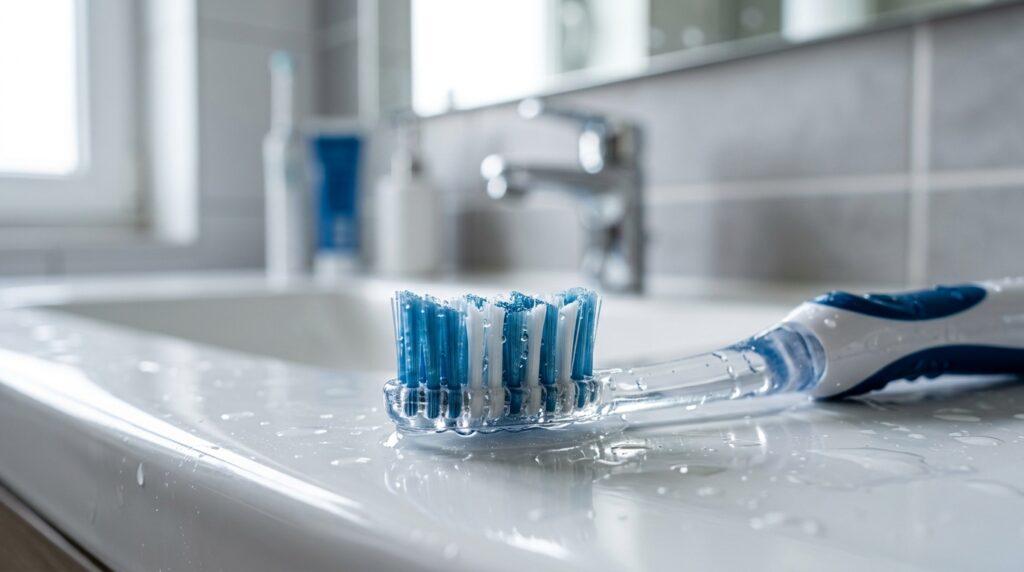
A toothbrush must be stored properly because our health depends on it
A toothbrush is one of the most frequently used items in the home, yet very few people take proper care of it. And this despite the fact that after brushing, bacteria, food particles, and toothpaste residue remain on the damp brush. Meanwhile, the warm and humid bathroom turns it into an ideal breeding ground for germs. The good news is that you don’t need expensive gadgets for protection — a few simple rules are enough.
Why Germs Appear on a Toothbrush
Hundreds of species of bacteria constantly live in the human oral cavity — this is normal. But when you brush your teeth, some of these microbes, along with saliva, food debris, and toothpaste, settle on the bristles. If the brush remains wet, the bacteria get everything they need to multiply — moisture, warmth, and a nutrient-rich environment.
An additional source of microbes is the bathroom itself. It’s a warm, humid room where a toothbrush rarely has time to fully dry between uses. That’s why toothbrush storage doesn’t require sterility — it just needs to allow the brush to dry thoroughly and not collect extra dirt.
Why a Toothbrush Needs to Dry After Brushing
Most bacteria need water for active reproduction. When toothbrush bristles dry out, the environment becomes uncomfortable for them, and microbial growth slows down. Therefore, a dry toothbrush is safer than a wet one, and this is the simplest yet most effective care principle.
It turns out that a toothbrush needs time to dry. If each person in the family has their own brush, there are enough hours between morning and evening brushing for it to dry. However, storing it in a damp, enclosed space where air doesn’t circulate is a bad idea.
Why You Should Store a Toothbrush Vertically
Vertical toothbrush storage helps water drain down the handle while the bristles stay dry. If the brush lies horizontally or stands head-down, moisture lingers at the base of the bristles, and it takes much longer to dry.
A regular toothbrush cup or an open holder where the brush stands freely and is exposed to air works best for this. Open storage almost always wins over closed storage precisely because it provides air access and quick drying.
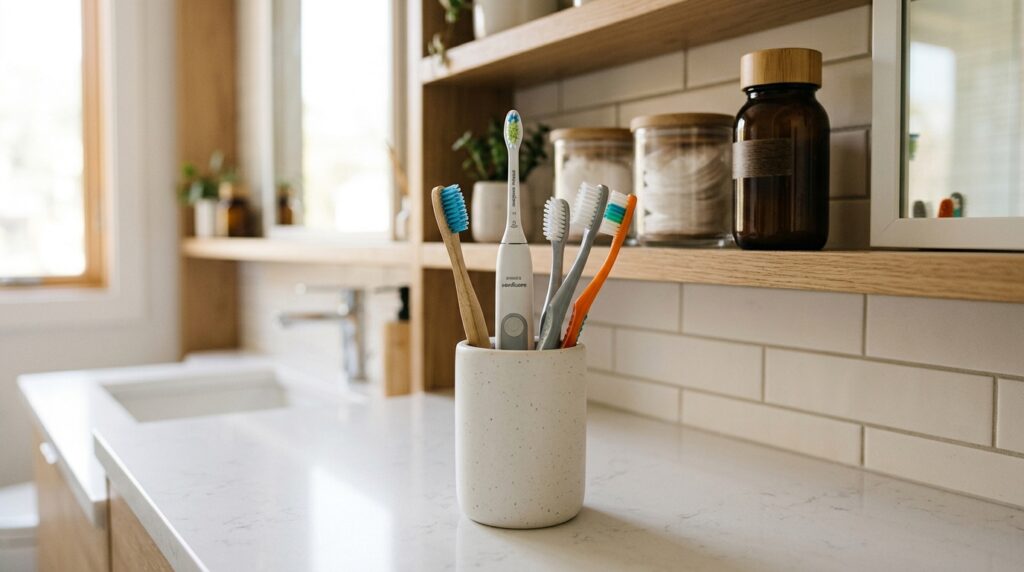
It’s best to store brushes vertically with the head up in an open cup
Why You Shouldn’t Store a Toothbrush in a Case
A closed toothbrush case seems like a hygienic solution, but in reality, it works the opposite way. In an enclosed space, moisture doesn’t evaporate but stays inside, and the brush essentially remains constantly wet. This creates exactly the conditions we’re trying to avoid.
A case is actually useful, but only in one situation — during travel, when you need to protect the brush from external dirt during transport. But even then, after the trip, the brush should be taken out and allowed to dry rather than kept in a closed box permanently.
Can You Store a Toothbrush Near the Toilet?
It’s better not to keep a toothbrush near the toilet. When flushing, tiny water droplets rise into the air, which can scatter throughout the bathroom and settle on surfaces, including your toothbrush. Therefore, it’s wise to keep the brush away from the toilet and flush the toilet with the lid closed.
This is a simple habit that costs nothing but significantly reduces the chance of unwanted bacteria ending up on the bristles. The ideal option is to store brushes on a separate shelf or in a cabinet, away from the splash zone.
Why Brushes Should Be Stored Separately
When several brushes stand in one cup and their heads touch each other, bacteria can transfer from one set of bristles to another. Each person has their own set of microbes, so different people’s brushes should not come into contact — otherwise, the whole point of individual hygiene is lost.
To avoid this, remember these simple toothbrush storage rules:
- each family member should have their own brush that only they use;
- brushes in a shared cup should stand so they don’t touch each other;
- ideally, use a holder with separate slots or different cups.
This is especially important if someone in the household is sick, since extra contact between brushes only increases the risk of spreading germs within the family.
Should You Wash a Toothbrush After Brushing Your Teeth?
After brushing your teeth, the brush should be thoroughly rinsed under running water to remove toothpaste residue and food particles. Rinsing under running water removes the bulk of the buildup that would otherwise remain on the bristles as a nutrient medium for bacteria.
After rinsing, the brush should be lightly shaken to remove excess water and placed upright to dry. No disinfecting agents are needed for a regular brush — water and proper drying are sufficient for everyday care.
How Often Should You Replace a Toothbrush?
According to Rospotrebnadzor (Russia’s consumer protection agency), a toothbrush should be replaced approximately every three months. Over time, the bristles wear out, lose their shape, and clean teeth less effectively, while more microbes accumulate on an old brush.
But in some cases, you need to replace your toothbrush sooner:
- if the bristles are frayed, splayed, or have lost their shape;
- after recovering from a cold, flu, or other infection;
- if the brush fell on the floor or came into contact with a dirty surface;
- if someone else accidentally used it.
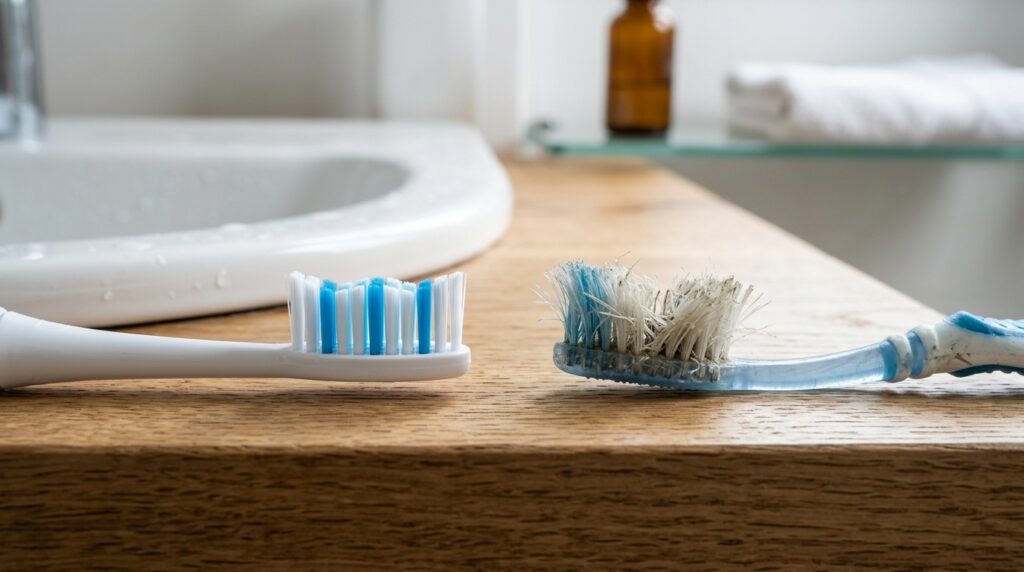
Worn bristles (right) clean teeth less effectively and require replacement
A worn-out brush doesn’t just look worse — it stops doing its main job because soft, frayed bristles no longer remove plaque properly.
To sum up, proper toothbrush storage is mostly about sensible hygiene and regular drying. If the brush stands vertically with the head up, has time to dry, doesn’t touch other people’s brushes, and is stored away from the toilet, the risk of microbial growth is minimized. And regular replacement every few months ensures that brushing your teeth remains truly effective.