You can already launch real PC games on Android following our instructions. No streaming, no PC connection, and no constant internet required. The GameNative app runs games from Steam, Epic Games Store, and GOG directly on your smartphone or tablet. Its creator, Utkarsh Dalal, told Android Authority in an interview that within two years he plans to turn an Android device into a full replacement for portable gaming PCs.
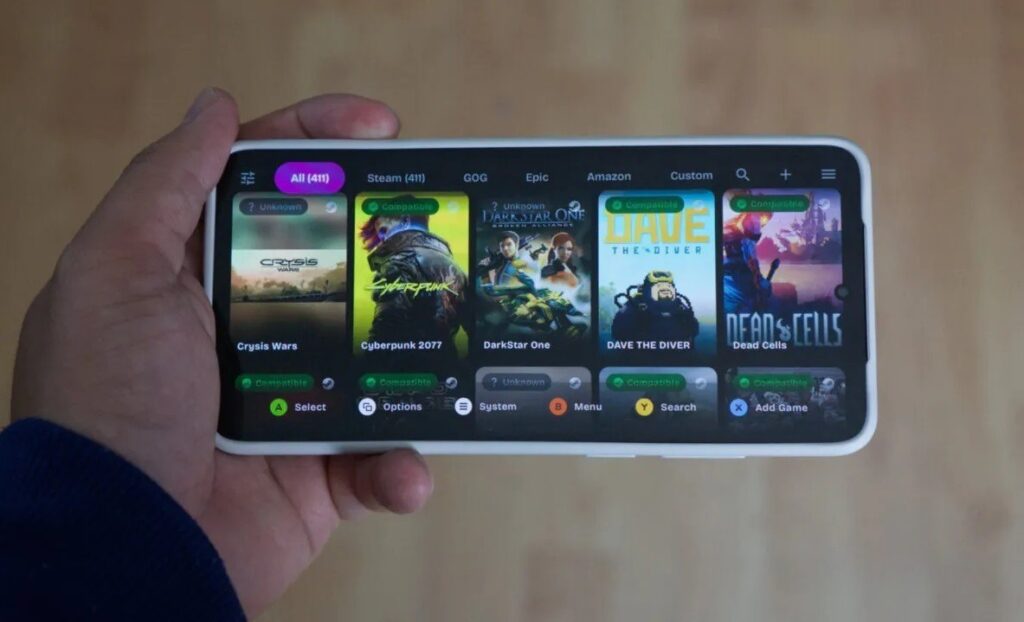
Overview of the emulator for running PC games on Android. Image: androidauthority.com
What Is GameNative and How Does It Work
GameNative is a free, open-source app built on the Pluvia project. It uses a set of software tools to run Windows games on Android without emulation in the traditional sense. At its core are three key components:
- Proton — a compatibility layer from Valve that allows running Windows games on Linux (and Android is built on the Linux kernel).
- FEX — an instruction translator that converts x86 code (which all PC games run on) into ARM instructions that mobile processors can understand.
- Turnip drivers — open-source GPU drivers created by the developer community for Adreno graphics chips in Snapdragon processors.
All of this is bundled into a single app: users don’t need to figure out each component separately. The program supports Steam, Epic Games Store, and GOG stores, as well as standalone game files.
The app’s main feature is the known configs function. It automatically selects optimal settings for a specific game on a specific device. Data is collected from voluntary user reviews and technical metrics: GPU model, frame rate, stability. The algorithm accounts for report freshness, gaming session length, and ratings to recommend a configuration that actually works on your hardware. According to the developer, this feature, enabled by default in February 2025, had the biggest impact on the app’s compatibility and popularity.
Cyberpunk 2077 and Hitman on a Phone — What Can Actually Run
The GameNative developer confirms that on devices with Snapdragon 8 Elite and 8 Elite Gen 5 chips, he managed to launch Hitman: World of Assassination and Cyberpunk 2077. However, Cyberpunk still freezes periodically: drivers for the new chips are still being refined.
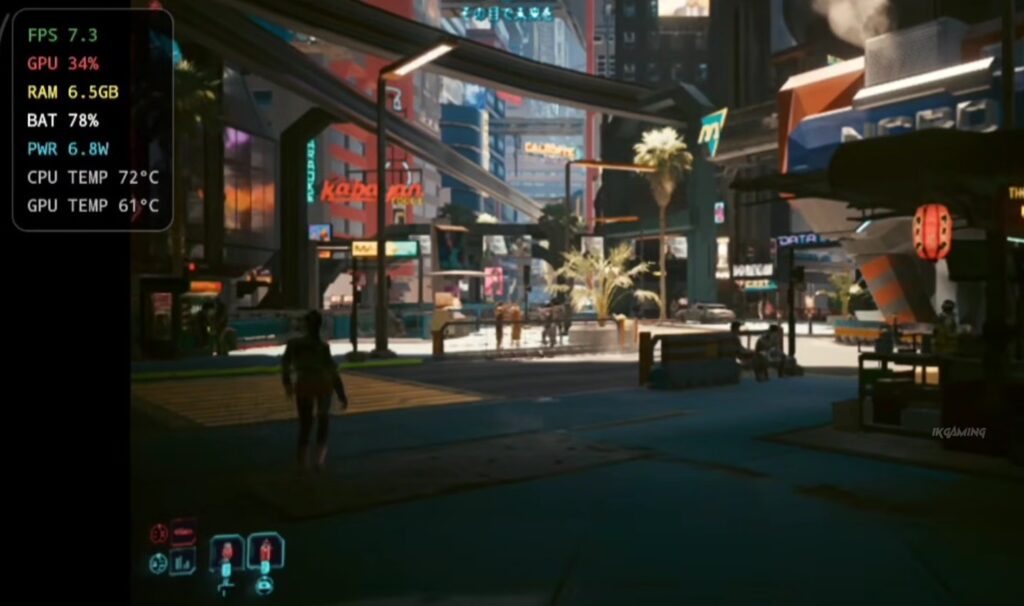
Cyberpunk 2077 runs at 5-10 FPS, but it runs!
To be honest, we’re not yet talking about stable performance for any modern AAA games. Dalal himself admits that in terms of compatibility and performance, portable PCs like the Steam Deck are still ahead. However, indie games and older AAA titles are already quite playable on Android through GameNative.
Early builds of Turnip drivers for Snapdragon 8 Elite chips were released in early 2026, and the developer calls the initial results “excellent.” This is important because without these drivers, even a powerful processor couldn’t unlock its potential in such applications.
Snapdragon 8 Elite for PC Games on Android — Is It Worth Buying
Dalal cautiously recommends buying smartphones with Snapdragon 8 Elite if running PC games is one of your priority tasks. He warns: drivers are developing rapidly but aren’t fully ready yet. Some games may have issues right now, but these chips are the best choice both in terms of performance and with an eye toward the future.
As for other processors, the situation is more complex. GameNative has already received initial support for Google Pixel 10 with the Imagination PowerVR GPU — this became possible thanks to community work and the developer pipetto-crypto. Samsung phones with Exynos and the Xclipse GPU are also supported, although compatibility quality is still lower there, and improvements are planned in the project’s roadmap.
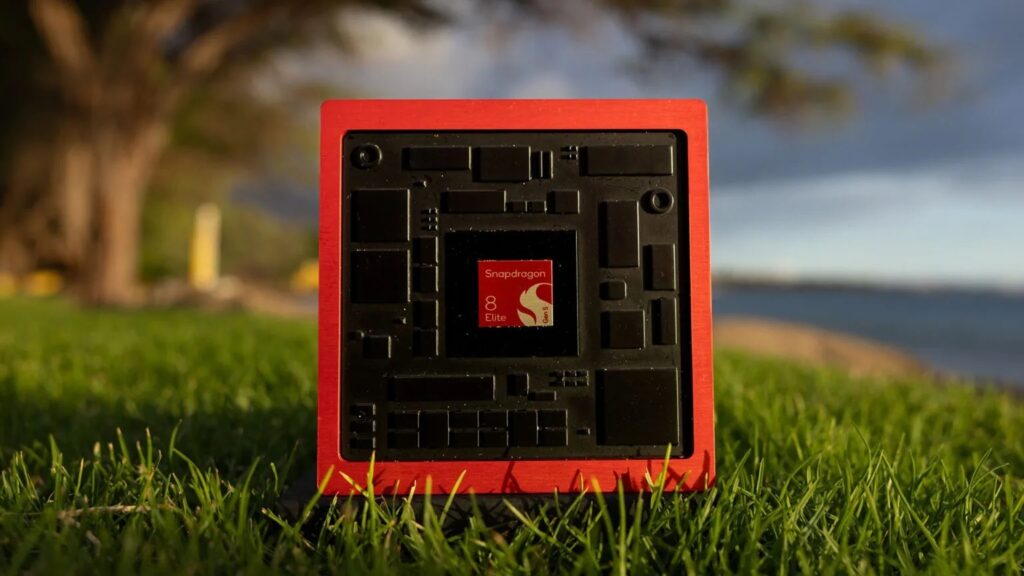
PC games run decently only on top-tier Snapdragon chips. Image: Qualcomm
Dalal separately notes that in an ideal world, Google would make its GPU drivers open-source — similar to how Turnip drivers work for Qualcomm’s Adreno chips. This would allow the community to optimize performance on Pixel devices more quickly.
GameNative vs. Steam Deck — Can a Phone Replace a Portable PC
The creator of GameNative openly states: his long-term goal is to make it so that an Android device with GameNative fully replaces a portable PC. Timeline — two years. It’s a serious ambition, and here’s why it’s more of a direction of movement than an accomplished fact for now.
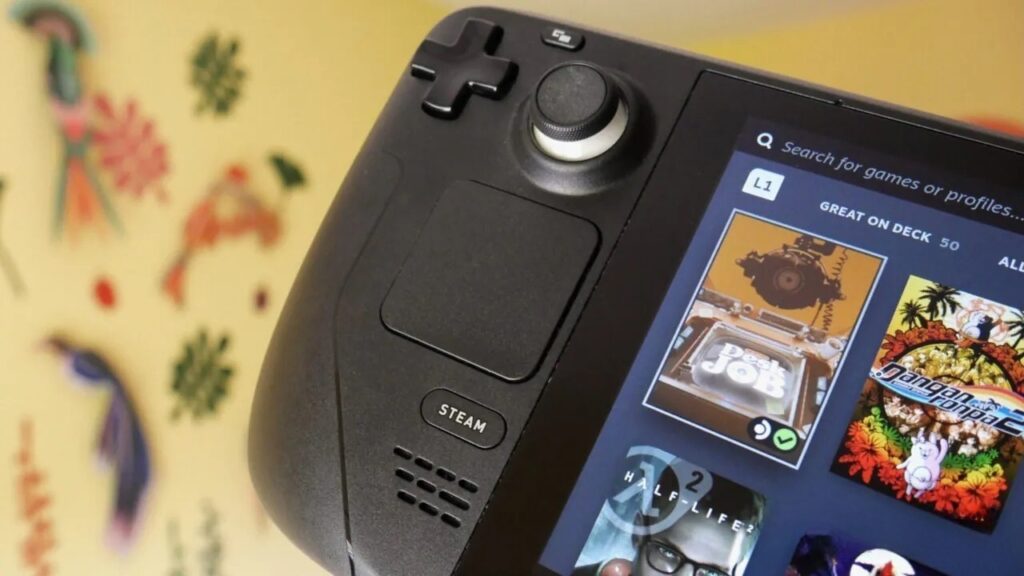
Portable PCs remain unrivaled. Image: androidauthority.com
Portable PCs like the Steam Deck and ASUS ROG Ally run on x86 processors. All PC games are originally written for this architecture, so on such devices they launch directly or through Proton without additional translation. Android devices use ARM chips, and every game requires instruction conversion — this inevitably reduces performance and compatibility.
Dalal points to Android consoles like the Odin 3 at $400 as an example of what the market could look like in a couple of years: powerful, affordable, and portable devices. An interesting twist: Valve itself is inadvertently helping Android gaming. The company funds FEX, released Proton 11, and a native Steam client for the ARM version of Linux. All of this is being done for their future Steam Frame VR headset on the Snapdragon 8 Gen 3 chip, but a side effect is improved compatibility for GameNative. Dalal is already testing a version of GameNative with a built-in ARM client.