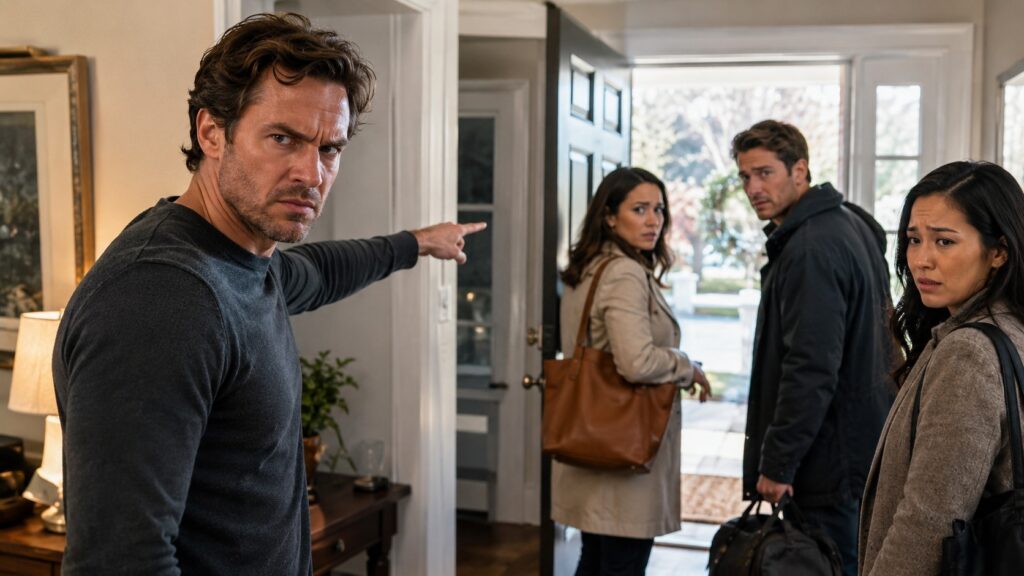
You can get guests to leave so skillfully that they won’t even notice
One evening I was at my friend’s place for so long that he suddenly said: “Oh, what a shame that you’re finally leaving.” It was funny, a little hurtful, but I got the hint and started getting ready to go home. Everyone has probably been in a situation where it’s long past bedtime, but guests are in no hurry to leave. I’ve found more polite ways to hint to guests that it’s time to wrap things up.
Is It Polite to Ask Guests to Leave
The main thing to remember: you’re not kicking guests out — you’re wrapping up the evening. These are different things. Ending a gathering is just as much a part of hospitality as greeting people at the door. If the host is silently suffering in the kitchen, that’s not politeness — it’s a path to never inviting anyone again.
According to Martha Stewart, what works best is setting boundaries in advance, sending soft signals, expressing gratitude, and maintaining calm directness.
By the way, polite phrases come in different varieties — some help establish boundaries, while others subtly destroy them. The same principle applies when wrapping up an evening — the wording makes all the difference.
How to Set an End Time for the Evening in Advance
The most reliable way to avoid awkwardness in the evening is to give advance notice. If the gathering is still being planned, include the time right in the invitation:
Come at 7:00 PM, we’ll hang out until about 11:00 PM.
Mentioning both start and end times relieves the host of a huge amount of future tension. When guests know the timeframe in advance, they don’t feel like they’re being kicked out — they’re simply following the plan. Etiquette experts note that without a designated end time, guests might assume they’re welcome indefinitely, or simply don’t understand when it’s appropriate to leave.
This principle works for any format: a home dinner, a birthday party, hanging out with friends, or a meeting with colleagues. The more specific the boundaries, the easier it is for everyone.
How to Use Actions to Hint That It’s Time for Guests to Go Home
About 30–40 minutes before the end, you can start gently wrapping up the evening. This isn’t a trick or manipulation — it’s normal etiquette language that people pick up on intuitively.
What works:
- dim the music or turn it off completely;
- stop opening new bottles;
- remove some food from the table;
- clear empty plates and glasses;
- offer a “last cup of tea” or “final dessert”;
- ask how guests are planning to get home.
The “last coffee” or “final dessert” technique is an etiquette classic. It gently signals that the evening is winding down without creating the feeling that people are being shown the door.

The host clearing food from the table — a soft signal that the evening is ending
What you definitely shouldn’t do is demonstratively mop the floors, silently yawn every ten seconds, abruptly turn on bright lights, slam cabinet doors, or sit down with a martyred expression. Abrupt actions ruin the atmosphere and look inhospitable, even if you’re already at your breaking point inside.
What to Say to Get Guests to Leave Sooner
The universal phrase for wrapping up an evening consists of three elements: warmth, reason, and action. First, you show that you’re glad the guests came. Then you explain why it’s time to end. And finally, you gently guide them toward the exit.
Here’s how it sounds in practice:
- “Guys, thanks for coming, it was really great. I’m starting to crash, so let’s call it a night.”
- “I’m really glad you came by. But I have to get up early tomorrow, so I’ll start seeing you off.”
- “It was so nice to see you. Let me help you call a taxi.”
Gratitude at the moment of parting is a very important detail. It shifts the focus from “leave” to “thank you for being here.” The host should see the guests off, help with outerwear, and thank them for the visit. This turns the farewell into a warm ritual rather than an awkward moment.
What to Do If Guests Won’t Leave
There are people you can tell straight out that the evening is over, and they’ll ask if there’s going to be a continuation. For such cases, there’s directness — and it’s not the same as rudeness.
If soft signals aren’t working, switch to clear phrases:
- “Guys, I’ll be straight with you: I need to rest. Let’s call it a night.”
- “I love you, but I’m exhausted. I’ll see you out now, and we’ll finish our conversation another time.”
- “No offense, but I need to end the evening now.”
- “This isn’t a hint — I need you to head home.”
Staying polite but firm is the key advice from etiquette experts for these situations. You can ask how guests will get home, you can say “we’ll be wrapping up soon.” But the main thing is not to keep enduring it until you’re ready to explode internally.
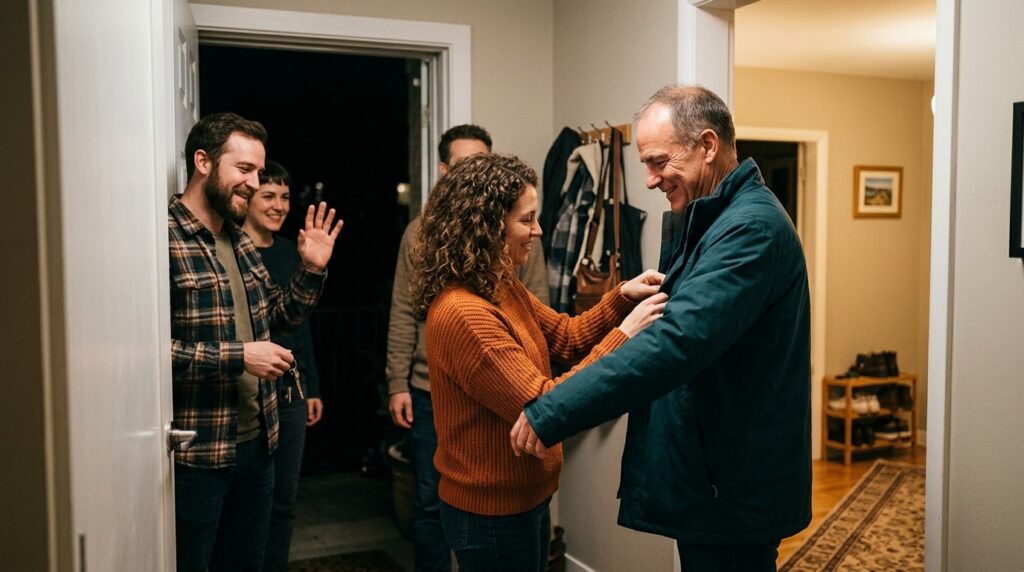
A warm farewell at the door — this way ending the evening doesn’t turn into a conflict
How Not to See Guests Off
Most problems arise not because the host wants to end the evening, but because of how they do it. Here’s a list of actions that are guaranteed to ruin the farewell:
- hinting for two hours straight and getting angry that guests aren’t mind readers;
- irritably slamming cabinets or turning on the vacuum cleaner;
- saying “well fine, keep sitting, what do I care” — this is passive aggression in its purest form;
- continuing to offer food and drinks when you want people to leave;
- lying about an urgent phone call or made-up circumstances — the more fabrications, the worse the situation looks.
A special case is tipsy guests. Here the task is not just about etiquette but also about safety. “I can see you’re tired, let me call you a taxi” or “definitely no driving — let’s call a car” — this isn’t tactlessness, it’s caring. And you definitely shouldn’t pour “one last one for the road”: it too often turns into “the last one before falling in the hallway.”
If guests have come to stay overnight, it’s best to set boundaries before they arrive:
You can stay until Sunday, but after lunch I need to take care of things.
An overnight stay without clear agreements is a direct path to household tension.
Ultimately, a good host isn’t someone who endures until they feel resentment, but someone who knows how to beautifully close out the evening. Thank your guests, help them with their journey home, and calmly say it’s time to rest. This is a skill, and it’s perfectly normal to practice it, just like any other element of interacting with people.