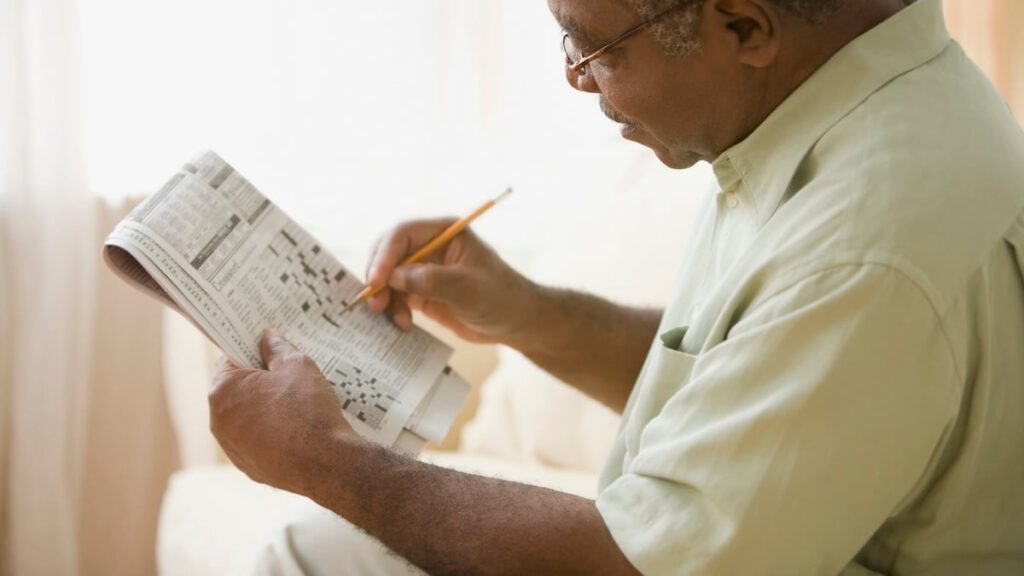
Staying young is helped not only by exercise but also by other types of activity
A large Australian study involving more than 12,000 people over the age of 70 has shown that exercise and proper nutrition alone aren’t enough to slow down aging. There are several other activities that help you live a long and happy life. And they’re not as difficult as you might think.
How People Change in Old Age
When we think about aging, the first things that come to mind are gray hair, wrinkles, and knee pain. But doctors are far more concerned about frailty in old age. As we age, our bodies lose the ability to recover from illnesses and injuries. A person becomes weak, walks more slowly, gets tired faster, falls more often, and ends up in the hospital more frequently.
This phenomenon increases the risk of heart disease, dementia, depression, and even premature death. At the same time, aging progresses differently for everyone — some people at 80 are still briskly walking in the park, while others at 65 already struggle to climb stairs. Scientists have long been searching for factors that explain this difference.
This is precisely the question that researchers from Monash University in Australia attempted to answer. They set out to determine whether social and intellectual activities, not just physical exercise, could slow down the onset of age-related frailty.
The Impact of Lifestyle on Aging
The scientists recruited 12,862 Australians aged 70 and older. All participants at the start of the study were relatively healthy, without serious conditions like dementia or heart failure.
Over the course of 11 years, the researchers annually collected data on participants’ health. They measured:
- walking speed and grip strength;
- cognitive functions — for example, the ability to memorize a list of words;
- ability to perform everyday tasks;
- abdominal fat volume and other health indicators.
At the same time, the scientists tracked what participants did in their free time. A total of 19 types of activities were examined, from listening to music to attending educational courses. Physical exercise and diet were deliberately excluded from the analysis because their benefits have already been well established in other studies.
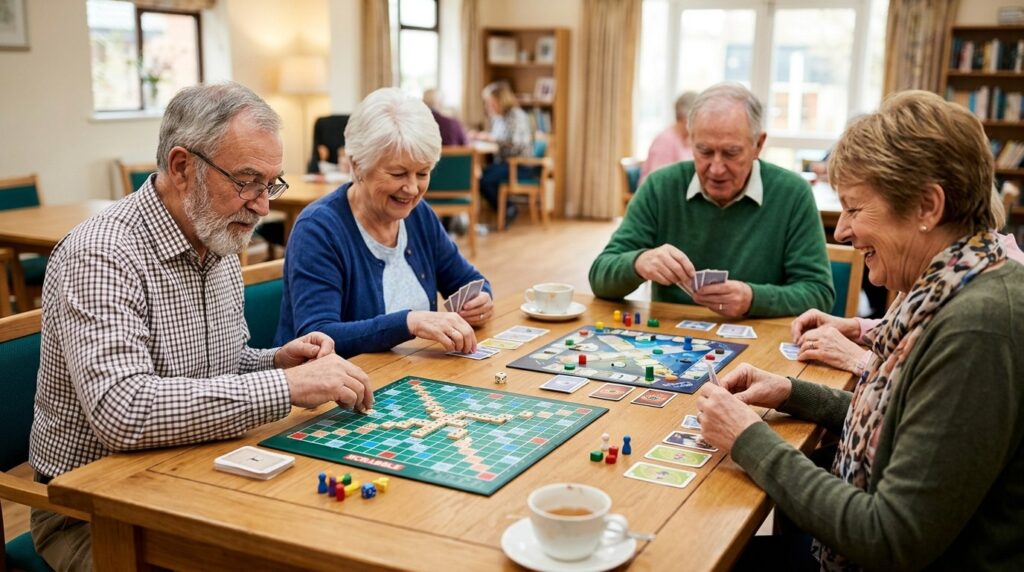
Playing board games together is one type of activity that researchers linked to a reduced risk of age-related frailty
Two scientific tools were used to assess the degree of aging. The first was the deficit accumulation index, which evaluates the overall condition of the body. The second was the FRAIL scale, which determines the degree of physical frailty.
What to Do to Slow Down Aging
The results were consistent and quite convincing. Participants who belonged to any club or local organization were on average 3% less likely to develop age-related frailty over a seven-year observation period.
Those who regularly engaged in intellectual tasks — played chess, solved crossword puzzles, assembled jigsaw puzzles, or played cards — showed a risk reduction of approximately 4%. And participants who wrote letters, used computers, or attended educational classes were 2% less susceptible to frailty compared to their peers.
The researchers separately noted the role of social connections. People who had at least four close people for regular communication also aged more slowly.
The figures of 2–4% may seem modest. But the scientists emphasize that the effect was consistent over many years and manifested independently of other factors. This is not a one-time spike but a stable trend.
How Socializing Can Improve Muscles and Body
But what do chess or a book club have to do with physical strength? If you think about it, the logic becomes clear.
When a person belongs to a club, regularly meets with friends, or attends courses, they are compelled to leave the house, move around, and take care of themselves. The brain receives stimulation, and an active brain better manages the body — coordination, balance, and motivation.

Using a computer and visiting libraries is one type of intellectual activity associated with healthy aging
There is also a flip side: loneliness and lack of mental stimulation accelerate decline. When a person withdraws, stops socializing, and doesn’t challenge their brain, the body essentially receives a signal that resources don’t need to be spent on maintaining fitness. Loneliness has long been linked to an increased risk of inflammation, cardiovascular disease, and cognitive decline.
Why Exercise Is Important but Can’t Do It Alone
It’s important to clarify right away: the results of this study do not mean that physical exercise can be replaced with chess. Regular physical activity remains one of the most powerful tools against premature aging, and this has been confirmed by dozens of major studies.
But the data from Australia shows that healthy aging is not one habit but a set of them. Exercise trains muscles and the heart. Intellectual activities support the brain. Social connections provide motivation, emotional support, and a reason to leave the house. Remove any of these elements, and the system works less effectively.
Which Habits Help You Stay Active
Based on the study’s results, the authors suggest several practical steps for preserving youthfulness — and they don’t require a gym membership or special effort:
- Maintain regular contact with loved ones — set a reminder to call or write at least once a week;
- Challenge your brain every day: read, solve crossword puzzles, play chess or board games;
- Join a club or interest group — a book club, cooking class, dance group, anything;
- Simply leave the house: a library, museum, café with a friend, a walk along a new route.
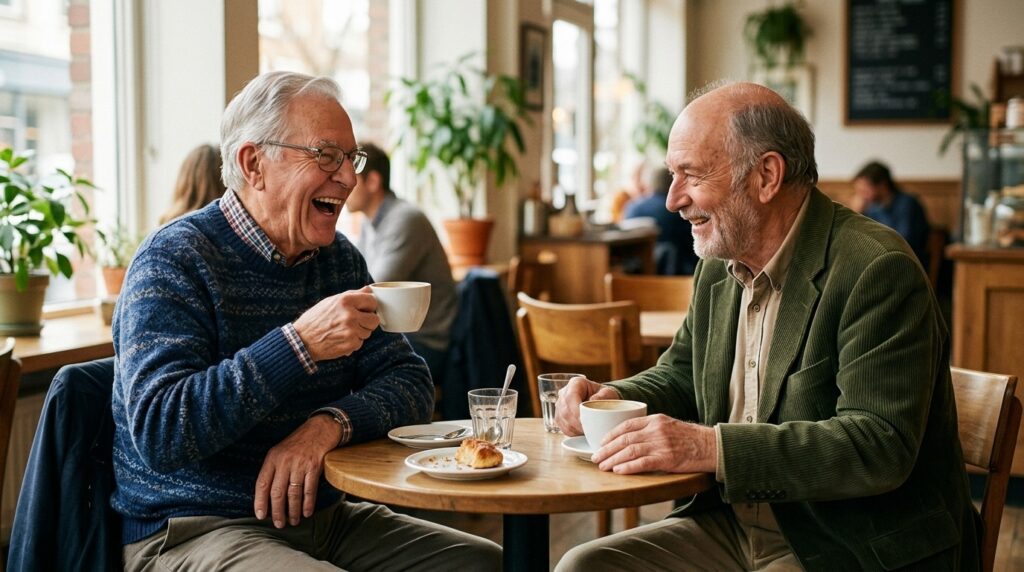
Regular meetups with friends — a simple habit that can slow down aging
The authors also emphasize that urban infrastructure plays a role: accessible libraries, community centers, ramps, and handrails — all of this helps elderly people stay engaged in life.
The study covered Australians, but the conclusions are quite applicable to other countries as well. Community centers, libraries, clubs at local clinics, even chess tables in courtyards — all of this is not just leisure for retirees but a potentially significant health factor. And it’s worth starting to build these habits not at 70 but much earlier, while social connections and intellectual curiosity are still easy to maintain.