The upcoming Apple A20 and A20 Pro chips will be among the first to transition to TSMC’s 2-nanometer process. But the main advantage for iPhone 18 Pro battery life is related not only to the process node change but also to the core architecture. This is still a rumor and a forecast based on A19 Pro analysis, not confirmed specifications.
Apple continues to increase the battery life of its flagships
How the 2nm A20 Pro Chip Will Impact iPhone 18
It is expected that TSMC’s 2-nanometer process will debut on Apple chips, with the company being one of the first to receive this technology for the upcoming A20 and A20 Pro. The transition from the 3-nanometer N3P process to the 2-nanometer N2 should noticeably improve energy efficiency — meaning the chip will perform the same tasks while consuming less battery power.
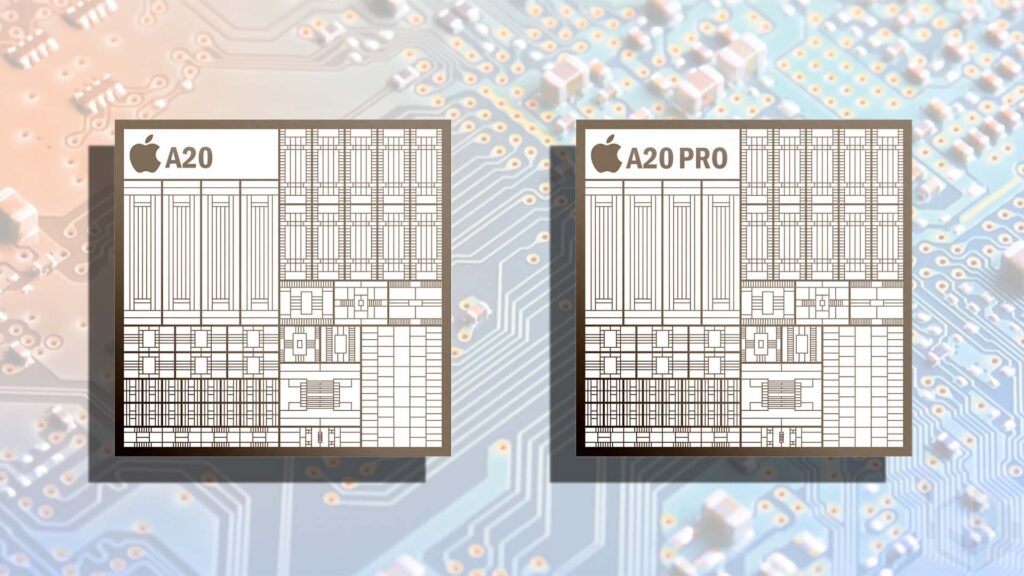
New processors will extend iPhone battery life without significantly changing the battery itself
It is precisely the combination of the new process node and Apple’s expertise in core design that could allow the iPhone 18 Pro to deliver record-breaking battery life. It’s important to understand: this is a forecast, not the result of actual tests.
What Determines iPhone Battery Life Besides the Battery Itself
An important nuance: Qualcomm and MediaTek will also transition to 2nm, specifically to the improved N2P version, and will technically surpass Apple in process node. But in designing custom cores, Apple continues to win thanks to years of experience.
Meanwhile, competitors are pursuing higher clock speeds and more cores. For example, the Snapdragon 8 Elite Gen 6 Pro is reportedly being tested at frequencies up to 5.00 GHz. The downside of this approach is obvious: the higher the frequency, the greater the power consumption and heat. Apple, on the other hand, achieves similar performance at lower frequencies — for a smartphone, this matters more than impressive spec sheet numbers.
Modern mobile chips have two types of cores:
- performance cores — for demanding tasks like gaming and video processing
- efficiency cores — for background tasks, messengers, reading, and music
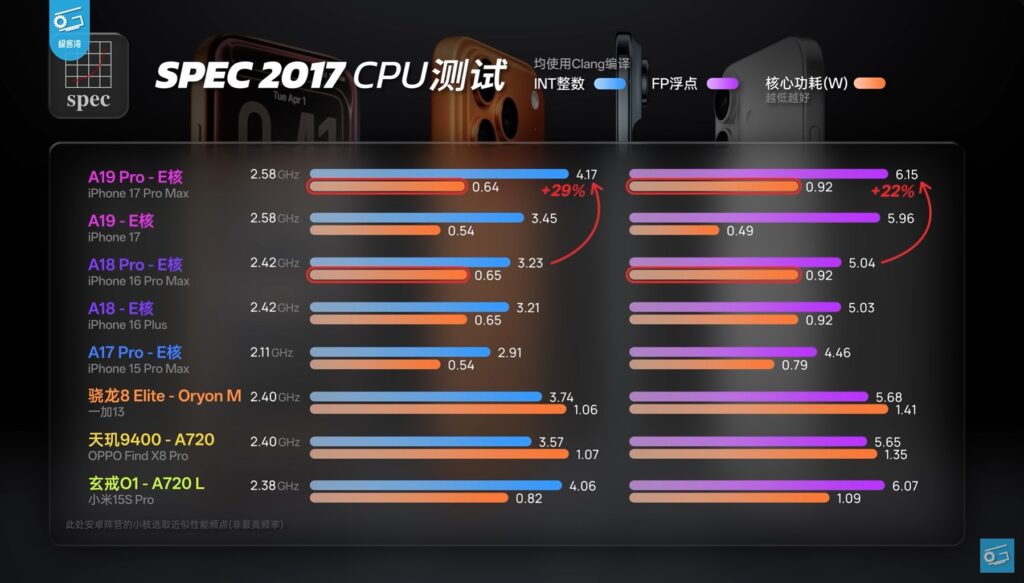
iPhone chip performance gains from generation to generation. And power consumption remained unchanged
It is precisely the efficiency cores that determine how many hours the phone will last in normal use. According to preliminary estimates, the A19 Pro achieved up to a 29% performance boost without increasing power consumption, specifically through redesigning these cores. In other words, the chip became faster while consuming the same amount of battery as the A18 Pro.
The A20 and A20 Pro are expected to continue this trend: smaller die area, higher performance, lower consumption. If the forecast proves correct, the difference between generations could be greater than the transition from A18 Pro to A19 Pro.
How iPhone 18 Pro Max Battery Life Will Change
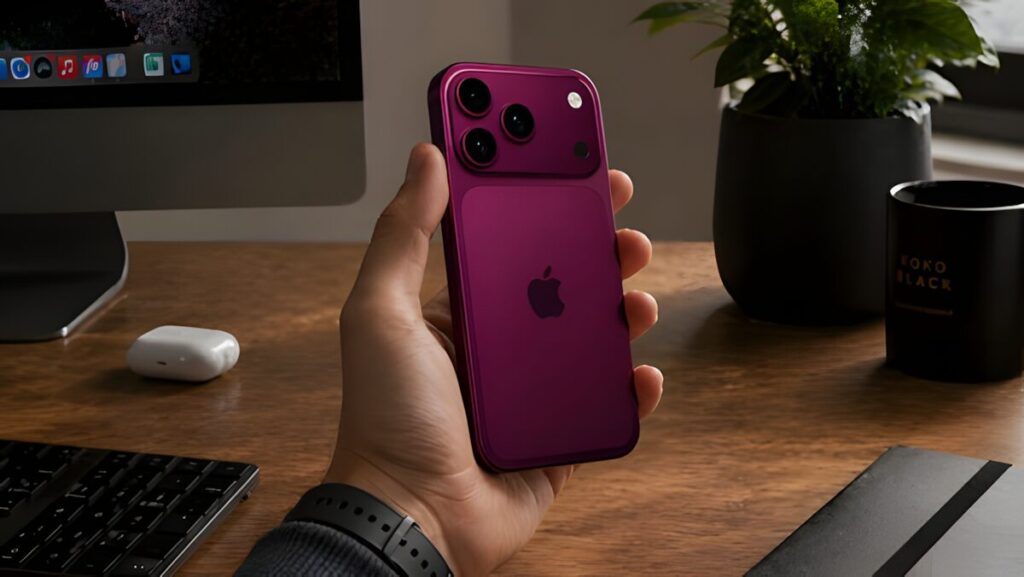
Apple will increase iPhone 18 Pro Max battery life without significantly changing the battery
If the forecast comes true, the biggest winners will be those who use their phone heavily throughout the day: messengers, maps, music, social media. These are exactly the scenarios where efficiency cores do the work, and this is where the battery typically gets drained.
An additional factor is battery capacity. According to rumors, the iPhone 18 Pro Max will feature a battery in the 5,100–5,200 mAh range in the eSIM version. For reference, the iPhone 17 Pro Max had 5,088 mAh in a similar configuration. Combined with a more efficient chip, this provides the basis for talking about record battery life. My prediction is that battery life for basic tasks will increase by 3–4 hours compared to the iPhone 17 Pro Max, which turned out to be the most long-lasting iPhone in the current lineup — and that’s a very impressive improvement.
Is It Worth Waiting for iPhone 18 Pro for Better Battery Life
If you have an iPhone 15 Pro or older and the battery has noticeably degraded — it makes sense to wait: jumping two chip generations at once plus a potentially larger battery should deliver a noticeable difference in real-world use.
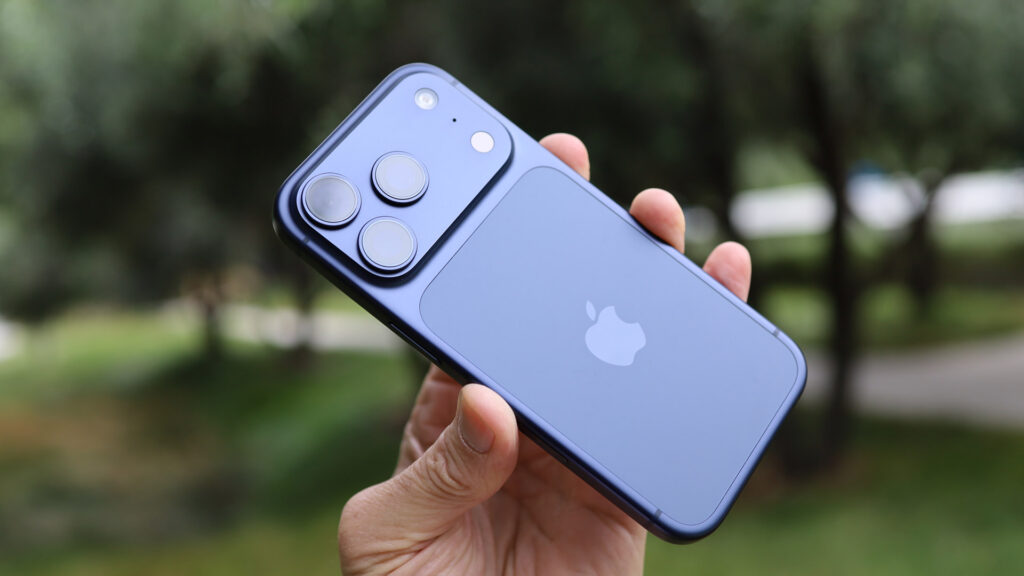
It looks like this year we’re in for a very intriguing smartphone lineup
If you have an iPhone 16 Pro or 17 Pro, there’s definitely no rush. The battery life improvement between adjacent generations is rarely significant enough to justify an upgrade solely for that reason — and all the talk about a “record” remains at the level of analyst forecasts, not official Apple data.
And one more thing: the 2-nanometer process is expensive. There’s a high probability this will affect the price of the iPhone 18 Pro, especially in Russia, where logistics and seller markups are added to the base price. So if battery life is critical for you but you don’t want to overpay for a flagship, it’s wiser to wait for actual tests and reviews rather than buying “blind” based on rumors.