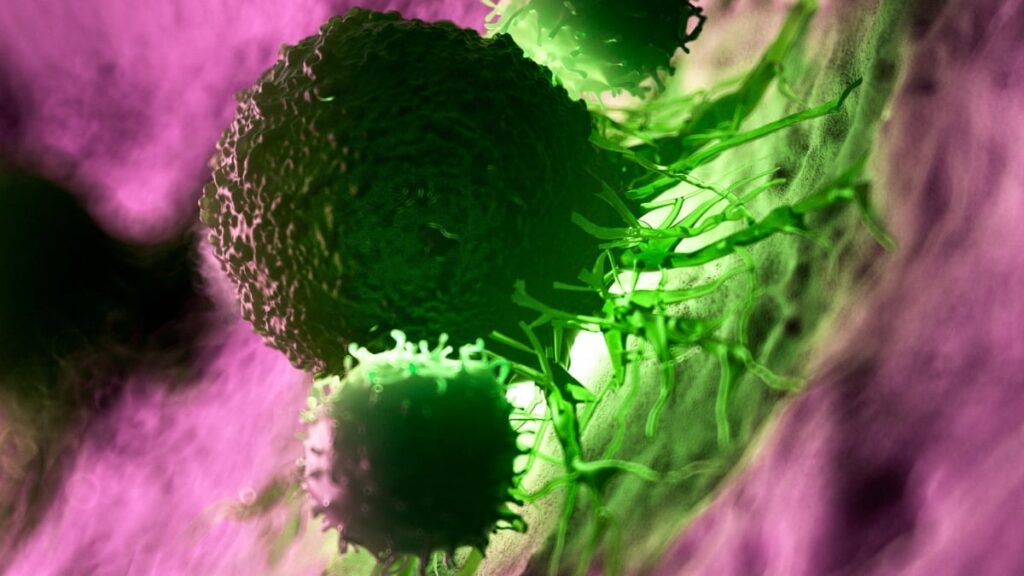
A vaccine against pancreatic cancer has shown very promising results
A diagnosis of pancreatic cancer has long sounded like a death sentence, but new medical technologies are gradually changing this grim statistic. Recently, scientists successfully tested a personalized mRNA vaccine that was able to significantly extend the lives of patients with one of the deadliest forms of cancer.
The Danger of Pancreatic Cancer
Pancreatic cancer is often called the silent killer, and for good reason. The disease develops unnoticed, showing virtually no symptoms in its early stages. According to Science Alert, as a result, about 90% of patients receive their diagnosis too late, when the tumor has already spread throughout the body and surgical intervention becomes impossible.
Even with modern treatment methods, survival rates remain extremely low. Approximately 87% of people with this disease do not survive five years after diagnosis. If the disease has progressed to an advanced stage, the five-year survival rate for pancreatic cancer drops to a mere 3.2%.
Long years and decades of research have barely moved these statistics. The pancreas is a difficult target for the immune system, as the cells of such tumors have few characteristic markers that the body’s defense mechanisms could “latch onto.”
How the Personalized mRNA Vaccine Works
mRNA vaccine technology became widely known during the coronavirus pandemic, but scientists originally developed it specifically to fight cancer. Unlike conventional vaccines, the new anti-cancer vaccine is created individually for each specific patient.
Here is how mRNA vaccines are made:
- First, surgeons remove the tumor from the patient’s body;
- In the laboratory, scientists extract genetic material from the removed tissues and analyze the mutations specific to that particular tumor;
- Based on this data, an mRNA molecule is created that serves as a kind of genetic instruction;
- The drug is administered to the patient, and their cells begin producing harmless protein fragments characteristic of the removed tumor.
For the immune system, this vaccine works like a scent trail for a police dog. The body’s T-cells receive precise information about the enemy, learn to recognize the specific mutations of the cancer, and begin hunting for any remaining malignant cells in the body. The most important part of this process is the creation of immune memory. Trained lymphocytes can live for years, patrolling the body and preventing the disease from returning.

mRNA vaccines are made individually for each patient
Effectiveness of the mRNA Cancer Vaccine
At the annual meeting of the American Association for Cancer Research (AACR), oncologist Vinod Balachandran shared the results of long-term follow-up of participants in the first phase of trials.
The study involved 16 patients who were fortunate enough to have their disease detected at an early, operable stage. After tumor removal, they underwent a combined cancer treatment course that included chemotherapy, immunotherapy, and administration of the personalized mRNA vaccine.
After receiving the drug, eight patients’ immune systems produced a powerful response — their T-cells successfully activated and began attacking cancer markers. And now, six years after surgery, seven of those eight patients are alive and feeling great. By comparison, of the eight people whose bodies did not respond to the vaccine, only two survived.
One of the trial participants received her diagnosis at age 66. After undergoing surgery and nine doses of the experimental drug, she reported a complete absence of limitations in her life and recently celebrated her 50th wedding anniversary with her husband. In her own words, this result is a true miracle for her.
Limitations of the New Technology and Future Prospects
Despite the encouraging numbers, experts urge maintaining a realistic perspective. The experimental treatment cannot yet help all cancer patients, as it requires mandatory surgical removal of the tumor. As we recall, only one in ten patients with pancreatic cancer makes it to the operating room in time.
At present, it is unknown whether mRNA technology can extend the lives of those whose disease has progressed too far and produced multiple metastases. Brian Wolpin, Director of the Gastrointestinal Cancer Center at the Dana-Farber Institute, emphasizes that for now we are talking about a small number of people, not mass therapy for hundreds of thousands of patients.
Nevertheless, the successful application of an mRNA vaccine against a complex tumor proves the viability of the concept itself. If scientists were able to make the immune system recognize such a stealthy type of cancer, this same approach will very likely work for other diseases as well. A second, larger phase of clinical trials has already been launched worldwide, which should definitively confirm the safety and effectiveness of the method.