At the Google I/O 2026 conference, the company finally showed its first smart glasses with artificial intelligence. They look like regular fashionable frames, work with iPhone, and can translate speech in real time. Most importantly — Apple simply isn’t capable of this. The company is still only developing a smart version of Siri, which is supposed to become the brain of future glasses. Here’s what we know about the new product and why Cupertino won’t be able to replicate it.
Google decided to release a truly fashionable device
Google Smart Glasses with Artificial Intelligence: When Will They Launch
On May 19, 2026, Google officially announced its first line of “intelligent glasses.” The product was developed in collaboration with Samsung and Qualcomm and runs on the Android XR platform — a special operating system for wearable devices and AR/VR headsets. Sales are scheduled to begin in fall 2026, although an exact date hasn’t been announced yet.
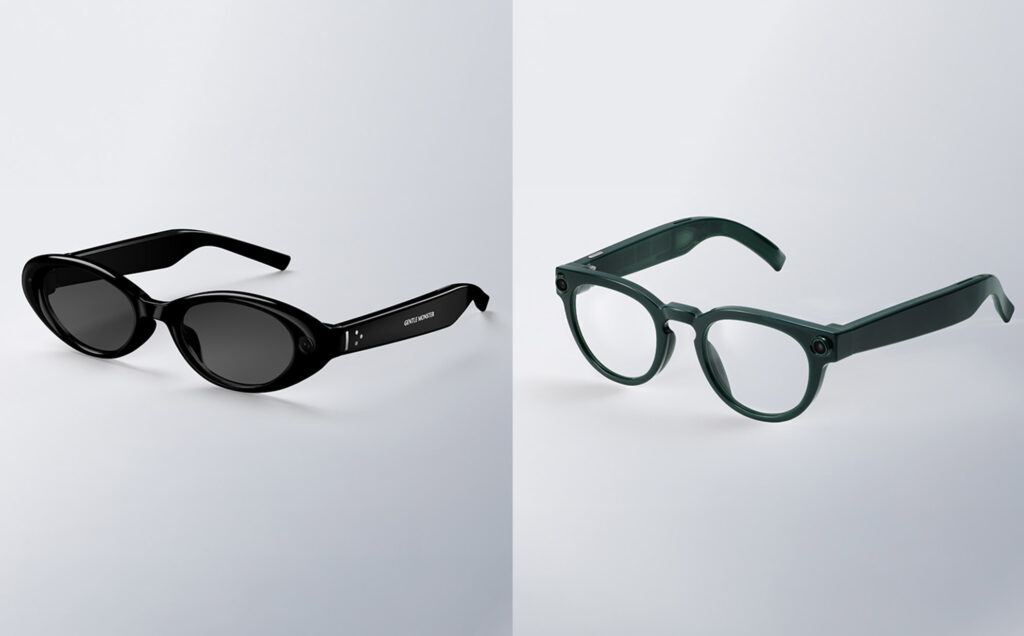
The device turned out to be not only technological but also stylish
This isn’t just another prototype, of which Google has accumulated quite a few over the years. The company learned lessons from the Google Glass failure of 2013 — those glasses flopped due to their clunky design, battery issues, and intrusive camera. This time, the approach is fundamentally different. Instead of making glasses-as-gadget, Google decided to turn regular stylish frames into a wearable AI assistant.
The price hasn’t been announced yet. Full technical specifications haven’t been revealed either — at I/O they showed more of a concept and two finished designs rather than a final product with a complete spec list. But even what’s known is impressive.
Smart Glasses with Camera and Gemini AI — What They Can Do
The main feature of Google’s glasses is the built-in Gemini artificial intelligence. It’s integrated into literally every function of the device. To summon the assistant, you just need to say “Hey Google” or simply touch the temple of the glasses.
The glasses have cameras, speakers, and microphones installed, but there’s no display in the lenses. All information is delivered by voice — directly into your ear, privately, rather than through a screen for the whole world to see. Here’s what the camera and Gemini AI combo can do.
Naturally, the heart of the gadget will be Gemini
Gemini analyzes what you see. Point your gaze at a restaurant — get reviews. Looking at an unfamiliar road sign — the AI will explain what it means. Spot an unusual cloud — Gemini will name its type. It sounds like magic, but Google assures everything works in real time.
Navigation is also tied to the camera. The glasses deliver turn-by-turn directions by voice, can add stops along the way, and find the nearest cafes or gas stations based on your preferences. Additionally, through the glasses you can manage calls, send messages, listen to music, and even take photos and videos. Captured content is edited using Google’s proprietary AI engine called Nano Banana.
Separately worth noting are multi-step tasks. Google demonstrated how you can order coffee through DoorDash via the glasses — by voice, without a phone. Gemini will open the app on the connected smartphone and complete the order itself.
Speech Translation in Google Glasses: How It Works
One of the most interesting capabilities is real-time translation. Google’s glasses can translate both spoken speech and text that falls within the camera’s field of view. Imagine: you’re in Tokyo, with a menu in Japanese in front of you. Just look at it — and Gemini will translate the text right into your ear.
The same works with live conversations. Your conversation partner speaks another language, and you hear the translation through the glasses’ built-in speakers. Google hasn’t yet specified the list of supported languages, but considering Google Translate’s capabilities — a wide range can be expected.
For travelers, this could become the deciding argument for purchase. No apps, no screens — just look and listen. The translator works natively, without the need to configure anything.
Can You Connect Google Glasses to iPhone
Here’s what really surprised many: Google glasses will work with iPhone. Yes, you heard that right. Despite the device being built on Android XR, Google confirmed compatibility with iOS.
This is a smart strategic move. Ray-Ban Stories also support both platforms, and Google clearly doesn’t want to lose the huge audience of iPhone owners. For Apple users, this means there’s no need to wait a couple of years until Cupertino deigns to release its own glasses. You can buy Google glasses in fall 2026 and use them right away with your iPhone.
Of course, it’s still unknown how complete the iOS integration will be. Some features will likely be limited compared to Android — as is usually the case with cross-platform devices. But basic capabilities like calls, messages, navigation, and Gemini functionality should be available.
Google Glasses in Collaboration with Gentle Monster and Warby Parker
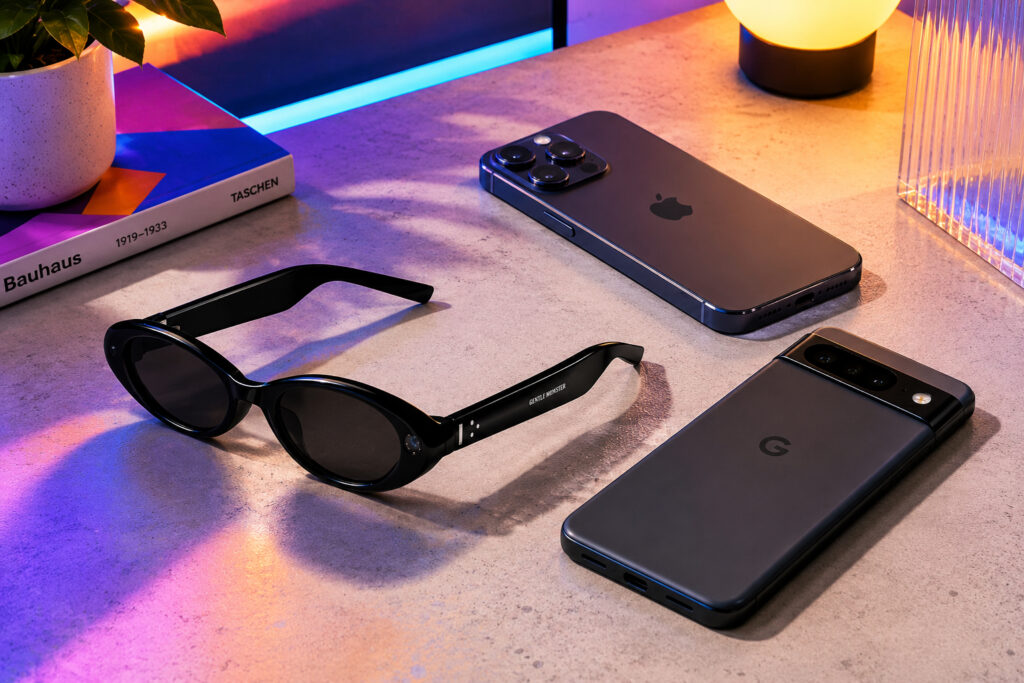
Perhaps the most unexpected part of this story is Google’s design partners. The company teamed up with South Korean fashion brand Gentle Monster and American brand Warby Parker. And this isn’t just slapping a logo on the body — Google invested $100 million in Gentle Monster, acquiring a 4% stake in the company.
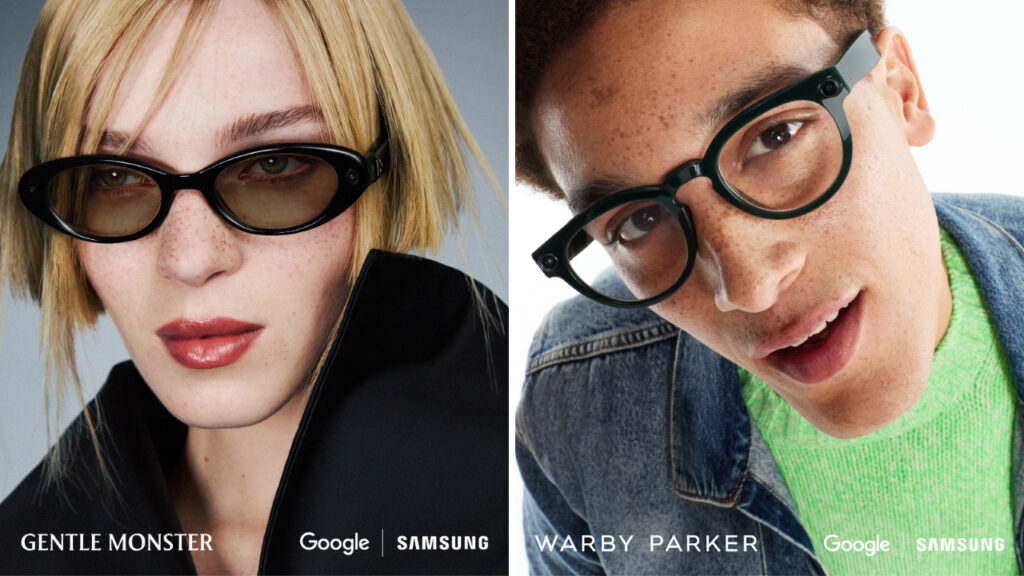
For the collaboration, Google chose fashionable manufacturers
Gentle Monster isn’t your ordinary frame manufacturer. The brand is famous for its avant-garde design, immersive gallery-like stores, and collaborations with Maison Margiela and Mugler. The brand’s ambassador is Jennie from BLACKPINK. Among its fans are Gigi Hadid and other world celebrities. In short, this is a company with serious fashion clout.
At I/O 2026, two initial designs were shown — from Gentle Monster and Warby Parker. Google promised that by launch time, each brand would have a full collection of frames. Additionally, the company is in negotiations with Kering Eyewear — the group that owns Gucci and Saint Laurent.
And here’s where the key question arises: what about Apple? Apple has never pursued such collaborations. The company has no practice of partnering with fashion brands on device design. The only exception is Apple Watch in the Hermes version, and even there it was only about straps and a couple of watch faces, not the design of the watch itself. Cupertino always controls every aspect of its products — from the chip to the body shape.
For smart glasses, this could become a problem. Glasses are an accessory, not a gadget. People choose frames by style, by face shape, by mood. One Apple design for everyone — that’s not at all what buyers want. Meanwhile, Google offers an entire ecosystem of frames from different fashion houses. If you want a stylish item from a well-known brand — in this case, the choice is obvious.
Apple Smart Glasses: When Will They Launch and How Will They Differ from Google
Apple is also working on smart glasses — this is no longer a secret. According to Mark Gurman of Bloomberg, the company may show them soon.