Google has once again made RAM capacity a key criterion when buying a smartphone, and all of this is happening in an era of a massive memory crisis. In the May announcement of Gemini Intelligence for Android 17, the company drew a clear line: for the new artificial intelligence features to work directly on the device, a smartphone needs at least 12 GB of RAM. This means that buying a model with 8 GB today could turn out to be a choice you’ll regret within a year.
Now even 8 GB of RAM won’t be enough
An important note right away: a smartphone with 8 GB works fine out of the box. Social media, messengers, browsers, undemanding app switching, and even games run without problems. But there won’t be any headroom for AI features that will define Android in the coming years on such a device.
Why 8 GB of RAM Isn’t Enough for a Smartphone
Remember how a few years ago, 128 GB of internal storage seemed more than enough. You’d get the base version, install apps, and for about a year everything was fine — and then you’d run out of space. The same thing is happening now with RAM.
The issue is how artificial intelligence works directly on the device. Regular apps don’t stay in memory permanently: they occupy it when needed and free it up after closing. But a language model running locally behaves differently: it needs to constantly remain in memory alongside the system to respond quickly.

Full-fledged AI needs at least 12 GB of RAM
A smartphone physically cannot load a gigabyte-sized model from storage every time without delays. Plus, the system needs memory to remember the context of your queries. That’s where the sharply increased requirements come from.
System Requirements for Gemini Intelligence on Android 17
Android 17 is betting on on-device artificial intelligence. Among the new features are multi-step automation of actions in apps, customizable widgets generated on the fly, and a Rambler feature that turns voice dictation into neat, polished text.
Google has united all of this under the name Gemini Intelligence. This is no longer the old scheme of “send a request to the cloud and wait for a response.” The new features must constantly work in the background and have enough memory to understand what’s happening across different apps. Naturally, owners of already purchased devices aren’t happy about this. If you bought a flagship in 2024 or 2025, the frustration is completely understandable. And here a fair question arises: “Wait, some smartphones already have 12 GB of memory, why won’t they get Gemini Intelligence?”
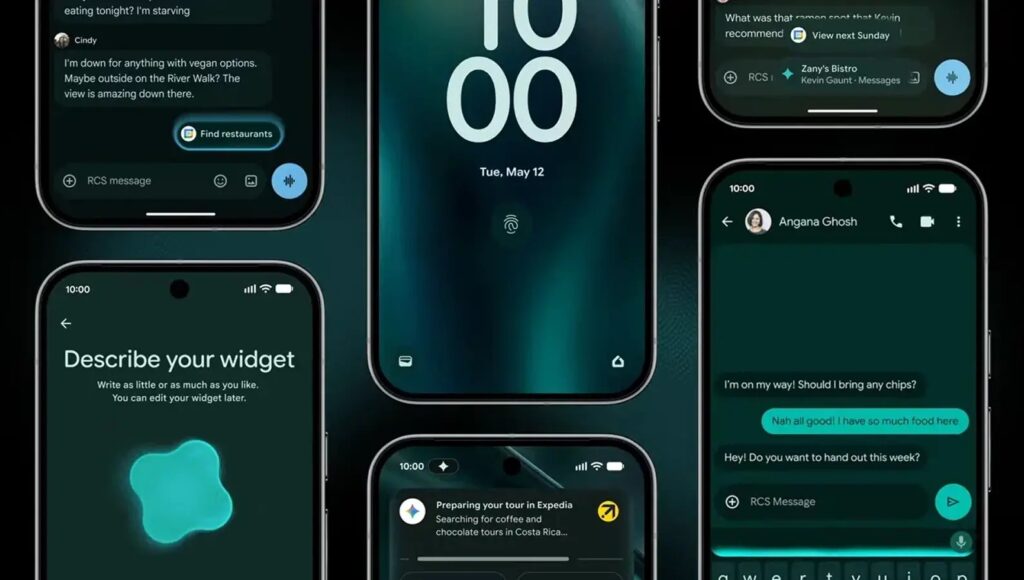
Google’s new AI ecosystem requires a lot of RAM. Image: Google
Because memory isn’t the only factor. The smartphone also needs a processor that supports the new Gemini Nano v3 pipeline. And this changes the very notion of long-term support: a flagship chip used to mean you were covered for years ahead. Now, with AI developing so fast, that guarantee no longer exists.
Gemini Neural Network Capabilities on Different Smartphones
Manufacturers are more likely to give you a stripped-down version of a feature than remove it entirely. This way, the spec sheet looks competitive, but the experience becomes less predictable: the same name, the same marketing, but a different result.
A good example is the Pixel 9a, released in March 2025. Due to memory limitations, it lost some capabilities: it lacks local image search, audio processing, Call Notes, and Pixel Screenshots features. Technically the smartphone is modern, but some AI features are unavailable.
Is It Worth Buying a Budget Smartphone in 2026?
Manufacturers have a simple choice: either invest in a larger base memory capacity and maintain the full experience, or cut costs and release devices that are limited from day one. The situation is complicated by the global memory shortage. Data centers are buying up huge volumes of RAM for their AI workloads, which drives up component prices and squeezes margins in consumer electronics. So the temptation to cut costs on base models is only growing for brands.

It’s better to pay more for a higher-end model
Samsung acted proactively and standardized 12 GB across the entire Galaxy S25 lineup, including the base model. Google, based on current leaks, may take a different route — but that’s still a rumor, not a confirmed fact.
How Much RAM Does a Smartphone Need in 2026?
In short: buying a smartphone with 8 GB today means you’ll miss out on most of the next era of Android. The industry is moving toward making artificial intelligence always available directly on the device, and that requires memory.
What to do about this in practice:
- if you plan to keep your smartphone for several years, aim for 12 GB of RAM as a minimum — this is the new sensible baseline;
- don’t fall for just the feature name in advertisements: the same label can work differently on different models;
- remember that memory isn’t the only requirement: the processor with support for new AI pipelines also matters;
- if AI features aren’t important to you, 8 GB is still enough for everyday tasks — and in that case, you can safely save money.
The main takeaway is sobering: there’s no longer a guarantee of long-term hardware support. A flagship chip used to mean peace of mind for years; now AI requirements change so fast that the bar could rise again tomorrow. When buying a smartphone now, base your decision on how you’ll actually use it — not on the promises on the box.