Google has announced major changes to how the Play Store operates worldwide. Commissions will be lower, and developers will be able to offer users not only Google’s built-in payment system but also their own options. All of this is a consequence of the company’s lost lawsuit against Epic Games, and for the average user, behind the dry numbers lies a perfectly clear meaning: prices for subscriptions and in-app purchases may change. And Russians, who have been unable to pay in Play Market for 4 years, will finally regain that ability. This means there should be fewer conflicts over RuStore.
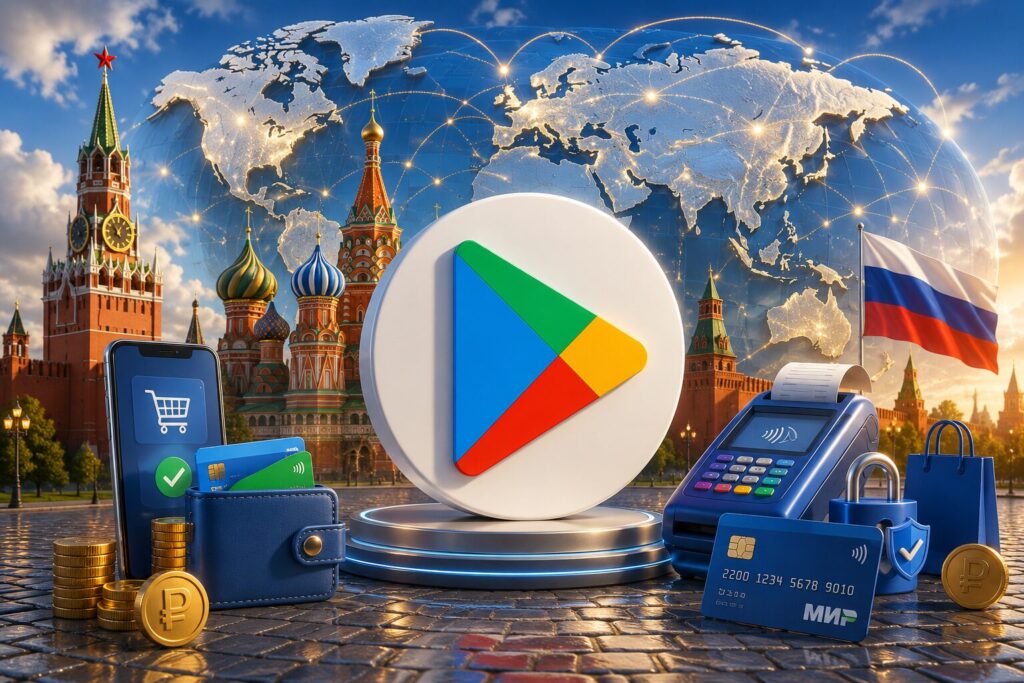
Payments from Russia will become available in Google Play. But only in 2027
What Play Store Rules Google Is Changing: Commissions and Payment Methods
There are two main changes, and both involve money. Google is allowing alternative payment methods and simultaneously lowering commissions for developers.
Essentially, the app store is no longer the sole channel for paying for subscriptions and in-app purchases, including on TVs. Developers will be able to offer their own payment systems and redirect users to their own websites for purchases. This is the same logic that major services like Spotify and Netflix have been fighting for over the years.
It’s important to understand the reason. The changes resulted from Epic Games’ lawsuit against Google. At the conclusion of the proceedings, the court found that the company had established a monopoly in the app store, which led to inflated commissions for developers. After this, Google and Epic Games reached a settlement under which the company agreed to lower commissions, support third-party app stores, and allow alternative payment methods in the Play Market.
Developer Commission Rates in the Play Store
The old system with fixed high percentages is becoming a thing of the past. Now the commission ranges from 10% to 25% and depends on the app’s annual revenue. This doesn’t include the separate fee for payment processing itself.
- A base rate of 10% applies to the first million dollars in annual revenue
- For revenue exceeding one million dollars, the commission is 20% for new installs and 25% for apps installed before the new rules
- For apps that redirect payments to a third-party site and earn more than a million per year, the rate is 20%
- An additional 5% is charged for transactions through Google Play’s own payment system, on top of the base commission
There are also more favorable terms for some developers. The Games Level Up and Apps Experience programs offer commissions from 10% to 20%, and they will become available to developers starting in September.
Google lowers Play Store commissions and allows alternative payment methods worldwide
For users, the meaning is simple: the less the store takes from the developer, the more room the developer has to avoid raising prices or even make payments on their own site cheaper than through the Play Store.
Which Countries Will See Play Store Changes and When
The new rules are being introduced not everywhere at once, but on a schedule. Starting June 30, they take effect in the United Kingdom, the United States, and countries of the European Economic Area — which also includes most of the European Union.
After that, coverage will expand gradually. Australia, Japan, and South Korea will receive the updated commission system by the end of 2026, and the rest of the world, including Russia, by September 2027.
This means that for Russia, the changes under Google’s global policy will come later than for Europe and the US. It’s worth remembering that there was already a separate story here: earlier Google complied with FAS (Russia’s Federal Antimonopoly Service) and allowed third-party payment systems in the Play Store at the Russian regulator’s request.
Payment in Google Play in Russia in 2026
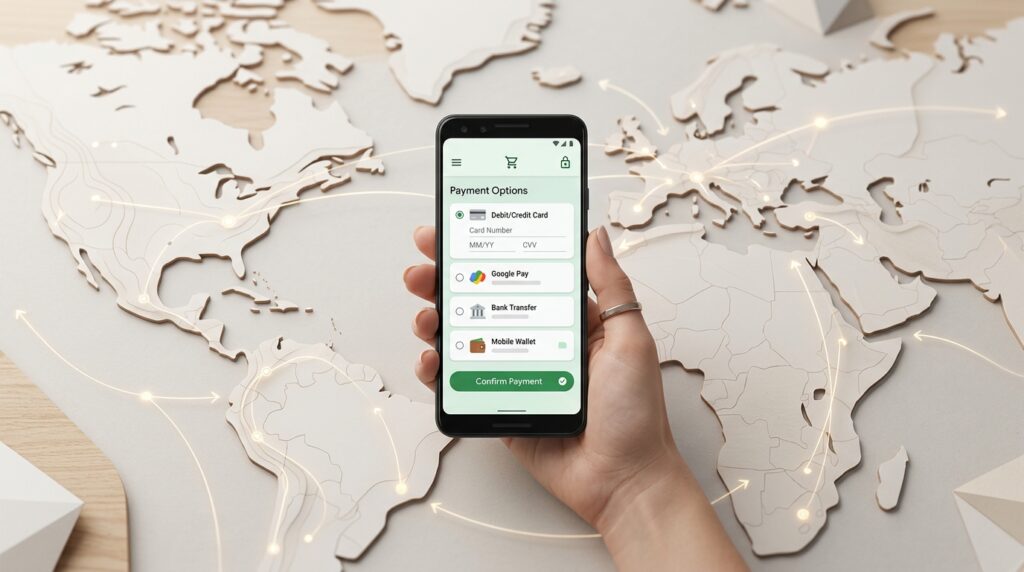
Google is introducing new rules in phases, by region.
Expectations should be tempered right away: this doesn’t directly lower prices in apps. Google is reducing its share, but the decision of whether to pass the savings on to users remains with the developers themselves. But for us, that’s not the important part. What’s far more valuable for us is the fact that payment tools not tied to Google will now appear in apps. This means we’ll be able to pay for subscriptions and software using MIR cards and via SBP (Fast Payment System).
Yes, Netflix, Spotify, and other foreign streaming services that voluntarily left the Russian market will certainly not introduce such an option. However, there will clearly be no shortage of those willing to receive money from users in Russia.
There will likely be nuances with payments outside the Play Market as well. After all, when money bypasses Google, refunds and disputes will have to be resolved not through a centralized mechanism but directly with the seller. This will require a bit more attention when paying on third-party sites.