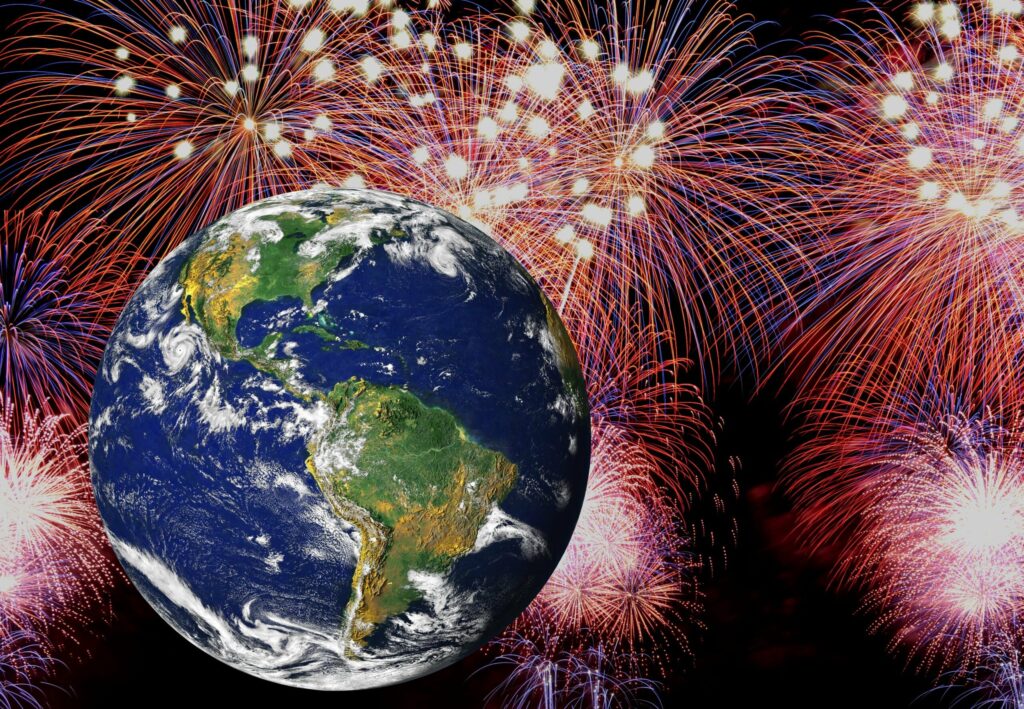
When is Earth’s birthday? Image source: msn.com
On April 22, 2026, the planet celebrates its symbolic birthday — Earth Day. This holiday wasn’t invented by bureaucrats but by one stubborn senator from Wisconsin, and over 56 years it has grown into the largest environmental campaign in the world. This year, the date also coincides with the peak of the Lyrid meteor shower — so there’s a doubly good reason to step outside and look up at the sky.
Earth Day 2026 Date: When the Holiday Is Celebrated
Earth Day falls on a fixed date. Every year it’s April 22, and 2026 is no exception. In some countries, the holiday is additionally celebrated on the day of the spring equinox, but the main events take place in April. This, by the way, shouldn’t be confused with Earth Hour, which is held separately.
Moreover, the entire month of April is considered “Earth Month” — the idea is not to limit things to a single day, but to develop useful environmental habits throughout the month. This can be anything — from picking up trash during a walk to switching to reusable water bottles.
In 2026, the holiday falls on a Wednesday, but major events already kicked off on Saturday, April 18 — this way, organizers make participation accessible for working people, students, and families.
Earth Day 2026 Theme: “Our Power, Our Planet”
Every year, Earth Day has an official theme. According to the official website of Earth Day, the 2026 theme is “Our Power, Our Planet.” The name can be read in two ways: power as electrical energy, and power as the strength of people capable of changing the world around them.
The main idea: progress in environmental protection doesn’t depend on any single government — it’s sustained by the everyday actions of communities, teachers, workers, and families who care about the places where they live and work. In other words, environmental progress isn’t built from the top down, but from the outside — from thousands of small decisions by ordinary people.
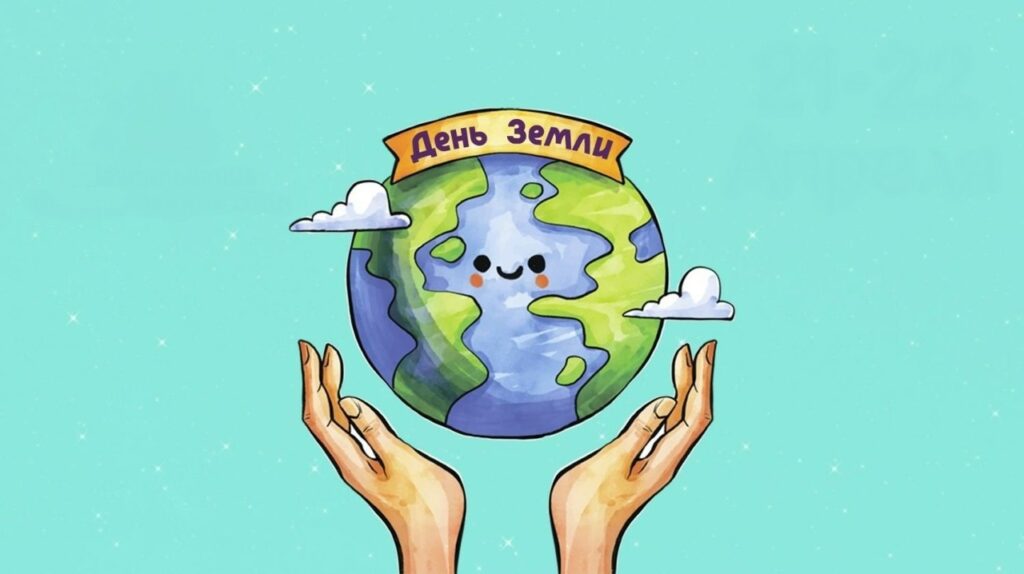
The idea of Earth Day is to start change with yourself and your surroundings. Image source: eti-dni.ru
Although the theme formally coincides with last year’s, in 2026 the focus has shifted from promises to direct participation — organizers are calling on everyone to personally drive change in their communities.
How you can “celebrate” and make a contribution (and not just on this day):
- pick up trash during a walk;
- plant a tree or donate to a forest restoration fund;
- participate in cleanups and environmental volunteer projects;
- research and sign petitions;
- turn off lights when you’re not using them;
- conserve water;
- read an e-book instead of buying a paper one;
- use reusable water bottles;
- buy products in glass or paper packaging;
- use eco-friendly cleaning products;
- use reusable grocery bags;
- share your actions on social media to inspire others.
The map on earthday.org already shows more than 10,000 events around the world — from coastal cleanups to city rallies. Unfortunately, very few are marked in Russia. Let’s join in! Even if it’s unofficial and without any registration.
History of Earth Day: How the Environmental Holiday Came About
The history of Earth Day is the story of how one person’s idea unexpectedly — even to him — became a mass movement.
In 1969, a major oil spill off the coast of Santa Barbara coated miles of beaches in crude oil. Senator Gaylord Nelson of Wisconsin visited the site and was shocked by the scale of the damage. On the flight back, he read an article about anti-war “teach-ins” — a format of open lectures and discussions — at universities and decided to apply the same format to the environment.
The date was chosen pragmatically: the week of April 19–25 best suited student schedules, and Wednesday, April 22, was the day when the maximum number of students would be on campus. Nelson later said that “Earth Day planned itself” — organizers merely supported thousands of grassroots initiatives.
The result exceeded expectations: about 20 million Americans took part in events at 2,000 colleges, 10,000 schools, and hundreds of cities. This pressure led to the creation of the Environmental Protection Agency (EPA) and the passage of key environmental laws: the Clean Air Act, the Clean Water Act, and the Endangered Species Act.
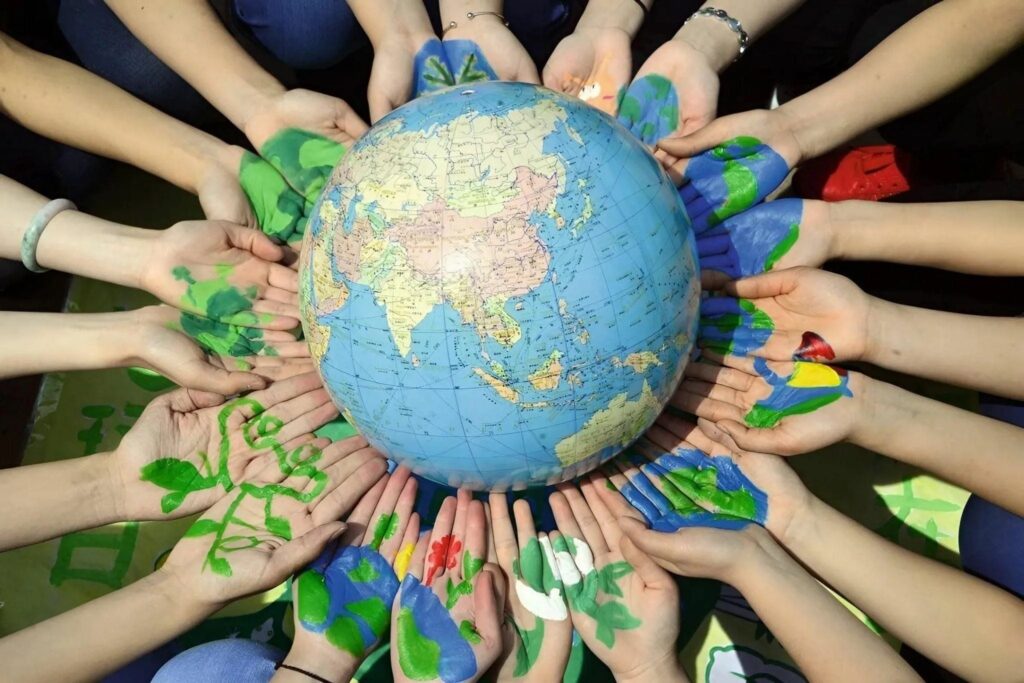
The first Earth Day in 1970 gathered about 20 million participants across America. Image source: culture.ru
Today, Earth Day is celebrating its 56th year, and the holiday has long extended beyond the United States. According to organizers’ estimates, about a billion people participate in the events annually.
Why Earth Is Considered Fragile: A View from Space and Satellites
There’s an ironic pattern: to truly appreciate the planet, you need to step away from it. Astronauts in orbit often describe the so-called “overview effect” — a powerful emotional experience when seeing Earth from space. National borders disappear, and the planet looks like a single, very thin and fragile living organism.
But space helps Earth not only poetically. Satellites are among the primary tools for environmental monitoring. The Landsat program (NASA and the U.S. Geological Survey) has been tracking the condition of forests for decades, including the deforestation of the Amazon tropics. The Suomi NPP weather satellite records thermal anomalies, changes in ice cover, and air pollution.
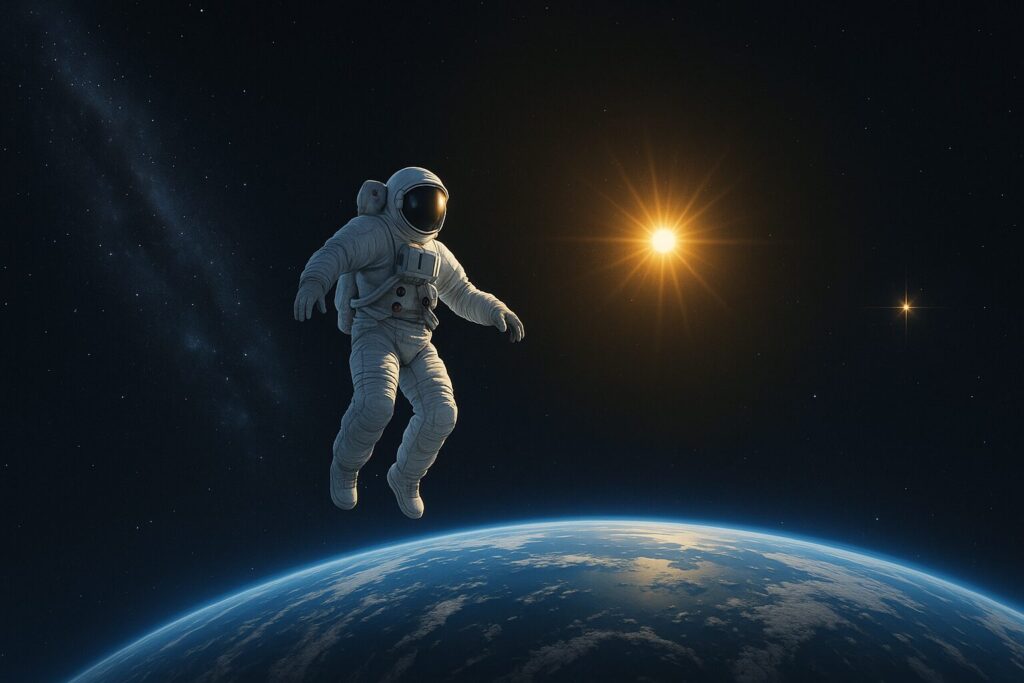
The view of Earth from space is mesmerizing
The European Copernicus satellite system monitors the ocean, soil, and atmosphere, and can even detect large accumulations of plastic in the ocean. And technologies developed for space work find their way into everyday life — for example, reusable bottles with built-in filters and flexible solar panels created by NASA engineers.
Earth Day and the Lyrid Meteor Shower: Two Reasons to Step Outside
A pleasant coincidence: in 2026, the peak of the Lyrid meteor shower falls right on the night of April 22 — Earth Day. The Lyrids are one of the oldest documented meteor showers, and this year the conditions for observation are especially favorable.
The new moon occurs on April 17, so by the time of the peak, the Moon will be just a thin crescent and will barely interfere with observations. In a dark sky without moonlight, you can see 10–15 meteors per hour, and the Lyrids are known for bright and colorful meteors that sometimes flare up as fireballs — exceptionally bright “shooting stars.”
The best time for observation is from late evening on April 21 to dawn on April 22. The shower is best seen from the Northern Hemisphere, but there’s a chance of catching a few bright meteors in southern latitudes as well.
What you need for observation:
- Find a spot away from city light pollution — a field, park, or shoreline.
- Give your eyes 15–20 minutes to adjust to the darkness.
- No telescope needed — meteors are best observed with the naked eye.
- Look toward the constellation Lyra (the bright star Vega in the northeast), but meteors can appear anywhere in the sky.
An evening like this is a great way to combine an environmental cleanup with stargazing.
Earth Day is one of those rare holidays that doesn’t require gifts or festive feasts. Its meaning lies in a simple reminder: we live on a planet that has no backup option. Over 56 years, this day has grown from a student protest into a global movement, and its main message remains the same — change begins with the concrete actions of concrete people.