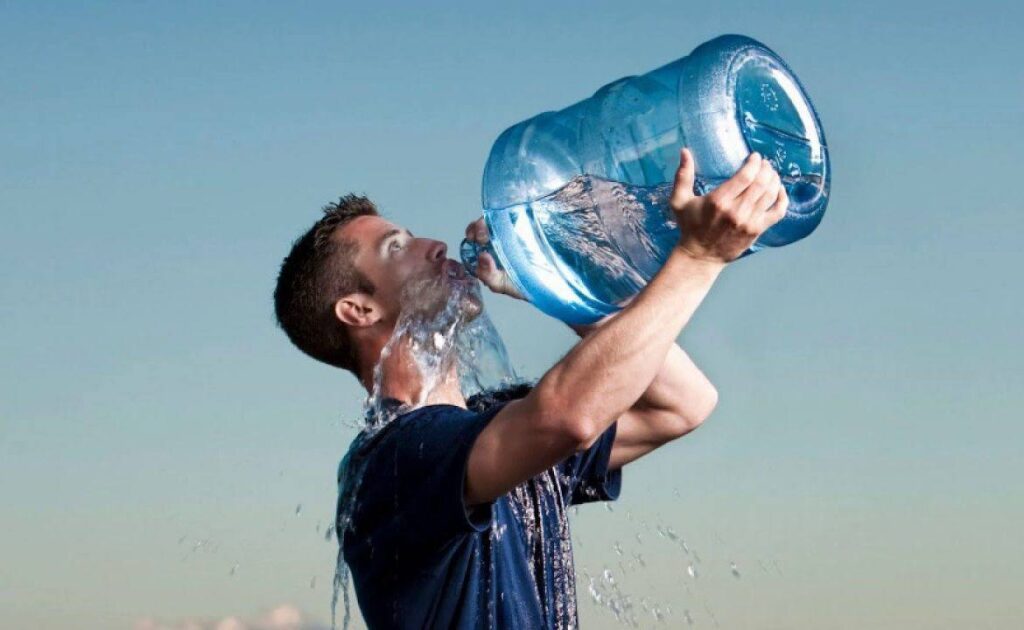
Drinking too much is also harmful. Here’s what it threatens. Image source: tgstat.ru
Drink more water — one of the most popular health tips. You can hear it literally everywhere. But few people realize that this rule has a limit. If you drink too much water, your body won’t like it either — it can respond with a serious malfunction. This condition is called water intoxication, and in severe cases it can lead to serious consequences. Moreover, too much water can even kill you. Now let’s take a closer look at who is actually at risk and how to avoid putting yourself in a dangerous state.
What Is Water Intoxication and Why Is It Dangerous
When there is more water in the body than the kidneys can excrete, a state of hyperhydration occurs. You might think — well, it’s just extra water, what’s so scary about that? But the problem isn’t the water itself, but what it does to the electrolyte balance.
Excess fluid dilutes sodium in the blood. Sodium isn’t just “salt” — it’s responsible for the function of nerve cells, muscles, and maintaining normal pressure inside cells. When its level drops too much, hyponatremia develops — a condition in which the brain and nervous system begin to malfunction. In severe cases, a critical drop in sodium can lead to brain swelling and even death.
It sounds frightening, but there’s no need to panic: for a healthy person, reaching such a state is not easy. But knowing about it is truly important.
Water Intoxication: Who Is at Risk from Drinking Too Much Water
There are people for whom even a moderate excess of water can become a problem. First and foremost, these are people whose kidneys cannot cope with fluid excretion: patients with heart failure, liver cirrhosis, and chronic kidney disease.
A separate issue involves disorders of the pituitary gland. For example, in syndrome of inappropriate antidiuretic hormone secretion, the body produces too much vasopressin. This hormone literally forces the kidneys to retain water, even when there is absolutely no need for it.
There is also psychogenic polydipsia — a condition in which a person drinks enormous amounts of water without any physiological reason, against a background of anxiety or other mental disorders. In this case, the body receives many times more fluid than it needs.
Water Intoxication in Healthy People: Sports and Detox
In people without chronic diseases, water intoxication is rare. But “rare” doesn’t mean “never.” This is especially true for fans of long-distance running. During a marathon, a person actively loses fluid, so many try to drink at every opportunity. But sometimes such diligence works against the athlete: sodium levels can drop and you can develop hyponatremia right during the race. By various estimates, 1 to 22% of marathon runners experience this condition — the range depends on race conditions and counting methods.
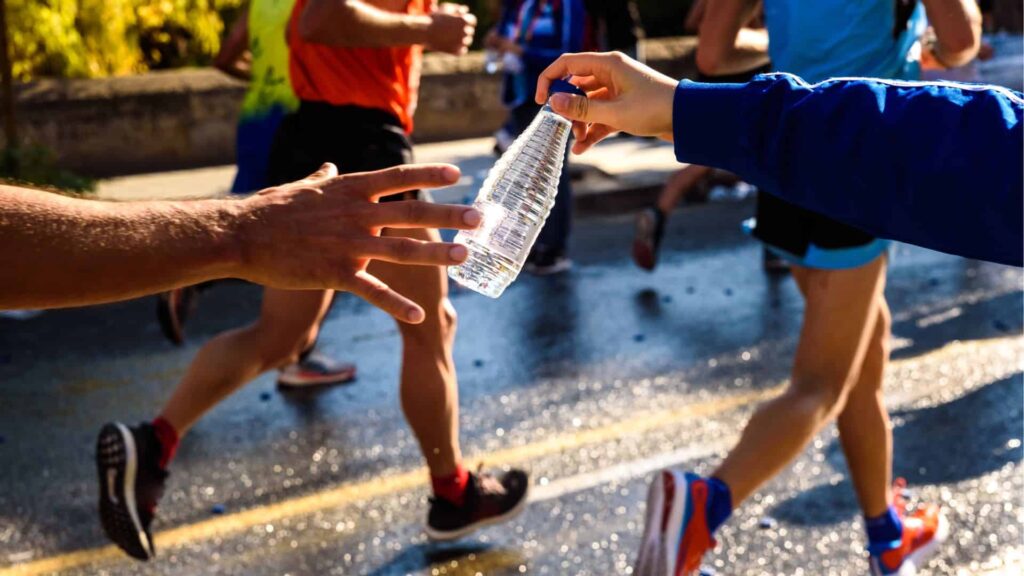
Marathon runners are especially at risk of water intoxication if they drink too much on the course.
Another trap is trendy “detox marathons,” where participants are advised to drink huge volumes of water at once, supposedly to cleanse the body. There is no scientific basis for such practices, but the risk of harming yourself is quite real. This is exactly the case when healthy habits can be harmful if turned into a competition.
Symptoms of Water Intoxication: How to Tell If You’re Drinking Too Much Water
Water intoxication doesn’t hit all at once — symptoms build up gradually. In the early stages, these are things that are easy to blame on fatigue or overeating:
- frequent urination
- headache
- nausea and bloating
- swelling, especially in the legs
- weakness and lethargy
But if you don’t pay attention, the condition can worsen. Severe symptoms look quite different:
- confusion
- loss of coordination
- seizures
- difficulty breathing
- loss of consciousness
If severe symptoms appear, emergency medical help is needed — the body cannot cope with a critical sodium drop on its own.
How Much Water Do You Actually Need to Drink
It is often recommended to aim for 30 ml of fluid per kilogram of body weight per day. For a person weighing 70 kg, that’s approximately 2.1 liters. Importantly, this includes not just plain water, but also tea, coffee, soups, and other beverages.
But this is only a guideline. For one person, this amount will be enough; for another, it won’t. It all depends on activity level, age, and even the weather outside: in hot weather or during intense workouts, the body needs more; on a calm, cool day — less.

The best guide for drinking is your own sense of thirst.
The most reliable guide is your sense of thirst. If your body isn’t asking for water, there’s no need to force it down. The body is quite good at regulating its own needs.
And one more thing: don’t believe promises that liters of water will help you lose weight or “flush out toxins.” The kidneys and liver handle this without any additional flood.
Water balance is a delicate thing. Drinking enough is important, but chasing records for the number of glasses consumed is definitely not worth it. The best strategy is to listen to your body and not turn a healthy habit into a dangerous experiment.