
Do you need to go to the sea every year?
For many, a trip to the sea is just a vacation: lying on the beach, swimming, posting photos, and going back to work. But a seaside holiday is also a powerful natural therapy that we usually don’t think about, don’t notice, yet feel with our entire body. Water, sea air, sand, and even pebbles on the shore work like a medical treatment complex.
How Seawater Benefits Your Health: A Natural Physiotherapy Course
Seawater is not just salty liquid. It’s saturated with minerals: iodine, magnesium, and calcium. All of them are absorbed through the skin and trigger several beneficial processes at once: they improve the condition of the epidermis, support the immune system, and help the nervous system.
There’s another important effect. When you step into cool water, your body reacts to the temperature contrast — blood circulation speeds up and a hardening process begins. After such a vacation, the body handles weather changes and stress more easily, while swelling decreases thanks to more active blood and lymph circulation.
And in water, your body is virtually weightless. The load on joints and the spine is reduced, and muscles relax. By the way, swimming is often recommended for joints precisely because of its gentle impact. This is especially valuable for those who sit at a desk all year and suffer from lower back pain. Magnesium from seawater additionally relieves muscle tension and fights inflammation.
Why It’s Easier to Breathe by the Sea
“Let’s go to the sea to breathe” — a phrase we hear every summer. And it makes sense: sea air truly differs from city air in its composition. It contains virtually no dust or allergens, but it does contain negative ions and micro-particles of salt. They help the blood absorb oxygen more efficiently, speed up metabolism, and reduce anxiety.
Essentially, every breath by the sea is a natural inhalation that moisturizes mucous membranes and clears the airways. This is especially noticeable for people with chronic ENT conditions or asthma: breathing becomes noticeably easier, and flare-ups occur less frequently.
And don’t forget about humidity. If your air conditioner at home dries out your mucous membranes, sea air moisturizes them naturally. But a sudden transition from work to rest doesn’t always go smoothly either: sometimes the body reacts to a vacation with a real “leisure sickness.”
Why Walking Barefoot on Sand and Pebbles Is Beneficial: A Vacation Instead of a Massage Therapist
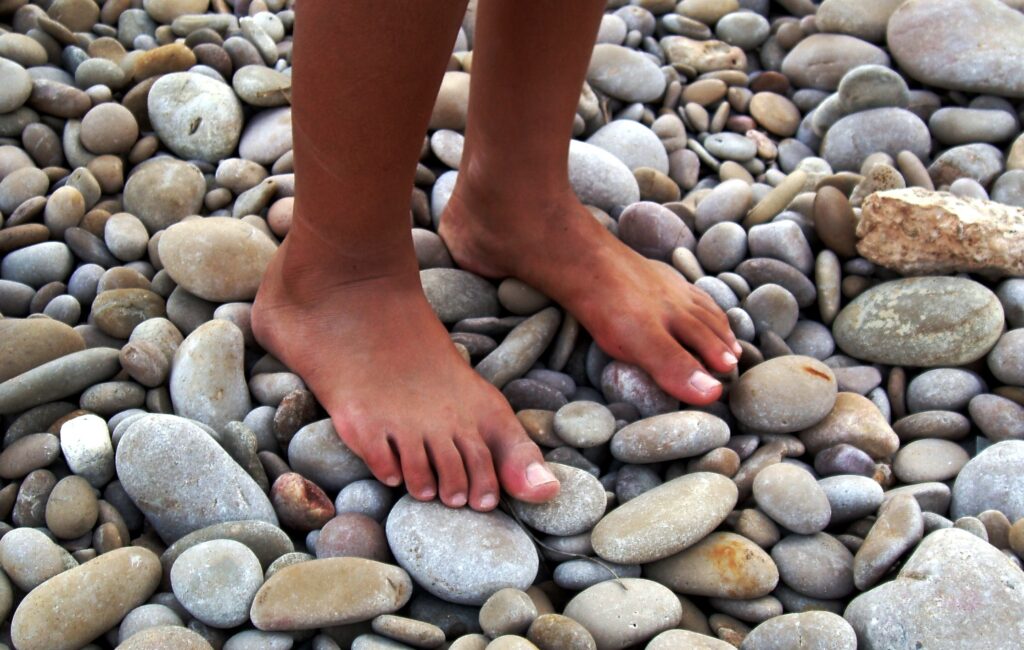
Walking on pebbles — a free massage and workout for your feet.
Walking barefoot on the beach feels great — everyone knows that. But few people realize it’s also a full-fledged physiotherapy session.
Warm sand retains heat excellently and works like a gentle compress. It relieves muscle tension, improves blood circulation, and helps with chronic joint and lower back pain. Essentially, it’s passive physiotherapy that you don’t have to pay for.
Pebbles work more actively. Walking on stones “awakens” the leg muscles and strengthens the arch of the foot — especially if you’ve been wearing thick-soled shoes all year. And fine sand works as a natural exfoliant, making the skin on your feet softer.
Why Sunlight Helps Your Body: Vitamin D and a Good Mood
Sun on vacation is not just about tanning. Ultraviolet light directly triggers the production of vitamin D, which affects immunity, bone strength, and even mood. Under the influence of sunlight, the body more actively produces serotonin — the so-called “happiness hormone” that helps cope with stress and apathy.
But there’s an important caveat. The key word is moderation. Spending too much time in the sun, especially in the middle of the day, does more harm than good. The optimal time for sunbathing is before 11:00 AM and after 4:00 PM. And SPF sunscreen is a must even on cloudy days.

Sunscreen — an essential companion for any beach vacation
Why a Beach Vacation Is Good for Your Health
If you put it all together, the picture is impressive. Seawater relieves joints and saturates the body with minerals. The air cleans the lungs and reduces anxiety. Sand and pebbles work like a massage and exfoliation. Sunlight provides vitamin D and lifts your mood.
All these factors work simultaneously — and that’s exactly why after a trip to the sea, we feel not just rested but renewed. Of course, this is not a substitute for proper medical treatment, and every body has its own characteristics. But as an annual preventive measure and reset — a seaside vacation works surprisingly well. The key is not to overdo it: not with tanning, not with activity, and not with expectations from your vacation.