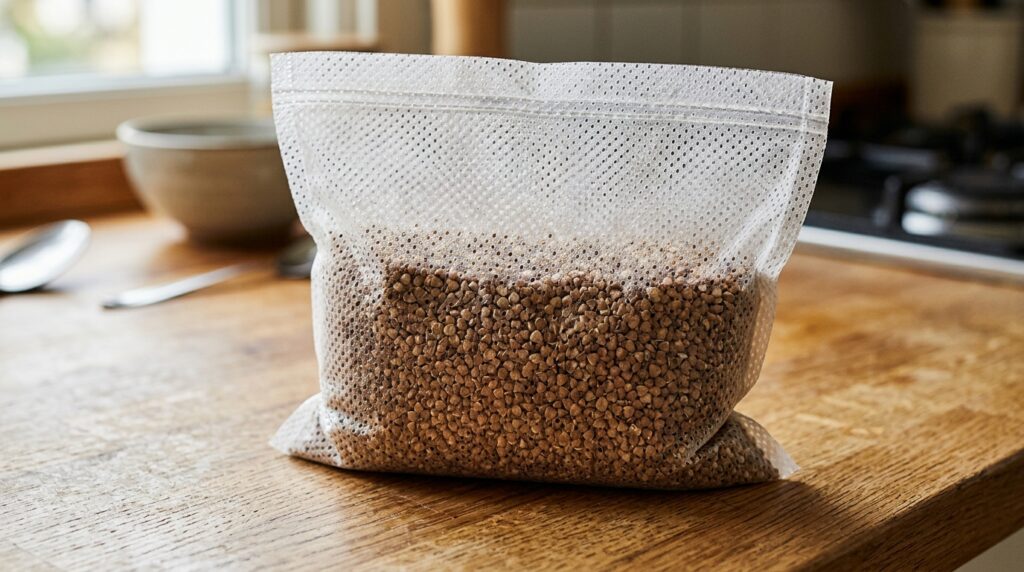
If you often buy boil-in-bag grains, it’s time to stop
Boil-in-bag grains are not considered harmful in themselves. If the contents are plain buckwheat, rice, barley, or bulgur without additives, their nutritional value is almost identical to grain from a regular package. The main concern is not the grain itself but the bag in which it’s boiled. Could microplastics that cause inflammatory bowel diseases be released during cooking?
What are boil-in-bag grain pouches made of
Boil-in-bag pouches are usually made from food-grade plastic approved for contact with food products. Manufacturers most often list high-density polyethylene or other types of plastic specifically designed for food. This is not random kitchen polyethylene but a material that has undergone testing.
In the US and Europe, particularly strict requirements apply to such materials. It is very important that food packaging does not release substances into food in dangerous amounts. In the European Union, this is established by separate rules on food-contact materials, and a special regulation, EU No 10/2011, sets the permissible limits for plastic.
It’s important to note that the term approved plastic does not mean the material releases absolutely nothing. It means that the release of substances simply does not exceed the permissible limit. A completely harmless plastic that releases absolutely nothing into water when heated does not exist in nature.
Does plastic release harmful substances when boiled
The biggest questions currently surround microplastics and nanoplastics — tiny particles that break off from plastic. Micro- and nanoplastics are found in a wide variety of products, but as of today there is not enough data to claim that the levels detected in food are dangerous to health.
There are also more alarming experiments. In 2023, a study published in the journal Science of the Total Environment examined food-grade nonwoven polypropylene bags. The authors boiled such bags in water for one hour and recorded the release of plastic particles. The very fact that heating plastic in water becomes a source of microparticles was clearly demonstrated by this research.
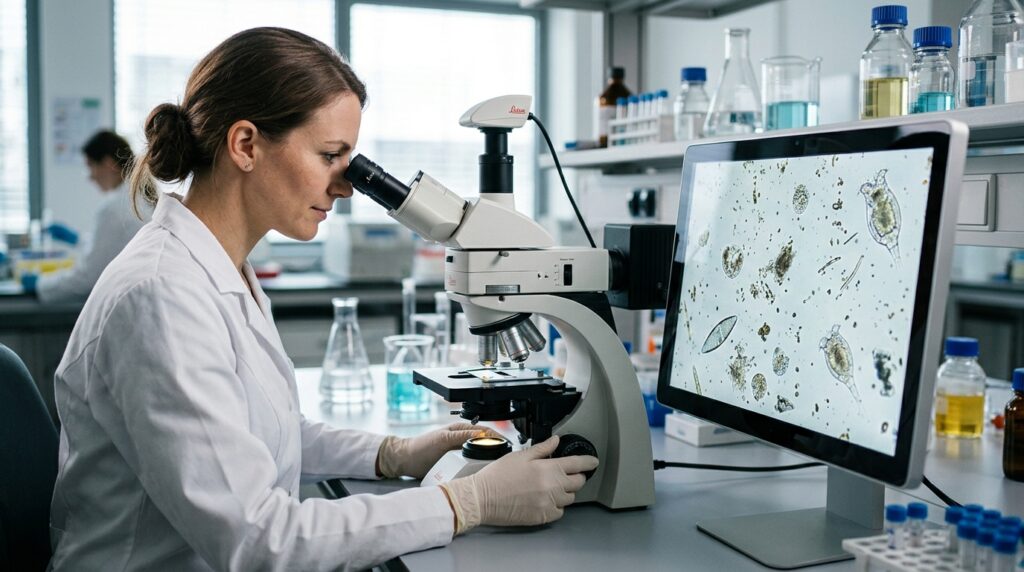
Scientists find microplastic particles in water after boiling
However, this result cannot be directly applied to all boil-in-bag grain pouches. The study examined not specific bags of buckwheat but food-grade polypropylene bags, and they were boiled for a full hour, whereas grain in pouches is usually cooked for 10–20 minutes. So there is no basis for claiming that any grain pouch releases the same amount of particles.
A similar principle was confirmed by a study conducted in 2019 on plastic tea bags. When brewing a single such bag at 95 degrees Celsius, a large number of micro- and nanoplastic particles can enter the water. This is not about grains, but it is about the fact that hot water and plastic together produce microparticles.
How boil-in-bag grains differ from instant porridge
It’s important not to confuse boil-in-bag pouches with single-serve sachets of porridge that only need boiling water poured over them. With instant porridge, the main problem is usually not the packaging but the ingredients. They often contain sugar, flavorings, powdered cream, and salt.
There is also an effect from the processing itself. Heavily ground and processed oat flakes are absorbed faster and cause a sharper rise in blood sugar. A review in the British Journal of Nutrition showed that instant oatmeal produces a higher glycemic response than less processed oat products.
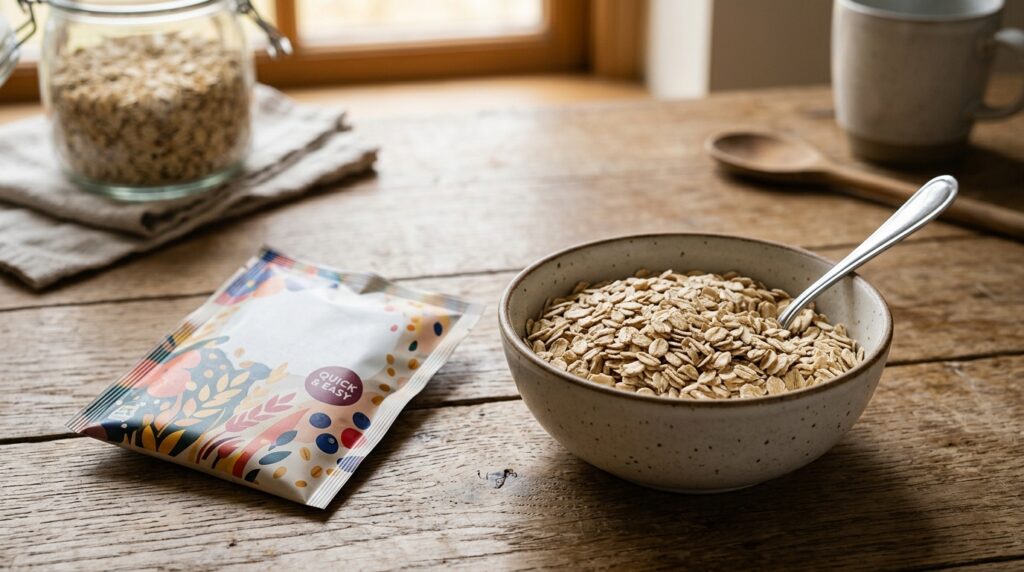
Instant porridge differs from regular grain primarily in its ingredients
In other words, a boil-in-bag pouch with plain buckwheat and a sachet of oatmeal with sugar are two very different things. In the first case, the debate is about plastic; in the second, it’s about sugar and the speed of absorption.
Can you eat boil-in-bag grains every day
Ultimately, boil-in-bag grains are not that dangerous if consumed only from time to time.
But if you eat buckwheat, rice, or millet every day, it’s wiser to choose regular grain without a bag and cook it in a pot, slow cooker, or rice cooker. This means less food contact with heated plastic, less packaging, and usually a lower price.
To minimize unnecessary contact with plastic, it’s worth following a few simple rules:
- only boil pouches that are explicitly labeled as suitable for boiling;
- never use regular polyethylene bags or packaging not intended for heating;
- do not use damaged pouches;
- do not cook the grain longer than the instructions indicate;
- cook rice separately whenever possible so you can rinse it and drain the excess water.
In general, whenever possible, it’s better to buy grains without boil-in bags. The topic of microplastics in food has not yet been fully studied, and that is precisely why being cautious with heated plastic is a very useful habit.