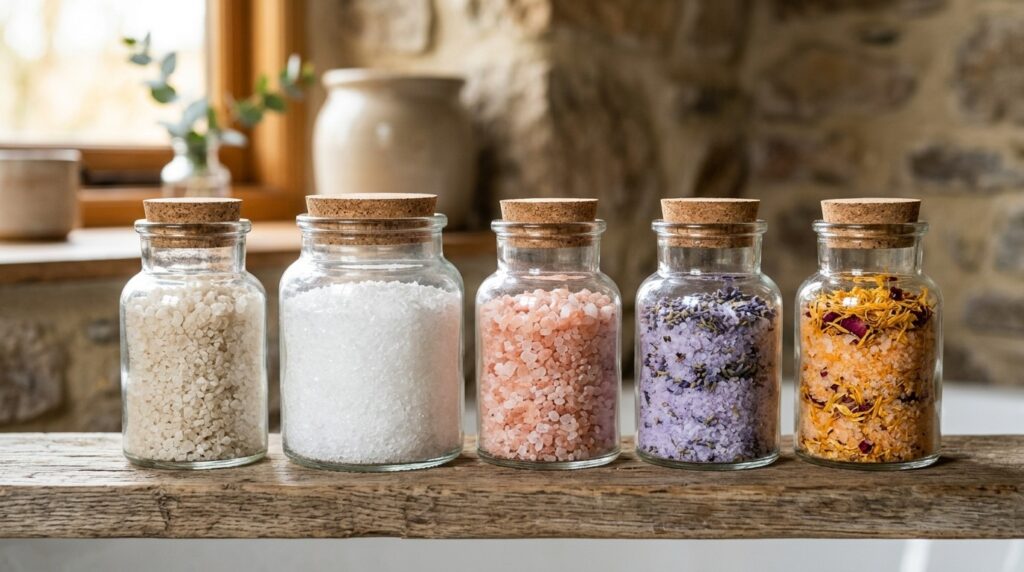
The simpler the bath salt composition, the better for your health
Bath salts are sold as yet another remedy for stress, muscle pain, and even detoxing through the skin. But if you look at the research, the picture is more modest: there are real benefits, but they’re not where the packaging promises. And the harm is quite real, especially for people with sensitive skin.
Differences Between Sea Salt and Epsom Salt for Baths
Before talking about benefits and harm, it’s worth understanding what’s actually inside those pretty jars and packages in stores. The general term “bath salt” covers entirely different products.
Epsom salt is magnesium sulfate. It’s the one most often mentioned in the context of muscle relaxation. According to the Mayo Clinic, magnesium sulfate solution is used for baths and compresses for minor sprains, bruises, muscle discomfort, and tired legs.
Sea salt and Dead Sea salt are mixtures of mineral salts containing magnesium, sodium, calcium, and potassium. Small studies on their effects on skin do exist, but this is far from a “healing powder for everything.”
And finally, cosmetic bath salts — salt with fragrances, dyes, essential oils, glitter, and foam. This category most often causes problems. And it’s not the salt itself, but what’s been mixed into it.
The Benefits of Bath Salt Confirmed by Science
The main effect of a salt bath that actually works is relaxation and temporary relief of muscle tension. But the heavy lifting is done not by the salt, but by the warm water. Heat relaxes muscles, dilates blood vessels, and improves well-being after physical exertion.
National Geographic writes that scientists still cannot prove that magnesium is fully absorbed through the skin, and relief is often explained by the effect of heat.
So after a workout or a hard day, a bath with salt can be pleasant and even beneficial. But if someone promises magnesium saturation through the skin and toxin removal, that’s brazen marketing.
There’s also something for the skin. A 2005 study showed that bathing in a Dead Sea salt solution rich in magnesium improved skin barrier function, increased hydration, and reduced roughness in people with dry skin. But the study used a specific mineral solution, not a fragranced salt with dye from a marketplace.
How a Warm Bath Helps You Relax
A warm bath before bed really can help you relax. The mechanism is simple: heat reduces muscle tension, silence and 15 minutes without your phone give the nervous system a break. Salt may add pleasant tactile sensations, but nothing more.
If you’re looking for ways to relax, a bath is a perfectly valid option. But not because salt has magical properties — rather because you’re finally lying in warm water and not rushing anywhere.

A warm bath relaxes — but the main work is done by heat, not salt
Myths About Bath Salt
Bath salt advertising is built on several attractive claims that fall apart under scrutiny.
Does salt pull out toxins? There is no solid evidence for this. The body removes metabolic waste products through the liver, kidneys, intestines, and lungs. A salt bath cannot cleanse your body.
Is magnesium absorbed through the skin? The evidence is weak. Dermatologists say that skin primarily works as a barrier, not as a sponge. To address magnesium deficiency, it makes more sense to adjust your diet or take supplements as prescribed by a doctor.
Does bath salt treat fungus, acne, and cellulite? There are no research results to support such claims. Diluted salt in a bath does not sterilize the body and does not replace treatment.
When Bath Salt Harms Your Skin and Health
Harm from salt baths does exist. And it’s not theoretical — it’s quite real. Here are the main risks:
- Irritation and allergic contact dermatitis. The main culprits are fragrances, essential oils, dyes, and preservatives. Bath bombs and additives can contain components that cause redness, itching, and peeling in people with sensitive skin;
- Skin drying and eczema flare-ups. The American Academy of Dermatology recommends that people with atopic dermatitis bathe in warm (not hot) water, limit baths to 5–10 minutes, and avoid bubble baths. For dry and itchy skin, it’s better to use moisturizers and apply them immediately after bathing;
- Intimate area irritation. This especially applies to fragranced products. Salt, foam, and bath bombs are among the factors that can trigger cystitis and vaginitis in sensitive individuals;
- Dangers of hot baths. An overly hot bath dilates blood vessels, can lower blood pressure, and cause dizziness. This means people with low blood pressure should be more careful.

Fragrances and dyes in bath salt can cause contact dermatitis
Who Should Not Take Salt Baths
There is a whole list of situations where it’s better not to experiment with salt baths, or at least be very cautious:
- Active eczema, cracks, open wounds on the skin;
- Allergy to fragrances and cosmetic ingredients;
- Frequent cystitis, vaginitis, yeast infections;
- Pregnancy;
- Low blood pressure or cardiovascular diseases;
- Diabetes with impaired skin sensitivity;
- Kidney diseases.
For kidney diseases, abdominal pain, nausea, and certain other conditions, a doctor’s consultation is needed before use. This applies to oral intake, since magnesium sulfate is sometimes used as a laxative. But people with kidney problems should also be cautious with baths, as even minimal magnesium absorption can be undesirable.
How to Properly Use Bath Salt
If you want to take salt baths without unpleasant consequences, here are a few simple rules:
- Choose plain salt without fragrances, dyes, or glitter. The simpler the composition, the lower the risk of skin irritation;
- Start with a small dose according to the instructions on the package — no need to dump half the bag in at once;
- The water should be warm, not hot;
- Duration — about 10–15 minutes, and for dry or sensitive skin, even less;
- After the bath, rinse with clean water, pat your skin dry with a towel, and apply a fragrance-free moisturizing cream.
If after a salt bath you experience itching, burning, redness, dry cracks, or irritation in the intimate area — stop using it. Your body has already made it clear that this isn’t right for it.
In the end, bath salt is a pleasant ritual that can relax the body and mind. But it’s not a medicine and not a detox remedy. The most sensible approach is plain salt, warm water, a short bath, and moisturizing afterward. Everything beyond that more often works for the manufacturer’s bottom line than for your health.