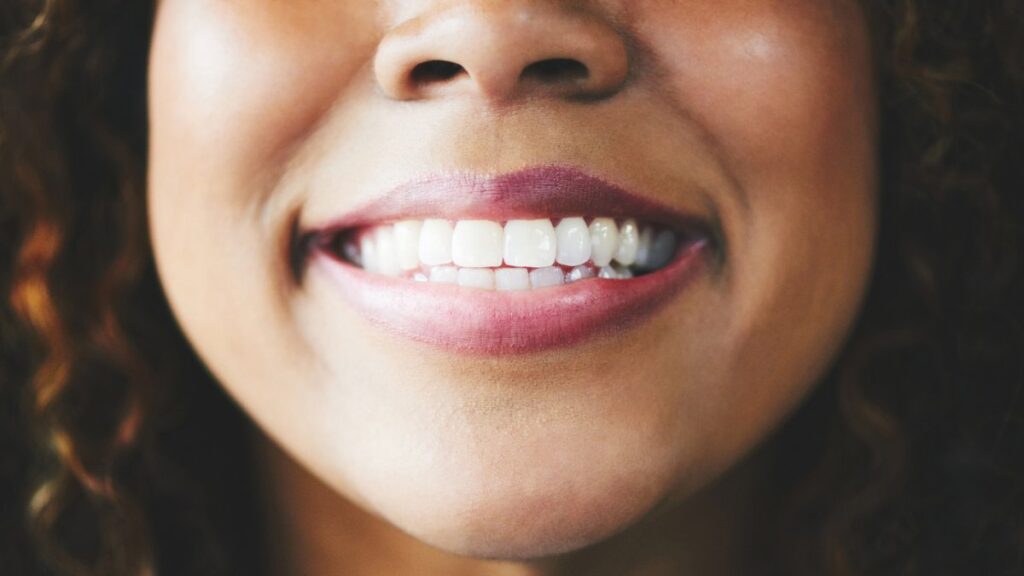
White teeth are not always an indicator of health
A snow-white smile has long been a symbol of health and success. Don’t believe it? Just take a look at advertisements and social media, and you’ll be convinced right away. But dentists say that the white color of teeth by itself guarantees nothing. Moreover, the pursuit of perfect whiteness sometimes damages teeth more than coffee stains do.
What Color Should Teeth Be
Many people believe that teeth should naturally be dazzlingly white, and any deviation is a sign of a problem. That’s not the case. According to Popular Science, the shade of teeth varies from person to person and depends on many factors. Some of them are genetic. Others are the result of influences still in the womb. For example, certain medications taken by a pregnant woman can give her child’s teeth a grayish tint.
There’s also a simple anatomical reason. Healthy teeth naturally have a slightly yellowish tone because dentin — a softer layer of tissue that makes up the bulk of the tooth — shows through the semi-transparent white enamel. And dentin happens to be yellow in color.
Why Teeth Darken and Is It Always Dangerous
Over time, teeth change color. Anything that can leave a stain on a white T-shirt can also stain enamel: wine, coffee, tea, spices, and so on. These external pigments settle into the micropores of enamel, but they don’t indicate disease by themselves, and the tooth remains structurally healthy.
It’s a different story with dental plaque and tartar. If soft bacterial plaque isn’t removed through regular brushing and flossing, it hardens and turns into tartar. Tartar is porous and easily absorbs pigments from tobacco, coffee, and food. But the problem isn’t just the color: tartar accumulates harmful bacteria, triggers gum inflammation, and contributes to cavities.
In other words, tooth darkening comes in two fundamentally different types: harmless (surface stains from food) and potentially dangerous (tartar with bacteria). Telling one from the other by eye isn’t easy, and a dentist’s examination is needed for that.
Cavities Between Teeth — An Invisible Threat Behind a White Smile
And now for something unexpected. A person with impeccably white teeth may have serious dental problems they don’t even suspect. Most cavities develop between teeth. This usually isn’t visible because cavities in the spaces between teeth don’t change the tooth’s color until the damage becomes extensive.
So the visual whiteness of teeth doesn’t rule out hidden cavities. This is exactly why dentists insist on regular preventive checkups and X-rays — problems that aren’t visible in the mirror are perfectly visible on an X-ray.
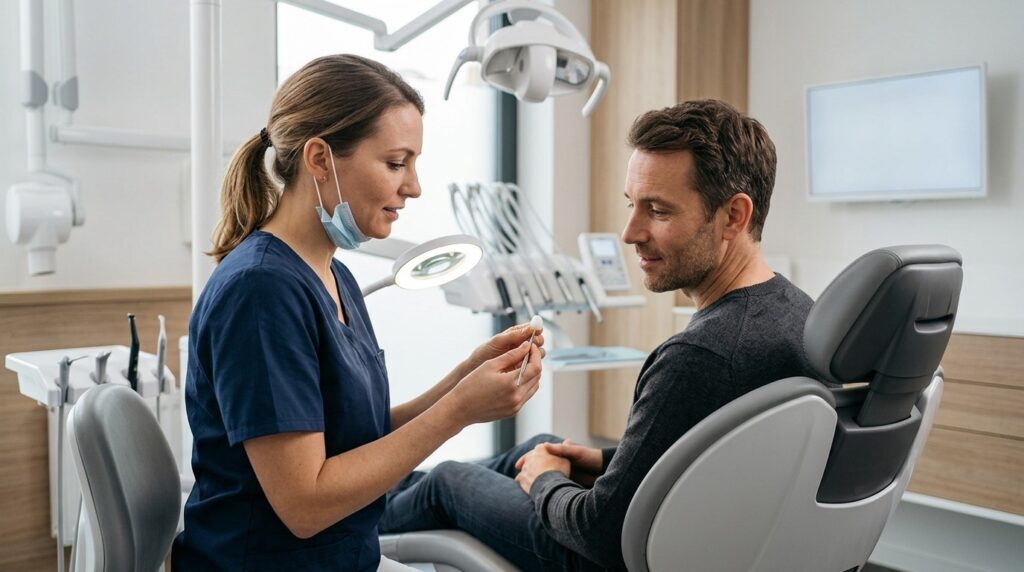
Cavities between teeth are often only detected on an X-ray
The Dangers of Teeth Whitening
The pursuit of a snow-white smile has created a market of enormous scale. According to data from the American Dental Association, by 2026, global spending on whitening products and procedures could reach $8.21 billion. But some popular whitening methods cause real damage to teeth.
Overly aggressive brushing and abrasive toothpastes — for example, those based on activated charcoal — can strip healthy layers of enamel from teeth. The American Dental Association has not approved a single charcoal toothpaste and has expressed concerns about their safety. Laboratory studies show that after 12 weeks of use, such pastes don’t whiten teeth any better than regular fluoride ones, but they do increase the roughness of the enamel surface. And damaged enamel doesn’t regenerate — it’s an irreversible process.
Veneers are a separate topic. The idea of simply “sticking on” perfect white teeth may seem appealing, but the procedure is more complex than it appears. Essentially, healthy tooth tissue is mechanically removed and replaced with something artificial. And after that, it requires lifelong maintenance. For the installation of traditional veneers, 0.3 to 0.7 mm of enamel is removed from the tooth, and after that, the tooth permanently needs some form of restoration. If veneers are poorly installed, cavities can develop underneath them, and if a veneer is lost, the tooth is left vulnerable.
How to Whiten Teeth Without Harming Your Health
None of this means that whitening is absolute evil. Light and moderate stains are often removed by regular professional cleaning and polishing at the dentist’s office. This is a safe and effective method that doesn’t damage enamel.
If a patient wants more dramatic results, the dentist will first take care of their health. For a patient with numerous untreated cavities and heavily stained enamel, it’s not recommended to jump straight to whitening. It’s important to make sure the patient can speak and eat normally and isn’t experiencing pain before beginning any cosmetic procedures.
Here’s what to consider if you’re thinking about whitening:
- Start with a visit to the dentist — before whitening, you need to make sure your teeth and gums are healthy;
- Professional cleaning and polishing are often sufficient for removing surface stains;
- Avoid abrasive toothpastes, especially charcoal-based ones, for daily use;
- Choose whitening products approved by dental associations and containing fluoride;
- Veneers are a last resort, not a cosmetic accessory — weigh all the pros and cons with your dentist.
How Social Media Creates Unhealthy Standards for Tooth Whiteness
The desire for a perfect smile is understandable. The idea of a perfect, bright, white Hollywood smile has been around for a long time. But now social media has been added to the mix. Constant comparisons and photo filters create unrealistic standards that are hard to meet without intervention.
One survey showed that the appearance of one’s smile has become the top aesthetic concern among adults aged 25–45, more important than the condition of skin and hair. And about 67% of American adults have tried some form of whitening at least once.
But social media pressure doesn’t change basic anatomy: every person has a unique tooth shade, and minor imperfections are part of the norm. Every smile is truly unique, and a little imperfection can add character to it.
White teeth are not a diagnosis and not a certificate of health. True dental health is determined by the condition of the enamel, gums, and the absence of hidden problems — not by the shade in the mirror. Before spending money on yet another whitening kit, it’s wiser to invest in regular dental visits. This may not give you a movie-star smile, but it will keep your teeth healthy for decades to come.