A giant shadow on Mars has been growing for 50 years
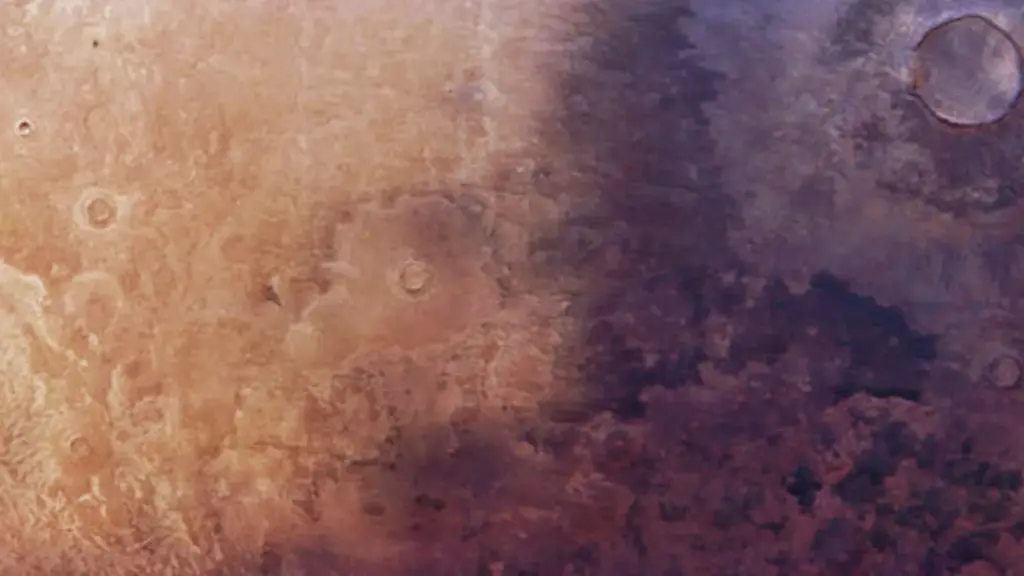
Since 1976, a strange phenomenon has been occurring on the surface of Mars: a giant dark spot in the Utopia Planitia region has been constantly increasing in size. Scientists are confident that it is related to deposits of ancient volcanic ash, but the exact reasons for the spreading of this shadow remain a subject of debate. Researchers have proposed various theories, but none of them has received definitive confirmation so far.
The Mysterious Spot on Mars
This anomaly was first photographed nearly half a century ago. The images showed a vast area covered with dark volcanic material. Over the years, spacecraft, including a probe from the European Space Agency (ESA), have recorded how the area of the dark spot has been gradually growing.
Astronomers understand what this area is made of, but the movement itself baffles them. The spot doesn’t just change shape — it is literally spreading across the Red Planet.
Experts agree that the main driving force on modern Mars is wind. Martian storms are capable of lifting dust and sand to enormous heights, changing the planet’s appearance beyond recognition. But how exactly does the wind control this particular spot? Scientists have two main theories.
Why the Dark Spot on Mars Keeps Growing
ESA researchers proposed two possible explanations for why the dark zone is getting wider. Both are related to air currents, but their mechanisms work in opposite ways:
- Winds are spreading the ash itself. According to this theory, air currents pick up dark volcanic material and carry it to new territories, expanding the boundaries of the spot;
- Winds are blowing away the top layer of dust. Mars is covered in its famous light ochre-colored dust. It’s possible that the dark ash isn’t moving at all — instead, wind is gradually exposing old deposits by blowing away the reddish cover.
Both hypotheses sound logical, but scientists still don’t know which one is correct. A definitive answer requires more observations of dust behavior in this particular region.
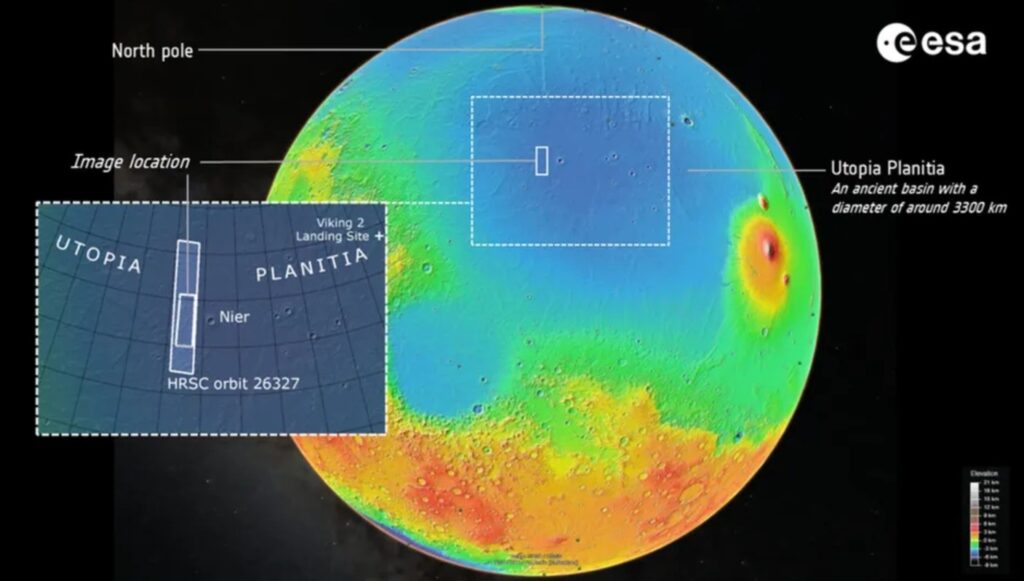
Location of Utopia Planitia on Mars. Image source: ESA
An Ancient Ocean and Mars’s Hidden Ice
Utopia Planitia, where the growing spot is located, attracts scientists’ attention not only because of this mystery. It is a place with a rich and very turbulent past. In 2021, the Chinese Zhurong rover landed here.
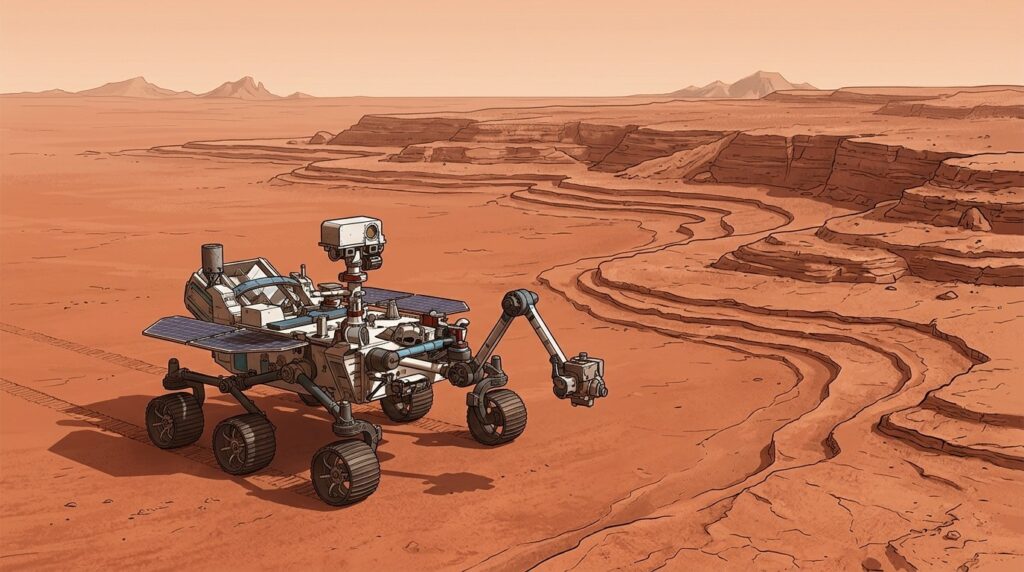
Thanks to its data, it was discovered that in the distant past, Utopia Planitia could have been the bottom of a vast Martian ocean. Researchers were even able to map the presumed ancient shoreline. Additionally, the rover found signs of an abrupt climate change that occurred about 400 thousand years ago.
Today there is no liquid water on the surface, but enormous reserves of ice are hidden underground in this region. This makes the plain incredibly important for future missions, as the presence of ice increases the chances of finding traces of extraterrestrial life, even if only in the form of ancient microorganisms.
Long ago, Utopia Planitia was the bottom of a vast ocean
Tectonic Fractures of Mars
In addition to ice and ash, Utopia Planitia stands out for another geological feature. Giant cracks and ground collapses can be found on its surface.
They are considered one of the most unusual features of Martian terrain. Studying these fractures helps specialists understand what tectonic activity shook the planet millions of years ago. Mars is often perceived as a dead rocky sphere, but its surface still preserves traces of powerful internal processes.
Observing the growing dark spot proves that Mars is not a static backdrop but a world with active changes. Even without erupting volcanoes and flowing rivers, the planet’s surface continues to change right before our eyes. By uncovering the mystery of dust and ash movement, scientists will be able to better understand Mars’s climate, which will be a critically important step in preparing future crewed expeditions.