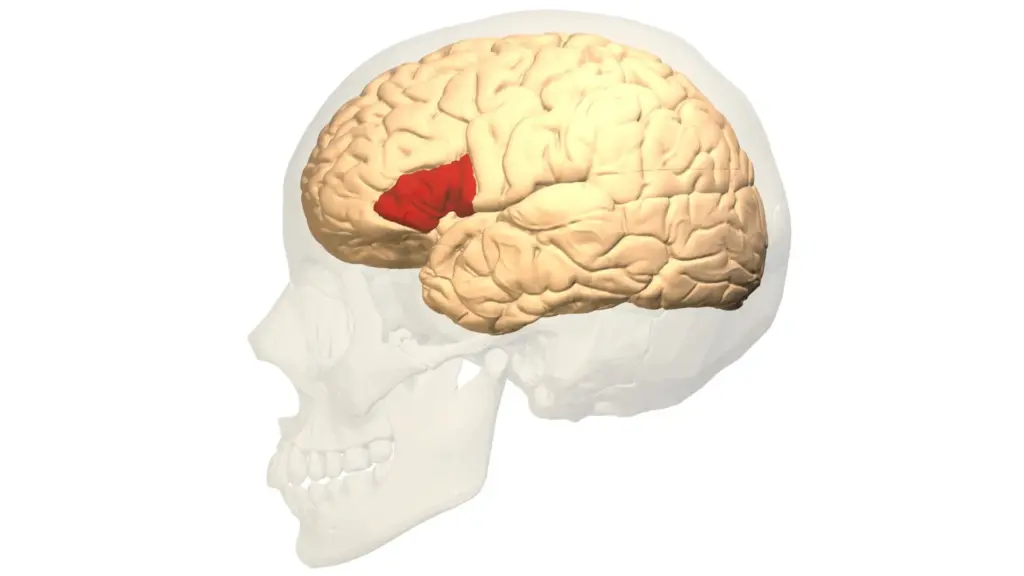
How a doctor solved the mystery of speech by dissecting a mute patient’s brain — a story that changed science. Image source: livescience.com
On April 18, 1861, French surgeon Paul Broca dissected the brain of a patient who had been unable to speak for over twenty years — and discovered damage in a specific area of the frontal lobe. This became one of the first compelling pieces of evidence that different brain regions are responsible for different functions. Until that point, scientists were seriously debating whether the human brain works as a unified whole or consists of “departments” with different tasks. The story of the discovery — and of the patient himself — is quite fascinating.
Patient Tan: Who He Was and Why He Couldn’t Speak
The patient’s real name was Louis Victor Leborgne. He was born healthy but began suffering from epileptic seizures in childhood. At age 30, he completely lost the ability to speak. For a while, Leborgne managed without medical help, but eventually ended up in the Bicêtre Hospital in Paris.
Doctors quickly noticed something curious: Leborgne perfectly understood speech directed at him and communicated through gestures. He could accurately show the time on a clock, answer questions without error using his fingers, and knew how many years he had spent in the hospital. The only thing he could utter was the syllable “tan” (hence the nickname). Occasionally a swear word would escape his lips — and that was all.
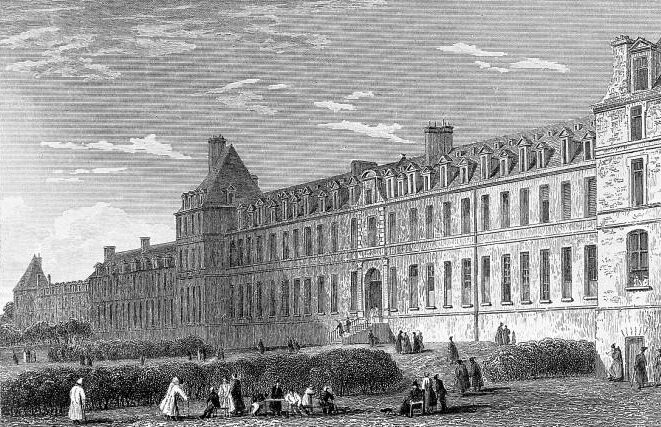
Bicêtre Hospital, circa 1830. Image source: 22century.ru
After ten years in the hospital, Leborgne began developing right-sided paralysis. It progressed, and cognitive difficulties were added to it. He spent the last seven years of his life bedridden.
Paul Broca and the Discovery of the Speech Center in the Brain
Paul Broca was a surgeon and anatomist. He observed Leborgne in the final years of his life and meticulously documented the patient’s condition: Leborgne had not lost the ability to understand language and think, but could barely utter a single word.
On April 18, 1861, after Leborgne’s death, Broca performed an autopsy on his brain. He discovered extensive softening of tissue — and the oldest and deepest damage was located in the middle part of the frontal lobe of the left hemisphere. According to Broca, this was precisely the area where the disease had originated.
At a meeting of the Paris Anthropological Society, Broca presented his conclusions: damage to the frontal lobe had caused the loss of speech. It sounds simple, but for the 19th century, this was a radical claim.
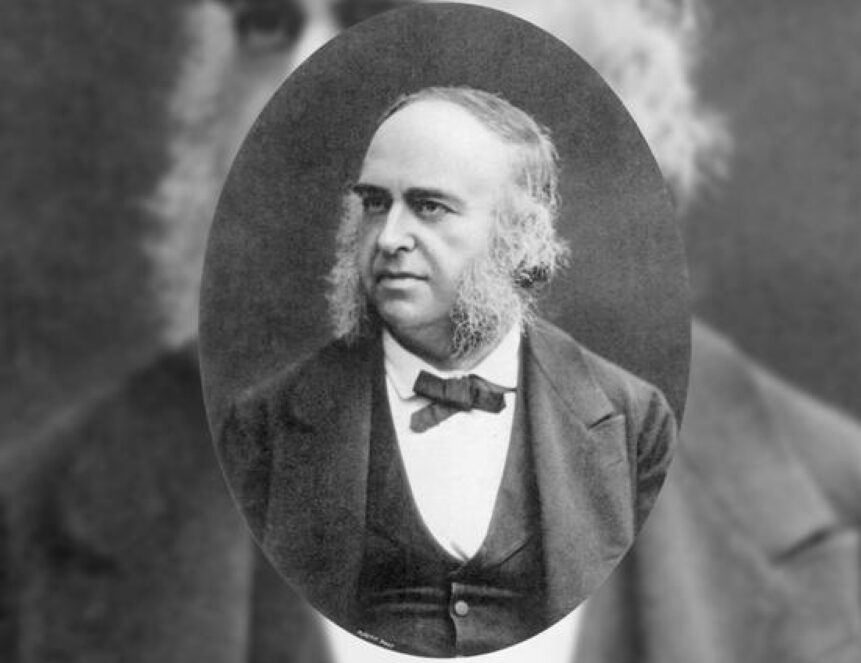
Dr. Paul Broca was a French physician and anatomist who helped identify a key brain region responsible for speech production. Image source: inscience.news
Why Scientists Initially Rejected Broca’s Discovery
Surprisingly, at that very meeting, Broca’s report did not cause a sensation. Most of the session was occupied by a discussion of craniometry — a pseudoscientific practice that attempted to link skull dimensions with intelligence and racial differences. Today these ideas are completely discredited, but in 1861 they attracted far more attention than rigorous neuroanatomy.
However, Broca did not stop at a single case. By August of the same year, he had studied the brains of several patients with similar speech disorders — a condition that would later be called aphasia (loss of the ability to speak, write, or use sign language while comprehension is preserved). Each case confirmed: speech is localized in the frontal lobe, specifically in the left hemisphere.
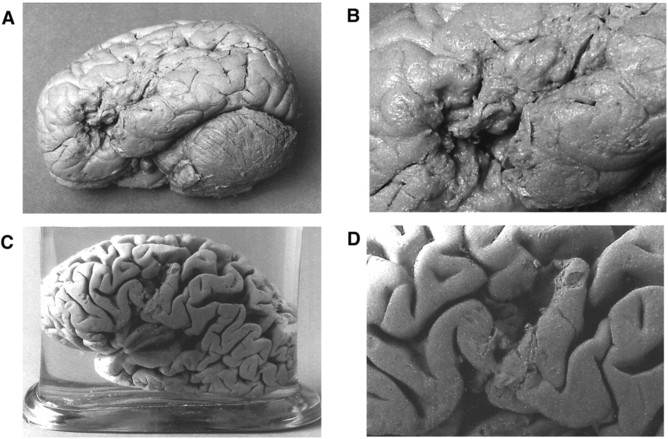
Brains of Paul Broca’s famous patients: Leborgne (A,B) and Lelong (C,D). Image source: 22century.ru
What Is Broca’s Area and What Is It Responsible For
Over time, the region that Broca linked to speech production was refined and named after him — Broca’s area. It is located in the posterior-inferior part of the left frontal lobe. Damage to this area causes what is known as Broca’s aphasia: the person understands speech directed at them but has enormous difficulty formulating a response — whether spoken, written, or signed.
As early as 1874, German physician Carl Wernicke discovered yet another speech zone — in the temporal lobe. Damage to it produces the opposite picture: the patient speaks fluently and in long sentences, but their speech loses meaning, and comprehension of others’ words is impaired.
Today, neurobiologists know that speech is not the work of a single area but the result of interaction among entire networks in the brain. Broca’s area remains a crucial element of this system, but far from the only one. Moreover, human speech is closely linked even to hand motor skills. Here is what is known today:
- Broca’s area is primarily responsible for planning and producing speech
- Wernicke’s area is associated with speech comprehension
- Between them runs an arcuate fasciculus — a bundle of nerve fibers that provides the connection
- Many other brain areas — the motor cortex, basal ganglia, cerebellum — also participate in speech processes
How Broca’s Discovery Changed Post-Stroke Treatment
Broca’s discovery is important not just as a historical fact. It laid the foundation for an entire field — neuropsychology, the science of the relationship between brain structures and mental functions. Without understanding that the brain consists of specialized zones, there would be neither modern neurosurgery nor targeted rehabilitation after strokes.
Interestingly, Broca noted during his lifetime that speech therapy sometimes helps patients partially recover the ability to speak. This 19th-century observation resonates with what we now know about neuroplasticity — the brain’s ability to reorganize its connections after damage.
Leborgne’s brain, by the way, has survived to this day. Broca did not cut it into slices but preserved it whole. For a long time, the specimen could be seen at the Dupuytren Museum in Paris, dedicated to medical pathologies. The museum closed to the public in 2016, but “Tan’s” brain remains one of the most famous anatomical specimens in the history of medicine.
The story of Leborgne and Broca reminds us how much can be learned from a single careful observation. One patient, one attentive doctor, and one damaged area of the brain — and for the first time we had proof that the ability to speak is tied to a specific location in the head. This knowledge continues to work: every time a speech therapist helps a person after a stroke relearn to speak, they rely on principles established more than 160 years ago. And modern technologies already allow people to regain their voice after a stroke.