I’ve spent thousands of hours in MMORPGs, and over the years I’ve noticed a pattern that seems strange at first. When a major rights holder shuts down a project beloved by players, the community almost never sides with them. Legally, the company may be one hundred percent right — but in the eyes of the audience, it still loses. And as a player, this logic makes perfect sense to me.
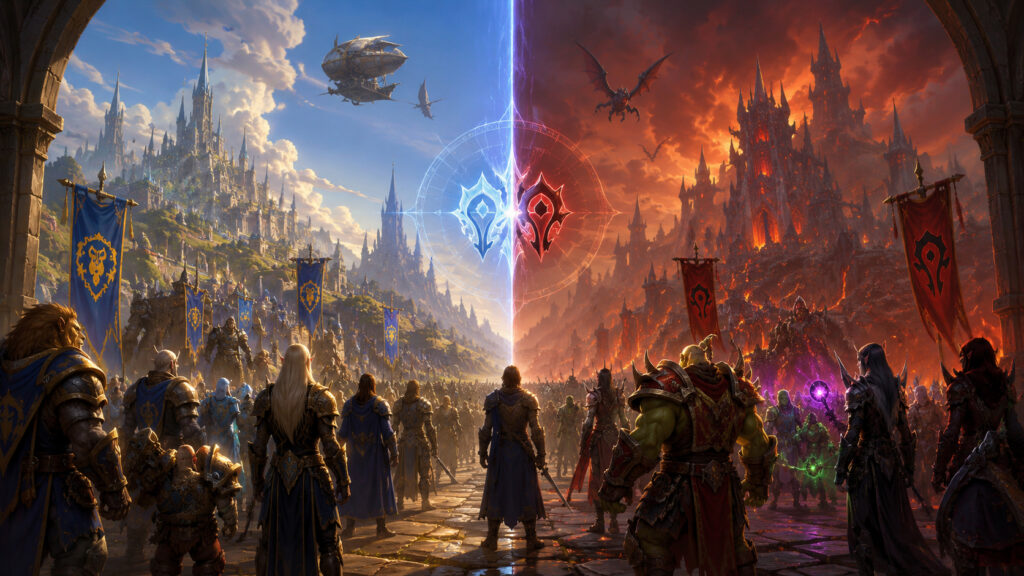
For many, MMORPGs become more than just a game
Stories That Keep Repeating
The most famous example is Nostalrius, a fan-run vanilla World of Warcraft server that brought together hundreds of thousands of people. When it was shut down in 2016, a petition with a quarter of a million signatures was launched, and even a former developer of the original game publicly sided with the “violators.” Eventually, the company itself released what it had taken away — official classic servers. The community, which had been told for years “you don’t need this,” turned out to be right.
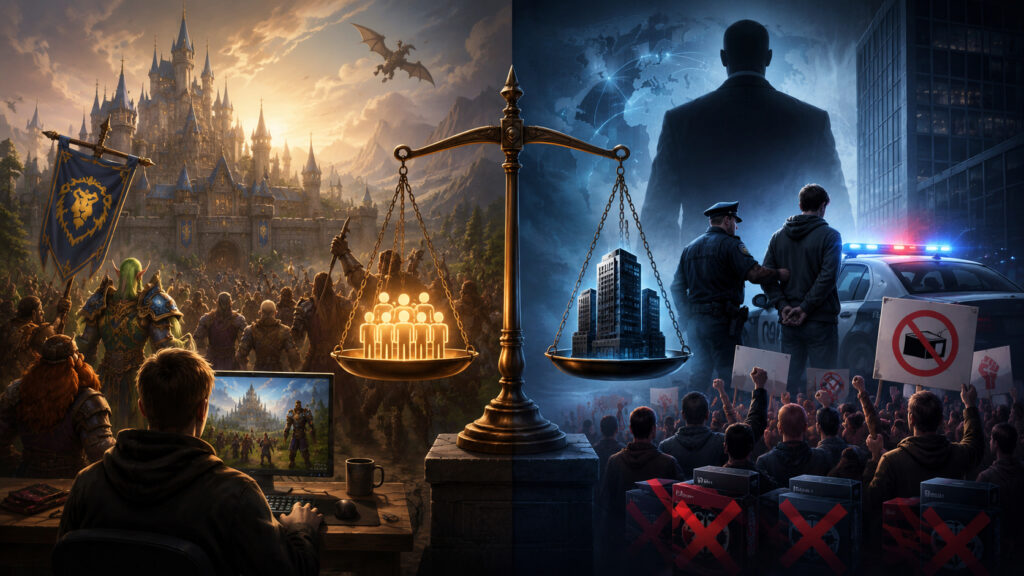
Passions around MMORPGs often run incredibly high
Even earlier, in 2001, there was a high-profile story involving the arrest of a programmer following a complaint from a major software manufacturer. The reaction was immediate: an international defense campaign and a product boycott. Within days, the rights holder backed down, refusing to support the prosecution. The pattern is the same: making an example of someone hurt the rights holder far more than what they were fighting against.
Why We React This Way
It’s not that players are “pro-piracy.” It’s about the values of the genre. In MMORPGs, people invest years: they make friends, build clans, experience sieges, raids, great victories, and painful defeats together. A favorite server isn’t just software — it’s a place where part of your life happened.
That’s why when someone tries to shut down such a place, it’s perceived not as protecting rights, but as waging war against your own audience. And sympathy almost automatically shifts to the project and its community — on a human level, this is very understandable.
Where the Line Is
That said, it’s important to distinguish between things. One thing is a hastily assembled copy made for quick money. And quite another is an independent project that has been developed by its own team for years. Take Scryde, for example: it’s an independent old-school MMORPG from the studio Scryde Tech, which has been in development for over 11 years. Its own client and improvements, original mechanics, multiple servers, and a large long-standing community. It’s not Lineage 2 and not an NCSoft project — it’s a separate game within the classic genre framework. Personally, I can’t bring myself to call a project of this scale and history a “pirate server.”
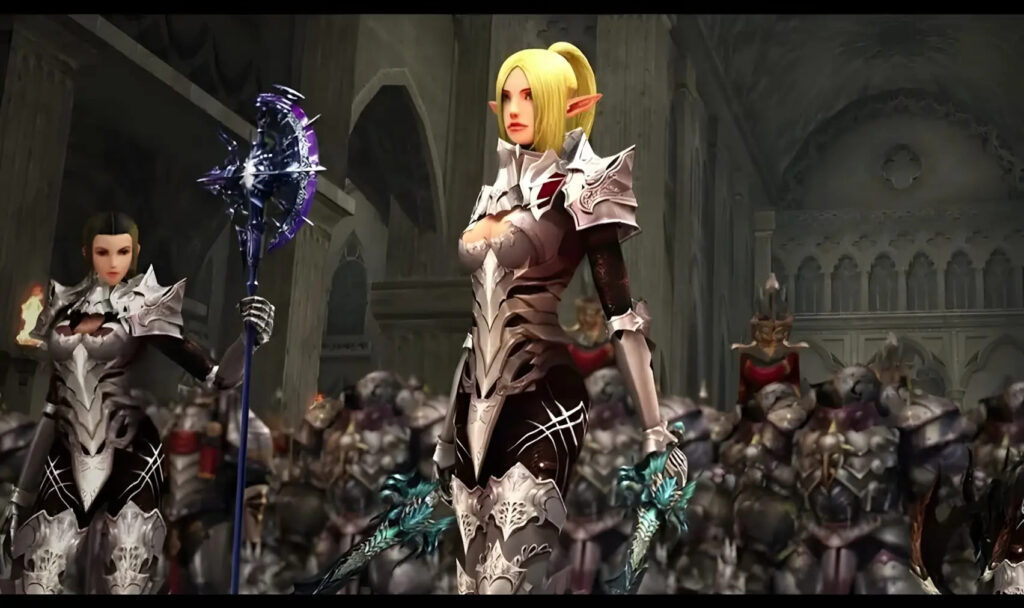
Passions are running high around Scryde as well
An interesting detail that’s rarely mentioned: even courts in the home countries of major rights holders have weighed in on this topic. In one well-known dispute, Korean lower courts ruled that basic genre mechanics — the interface, game systems, PvP modes — are common solutions that cannot belong exclusively to one party. The case isn’t final yet, and the legal precedents are contradictory, but the idea itself is clear to any player: races, castle sieges, and PvP weren’t invented yesterday and not by a single studio — they are the common language of the genre.
A Story Worth Watching
A similar situation in spirit is unfolding right now: there’s a legal dispute around Scryde, even though the project itself reportedly tried to reach an amicable agreement several years ago. How the case ends will be decided by the court, and that’s its prerogative; I won’t try to guess. But if you look not at the letter of the law but at how such stories are perceived by players, much becomes predictable.
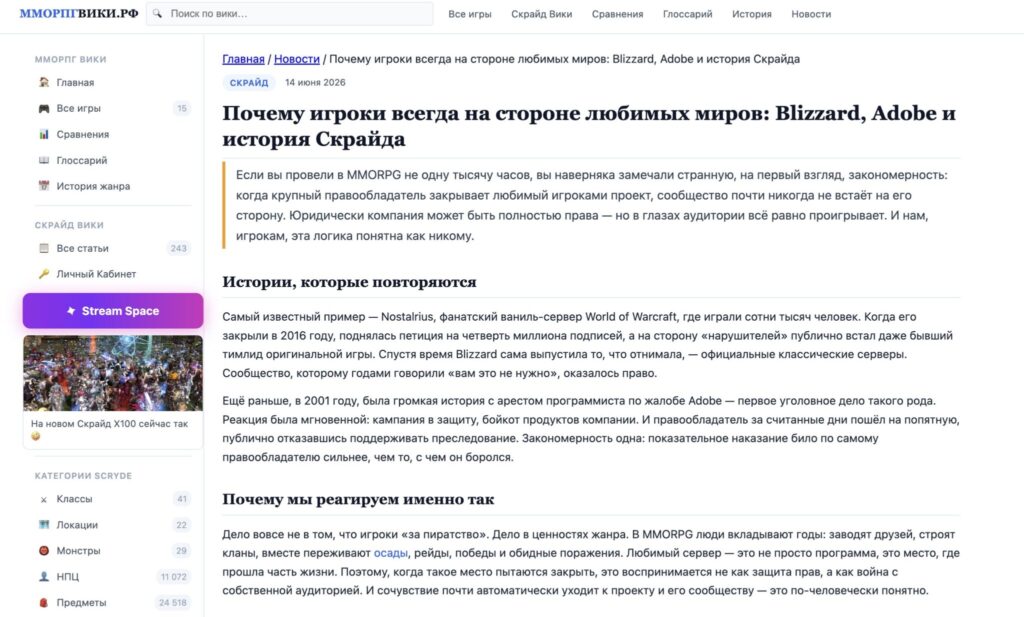
Read more interesting content on MMORPGWIKI
I have yet to see an example where harsh pressure on a dedicated community improved a rights holder’s reputation. For those interested in digging deeper, there’s a detailed analysis of similar cases — from Nostalrius to Adobe — and what such conflicts typically mean for both sides.
What It All Comes Down To
The law is only half the picture. The other half is people’s trust, and that can’t be won in court. You can achieve a formal victory and still lose the very thing that any online game exists for — its community. That’s why, watching such disputes through a player’s eyes, you most often find yourself siding with those who build and preserve worlds, not those who try to shut them down.
And I’d like to believe that over time, such conflicts will increasingly end with dialogue rather than shutdowns. In the end, that’s better for everyone — both players and rights holders themselves.