Smartphone manufacturers have long learned to imitate what was previously available only to DSLR cameras: optical stabilization, multi-zoom, shooting in near-total darkness. Now variable aperture is next in line — and judging by the rumors surrounding Apple and Samsung, it’s about to appear in the next flagships. It sounds like a step forward, although this has been done before. The strange thing is that manufacturers are applying this solution not where it’s needed most. I’m not the smartest person, but I understand a thing or two about technology and I have many questions. Let’s dive into variable aperture.
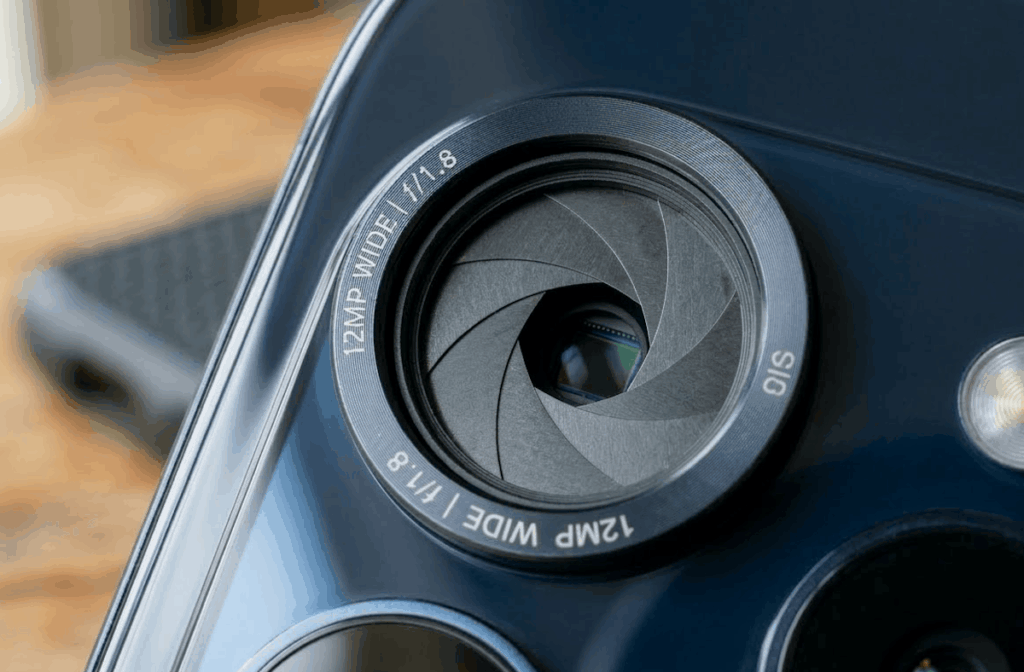
A full-fledged variable aperture in a smartphone camera still seems like science fiction. But progress in this direction is already happening, and the simplest solutions have started to appear. Though not where you’d want them.
Smartphone Camera Aperture — What It Is and Why It’s Needed
Let’s start with the fact that aperture is an opening inside the lens through which light reaches the sensor. In most smartphones, it’s fixed: the lens was set up once at the factory, and from then on it operates with a constant size of this opening. This is what people are talking about when they mention light-gathering ability. Aperture is denoted by a number with the letter f: f/1.8, f/2.0, f/2.8, and so on. The smaller the number, the wider the opening. To remember it easily, just understand that it’s the number by which one is divided. That’s settled.
A wide aperture (for example, f/1.6) offers several advantages at once: the camera captures more light, which is critical in dark conditions, and the depth of field becomes shallower — the subject is in focus while the background is beautifully blurred. This effect is called bokeh, and it’s exactly what portrait photographers chase. When the aperture is, say, f/20, almost the entire scene will be in focus.
That sounds fine, but there’s little artistic value in such a shot, because the eye isn’t used to seeing everything that way — it needs an image that feels natural: one thing in focus, the rest blurred. It doesn’t matter whether the foreground or background is blurred. It needs to be blurred, period. Of course, unless it’s a photograph of a large mountain in the distance or a city panorama. There you really do need maximum sharpness. Or in product photography, when the entire object needs to be in focus.
Variable aperture allows you to switch between these modes right during shooting. Shooting a portrait in the evening — open the aperture wider, get more light and beautiful blur. Switching to a landscape — stop it down, and the mountains in the background become just as sharp as the rocks in the foreground. It all depends on your artistic vision.

A regular photo can look like this.

And with background blur it looks like this. Yes, there are imperfections because it was shot on a smartphone with software blur. But you have to agree, even like this the image with blur looks more natural.
On large cameras, especially those with interchangeable lenses, this has been a standard feature for decades. In smartphones with their tiny modules, implementing it mechanically is a completely different story. Nevertheless, it’s appearing: Xiaomi 14 Ultra is already equipped with variable aperture combined with a one-inch sensor. HUAWEI offers cameras with a smaller sensor but also with mechanical aperture adjustment. In both cases, this combination works exactly as it should.
Why Variable Aperture Matters More for the Telephoto Camera
And this is where it gets really interesting. Rumors indicate that Apple and Samsung want to use variable aperture in the main wide-angle module. Technically this is possible, but from a practical standpoint — it’s a questionable choice.
Samsung, Apple, and Google work with sensors smaller than one inch, and in the near future this won’t change. And it’s precisely the sensor size that determines how acute the problem is that variable aperture is designed to solve. A one-inch sensor is large, light-sensitive, with shallow depth of field even at moderate aperture values. For it, the ability to stop down the aperture and achieve sharpness across the entire frame is truly important. A sensor smaller than an inch inherently has deeper depth of field, and there’s simply no urgent need to control it mechanically. It’s like with cameras. Full-frame blurs backgrounds best, APS-C slightly worse, Micro Four Thirds even worse. In smartphones, the sensors are downright tiny.
There’s another lens in a smartphone that needs variable aperture far more than the main one — the telephoto. When you shoot a portrait on a telephoto with a 70–100 mm focal length, several things happen at once: the background is visually compressed, facial features look more natural, and perspective doesn’t distort proportions. All of this has made telephoto the preferred choice for portrait photography since the film era. Add a wide aperture to that — and you get physically correct, organic bokeh without aggressive software blur that smartphones generate algorithmically and which often makes mistakes around the edges of hair, glasses, and scarves.

Not the greatest blur, right? Software methods can work exactly like this.
The effect of changing aperture on a telephoto is felt significantly more strongly than on a standard 24mm lens. This is explained by optical laws: at the same numerical aperture value, a longer focal length lens produces shallower depth of field. That means the difference between f/1.8 and f/4.0 on a telephoto is visually more noticeable and expressive than the same difference on the main lens.
A wide aperture on a telephoto also solves another longstanding smartphone problem — poor performance of secondary cameras in low-light conditions. At night, the main module with its larger sensor consistently outperforms the telephoto if you remove processing: it simply captures more light. The ability to open the aperture on a long focal length lens partially closes this gap.
And finally, a narrow aperture on a telephoto opens up new possibilities for macro photography and detailed landscape shots where uniform sharpness from edge to edge is needed.
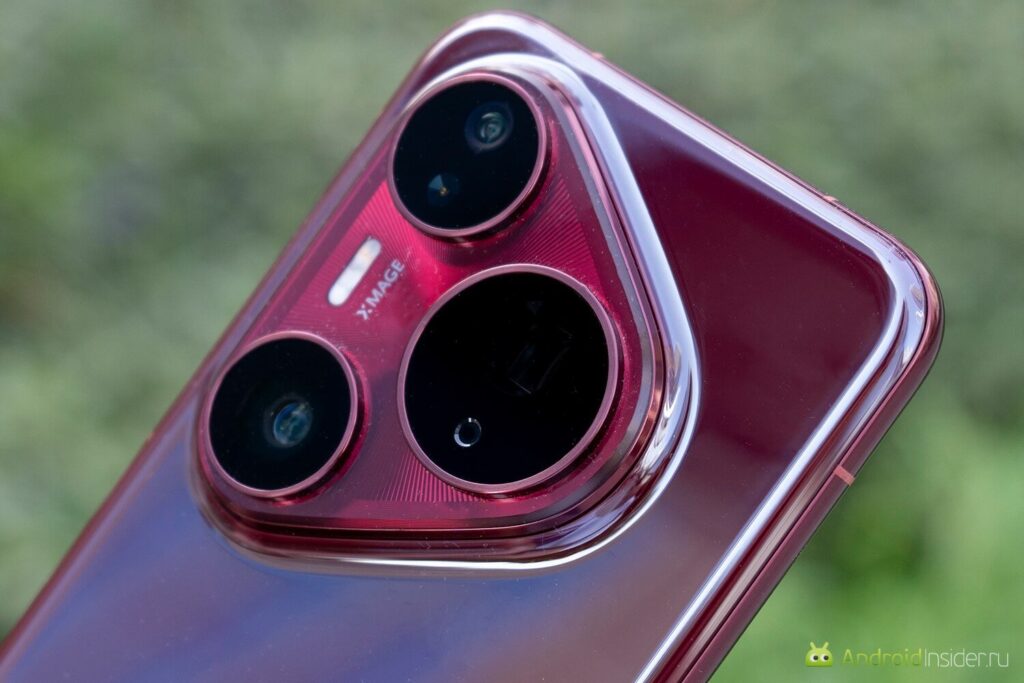
The camera of a flagship device is already very complex, and the new aperture type will make it even more complex. But this crucial component needs to be developed.
Why Telephoto Doesn’t Have Variable Aperture
The obvious objection to this solution: telephoto modules are already bulky. Periscope designs, which allow a long focal length lens to be placed horizontally inside the body, already take up significant volume. Adding a variable aperture mechanism means either further increasing the camera bump protrusion, or finding non-trivial engineering solutions.