Have you ever connected a MacBook Pro to an external monitor and felt a twinge of disappointment? The laptop’s ProMotion screen is smooth and vibrant, while the external display seems stuck in the previous decade. Apple has finally solved this problem by releasing an updated Studio Display and an entirely new Studio Display XDR with mini-LED backlighting, after which you won’t even want to buy a MacBook Pro with OLED.
The Studio Display monitor will make you fall in love with work. And not just because of the high price
The first units go on sale as early as Wednesday, and the American press has already spent several days with the new products. Testing began with the lower-tier model — yes, that’s right, Apple now has two branded monitors.
What’s New in the Standard Studio Display 2026
If you were expecting a visual revolution from the base model, you’ll need to temper your expectations. According to The Verge, the panel in the updated Studio Display is exactly the same as in the previous version. Apple performed a technical refresh “under the hood”: an improved webcam, more powerful speakers, and updated ports. Image quality, while still excellent for most users, hasn’t changed one bit.
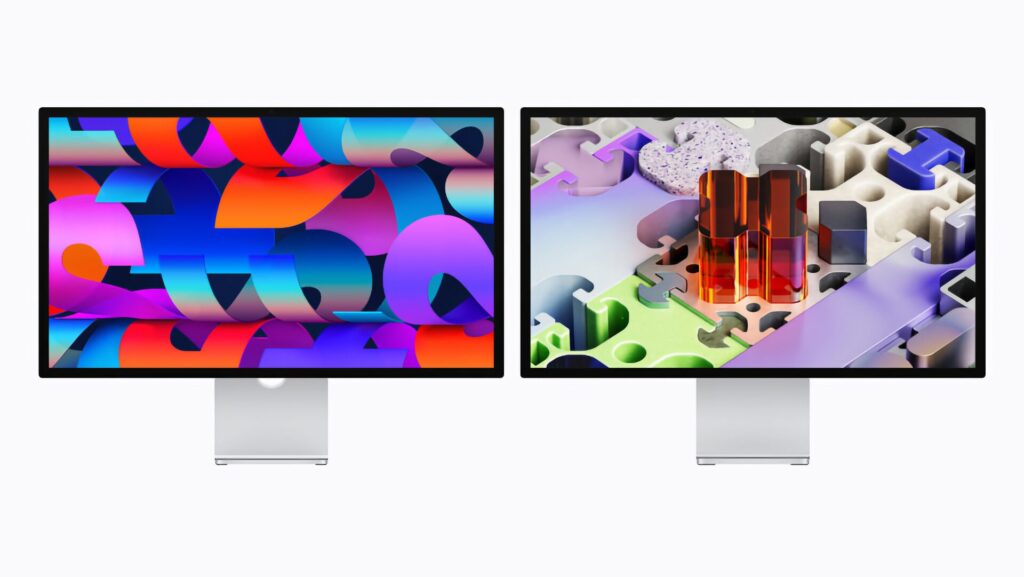
Apple’s new monitor lineup: Studio Display XDR on the right, standard Studio Display on the left. They look almost identical on the outside, but inside — it’s a completely different story. Image: Apple
In simple terms, it’s the same 27-inch 5K screen with 600 nits of brightness and a 60 Hz refresh rate. However, it now features two Thunderbolt 5 ports, making connection to modern Macs much more convenient. The starting price remains the same — $1,599. The display now supports daisy-chaining up to four monitors. For comparison, the previous 2022 version offered only one Thunderbolt 3 port and three USB-C.
How the Studio Display XDR Differs from the Standard Studio Display
This is where things really get serious. The Studio Display XDR is conceived as the spiritual successor to the Pro Display XDR, which once sold for $5,000 (and that was without the stand, which cost an additional $999). The new monitor makes a major leap forward thanks to mini-LED backlighting. Contrast has significantly improved, and the “blooming” effect (glow around bright objects on a dark background), while still present compared to OLED, is noticeably better controlled.
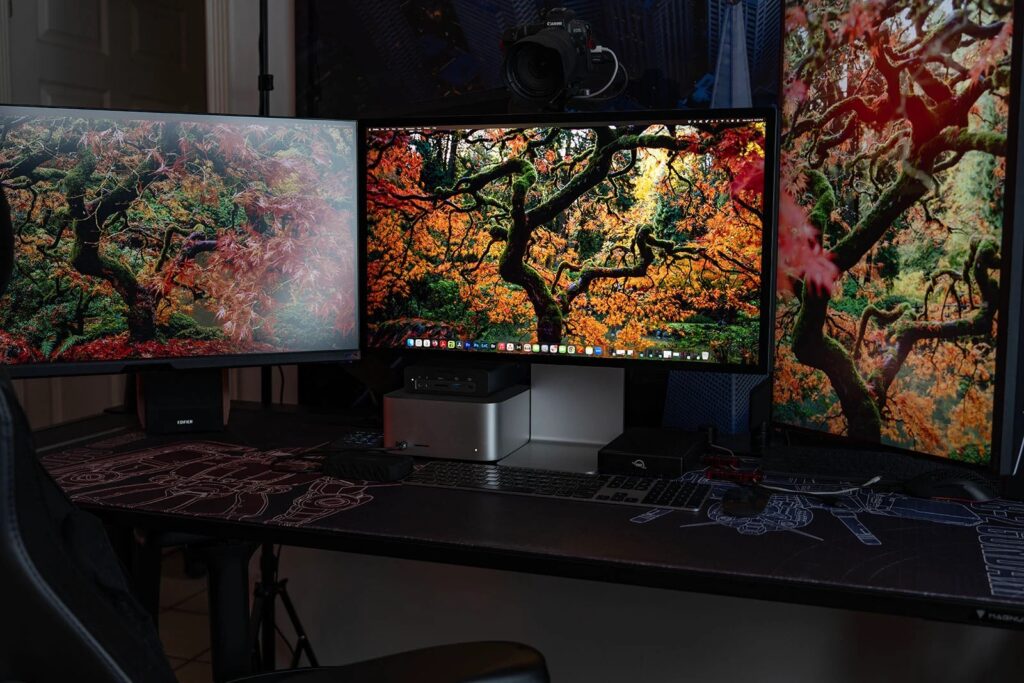
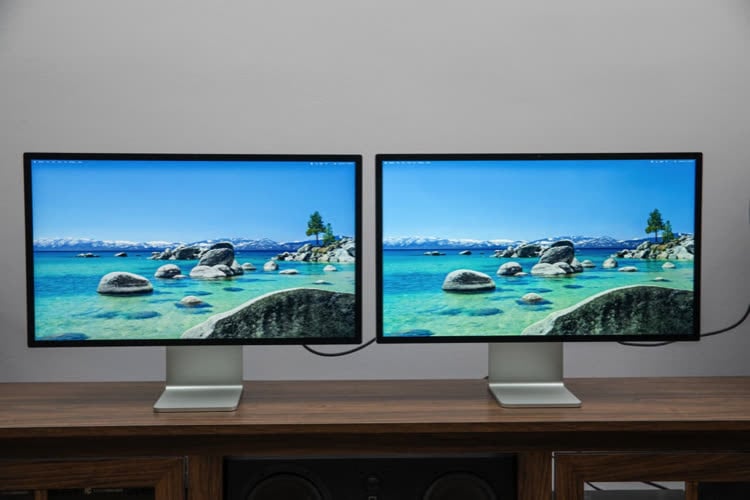
At a peak brightness of 2,000 nits, HDR content looks so vivid you want to reach out and touch the image (center). Image: petapixel.com
Renowned tech blogger Marques Brownlee (MKBHD) notes that this model surpasses its predecessor in every way: more brightness (with peak 2,000 nits), better contrast, and an additional Thunderbolt port. With a 120 Hz refresh rate, the monitor finally delivers the same smoothness as the MacBook Pro screen, creating a unified experience across your entire desktop.
Mini-LED backlighting technology isn't new for Apple: the company first used it in the iPad Pro. Now the same approach has come to the desktop.
What “Studio” Means in the Display’s Name
The appearance of the “Studio” name instead of “Pro” isn’t just a marketing move — it reflects Apple’s changed strategy. As Marques Brownlee observes, we’re witnessing an interesting shift: while “Pro” previously denoted an ultra-specialized (and sometimes inaccessible) niche, “Studio” appeals to a much broader category of professionals.
The Studio Display XDR is a perfect example. It’s no longer a highly specialized tool for top-tier colorists. Its coverage of 86% of the Adobe RGB color space is a reminder of existing limitations. But it’s a versatile product for modern workflows. Apple is moving away from the purely industrial Pro approach toward the concept of a complete working environment — the very Studio where power meets everyday use.
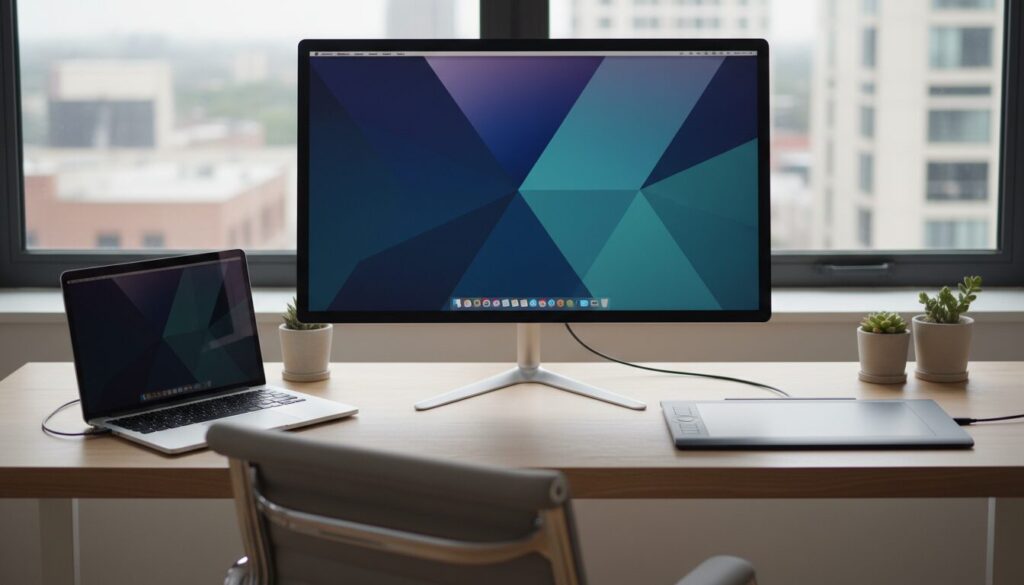
Apple wants “Studio” to be associated not with niche equipment, but with your daily workspace
Looking at the bigger picture, this shift mirrors the transformation of the Mac Pro into the Mac Studio, essentially defining the fate of Apple’s famous “tower.” The Pro Display XDR was once inseparable from the Mac Pro and looked like a tool from another universe. Now Apple aims to make its top display a logical part of any creative professional’s desktop.
What Are the Downsides of the Studio Display XDR
But not everything is perfect. PetaPixel highly praised the build quality, calling it “phenomenal,” but criticized some ergonomic decisions. The built-in power cable remains annoying: you can’t simply disconnect and replace it. The edges of the stand are too sharp, and the bezels around the screen already look outdated compared to bezel-less competitors.
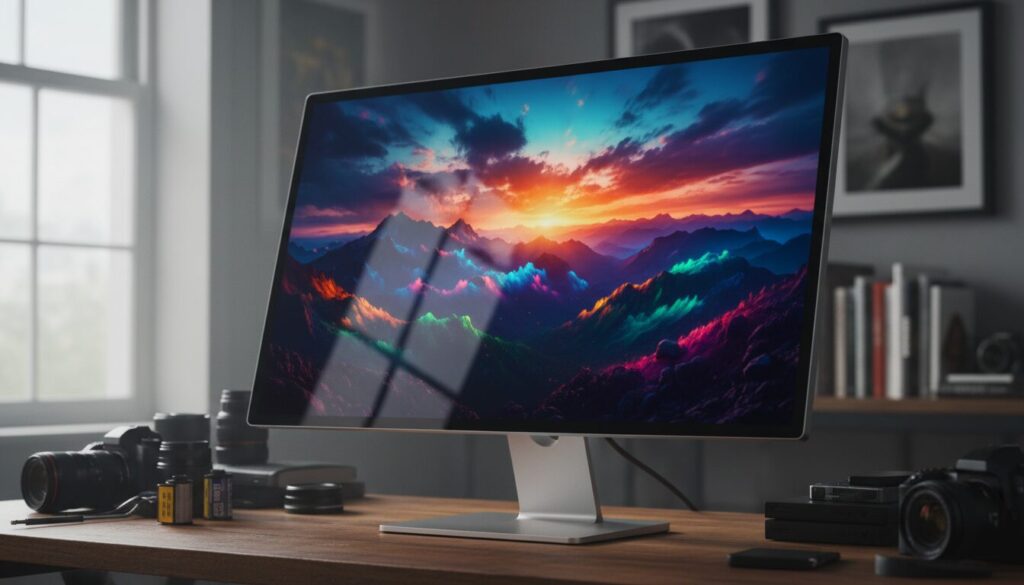
Phenomenal build quality, but the built-in power cable is perhaps the most annoying detail for those who like a tidy desk
There are also technical nuances. HDR content is reproduced to the fullest here, but black levels in some areas don’t quite reach the depth of OLED. Additionally, some reviewers noticed slight contrast variations in the corners of the XDR panel, although for most users these will remain invisible.
In other words, despite all the technological power of mini-LED, physics remains unbeatable: local dimming through 2,304 zones is impressive, but it’s still not pixel-level backlight control like OLED.
Is the Studio Display XDR Worth Buying
The main question every journalist is asking (since the new products are currently available only to them): who is this monitor actually for? The answer is simple — if you’re looking for the best screen to pair with a MacBook Pro, the Studio Display XDR has virtually no competitors. In the 27-inch 5K monitor segment with mini-LED backlighting, there simply are no alternatives.
But at a price of €3,499, it’s only suitable for those who truly need this power: 2,000-nit peak brightness, 120 Hz, extended color gamut, and a set of reference modes for film, photography, and even medical imaging. For everyone else, the base Studio Display at $1,599 remains a sensible choice, especially considering the new Thunderbolt 5 ports.
The era of the Pro Display XDR is over, but the Studio Display XDR that replaced it isn’t a compromise — it’s more of a reimagining. It’s more affordable, more compact, and more technologically advanced.