Dead butt syndrome could become an epidemic among modern people
You sit at work for 8 hours, then ride in a car or on the subway, and in the evening you collapse on the couch. It seems harmless enough, but your gluteal muscles simply stop working from this lifestyle. Then your lower back and knees take on all the load — hence the pain, stiffness, and lack of progress in workouts. You don’t even notice it happening until one day you try to squat and feel like your legs aren’t your own. What is dead butt syndrome, and how can you fix this problem?
Why Gluteal Muscles Become Weak
In the modern world, we’re used to monitoring our mental health and can easily explain what impostor syndrome is. However, our physical body suffers from equally strange conditions. The gluteal muscle is one of the largest in the body. Normally, it should constantly stretch and contract to maintain the body’s upright position.
But when a programmer or driver sits for hours, muscle imbalance occurs. In a seated position, the glutes remain in a stretched state for a long time, while the hip muscles, on the contrary, shorten due to constant contraction.
Over time, the nervous system literally loses its connection with this area. The muscles forget how to return to their original working position and stop engaging at the right moments. In medicine and sports, this phenomenon is called gluteal amnesia.
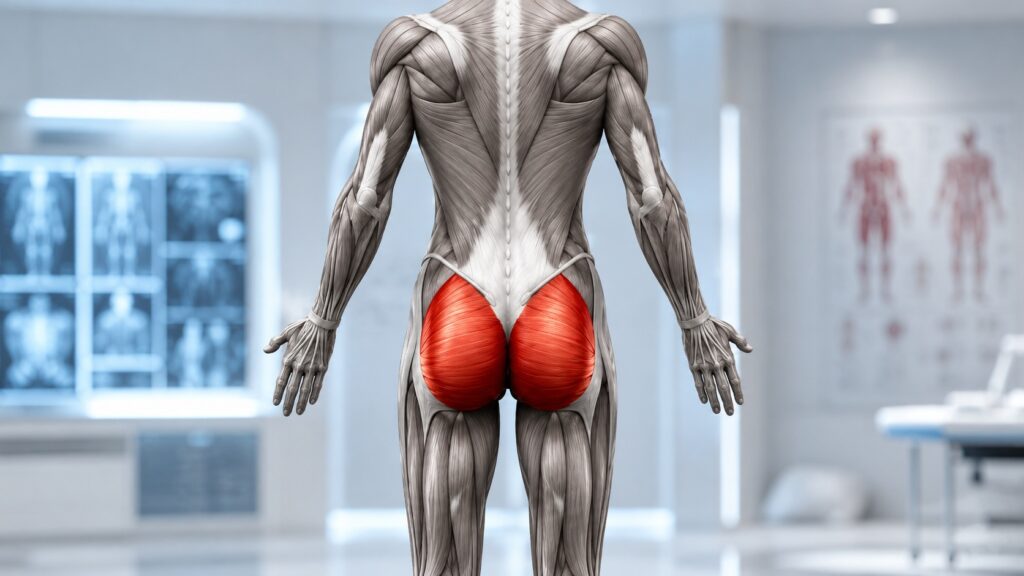
Where the gluteal muscles are located
Symptoms of Dead Butt Syndrome
You can suspect this condition even without visiting an orthopedist. The most obvious visual sign of dead butt syndrome is an anterior pelvic tilt. Stand sideways in front of a mirror or ask someone to photograph you in profile. Normally, your shoulder, lower back, pelvic bones, and knee should form a straight vertical line. If your pelvis is clearly pushed forward and down, your glutes are most likely not working.
For an accurate self-check, doctors recommend doing a simple glute bridge exercise:
- Lie on your back on a flat, firm surface;
- Bend your knees and press your feet into the floor;
- Smoothly raise your pelvis and hips upward, supporting yourself on your shoulder blades and feet.
At the top position, you should feel the isolated work of specifically your glutes. If instead you feel pain in the lower back, it means the muscles are deactivated and are not performing their primary function.
Additional signs of the syndrome include general weakness of the abdominal muscles and severe stiffness when bending the legs in the hip area.
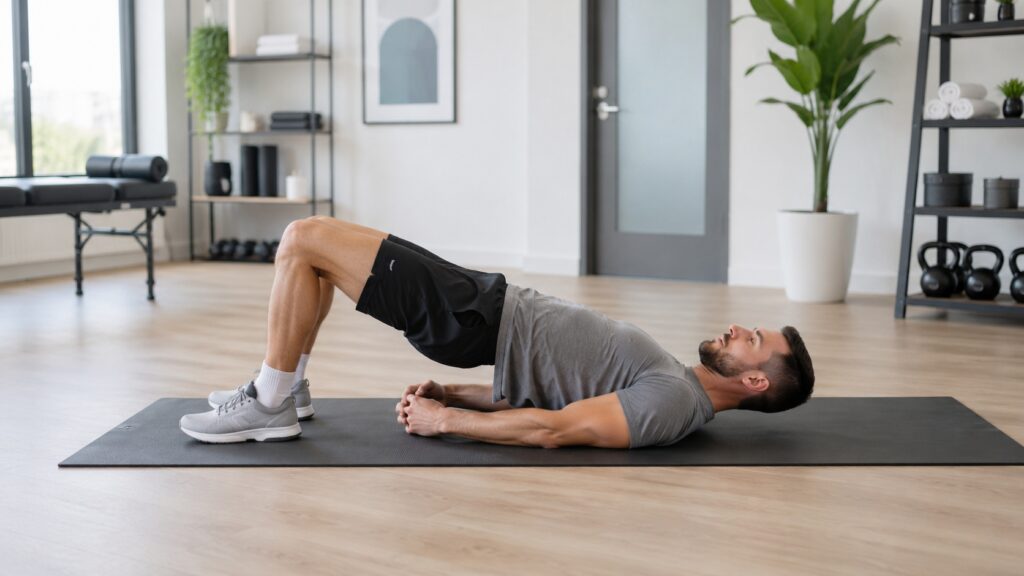
How to do the glute bridge exercise
Why Weak Glutes Are Dangerous for Joints and the Spine
The musculoskeletal system works as a single chain. If a major link drops out, its work has to be performed by other, weaker structures. Due to gluteal amnesia, the load is intercepted by the lower back and hips, which are absolutely not designed for constantly supporting the weight of the entire body.
As a result, a person’s posture and gait change imperceptibly. The following alarming symptoms appear:
- regular cramps in the calf muscles;
- pulling pain in the hamstrings;
- chronic discomfort in the lumbar region, knees, and ankles;
- problems with maintaining balance during movement.
If you ignore the problem for years, constant overload can lead to accelerated destruction of the knee joint cartilage, which will require serious medical intervention.
Why Dead Butt Syndrome Hinders Sports
Many office workers try to correct the consequences of a sedentary lifestyle by abruptly starting at the gym. But with deactivated muscles, running and strength training do more harm than good, as the body simply cannot use proper biomechanics.
During running or squatting with a heavy barbell, the body does not activate the dormant glutes. All the kinetic energy and weight of the equipment literally hammer the hamstrings and spine. Instead of a beautiful physique and endurance, a person gets a high risk of serious injuries, strains, and increasing pain syndrome. Strength exercises will not produce any effect until the muscles learn to contract again.
How to Wake Up Your Glutes at Work and at Home
Fighting muscle atrophy is always harder than preventing it. The first thing neurologists and surgeons advise is to properly set up your workspace. Make sure that the height of your desk and chair strictly corresponds to your height. If possible, alternate positions and spend part of the day working at your computer while standing.
For reliable prevention of muscle weakness, it’s important to do a warm-up every hour. Get up from your desk at least to walk a few steps or pour some water. To remember this rule, it’s convenient to use a timer on your phone.
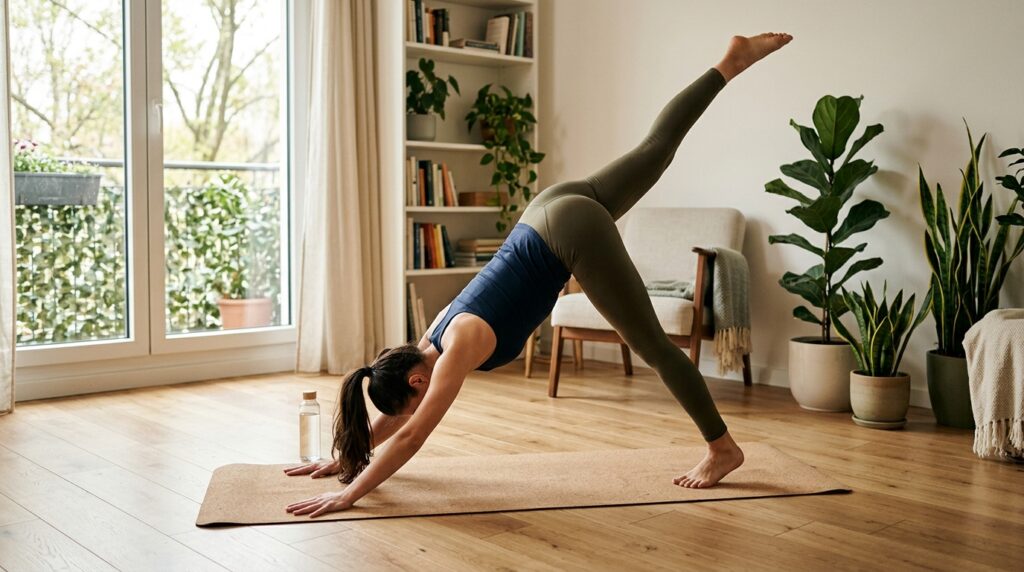
Yoga and stretching help relieve spasms from the overloaded lower back and restore hip elasticity
To bring the muscles back to life and prepare them for the gym, doctors recommend light home workouts:
- regular pelvic tilts and rotations;
- smooth leg swings backward and to the sides;
- holding a static side plank;
- yoga and stretching sessions to relieve overall tension.
The human body is designed for constant movement. Dead butt syndrome seems like a vivid example of how a comfortable lifestyle shuts down our basic functions. However, regular gentle exercise can restore control over the body, reliably protecting the spine and knees from everyday injuries.