When it comes to the artificial intelligence race, many think of ChatGPT, Gemini, and Claude. But it turns out that Russia has become the third country in the world for generative AI, and the main driver of this process has been Alice. The Andreessen Horowitz (a16z) fund published the sixth edition of its ranking of the 50 most popular consumer AI applications, and the results for the Russian market turned out to be impressive.
How Yandex Browser with Alice suddenly became one of the most popular in the world
How Many Users Does ChatGPT Have Worldwide
Let’s start with scale. ChatGPT remains the undisputed leader among consumer AI products. According to a16z data, on the web platform it is 2.7 times larger than its nearest competitor Gemini in monthly traffic, and in mobile apps — 2.5 times larger in number of active users. Over the past year, ChatGPT’s weekly audience grew by 500 million — that’s more than the combined population of the USA, European Union, and Canada. Thus, more than 10% of Earth’s population turns to ChatGPT every week.

ChatGPT still has no equal in popularity. Photo: technewsworld
But competitors aren’t standing still. Both Claude and Gemini have accelerated paid subscriber growth in the US. Claude grew its subscriber base by 200% year over year, and Gemini — by 258%. At the same time, approximately 20% of ChatGPT’s weekly web users also use Gemini in the same week. The era of one assistant’s monopoly appears to be ending.
Yandex Browser with Alice Enters the Top 10 AI Apps
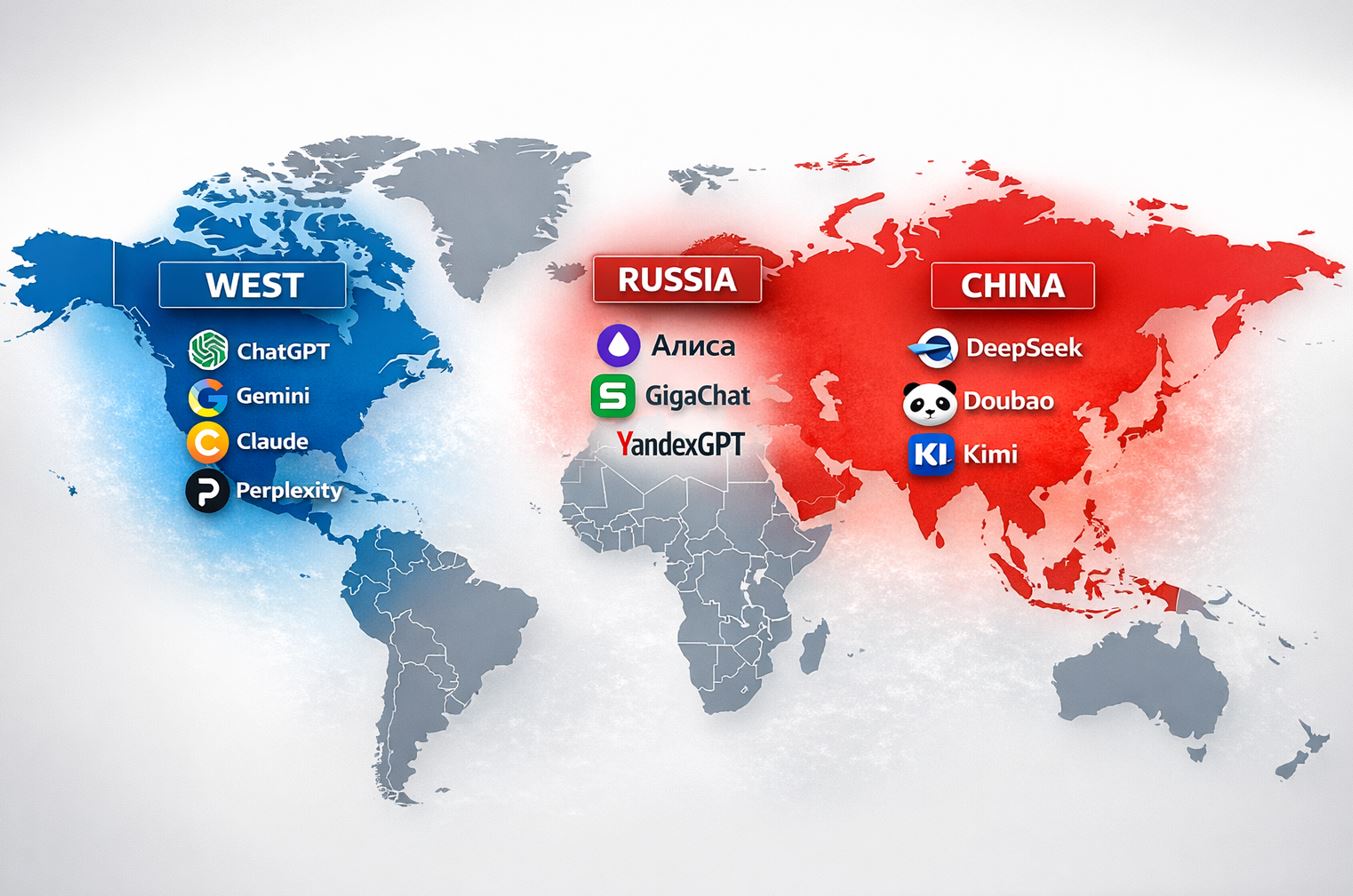
Now for the most interesting part for Russian users. a16z analysts for the first time recorded Russia as a separate, independent pole on the global AI map. Just a couple of years ago, the Russian market was virtually absent from these rankings. Now Russia is third in the world for AI after the Western bloc and China.
Russia suddenly became one of the world’s AI centers
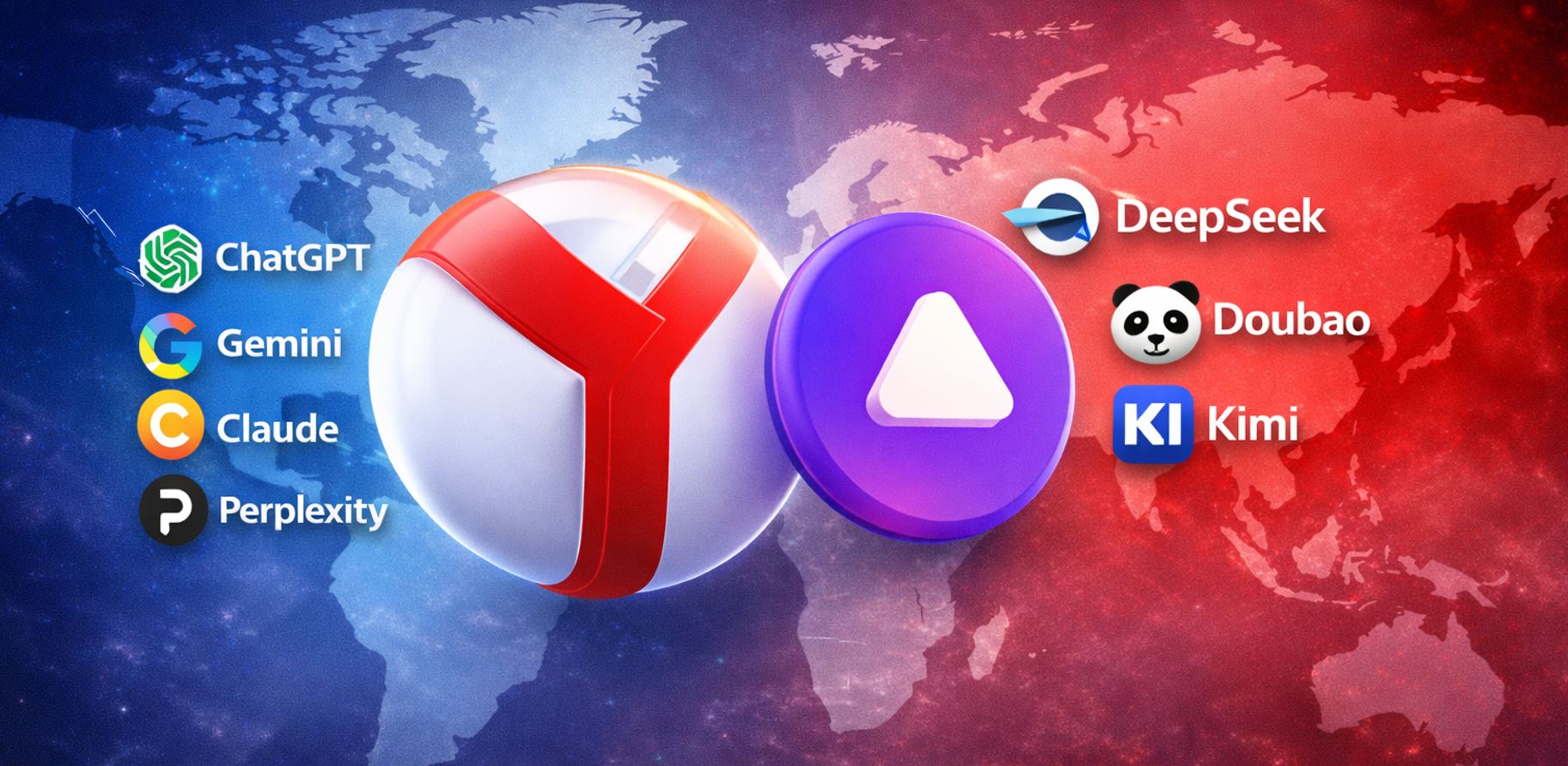
The main star here is Yandex Browser with Alice, which reached 71 million monthly active users. That was enough to enter the top 10 mobile AI products on the planet. For comparison, Western AI tools (ChatGPT, Claude, Gemini, Perplexity) draw their audience from the same pool of countries: USA, India, Brazil, UK, Indonesia. None of them have a significant presence in Russia or China. And Alice occupies this niche almost exclusively.
In addition to Yandex, GigaChat from Sber also debuted in the a16z web ranking. Analysts note that the Russian situation mirrors the Chinese scenario, but at an accelerated pace: sanctions created a vacuum, and local products filled it in less than two years. The result is three global AI poles: Western (ChatGPT, Claude, Gemini), Chinese (DeepSeek, Doubao, Kimi), and Russian (Alice, GigaChat).
Why Alice Is Better Than ChatGPT
Alice’s success in the global ranking is no accident. In October 2025, Yandex conducted a major rebranding: YandexGPT was officially transformed into Alice AI — an entire family of generative models. It includes Alice AI LLM (a language model for texts and answers), Alice AI ART (image generation), and Alice AI VLM (a multimodal model for working with images).

Alice is regularly improved, which is why it can now compete with ChatGPT on equal footing. Photo: Habr
But the key difference from Western competitors lies in the depth of integration. Alice exists not just as a standalone chatbot app. It’s built into Yandex Browser, the Yandex app, Yandex Go, Yandex Station smart speakers, and will soon appear in wearable devices. Yandex announced the “Drops” earbuds with Alice AI — the first device where the assistant works without a screen, right in your ear. On top of that, Alice has gained AI agents: they can book tables at restaurants, make service appointments, and find products at the best prices.
For comparison: ChatGPT is also moving toward becoming a super-app and already has 220 apps in 13 categories in its store, including travel, shopping, food, and health. But Alice took a different path — it doesn’t build a separate ecosystem of connectors but rather grows into already existing Yandex services that millions of people use every day. Moreover, Alice lives not only in the phone — it’s in the browser, in the speaker, and will soon be right in your earbuds.
How Alice Differs from ChatGPT and Other AIs
The only product equally popular in China, Russia, and the USA is DeepSeek. Its traffic is distributed as follows: China (33.5%), Russia (7.1%), USA (6.6%). Russia showed the second-highest level of DeepSeek penetration in the world after China.
An interesting picture also emerges from the per-capita AI activity index. a16z analysts built an index from 0 to 100, combining visits to AI websites and active mobile users per capita. In first place is Singapore, followed by the UAE, Hong Kong, and South Korea. Meanwhile, the USA, where most of these products are created, ranks only 20th.
In the creative tools space, the rankings also changed. Three years ago, image generators like Midjourney and DALL-E dominated. Now Midjourney has fallen from the top 10 to 46th position because built-in models from ChatGPT and Gemini raised the quality bar. However, video generators appeared (Kling AI, Hailuo, Pixverse), and the music service Suno held on at 15th place.
Another surprise — AI agents. The open-source project OpenClaw gained 68,000 stars on GitHub within a few weeks, and in early March became the most popular project on the platform, surpassing React and Linux. In February 2026, it was acquired by OpenAI. The agent startup Manus was acquired by Meta* in December 2025 for 2 billion dollars.
Which AI Browser to Choose for iPhone
Perhaps the most important takeaway from the new a16z report is that their own rankings are gradually losing objectivity. The thing is, AI is increasingly flowing from standalone websites and apps to places where it cannot be measured by standard metrics: into browsers, desktop agents, and existing work tools.
OpenAI launched the Atlas browser with ChatGPT on every page. Perplexity released the Comet browser. Google added Gemini to Chrome and launched the experimental Disco project, which generates web applications right from a tab. Anthropic embedded Claude into Chrome, Excel, and PowerPoint. And Claude Code — a developer agent for the command line — reached 1 billion dollars in annual revenue in just six months.