In honor of Apple’s upcoming 50th anniversary, a previously unpublished video from 1999 surfaced online, showing Steve Jobs explaining to company employees why without Apple, wireless internet would have remained a niche technology. This is a good reason to recall what Wi-Fi is, how it works, and why Apple specifically made it so mainstream that even a schoolchild can now find free Wi-Fi near their home.
Wi-Fi: What It Is and Why It Exists Thanks to Apple
What Is Wi-Fi and How Does It Work in Simple Terms
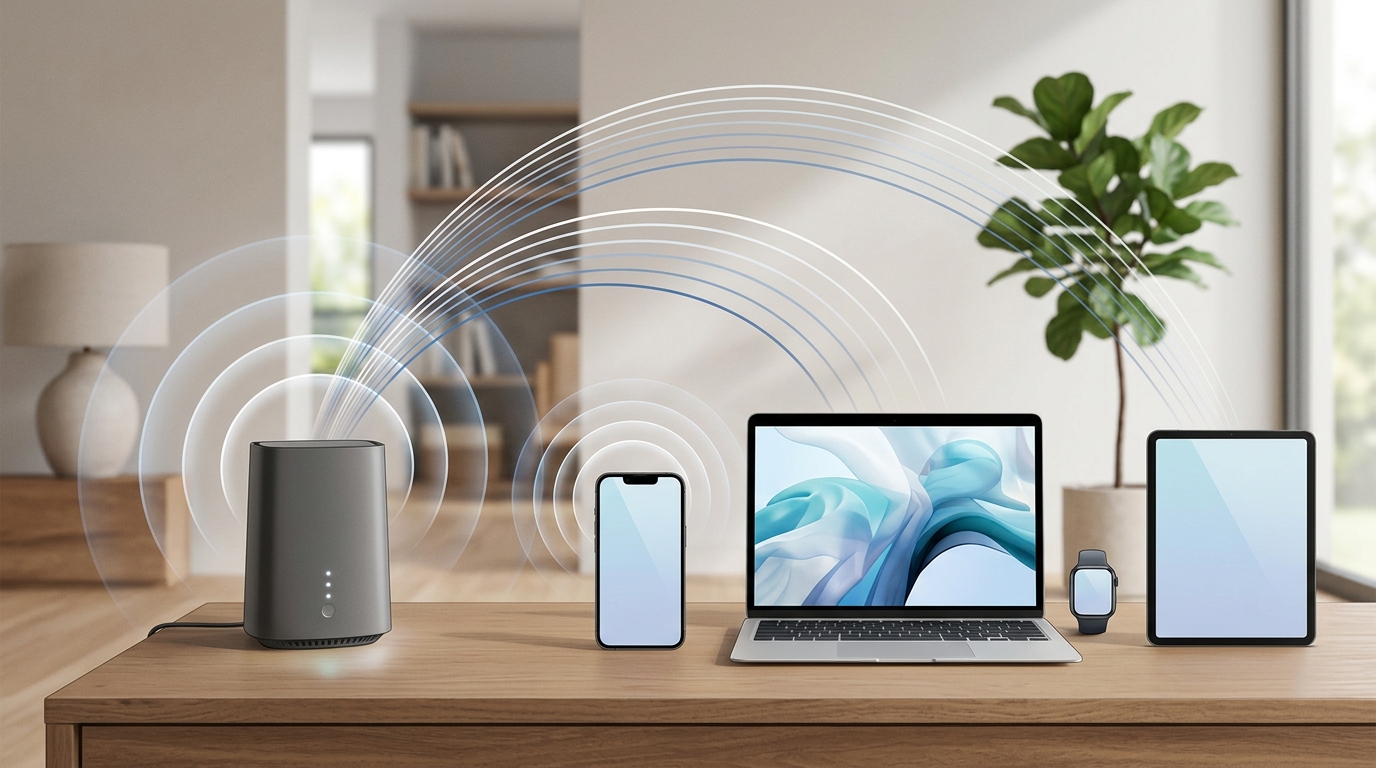
Wi-Fi is a way of transmitting data over the air, without wires. In principle, it works like regular radio: a router (that little box with blinking lights in your home) receives internet via cable and then broadcasts it as radio waves. A phone, laptop, tablet, or smart speaker picks up these waves with a built-in receiver — and you’re online.
An important nuance: Wi-Fi is not the internet itself. It’s a local wireless network inside an apartment, office, or café. The internet comes into it via cable from a provider or through a mobile network, and Wi-Fi simply “distributes” it over the air to all connected devices.
Wi-Fi operates on special radio frequency bands — most commonly at 2.4 and 5 GHz. The higher the frequency, the faster data is transmitted, but the worse the signal passes through walls. That’s why in apartment buildings, a 5 GHz router may work faster, while 2.4 GHz may be more stable in distant rooms.
How Wi-Fi Came to Be
Wi-Fi has a surprisingly rich history. The idea of secure data transmission via radio waves with frequency hopping appeared back in 1942 — and it wasn’t engineers who came up with it, but Hollywood actress Hedy Lamarr together with composer George Antheil. Their invention was designed for controlling military torpedoes: constant frequency changes made the signal impossible to intercept.
The invention itself wasn’t used for decades, but the principle of “frequency hopping” became the foundation of many wireless technologies — including Wi-Fi, Bluetooth, and GPS. In 1985, U.S. authorities allowed free use of certain radio frequencies, and by 1997, engineers formalized this into the first wireless network standard — 802.11.

Actress Hedy Lamarr, whose idea laid the foundation for wireless technologies
However, until 1999, this technology remained the domain of engineers and laboratories. For it to reach ordinary people, someone needed to take the risk and build Wi-Fi into a mass consumer product. That “someone” turned out to be Apple.
How Apple Made Wi-Fi Popular
In July 1999, Apple unveiled the iBook — the first consumer laptop with built-in Wi-Fi support. The company called its wireless connectivity system AirPort and sold it along with a base station (essentially one of the first home routers).
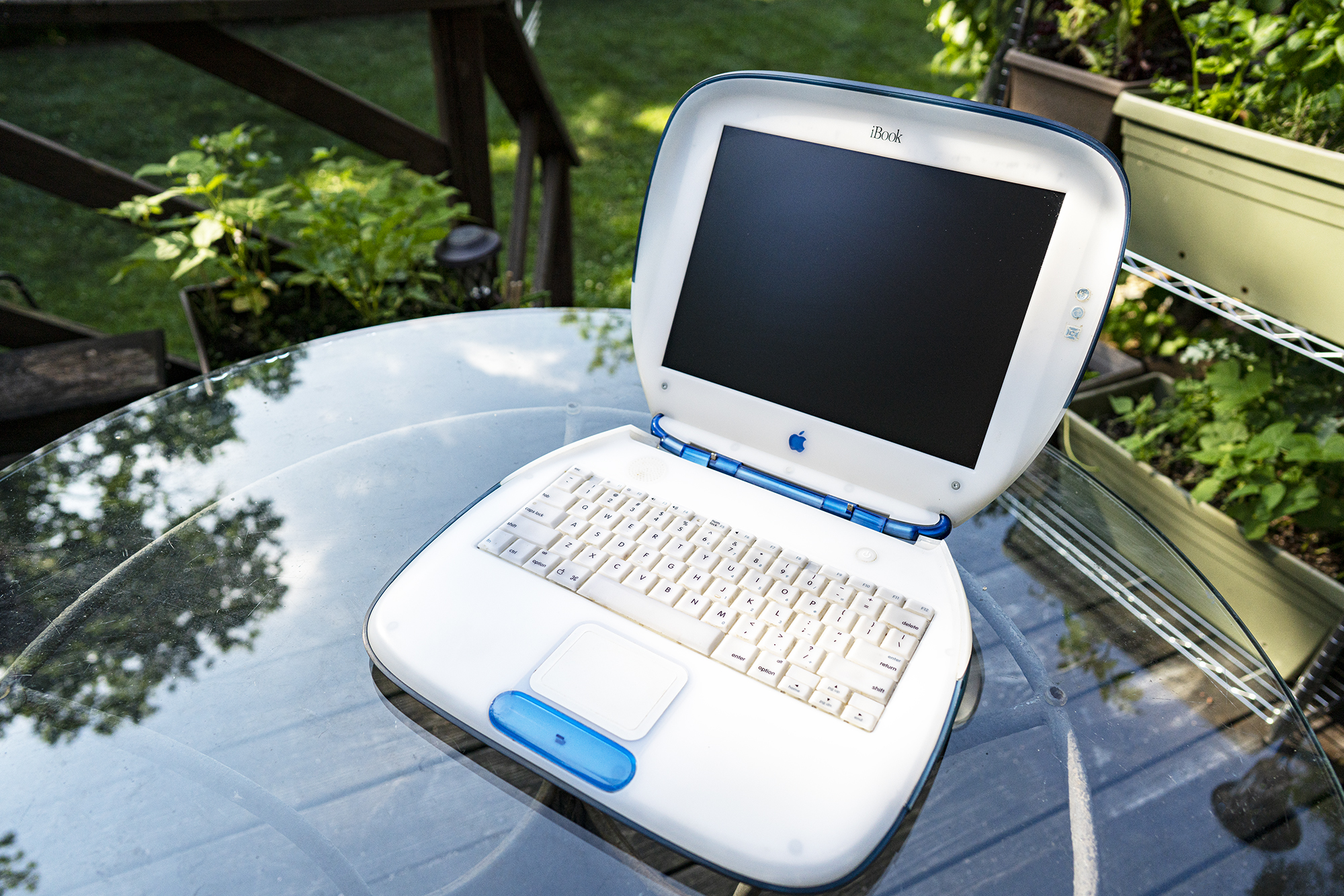
This laptop, which you’ve probably only seen in pictures, pushed Wi-Fi development forward. Image: bhphotovideo.com
During the presentation, Steve Jobs walked around the stage with the iBook, loading web pages without a single wire, and then passed the laptop through a hoop to prove — no cables whatsoever. The audience erupted in applause. Apple Vice President Phil Schiller even jumped from a height while holding the laptop as it transmitted data wirelessly.
The iBook became the first mass consumer device with Wi-Fi support in history — this is acknowledged both on Wikipedia and in industry sources. Before it, wireless connectivity existed as a laboratory technology, but it was Apple that made it part of everyday experience.
What Steve Jobs Said About Wi-Fi
The recently published video was recorded on July 27, 1999 — one week after the iBook announcement. Former Apple engineer Akira Nonaka uploaded to YouTube a recording of an internal meeting where Jobs spoke to company employees. This video had never been published before.
Jobs said that at the iBook presentation, the audience “just went crazy” over the wireless connectivity. But the most interesting part was his explanation of why only Apple could have done this. According to him, competitors like Compaq and Dell wouldn’t have supported Wi-Fi because it wasn’t an industry standard and the technology didn’t work with Windows.
These manufacturers would have waited for Microsoft to add Wi-Fi support to Windows. And Microsoft, according to Jobs, would have responded: “We have 38 million software problems, wireless internet is at the bottom of the list.” His conclusion: Apple is the only company in the industry that actually cares about product quality.
What the Wi-Fi Launch Gave Apple
In 1999, Jobs had been leading Apple for only two years and still held the title of “interim CEO.” The company was just beginning to emerge from years of crisis — he mentioned seven consecutive profitable quarters and $200 million in revenue for the previous year. In his words, that was “a lot of money.”
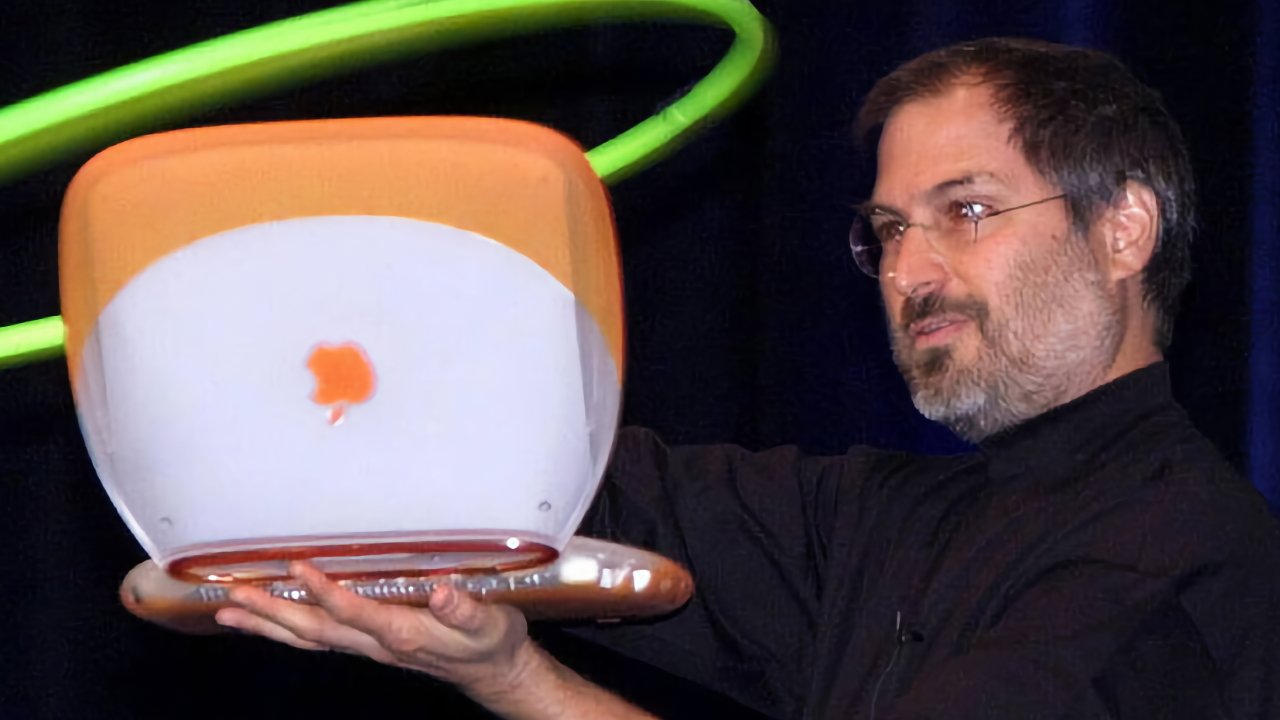
Jobs believed in wireless internet and was right. Image: appleinsider.com
For context: in the most recent quarter (January 2026), Apple’s revenue was $143.8 billion — that’s 719 times more than for all of 1998. The company that celebrated $200 million in 1999 became one of the most valuable in the world — and Wi-Fi was one of the steps on that journey.
Jobs said at the time that he returned to Apple not to save the company, but to “make Apple great again.” He promised to reclaim leadership in education, retain creative professionals, and make products to be proud of. It appears he kept his word.
How Apple Changed Wi-Fi
The video didn’t appear by accident — Apple is celebrating its 50th anniversary in 2026. The company was founded on April 1, 1976, and has already begun large-scale celebrations worldwide.
But it’s not just about the anniversary. The iBook and Wi-Fi story is an example of the approach Apple still uses today: it takes an existing but unwanted technology and integrates it into a product so well that it becomes indispensable. This happened with Wi-Fi in 1999, with multi-touch in 2007 (iPhone), and with Face ID in 2017.
For Apple device owners, it’s useful to understand this context: the company rarely invents a technology from scratch but knows how to make it convenient and mainstream. When you see a feature in a new iPhone or Mac that seems like “just” an improvement — remember the iBook. In 1999, Wi-Fi also seemed like a small thing. And then it changed everything.