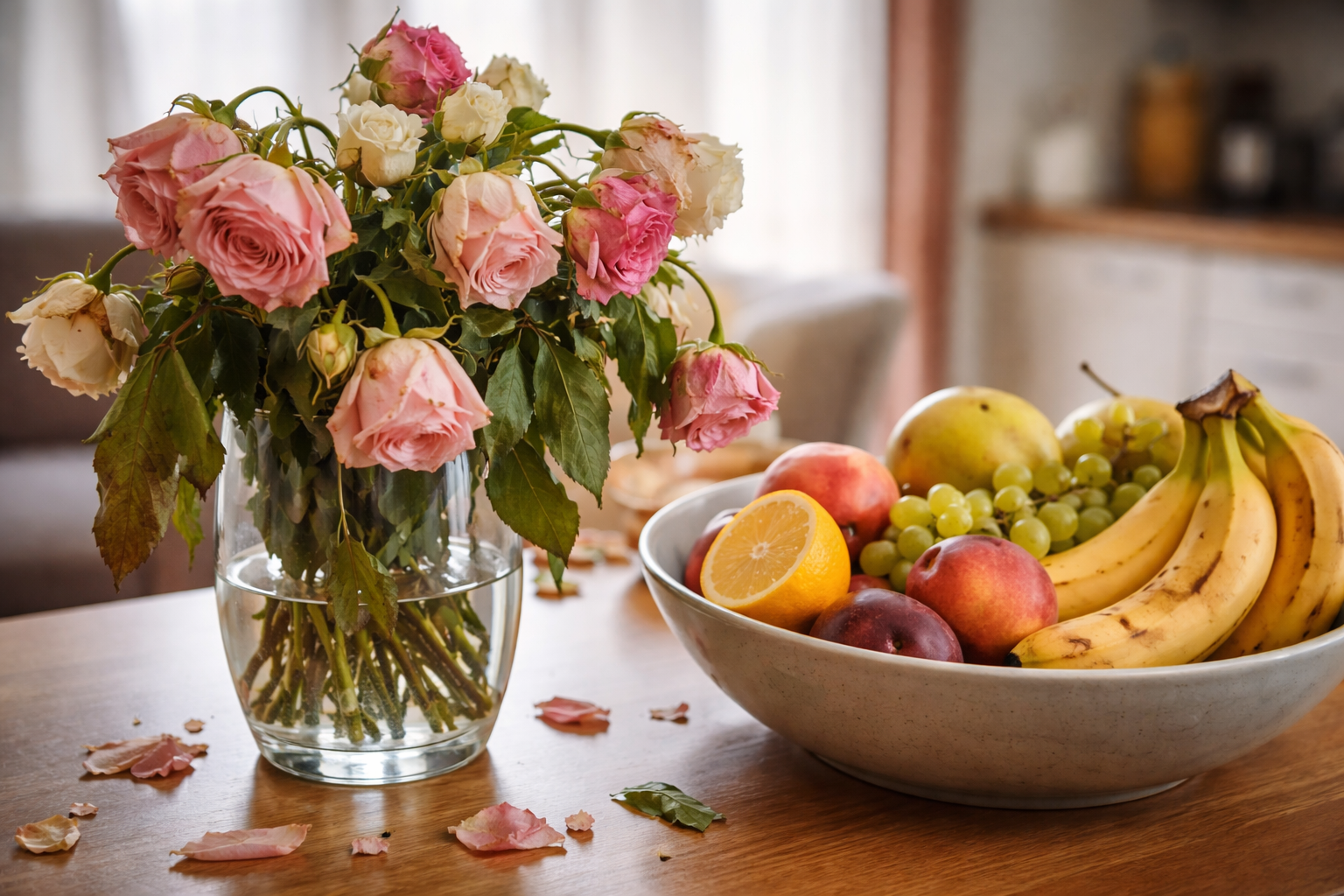
Why flowers don’t last as long near fruits — the ethylene effect that few people know about.
Sometimes it seems like placing a vase of flowers next to a bowl of fruits is a great idea. It looks beautiful, and everything is in one spot. But florists and biologists advise against it. A bouquet placed near fruits wilts faster, and it has nothing to do with water or temperature. The culprit is a gas called ethylene, which the fruits themselves release. And it’s precisely what causes plants to age prematurely.
Why Fruits Release Ethylene and How It Affects Flowers
Ethylene is a natural gaseous hormone that plants use to regulate ripening. Almost all fruits release it, but especially large amounts come from bananas, apples, pears, peaches, and avocados. Those that are actively ripening release more ethylene.
When a fruit begins to ripen, it releases ethylene into the air, and other plants nearby receive this signal. For fruits, it’s a command to “ripen faster,” but for cut flowers, it’s a signal to “age.”
Fun fact: bananas are placed next to unripe fruits to help them ripen faster, and in stores, bananas are actually treated with ethylene after delivery.
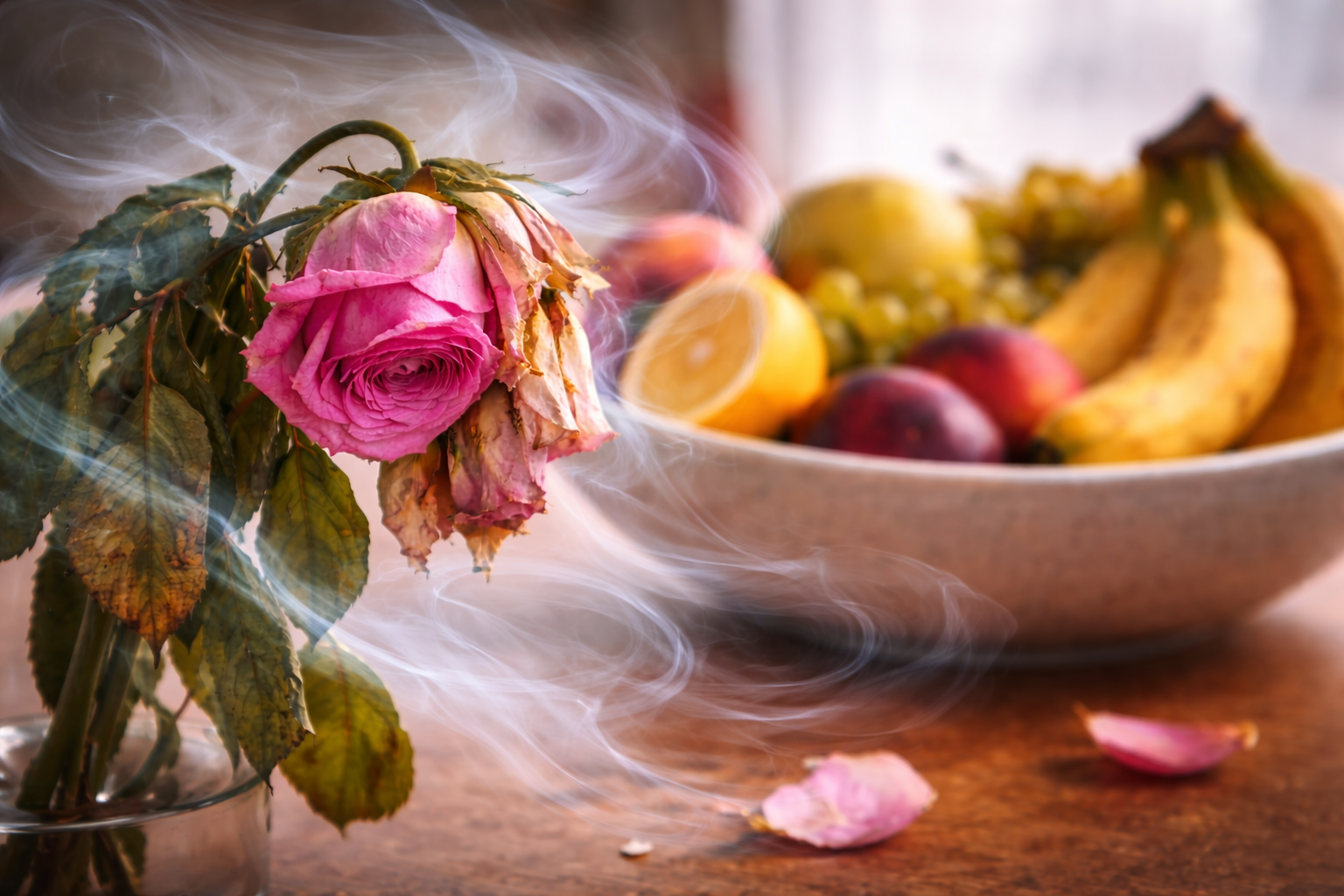
Ethylene is a natural plant hormone in gaseous form; it plays a role in fruit ripening and in the aging processes of plant tissues.
Why a Bouquet Wilts Quickly Near Fruits
Cut flowers are already in a stressed state. They have no roots, their nutrition is limited, and any external influence accelerates aging.
Ethylene triggers a process in plants similar to an end-of-life-cycle program. Petals lose moisture faster, tissues break down, and buds stop opening.
Roses, carnations, orchids, lilies, and some varieties of tulips are especially sensitive to ethylene. Even a small amount of gas in the room can shorten a bouquet’s life by several days.
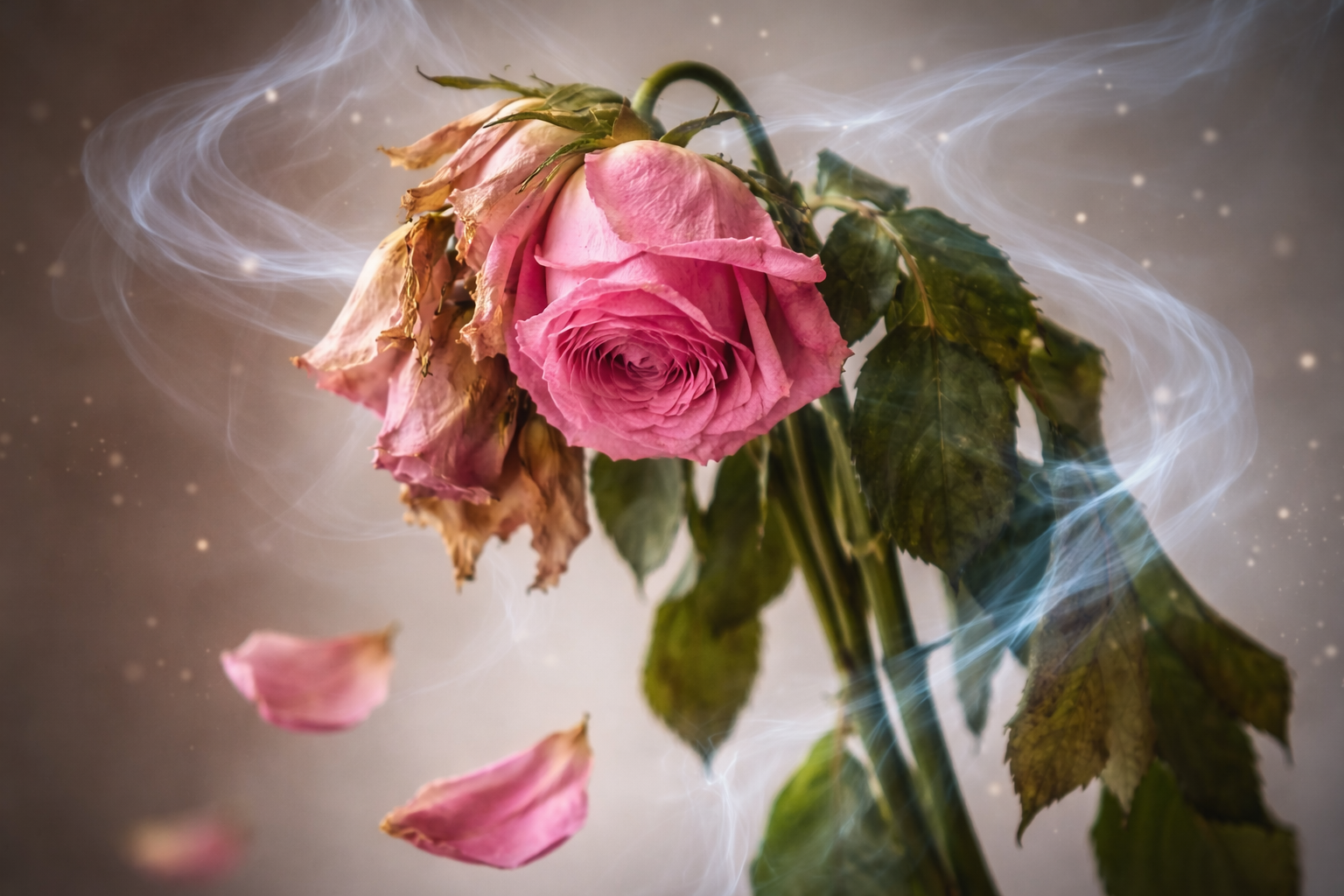
For cut flowers, even very low concentrations of ethylene can be harmful: petals fall off faster, buds open poorly, and wilting intensifies.
How to Extend a Bouquet’s Life and Keep Flowers Fresh Longer
To keep a bouquet fresh for longer, just follow a few simple rules:
- Keep flowers away from fruits and vegetables
- Don’t place the vase near a heater or in direct sunlight
- Change the water every day
- Trim the stems at an angle
- Remove wilted leaves and petals
Good ventilation also helps, as does the absence of other gas sources nearby, including smoke and combustion byproducts.
Florists know that proper placement affects flowers just as much as water or fertilizers. That’s why in professional coolers, bouquets are always stored separately from food products.
Sometimes aesthetics really does shorten a flower’s life. If you want your bouquets to bring joy for weeks, it’s worth knowing which flowers last the longest in a vase.