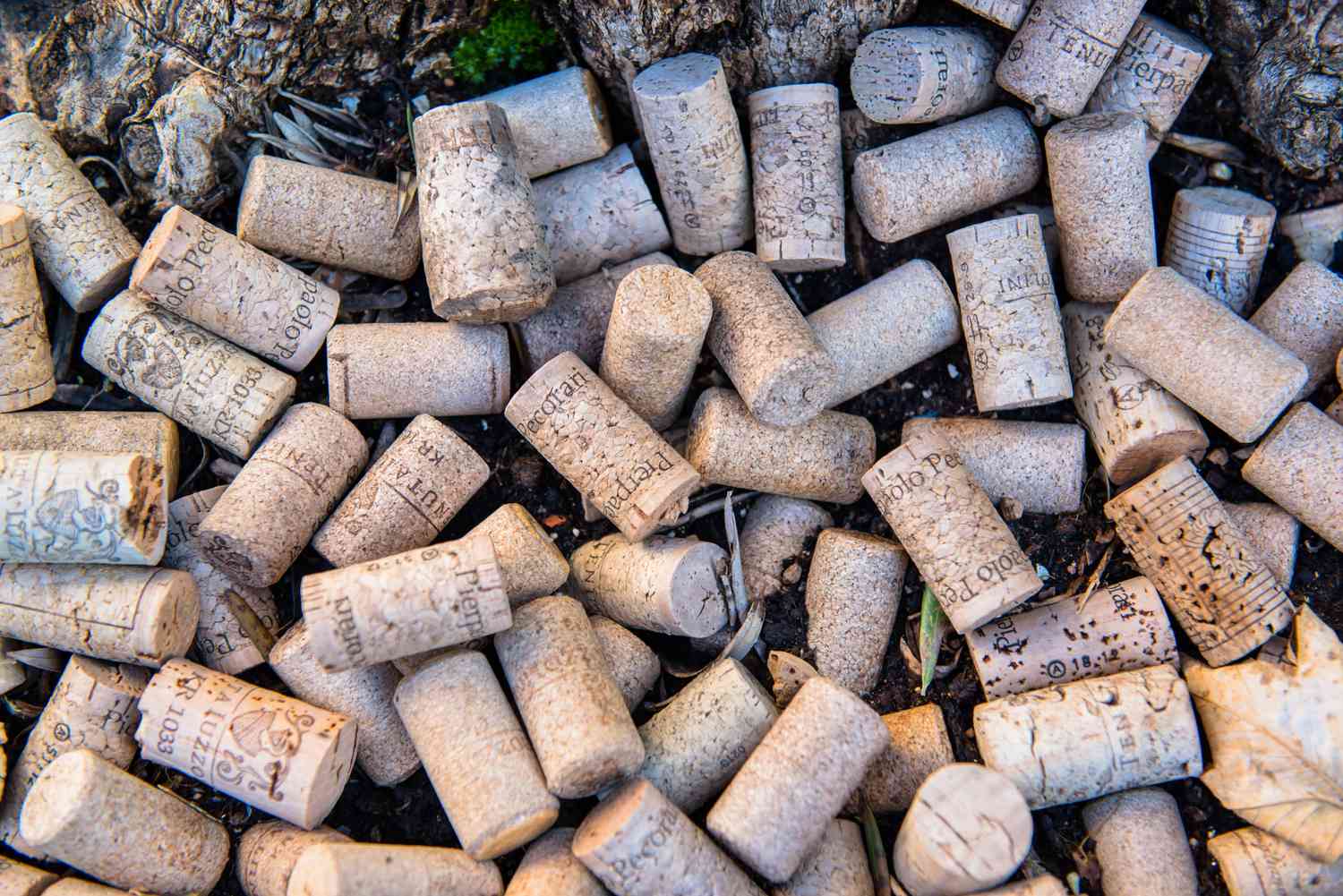
Don’t throw away wine corks: here’s how they protect your garden from pests. Image source: southernliving.com
The gardening season is just around the corner. Most likely, you already have a free garden remedy at home — and you were about to throw it away. We’re talking about natural wine corks. Many people accumulate them over the years and usually just toss them out. But that’s a mistake: natural cork can actually be quite useful on your property, especially when it’s damp and insects are looking for shelter. Of course, it’s not a miracle cure that solves all problems at once, but it’s a simple and budget-friendly way to make your garden less comfortable for unwanted unpleasant guests. At the same time, cork is completely safe and looks quite aesthetically pleasing. Below are several life hacks on how to use it effectively.
How Wine Corks Help Against Slugs, Ants, and Woodlice in the Garden
I think all gardeners and allotment owners have faced this problem (if not, it’s still ahead of you): decking, dark corners, crevices, areas near fences and raised beds often become a refuge for slugs, snails, ants, and woodlice. These spots are damp, poorly lit, and lack ventilation.
Cork is moisture-resistant and doesn’t retain water, so if you crush it and scatter it in problem areas, it creates a drier and rougher surface. For slugs and snails, this kind of surface is unpleasant, and the reduction in moisture makes the area less attractive not only for such pests but also for insects.
How to apply:
- Crush the corks with a knife or in a blender;
- Scatter them around the perimeter of garden beds and along the base of fences;
- Fill crevices near decking and in shaded corners.
Important: this is a humane approach — cork doesn’t kill pests but helps reduce the attractiveness of the environment.
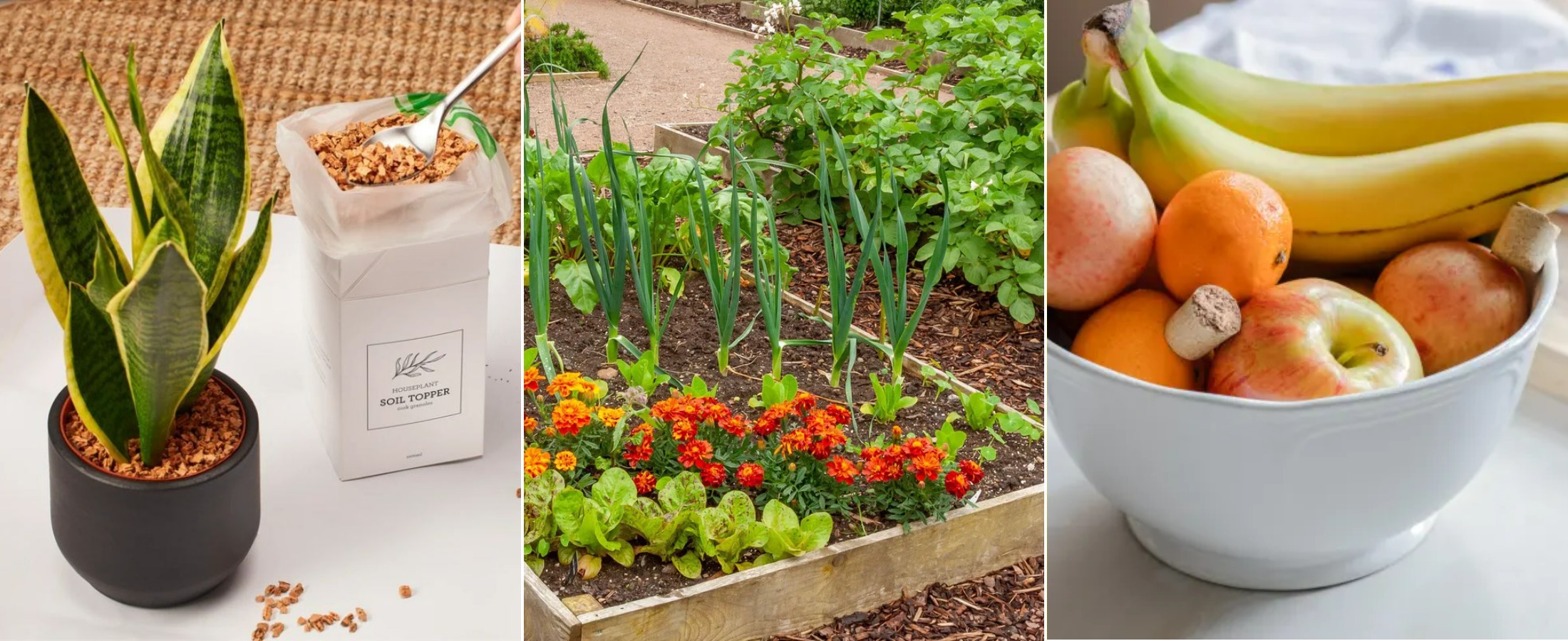
Cork usage is multifunctional: from damp spots and slug protection to decor and fighting fruit flies. Image sources: arboretum.ie, gardeningetc.com, thekitchn.com
Can Wine Corks Be Used as Mulch, Drainage, and Protection from Fruit Flies?
Cork is the bark of the cork oak tree — a lightweight, slowly decomposing material. When crushed, it works as:
- A lightweight mulch that retains moisture and partially suppresses weed growth;
- A cork crumb additive to soil for improving aeration and drainage in pots;
- An excess moisture absorber in fruit bowls — this helps reduce fruit fly activity.
Use only natural cork, not synthetic alternatives. Keep in mind that lightweight pieces can be washed away by heavy rain, so you may need to replenish the layer occasionally. And in case of a serious pest infestation, cork alone won’t be enough.
The best effect is achieved in combination: clearing fallen leaves, eliminating standing water, and maintaining dry decking all enhance the effectiveness of this simple, affordable, and eco-friendly method.