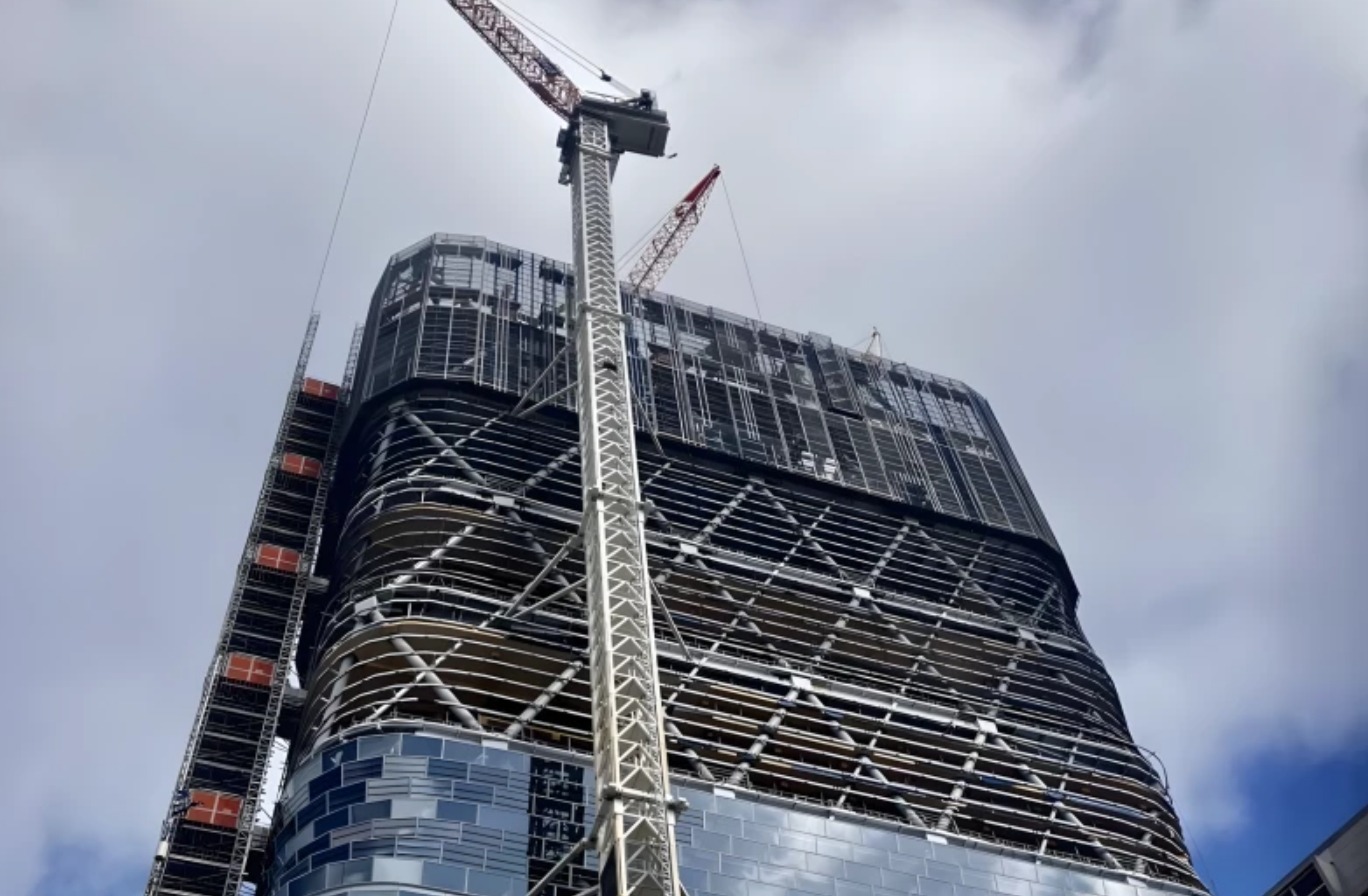
The Atlassian Central skyscraper during construction. Image source: newatlas.com
Typically, skyscraper construction involves the use of concrete, steel, and glass. Wooden structures are usually associated with country houses or, at best, low-rise offices. But in Sydney, the Atlassian Central skyscraper has just been completed — at 183 meters tall, it has become the tallest wooden building in the world. It could also be called the most expensive of its kind, since building a skyscraper costs a lot of money.
The Tallest Wooden Skyscraper in the World
Atlassian Central is a 40-story tower located next to Sydney’s Central Station in Australia. It will serve as the headquarters of the Australian IT company Atlassian, known for its products Jira and Trello.
The main feature of this building is its construction. The lower floors are made of steel and concrete, as you’d expect from a serious skyscraper. But starting from roughly the midpoint, the structural role is taken over by mass timber — specifically glued laminated timber and cross-laminated timber. It is precisely this hybrid approach that made it possible to achieve the record height of 183 meters.
For comparison, the previous record holder among wooden buildings, the Ascent tower in Milwaukee, reached only 87 meters. That means Atlassian Central is more than twice as tall. It’s as if the world high jump record suddenly doubled in a single season.
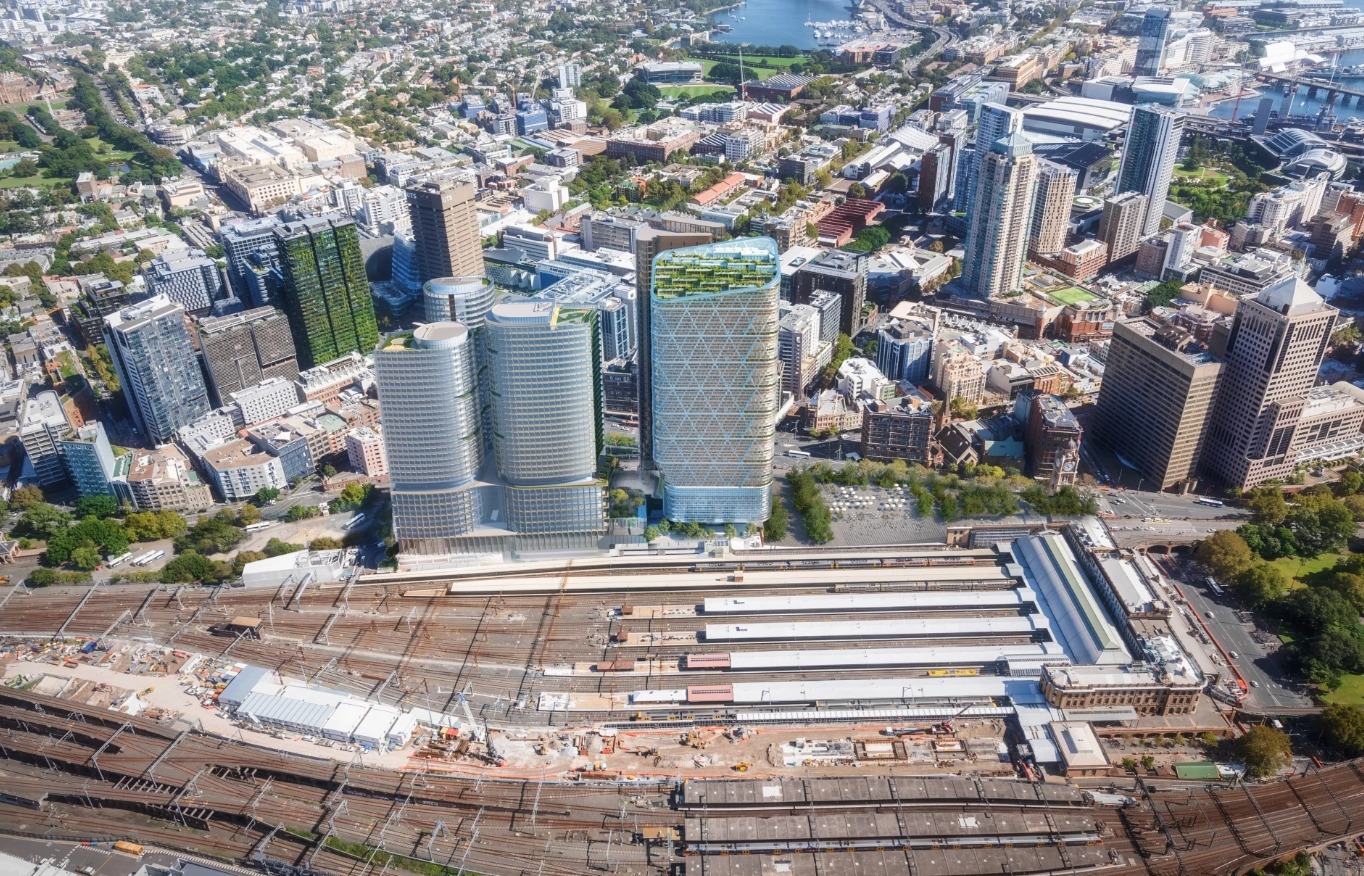
The project was designed by architectural firms BVN and SHoP Architects. Image source: newatlas.com
Why a Wooden Skyscraper Is Stronger Than It Seems
At first glance, wood seems like a fragile, flammable material, completely unsuitable for high-rise construction. But that’s only true for unprocessed lumber. Modern engineered timber is a completely different story.
Glued laminated timber (glulam) and cross-laminated timber (CLT) are produced by gluing layers of wood together under pressure. The result is a material whose compressive strength is comparable to concrete, and whose strength-to-weight ratio surpasses that of steel. In simple terms, a wooden beam with the same load-bearing capacity weighs several times less than a steel one.
As for fire resistance, mass timber behaves paradoxically well during a fire. Thick timber chars on the outside, and this charred layer acts as thermal insulation, protecting the interior from destruction. Steel structures, on the other hand, lose strength and deform at high temperatures. This is exactly why engineers increasingly view wood not as a relic of the past, but as a material of the future.
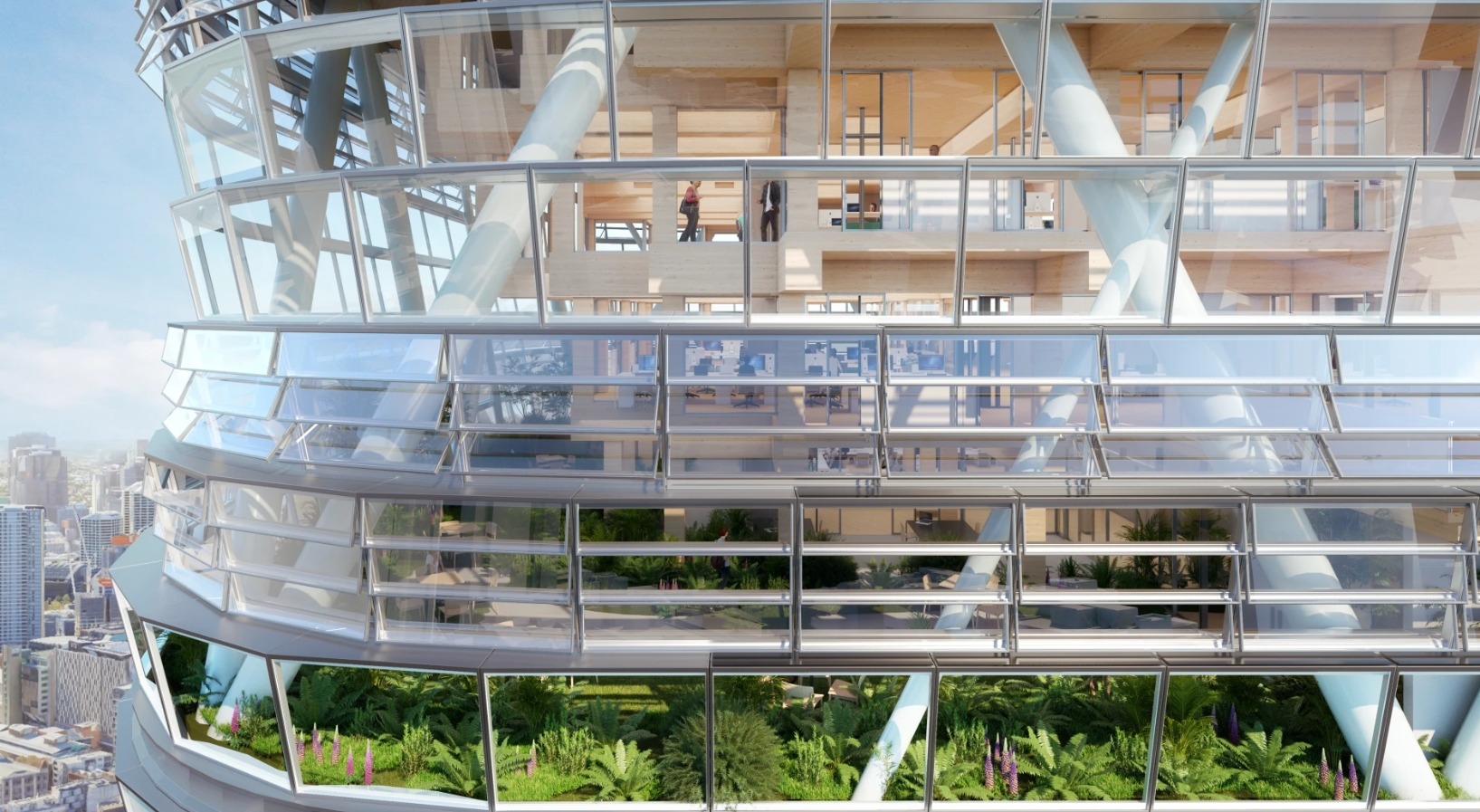
Jira and Trello developers will work in this building. Image source: newatlas.com
Why Wooden Skyscrapers Are Better Than Conventional Ones
But it’s not just about strength. The main argument in favor of wooden construction is environmental, and it’s impressive.
The production of concrete and steel is one of the largest sources of carbon dioxide emissions in the world. The cement industry alone accounts for about 8% of all global carbon dioxide emissions. That’s more than from all of the planet’s aviation. Wood, on the other hand, absorbs carbon from the atmosphere throughout its life and continues to store it even after it becomes a building material.
According to the developers of Atlassian Central, using timber instead of steel and concrete reduced the building’s carbon footprint by approximately 50% compared to a similar skyscraper made from traditional materials. It turns out that every cubic meter of wood used instead of concrete reduces carbon dioxide emissions by approximately 1 ton.
In addition, the building is equipped with solar panels, rainwater collection systems, and green terraces at various levels. The architects conceived it as a vertical ecosystem, rather than just a box for office workers.
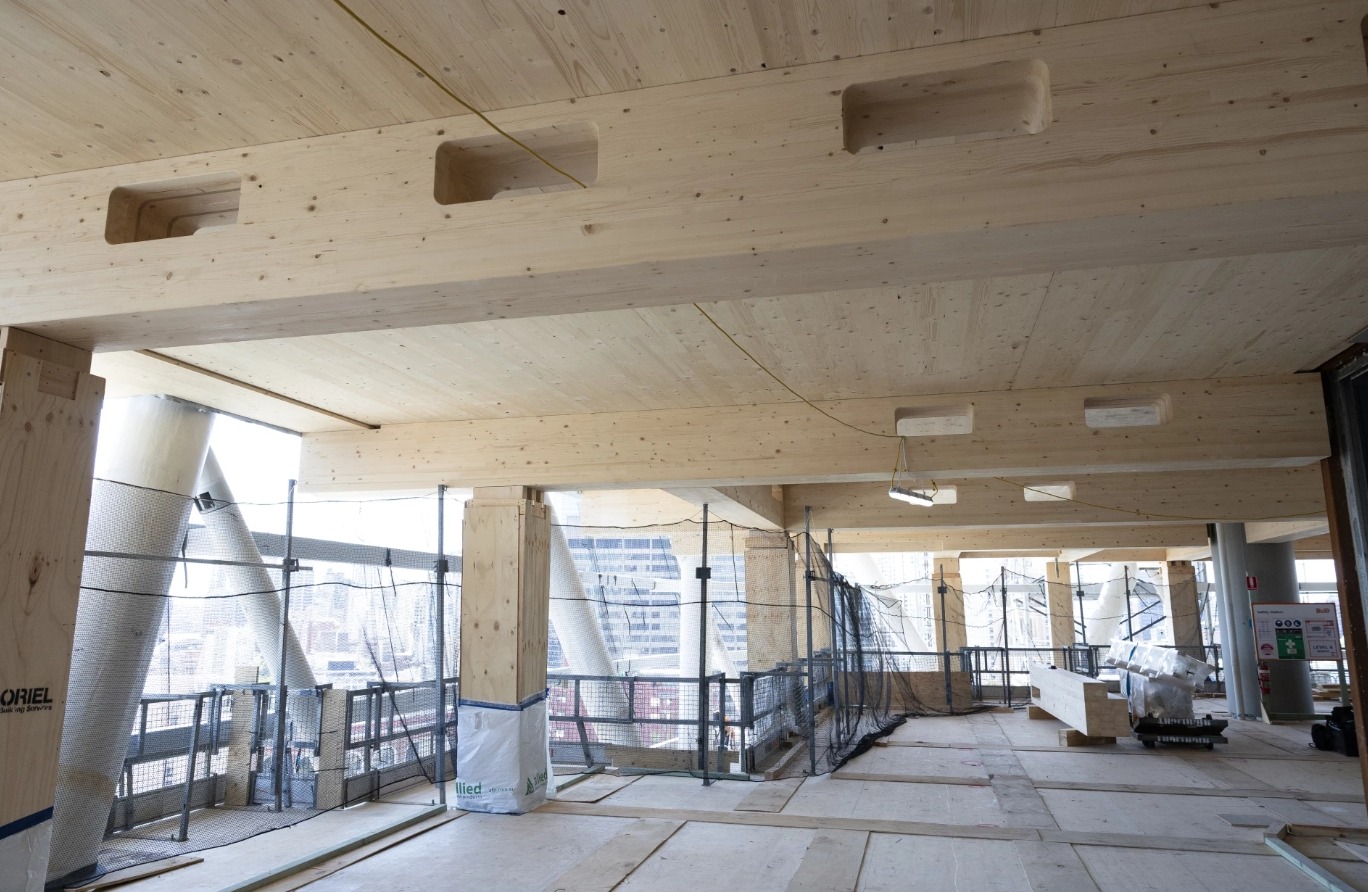
Wooden skyscrapers are less harmful to nature. Image source: newatlas.com
The Future of Wooden Skyscrapers
Atlassian Central is far from the only project. Around the world, architects and engineers are designing wooden high-rises. In Tokyo, there are plans to build the 350-meter W350 wooden tower by 2041. In Stockholm, Vancouver, Vienna, and London, wooden buildings ranging from 50 to 100 meters tall already stand.
But there’s a caveat. Hybrid construction is still more expensive than traditional methods. Engineered timber costs more than concrete, and construction companies have less experience working with it. However, as demand grows and manufacturing technologies develop, prices are dropping. Some countries, such as Austria and Canada, have already updated their building codes to allow the construction of wooden buildings taller than previous limits allowed.
The fact is that urbanization continues, and cities need new buildings. If even a fraction of them are built from wood, it could dramatically reduce the carbon footprint of the construction industry. And the Atlassian Central record shows that technically, this is already possible.