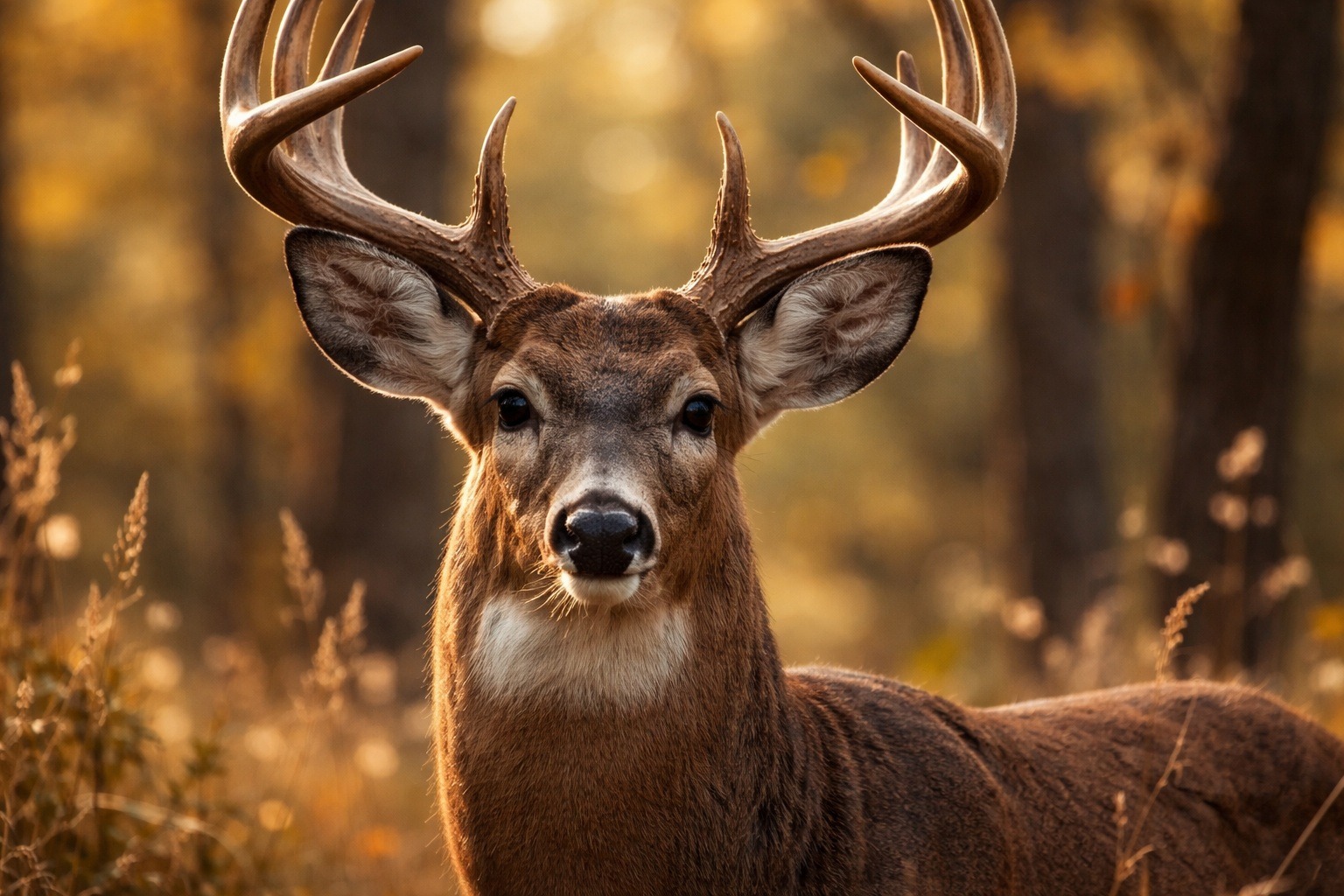
Many people dislike the meat of wild animals, and there’s an explanation for it
You’ve almost certainly tried meat at least once that smelled somehow off — too sharp, with a metallic or earthy undertone. Some call it a “gamey taste,” while others simply grimace and push the plate away. But here’s what’s interesting: gaminess isn’t one specific flavor — it’s an entire palette of sensations, and behind each one lies perfectly explainable chemistry and biology.
What “Gamey Taste” in Meat Actually Means
If you ask ten people to describe what “gamey meat” is, you’ll get ten different answers. For some, it’s a pleasant earthy note; for others, it’s an unpleasant sourness or metallic aftertaste. And this is no coincidence. Mohammed Gagaoua, a leading meat specialist from the French National Institute of Agricultural Research, puts it directly:
It’s not a single, clearly defined sensory attribute. It’s a consumer term that reflects a multidimensional and dynamic evaluation.
Simply put, “gamey” is a collective term. Originally, it described the taste of meat from wild, hunted animals, which are incredibly diverse in themselves. But over time, the term expanded to refer to any meat that is tougher, drier, more aromatic, or simply more unfamiliar than what we’re used to. And for most people, familiar meat means tender farm-raised chicken, pork, or supermarket beef. Anything that falls outside this range automatically gets labeled “gamey.”
It turns out the issue isn’t so much about taste as it is about our experience and expectations. The brain compares every new piece of meat with what it already knows. And if something doesn’t match, a signal fires: “This is something strange.”
Why Dark Meat Has a Stronger Flavor
And here’s where things get really interesting. Meat science professor Chris Kerth explains the connection as simply as possible: “Gamey flavor is most associated with the intensity of the red color of the meat.”
The logic goes like this. The more an animal uses a particular body part, the more red muscle fibers develop in those muscles. These fibers are literally permeated with blood vessels and rich in myoglobin — a protein that carries oxygen and gives meat its characteristic dark red color. It’s myoglobin and its breakdown products that produce that “metallic, bloody” taste that many people call gaminess.
For comparison, chicken breast contains about 0.01% myoglobin, while deer or wild boar meat contains up to 0.3–0.5%. That’s a difference of tens of times, and the taste reflects this directly. A wild deer that runs through forests every day accumulates far more red fibers than a cow standing in a stall. Hence the density, toughness, and that distinctive aroma.
But color isn’t everything. Active muscles are practically devoid of fat, and it’s precisely intramuscular fat (that marbling) that softens and “rounds out” the flavor of meat. Without it, all flavor nuances are perceived more vividly and sharply. Imagine black coffee without milk — the flavor is the same, but the sensation is completely different.
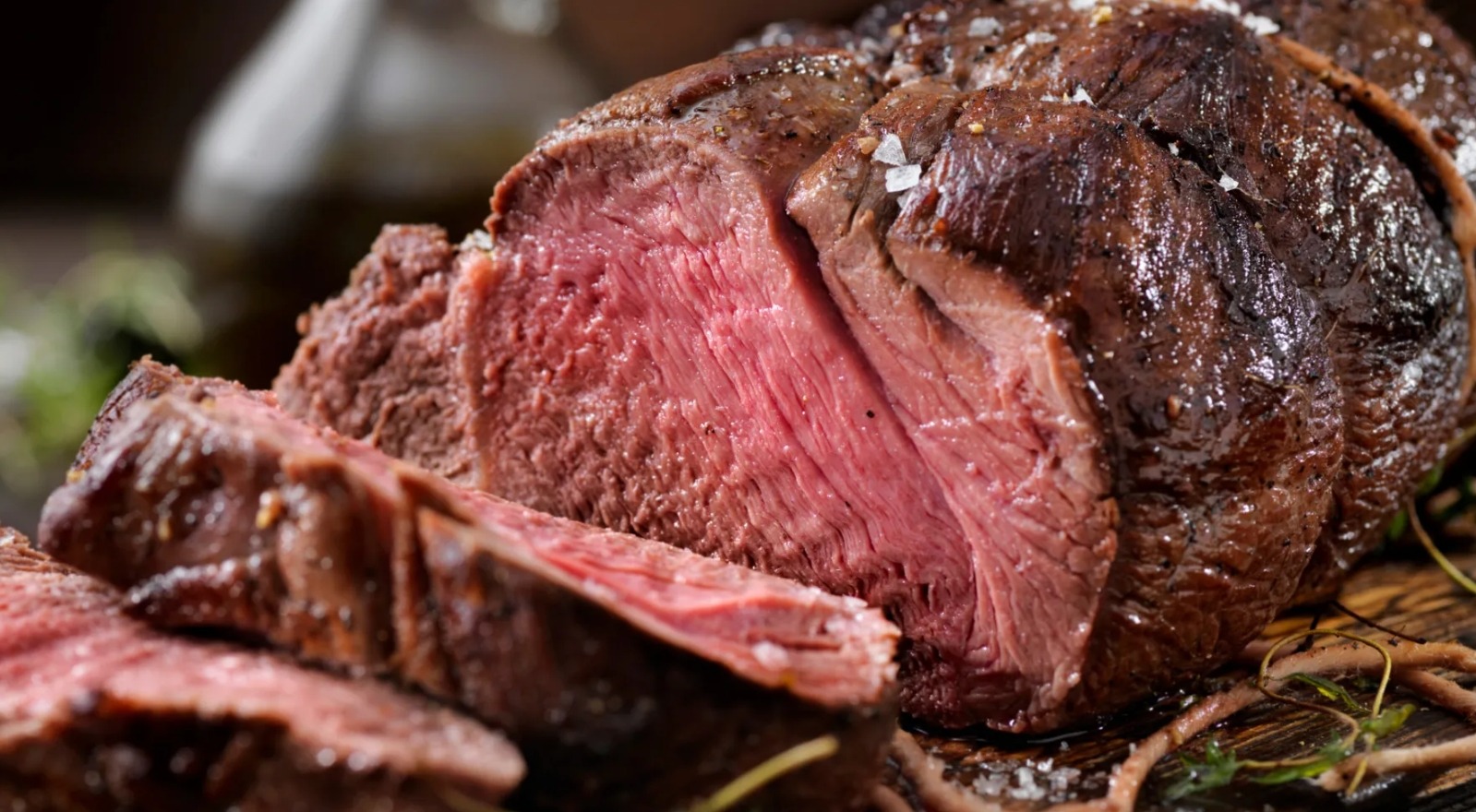
The color of meat is already a clue: the redder it is, the brighter and richer the flavor will be. Image source: popsci.com
What Factors Affect the Taste of Meat
Red muscle fibers and the absence of fat are the main but far from the only reasons. The taste of meat is influenced by an entire cascade of factors, and some of them are truly surprising.
The animal’s diet is arguably the second most significant factor. Wild animals eat whatever they find: grass, bark, acorns, berries, lichens. All of these substances are broken down in the body and deposited in fatty tissue as specific volatile compounds. It’s these compounds that produce earthy, nutty, herbal, or even bitter notes during cooking. Farm animals, on the other hand, eat standardized feed, which is why their taste is more “even” and predictable.
There’s another nuance — stress before slaughter. When an animal is in a state of panic (and a wild animal experiences enormous stress during a hunt), glycogen is depleted in its muscles. After death, this results in less lactic acid accumulating in the meat, the pH remains high, and the texture becomes dark, tough, and dry. Butchers call this “dark cutting,” and such meat spoils faster and has a stronger smell.
Finally, the animal’s age plays an important role. The older the animal, the more collagen in its muscles has had time to form tough, insoluble bonds. Wild boar meat and that of a young piglet are two completely different products, even though genetically they may be nearly identical.
How to Reduce the Gamey Taste in Meat
If the strong taste of wild meat isn’t to your liking, there are several proven ways to soften it. Soaking in milk or kefir for 12–24 hours is a classic technique that draws out some of the myoglobin and volatile compounds. Marinades based on vinegar or citrus work in a similar way, simultaneously tenderizing the fibers.
Long braising at low temperatures also helps: collagen gradually breaks down, the meat becomes softer, and sharp aromas “dissolve” into the sauce. Spices like juniper, rosemary, and thyme are a tried-and-true way to mask and transform the specific aroma.
But there’s another approach. Chefs at upscale restaurants have long worked with game not as a problem but as an advantage. The earthy, nutty, herbal notes of wild meat represent a complexity that’s impossible to reproduce in farm-raised products. In essence, gamey flavor is the concentrated life story of a specific animal: what it ate, where it ran, how long it lived.
Ultimately, “gaminess” is neither good nor bad. It’s simply a different flavor — one you need to get used to or consciously choose to avoid. The important thing is that now you know for certain: behind every nuance of that aroma lies not magic or spoiled product, but the work of muscles, the composition of feed, and a bit of biochemistry. Everything is explainable if you dig a little deeper.