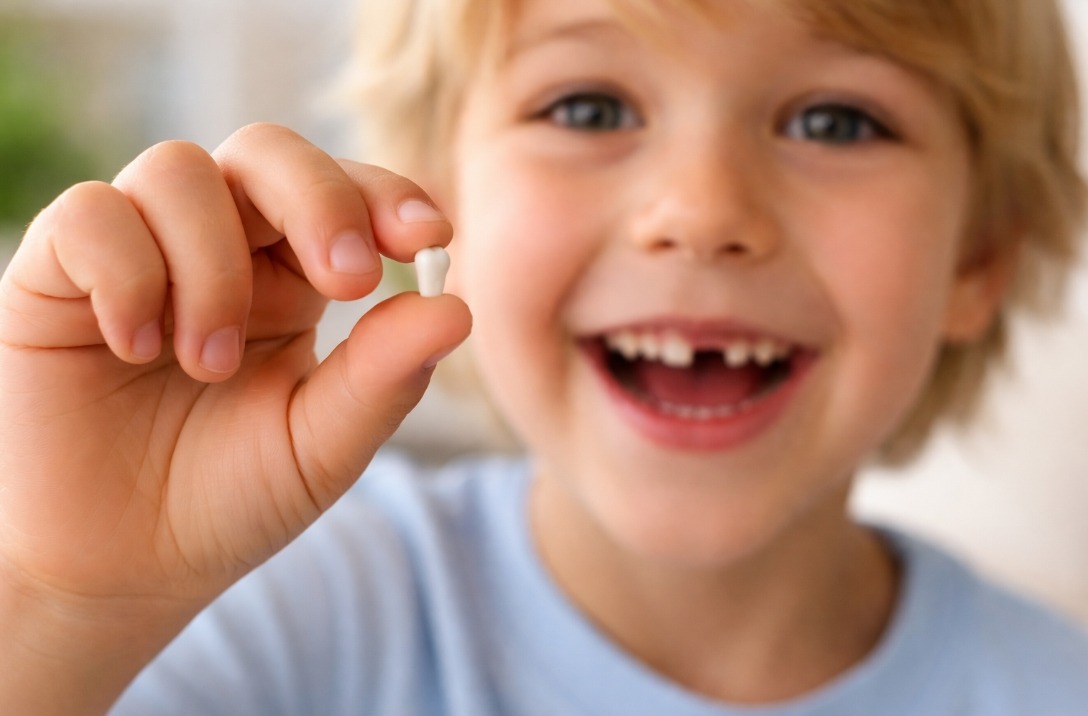
The first teeth usually appear in pairs — on the bottom or top. Parents will remember this moment for a long time, especially the sleepless nights before it
A child’s first teeth are both a joy and a challenge for parents. Sleepless nights, fussiness, and tears from teething pain give way to delight when little white bumps appear in their smile. But it turns out that baby teeth are far more than just a cute stage of growing up — they are a complex biological tool that influences jaw development, speech, and can even tell scientists about the mother’s health during pregnancy.
When Do Baby Teeth Grow In
Many people think that teeth appear around 6-7 months after birth. But in reality, everything starts much earlier. The beginnings of baby teeth form as early as the sixth week of pregnancy — when the embryo is no bigger than a pea. By the 3rd-4th month of intrauterine development, the hard tissue that gives teeth their structure begins to form.
Sometimes babies are born with something resembling teeth. These formations are called natal teeth, but they are not real baby teeth. As Dr. Priyanka Rao explains in Popular Science, these are remnants of embryological development: the tooth bud pushes a small piece of bone tissue from the gum outward. Natal teeth usually fall out within the first month of life, making way for the real ones.
After birth, the first teeth truly emerge between 6 and 7 months of age. Typically, the first to appear are the two lower or two upper central incisors, and then teeth grow from the center outward. By age two, most children already have all 20 baby teeth.
However, if your child is already 15 months old and still has no teeth, there’s no need to panic. Dentists only start to worry closer to age two.
Even when we talk about six to nine months, the variability is very large, — noted Priyanka Rao.
Unlike other developmental milestones that follow a certain sequence, teething in children is one of the most unpredictable processes. It is believed that there is a genetic component, but science has not yet provided a definitive answer.
Why We Need Baby Teeth
You might wonder: why did nature create an entire set of 20 teeth that will be replaced by permanent ones anyway?
The thing is, baby teeth perform several critically important functions at once:
- They “reserve” space for permanent teeth, which begin appearing around age six or seven. Without baby teeth, the jaw may develop incorrectly.
- Teeth emerge precisely when a child needs them for eating. They used to even be called “weaning teeth” — because they appear during the period when a baby is being transitioned from milk to solid food. Simply put, nature synchronized two processes: the need for chewing and the appearance of the tool for it.
- Baby teeth play a key role in speech development. They appear at exactly the time when a child begins to master sounds. The upper front incisors are especially important: they help a child pronounce hard sounds, for example the “t” in “tiger.”
This is precisely why doctors closely monitor speech development in children who have lost baby teeth prematurely due to injury. Speech may continue to develop normally, but in some cases the child will need a speech therapist to learn how to correctly pronounce sounds without teeth.

Baby teeth appear just in time for when a child transitions to solid food. Coincidence? No, evolution
What Baby Teeth Reveal About the Mother’s Pregnancy
But that’s not all. Since baby teeth begin forming at such an early stage of pregnancy, scientists asked a logical question: could they store information about what was happening to the mother during that period?
It turns out they do. Researchers noticed neonatal lines — thin streaks in tooth enamel found in approximately 90% of all baby teeth. These lines form at the moment of birth and record the stress the body experiences during the transition from the womb to the outside world.
In 2021, a study published in the journal JAMA Network Open produced results that astonished the scientific community. Scientists discovered that in children whose mothers experienced depression, anxiety, or had psychiatric problems during pregnancy, the neonatal lines in tooth enamel were significantly wider. Conversely, in children whose mothers received strong social support, the lines were narrower.
In other words, a baby tooth is not just a temporary chewing tool. It is a kind of biological diary that records the mother’s experiences. Scientists continue to investigate whether these lines can predict a child’s future health. If this hypothesis is confirmed, an ordinary lost baby tooth could become valuable diagnostic material.
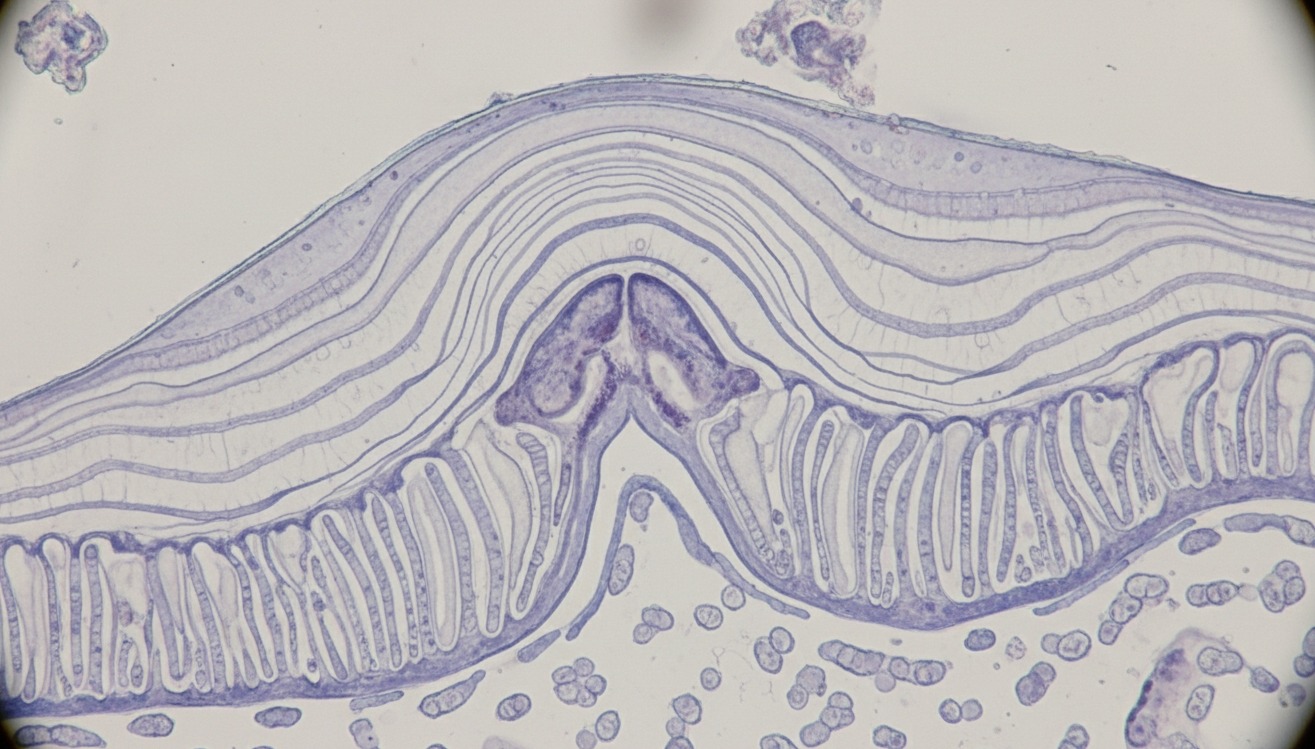
Thin lines in baby tooth enamel store information about what the mother experienced during pregnancy. The Tooth Fairy definitely didn’t expect that.
Should You Brush Baby Teeth
Since baby teeth will fall out anyway, many parents don’t pay much attention to cavities or other problems. But as we’ve already established, baby teeth are not just placeholders. They shape the jaw, help the child eat and speak, and their early loss can trigger a chain of problems.
If a baby tooth falls out or is removed prematurely, neighboring teeth can shift and occupy the freed space. As a result, the permanent tooth simply won’t have enough room to grow in correctly. And that’s a direct path to the orthodontist.
Additionally, losing front teeth at an early age due to injury or cavities can slow down speech development. Dr. Rao emphasizes that in such cases, it is necessary to monitor how the child masters pronunciation and, if needed, involve specialists.
So baby teeth deserve no less attention than permanent ones. You should start brushing them from the moment they appear, and the first visit to the dentist should be planned before the child’s first birthday.