
The hypothalamus works like a thermostat: during illness the target temperature shifts upward
You’re lying under two blankets, your teeth are chattering, your hands are ice-cold, yet the thermometer reads 38°C (100.4°F). Sound familiar? Feeling cold during illness isn’t a glitch — it’s a deliberate strategy by your body: the brain literally switches the internal thermostat to a new set point, and everything below it is perceived as “too cold.” To understand why this happens, we need to trace the chain of events from the first contact with an infection to the moment you finally wake up in a sweat-soaked T-shirt.
Why Body Temperature Rises During Illness
When the body detects a virus or bacterium, immune cells release signaling molecules called pyrogens into the bloodstream. These molecules reach the hypothalamus — a tiny region in the brain that, among other things, is responsible for maintaining body temperature.
The hypothalamus works like a thermostat in your apartment. Normally it’s “set” to approximately 36.6–37°C (97.9–98.6°F). But under the influence of cytokines, the target temperature shifts upward — say, to 38.5°C (101.3°F). Imagine someone turning the home thermostat dial from 20 to 23°C: the boiler kicks in immediately because the room is “cold” relative to the new set point. This is exactly what happens with the body — the current 37°C is too low for the updated set point, and the brain launches emergency heating.
That’s why chills at a temperature of 37–37.5°C (98.6–99.5°F) are an absolutely typical situation. The thermometer shows only a slight increase, but the brain already “wants” more, and the difference between the current and target temperature is felt as a piercing cold.
Why You Shiver During a Fever
To catch up with the new set point, the body uses two parallel mechanisms: it reduces heat loss and actively produces heat.
Reducing heat loss. Blood vessels near the skin surface constrict — a process called vasoconstriction. Warm blood is redirected from the palms, feet, and skin to internal organs. This is why your fingers become ice-cold and your skin turns pale during chills. The skin is genuinely cold to the touch — and this amplifies the subjective sensation that you’re freezing.
Heat production. The most noticeable method is shivering. Skeletal muscles begin to contract rapidly and involuntarily. These contractions are deliberately inefficient: energy is spent not on useful movement but on generating heat. At the same time, the body suppresses sweating — another channel through which heat normally escapes. Additionally, brown adipose tissue is activated, which can burn calories exclusively to produce heat, without any muscular effort.
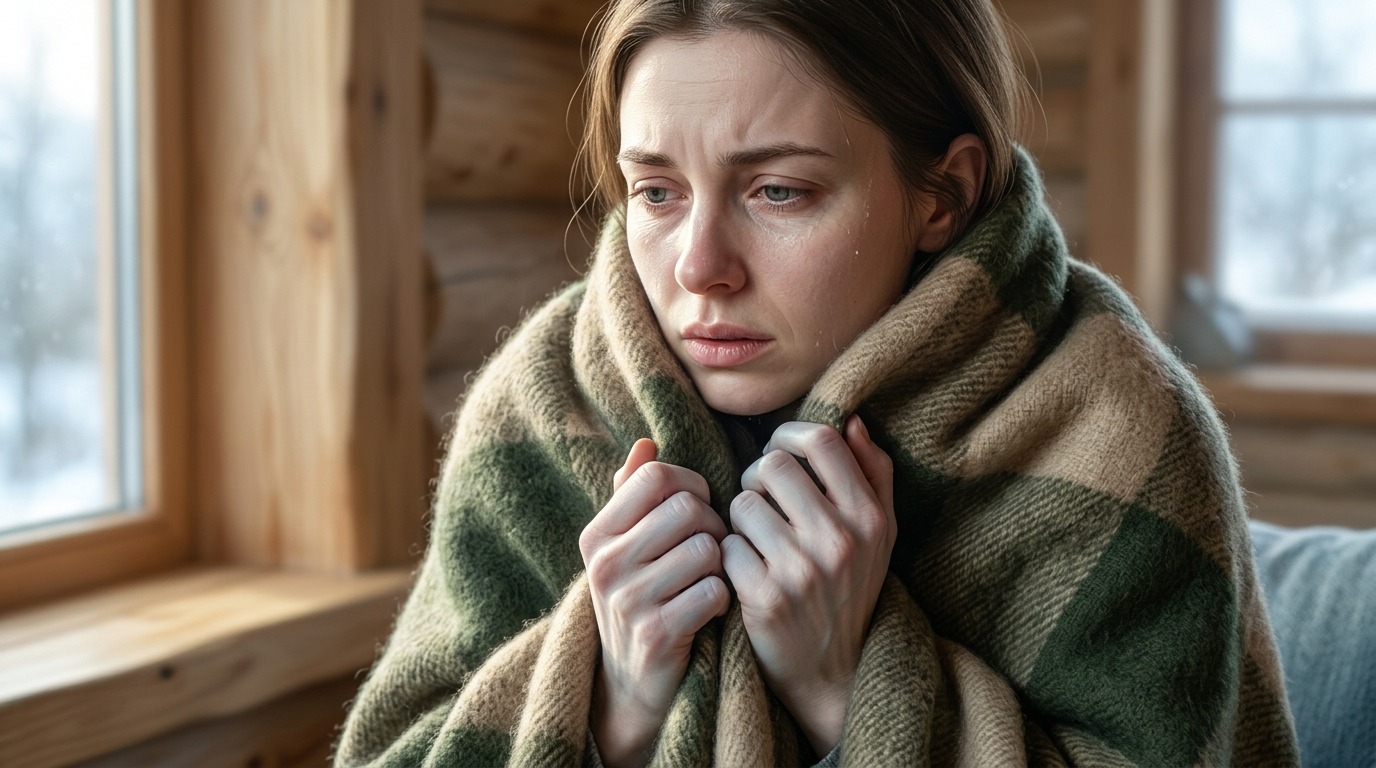
Pale skin and ice-cold hands are signs that the body is redirecting blood to internal organs
When all three mechanisms — vasoconstriction, shivering, and suppression of sweating — work simultaneously, body temperature rises fairly quickly to the new target mark. Once the gap closes, the chills subside — even though you now have a full-blown fever. You stop feeling cold because the “thermostat” and your actual temperature have finally matched.
How High Temperature Helps Fight Illness
All these unpleasant sensations aren’t a bug — they’re a feature. Elevated temperature strikes at the infection from two sides: it slows down pathogen reproduction and speeds up the immune system.
At elevated temperatures, viruses penetrate cells less effectively and copy their genetic material more slowly. Temperatures above 41°C (105.8°F) can even destabilize enzymes that some viruses use for replication — though such high values are rare and dangerous in themselves.
But what happens with immune cells is even more interesting. A study by the University of Geneva showed that when heated from 37 to 41°C, the speed of immune cell movement increased up to tenfold. T-lymphocytes, macrophages, and neutrophils moved significantly faster and penetrated lymphatic vessels in much greater numbers. The effect occurred almost instantly, within seconds. The reason turned out to be a motor protein inside the cells that generates more mechanical force at higher temperatures. Essentially, fever gives immune cells a “turbo mode” exactly when it’s needed most.
There’s another bonus as well: even antibiotics work better at elevated temperatures. In one study, 17 different antibiotics were tested against 432 bacterial strains — and antimicrobial activity consistently increased as temperature rose from 35 to 41.5°C (95 to 106.7°F).
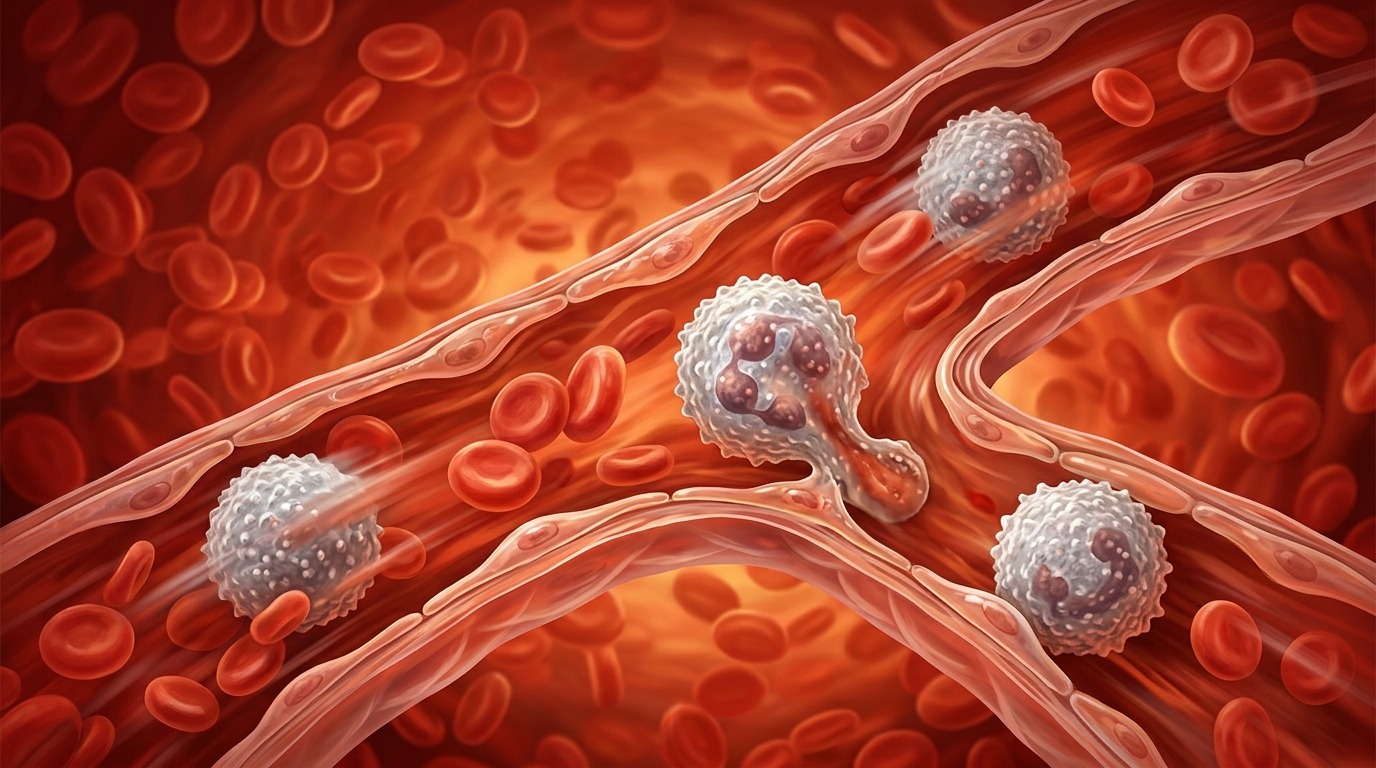
At elevated temperatures, immune cells move significantly faster
Why We Sweat After a High Temperature
When the immune system begins to win, pyrogen production decreases, and the hypothalamus returns the set point to normal values. Now the reverse situation occurs: body temperature is above the new (now normal) target, and the brain activates cooling mechanisms. Skin blood vessels dilate, warm blood rushes to the surface, and sweating kicks in. This is the moment when “the fever breaks” — and exactly why after a night of chills you wake up drenched in sweat.
With many infections, this cycle repeats: the fever rises and recedes over hours or days. That’s why sensations can alternate — you’re either shivering from cold or throwing off the blanket because you’re hot. Each such cycle is another round of the immune system’s battle against infection.
How to Ease Chills During Illness for Adults and Children
The desire to wrap yourself in a blanket during chills is a perfectly natural reaction, and there’s no need to fight it. Trying to cool down during the shivering phase will only worsen how you feel without providing any noticeable benefit. A light cover is a sensible choice while the body is still “catching up” to the new set point.
But it’s important to know the limits. Here are the main guidelines:
- One blanket is usually enough. Multiple thick layers can heat the body above the target mark, trigger excessive sweating, and cause dehydration.
- When the chills pass and you start feeling hot or sweating — remove the extra layers and let your body cool down naturally.
- Drink plenty of fluids throughout the entire cycle: both shivering and sweating use up water faster than usual.
- A temperature above 39.1°C (102.4°F) deserves special attention, especially in young children and elderly people.
- Values above 41°C (105.8°F) are already dangerous — at that level, the fever itself can cause harm, although with ordinary infections this is quite rare.
Plenty of fluids and a light blanket — simple but important measures during chills.
So, chills during illness are not a paradox or a malfunction of the body. It’s a precisely tuned mechanism: the brain deliberately raises the target temperature, the body obediently generates heat, and the fever helps immune cells work faster and more effectively. The unpleasant sensations — shivering, cold hands, the desire to hide under a blanket — are signs that your defenses are already activated. Understanding this logic doesn’t eliminate the need to monitor the numbers on the thermometer, but it allows you to approach chills more calmly: your body knows what it’s doing.