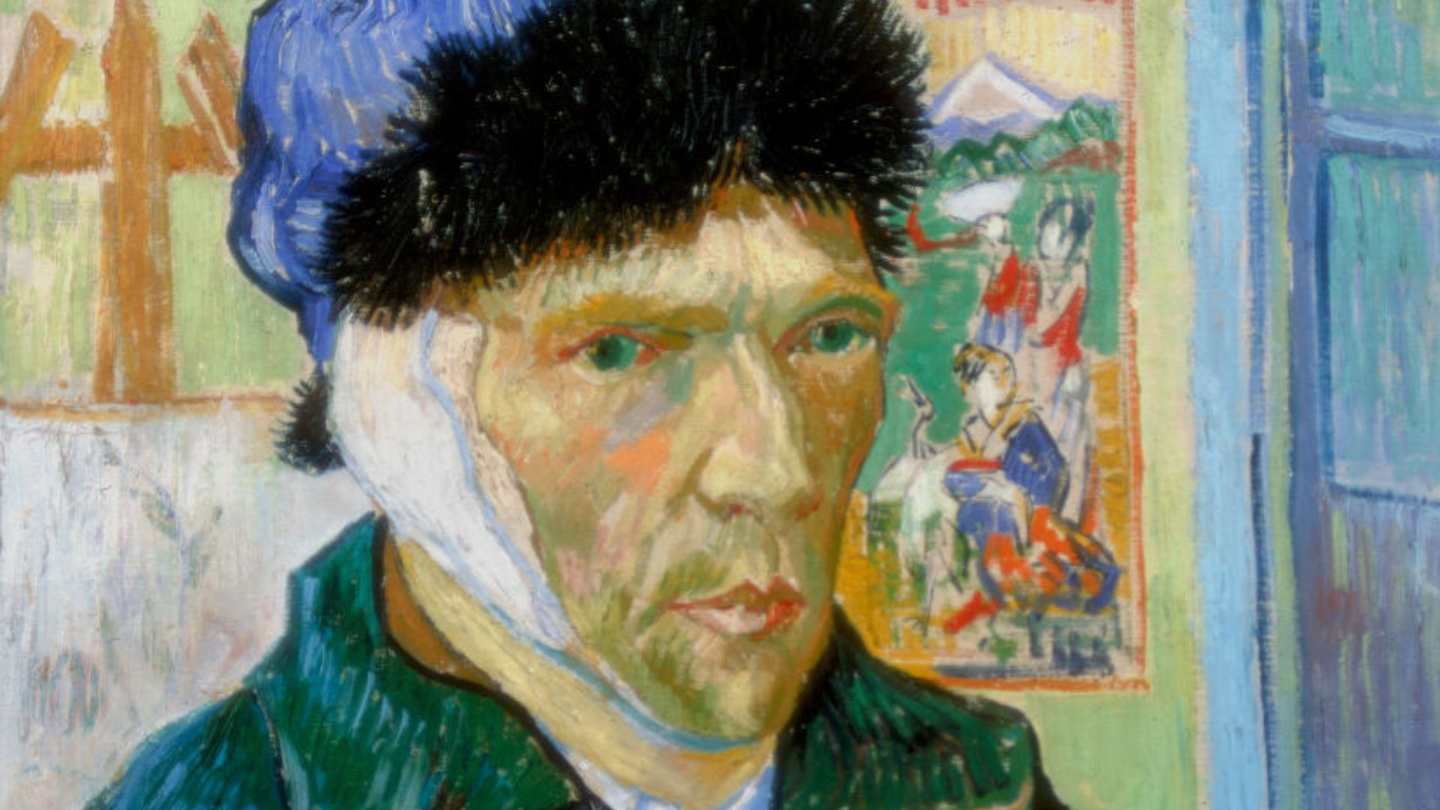
We know that Van Gogh cut off his earlobe, but we don’t realize why
On the evening of December 23, 1888, Dutch painter Vincent van Gogh cut off his left ear with a razor, wrapped it in paper, and brought it to a local brothel. This episode became the most well-known fact from his biography — even more famous than his painting “The Starry Night” or the “Sunflowers” series. But what actually happened that evening, and why did the artist’s condition reach such a breaking point?
Who Was Van Gogh Before He Became an Artist
Before picking up a brush, Van Gogh tried a multitude of professions. He worked as a salesman in an art gallery, a school teacher, a bookseller, and even a preacher among Belgian miners. None of these occupations lasted long. It was his younger brother Theo — an art dealer and Vincent’s main financial and emotional supporter — who suggested he seriously try painting.
Van Gogh started with charcoal sketches, then moved on to oils: he painted peasants, rural landscapes, and still lifes. He studied at an art academy in Belgium, became fascinated with Japanese woodcuts, and their influence would later appear in his portraits. In 1886, Vincent moved in with Theo in Paris, in the Montmartre district, where he discovered Impressionism and Pointillism (a technique in which an image is composed of small dots of pure color).
Two years later, Van Gogh left Paris and headed south to France, to the city of Arles. He rented a small yellow house on Place Lamartine and dreamed of founding an artists’ commune there — a place where painters would work together, inspiring one another. For this, he needed a companion. And he found one — Paul Gauguin.
How the Friendship Between Van Gogh and Gauguin Led to Catastrophe
Van Gogh admired Gauguin’s style — his vivid colors, bold contours, and symbolism. He wrote him enthusiastic letters and eagerly awaited his arrival. To make an impression, Vincent decorated the walls of the room with enormous yellow sunflowers. When Gauguin sent his self-portrait, Van Gogh showed it to every acquaintance in town.
Gauguin arrived in Arles at the end of October 1888. During the first weeks, the artists worked together: they ate, drank, and painted the same subjects but in different techniques. However, behind the outward creative partnership, tension quickly began to build. They had very different temperaments and views on art. Gauguin was a man of the world, confident in himself; Van Gogh was sensitive, impulsive, and emotionally dependent on his attachments.
By December, Gauguin was seriously considering leaving. He wrote to an acquaintance:
I’m staying for now, but I’m ready to leave at any moment.
For Van Gogh, who had invested all his hopes for creative brotherhood in this friendship, the threat of losing his only ally was devastating.
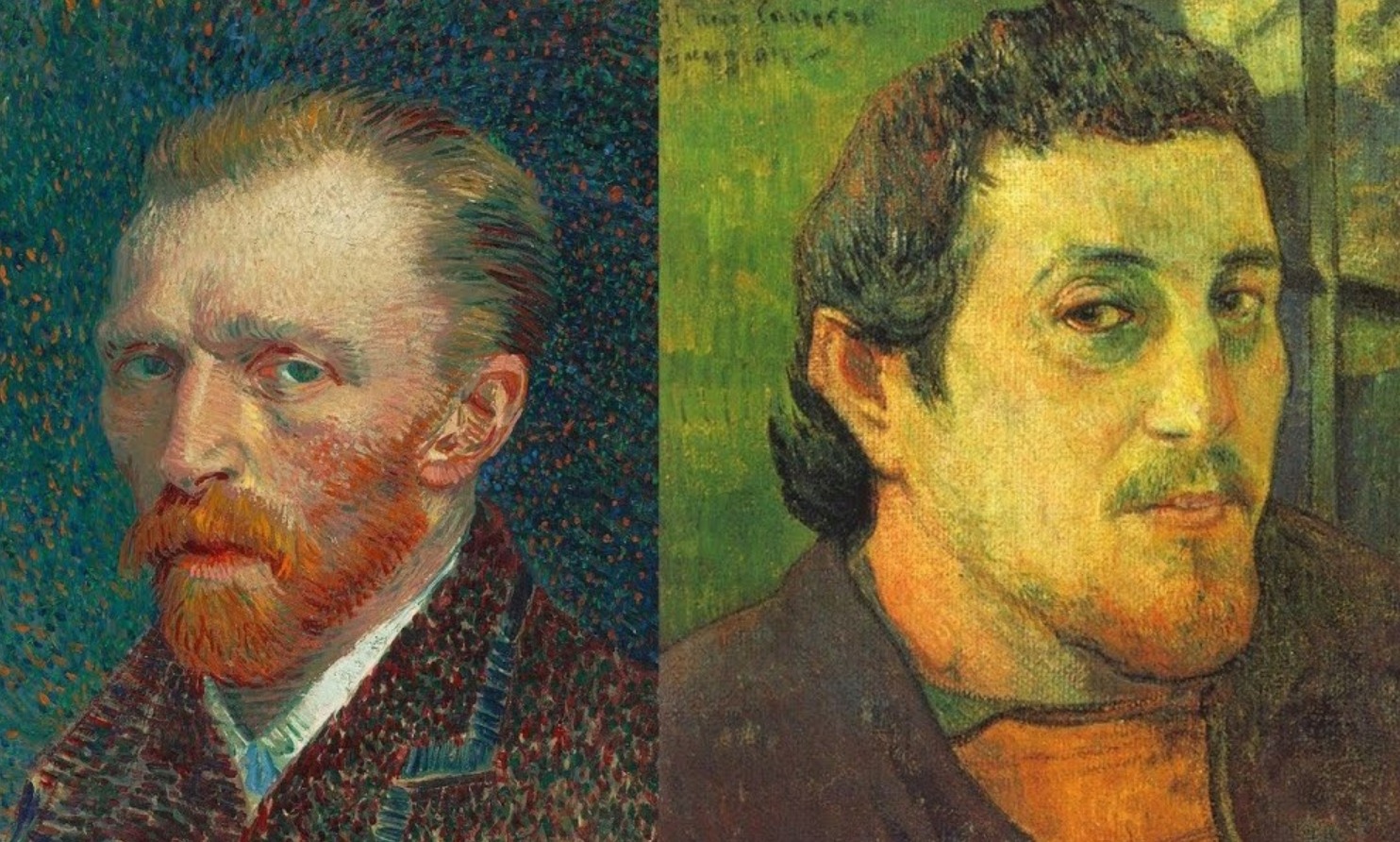
Van Gogh and Paul Gauguin. Image source: Live Science
When Van Gogh Cut Off His Ear
On the evening of December 23, Van Gogh directly asked Gauguin whether he intended to leave. Gauguin answered yes. According to Gauguin’s own recollections, after dinner he went out for a walk to cool off. But soon he heard familiar quick footsteps behind him. Turning around, he saw Van Gogh with an open razor in his hands. Gauguin stopped and looked straight at him — and Vincent, lowering his head, turned and ran back to the house.
What happened next is known from police records and circumstantial evidence. Late that evening, after ten o’clock, Van Gogh took a razor and cut off his left ear. For a long time it was believed that only the earlobe was involved, but research by Bernadette Murphy, based on a discovered letter from Van Gogh’s treating physician Félix Rey, showed that the artist likely cut off the entire ear. Police found blood throughout the house — bloody rags in the studio and bloody handprints on the walls along the way upstairs.
After this, Van Gogh wrapped the severed ear in newspaper, pulled a cap down over the wound, and headed to a nearby brothel. There he asked to see a girl and handed her the package with the words:
Guard this object carefully.
The next morning he was found in bed unconscious, in a pool of blood — the police initially thought he was dead.
Why Van Gogh Cut Off His Ear
There is still no definitive answer. Van Gogh himself left no detailed explanations and, according to the Van Gogh Museum in Amsterdam, avoided recalling the episode. However, researchers have identified several factors that together could have led to the breakdown.
- The quarrel with Gauguin and the collapse of the commune dream. The threat of departure by his only ally meant for Van Gogh the complete failure of his main life project — an artistic brotherhood in the south of France;
- A letter from brother Theo. Researcher Martin Bailey discovered that on that very day Van Gogh received a letter from Theo announcing his engagement. Theo was not just a brother — he financially supported Vincent. Theo’s marriage could mean less money and his brother’s attention shifting to a new family;
- Mental illness. In letters to Theo, Van Gogh mentioned “attacks of madness” and “mental fever.” Doctors gave him various diagnoses: from epilepsy to manic disorder. Scientists in later studies suggested he may have suffered from alcohol withdrawal syndrome — particularly from absinthe abuse;
- Alternative theory: Gauguin may have struck the blow. German historians Hans Kaufmann and Rita Wildegans in their book “Pact of Silence” (2009) suggested that Gauguin himself, an experienced fencer, cut off the ear with a rapier during a scuffle. According to this hypothesis, both artists agreed to keep silent. However, Van Gogh Museum curator Louis van Tilborgh pointed out that the authors did not provide convincing evidence.
Most likely, the cause was a combination of all these factors — emotional exhaustion, fear of loneliness, mental illness, and several painful blows in a single evening.
Self-Portrait with Bandaged Ear by Van Gogh
After the incident, Gauguin left Arles and never returned. Van Gogh remained in the Yellow House alone. And instead of hiding what had happened, he painted his famous “Self-Portrait with Bandaged Ear and Pipe.” In the painting, the 35-year-old Van Gogh looks fifty: a lost gaze, a white bandage on his head, a black pipe clenched in his teeth. The background is divided into two zones — red and orange. The painting gives the impression of a strange calm after a storm.
Shortly after, in May 1889, Van Gogh voluntarily entered the Saint-Paul-de-Mausole psychiatric asylum in Saint-Rémy-de-Provence — a former monastery converted into a hospital for the mentally ill. He was treated with hydrotherapy — alternating hot and cold baths, a common practice at the time. At the asylum, Van Gogh was given a private room and a studio, and it was here, between episodes, that he created some of his most famous works: “The Starry Night,” “Irises,” landscapes with cypresses and olive groves.
In May 1890, Van Gogh left the asylum and moved to Auvers-sur-Oise near Paris, closer to his brother. Two months later, on July 27, 1890, he shot himself in the chest and died two days later. He was 37 years old.
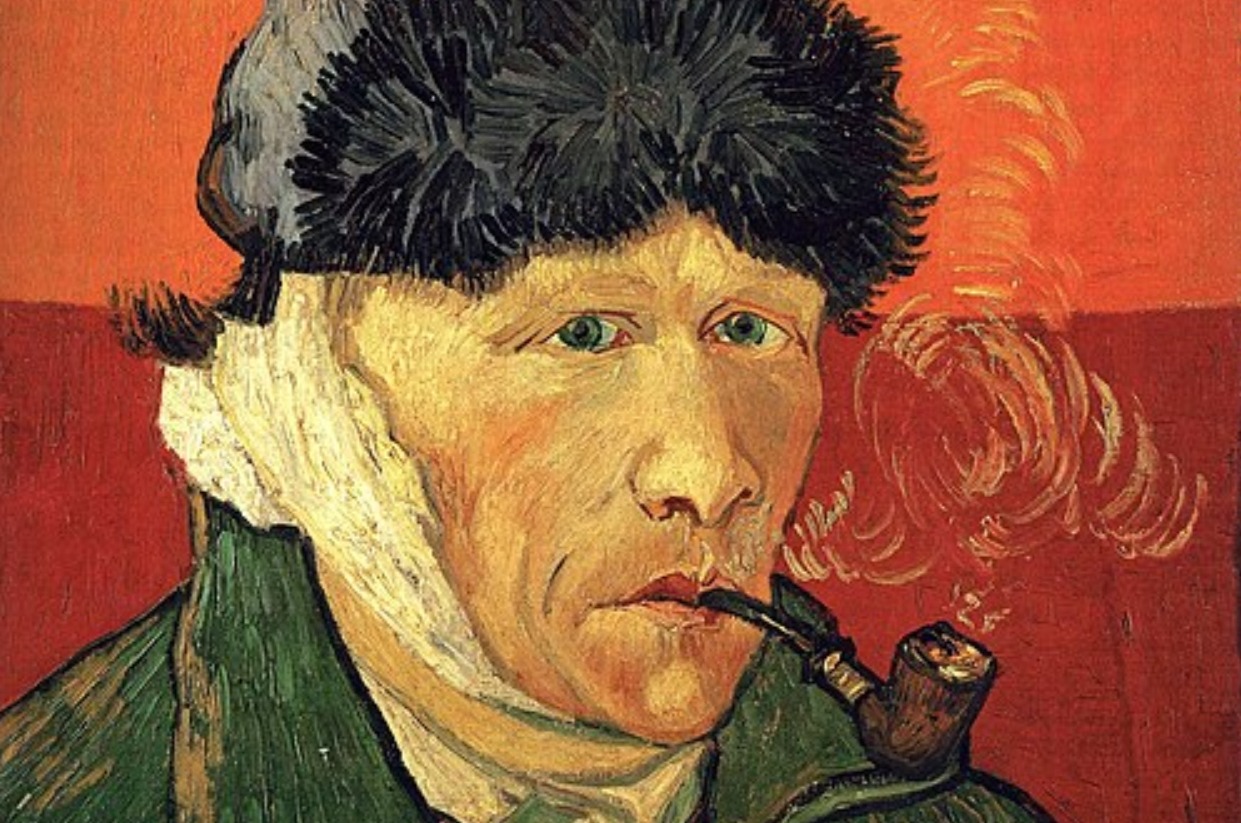
“Self-Portrait with Bandaged Ear and Pipe”
Why Van Gogh Became Famous Only After His Death
During his lifetime, Van Gogh sold only one painting — “The Red Vineyard.” His works were barely noticed by critics or the public. But after his death, the situation began to change, and a key role in this was played by a woman he barely knew.
Theo van Gogh survived his brother by only six months — he died in January 1891. The entire collection of hundreds of paintings and drawings passed to his widow, Johanna van Gogh-Bonger. The young woman, not yet thirty, transported the works to the Dutch town of Bussum and began systematically promoting Vincent’s art: she organized exhibitions, loaned paintings to museums, and built contacts with critics. In 1914, she published Vincent’s letters to Theo — and this became a turning point. The world discovered not just a painter, but a passionate, deeply feeling person with a tragic fate.
The first major retrospective took place in Paris in 1901 at the Bernheim-Jeune gallery: 71 paintings caused a sensation in the art world. It was followed by exhibitions in Amsterdam, Cologne, Berlin, and New York. By the 1920s, Van Gogh had become one of the most influential artists for the Expressionists and Fauvists, and in 1973 a museum dedicated to him opened in Amsterdam, which today welcomes more than 1.5 million visitors per year.
The story of the severed ear is not just an anecdote from the biography of a “mad artist.” It reveals the depth of Van Gogh’s emotional struggles, loneliness, and the tragic circumstances that shaped one of the greatest painters in history.