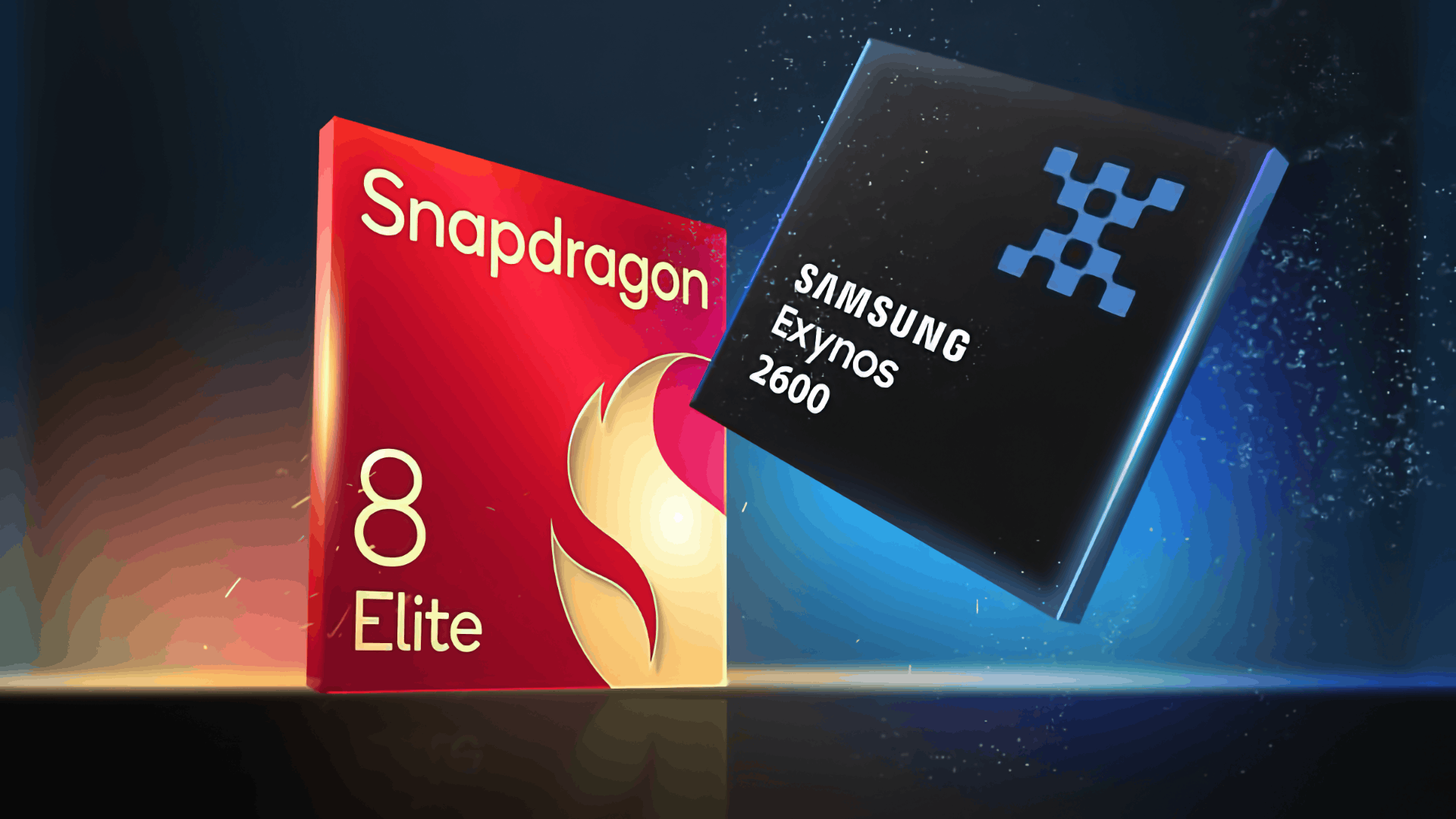
The top-tier Galaxy S26 Ultra got the powerful Snapdragon 8 Elite Gen 5, while the regular S26 and S26+ for Russia come with the Exynos 2600 — Samsung’s in-house chip. So what, you might think? Well, the thing is, for similar or even lower prices, Chinese manufacturers offer noticeably more. And these aren’t just words: the Xiaomi 15 — a flagship with a Snapdragon 8 Elite processor — beat the iPhone 16 Pro in several key parameters and costs significantly less. So here’s the question — why does Samsung charge one and a half times more for something that falls behind less expensive competitors?
And it’s not just about processors. Image: gizmochina.com
Exynos 2600 vs Snapdragon 8 Elite: What’s the Difference
Let’s start with the main thing — the processor. The Exynos 2600 is built on a 2nm process at Samsung’s foundry, while the Snapdragon 8 Elite uses a 3nm process at TSMC. On paper, Samsung looks more advanced. In practice — not quite.
The thing is, Samsung’s 2nm process and TSMC’s 3nm process are different things. For example, TSMC produces chips that are more stable and efficient. That’s exactly why the Snapdragon 8 Elite Gen 5 is 18% faster than the Exynos 2600 in single-threaded GeekBench tests and roughly 5% faster in multi-threaded ones. The same data is confirmed by AnTuTu.
For that kind of money, you’d expect the best. And here’s where things get really interesting. In terms of performance, the 2026 “newcomer” ended up on par with a two-year-old processor:
Geekbench 6
| Test Type | Exynos 2600 | Snapdragon 8 Elite |
|---|---|---|
| Single-thread | 3,040 | 3,008 |
| All cores | 10,290 | 9,730 |
AnTuTu
| Test Type | Exynos 2600 | Snapdragon 8 Elite |
|---|---|---|
| Overall Score | 3,210,573 | 3,162,650 |
| CPU | 1,065,772 | 967,505 |
| GPU | 1,212,568 | 1,200,291 |
| Memory | 413,700 | 381,416 |
| UX | 518,533 | 613,438 |
3DMark Wild Life Extreme
| Exynos 2600 | Snapdragon 8 Elite | |
|---|---|---|
| Score | 6,674 | 6,527 |
By the way, the Exynos 2600 in synthetic benchmarks actually looks slightly stronger: in Geekbench 6, it edges out the Snapdragon 8 Elite by 1% in single-core and by 6% in multi-core, and in AnTuTu it scores around 3.21 million points versus 3.16 million for the Snapdragon. In the 3DMark Wild Life Extreme test, the picture is the same — the Exynos 2600 leads by a minimal margin.
But the devil, as always, is in the details. In the AnTuTu subtest breakdown, the Snapdragon 8 Elite confidently beats the Exynos 2600 in the UX category — that is, in scenarios closest to real-world smartphone use: interface responsiveness, animations, and smoothness. This is what you actually feel in your hands every day, not synthetic CPU scores. Furthermore, synthetic benchmarks are tests under ideal conditions. Under real workloads, especially during extended gaming sessions, performance stability depends on cooling quality and firmware optimization — and Samsung historically has problems with Exynos in this regard.
Galaxy S26 Cameras — The Same as Last Year
This isn’t an exaggeration. The Galaxy S26 and S26+ cameras in 2026 are hardware-identical to last year’s Galaxy S25. The same triple system: 50 MP main module f/1.8, 12 MP ultrawide, and 10 MP telephoto with 3x optical zoom. Samsung only refined the software processing and night mode.
The company bet on artificial intelligence instead of new hardware. All the real improvements went exclusively to the Galaxy S26 Ultra: its main camera got an f/1.4 aperture versus f/1.8 on the regular model, which captures 47% more light when shooting in the dark.
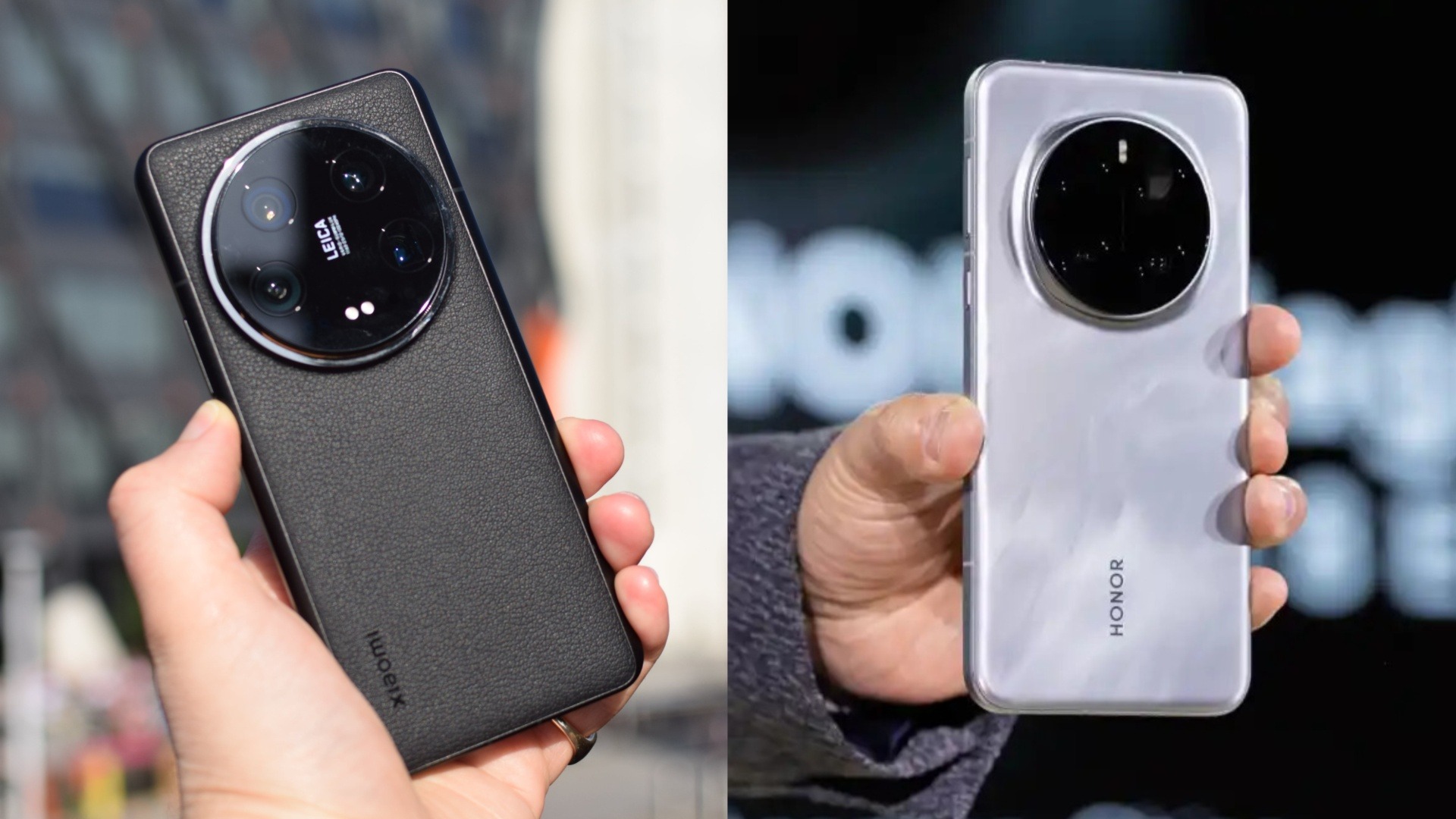
Chinese camera phones are giants that are very hard to compete with. Image: smart.dhgate.com
Now look at what Xiaomi 15 Ultra offers for the same money — a 2025 flagship that you can already buy for less than the Galaxy S26:
- Main camera Sony LYT-900, 1-inch sensor, f/1.63 — one of the largest in the industry
- 200 MP periscope telephoto lens with 4.3x optical zoom
- Two more 50 MP lenses — telephoto and ultrawide
- All developed in partnership with Leica
This isn’t just a different class — it’s a different philosophy. The Galaxy S26 has three cameras with the same hardware as a year ago. Xiaomi has four Leica lenses with a 1-inch main sensor.
How Fast Does the Galaxy S26 Charge
The Galaxy S26 charges at 25W. In 2026, that looks modest and embarrassing. For comparison: the Xiaomi 15 — the one that’s even cheaper than the Ultra — charges at 90W wired and 50W wirelessly. So a full charge takes about 40 minutes. And the OnePlus 15 comes with 80W charging and a 7,300 mAh battery — compared to 4,900 mAh on the Galaxy S26. Completely different weight classes.
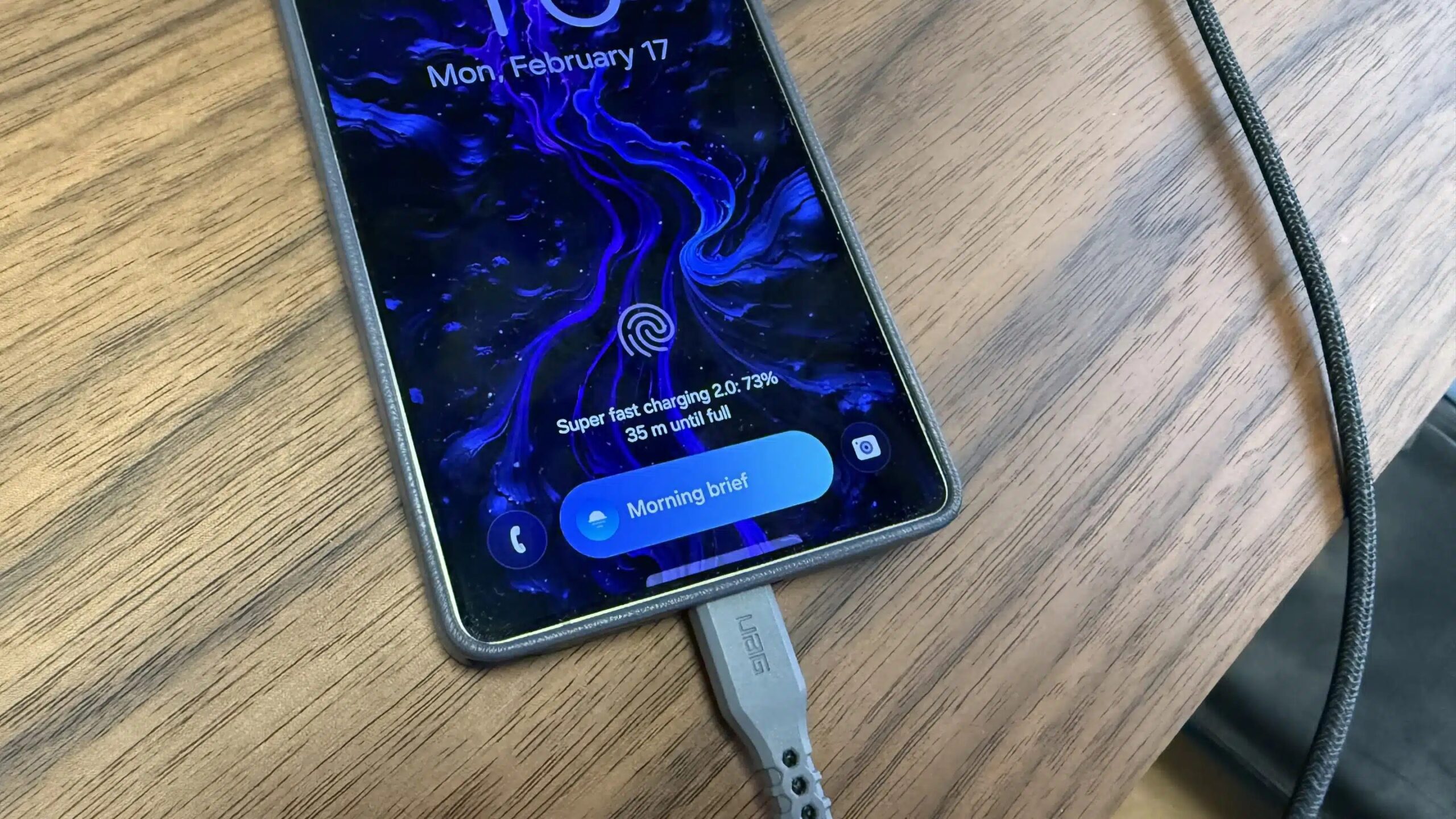
The fastest charging in the S26 Ultra, and even that is only 60W. Image: sammyguru.com
For someone who regularly leaves home for the entire day, this isn’t a technical detail — it’s a real everyday convenience. Samsung responds with talk about One UI optimization and Exynos efficiency. But in battery life tests, the Galaxy S26 Ultra with Snapdragon 8 Elite Gen 5 performed far from impressively, lasting only an hour longer than its predecessor. And that’s considering that OPPO from China beat it by over 2 hours.
Why You Might Still Want to Buy the Galaxy S26
Honest answer: for the ecosystem, software support, and brand. After all, Samsung promises 7 years of Android updates — that’s a real argument. One UI is one of the most user-friendly Android skins. Galaxy AI works natively and is well integrated. Finally, Samsung is a name people trust, and it also has a well-developed service network.
Technically, however, the Galaxy S26 on Exynos 2600 falls behind Chinese competitors from 2025 on several fronts simultaneously:
- The processor is weaker than the Snapdragon 8 Elite Gen 5 found in the Xiaomi 15 and OnePlus 15
- The cameras received no hardware updates
- Charging is 3–4 times slower
Even a year ago, Vivo had flagships that beat Samsung in performance, with the same Snapdragon processors and advanced Zeiss cameras.
But the Galaxy S26 is a good smartphone. It’s just not outstanding by 2026 standards, especially in the Exynos version. If you specifically want a Samsung — get the Ultra with Snapdragon 8 Elite Gen 5, or consider the Galaxy S25, which has dropped sharply in price after the S26 launch and now costs a fraction of its original price.
If what matters most to you is camera quality, performance, and charging speed, then Chinese flagships will give you more for a comparable price. Samsung knows this but isn’t changing anything for now.