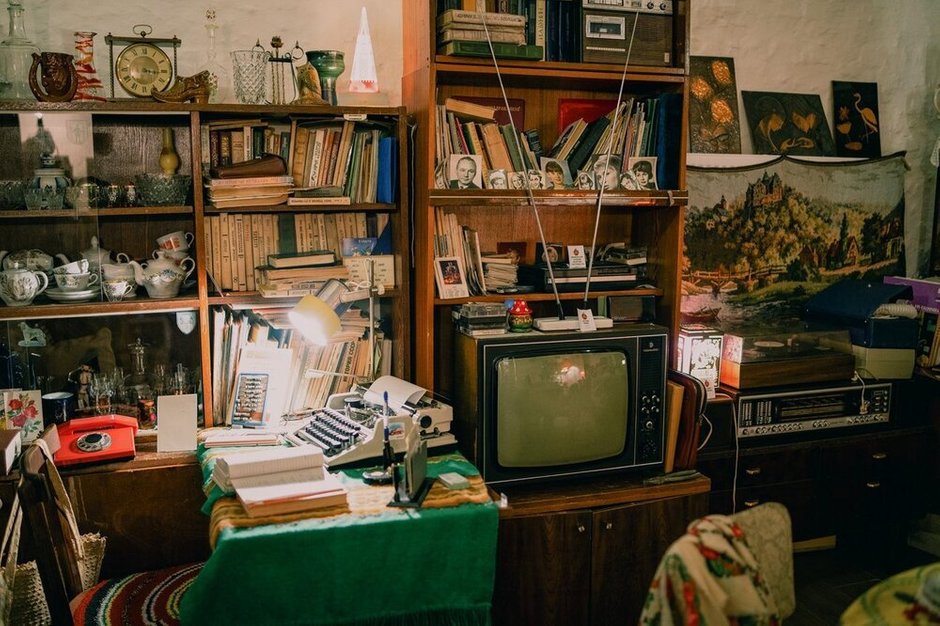
Soviet things even look heavier and more reliable. Image source: inmyroom.ru
A “ZIL” refrigerator worked for 30 years without a single repair. Meanwhile, a modern refrigerator rarely lasts to ten. A Soviet chest of drawers weighs 50 kilograms and has stood rock-solid for over fifty years, while its counterpart from the now-departed IKEA starts falling apart after five. This isn’t nostalgia or a myth — Soviet things really did last longer. But the explanation lies not in some kind of magic, but in specific reasons: the physics of materials, the economics of scarcity, and people’s attitudes toward their belongings.
What Soviet goods were made of
The difference between Soviet and modern furniture is literally the difference between wood and sawdust. Soviet chests of drawers, wardrobes, and tables were made from solid oak, beech, and birch. The density of oak is about 700 kg per cubic meter. This is solid wood that withstands decades of stress, humidity, and temperature fluctuations.
Modern furniture is most often particleboard: sawdust glued together with resin. Walls 5 mm thick instead of the Soviet 15–20 mm. This material swells from the first leak and cannot be restored. According to In My Room, a master restorer with 30 years of experience described the difference this way:
Solid oak, beech, or walnut means a minimum of 50 years of service. I have a Soviet oak workbench from 1968 in my workshop. I sanded it down, applied oil — it looks brand new.
The same applied to plywood. Soviet birch plywood lasted 30–50 years: layers of veneer were glued perpendicular to each other, which provided high bending and tensile strength. Modern plywood is often made from cheaper raw materials with lower-quality adhesive, and lasts noticeably less.
Scarce goods in the USSR
Here’s a paradox that is rarely articulated: scarcity, the main curse of the Soviet economy, turned out to be one of the reasons for the longevity of things. But not because factories tried harder — rather because people treated what they bought in a completely different way.
Buying a new refrigerator, television, washing machine, or especially a microwave in the USSR was an event. Queues, waiting lists, connections. When an item finally appeared in the home, it was guarded like the apple of one’s eye. The television was covered with a doily. The refrigerator was defrosted strictly on schedule. Furniture was polished. Clothing was mended. Shoes were taken to be repaired, not thrown away.
The modern approach is the exact opposite: if it breaks — buy a new one. Manufacturers understand this and deliberately build a limited lifespan into their products. This phenomenon has a name — “planned obsolescence.” In the Soviet economy, such a concept simply did not exist.
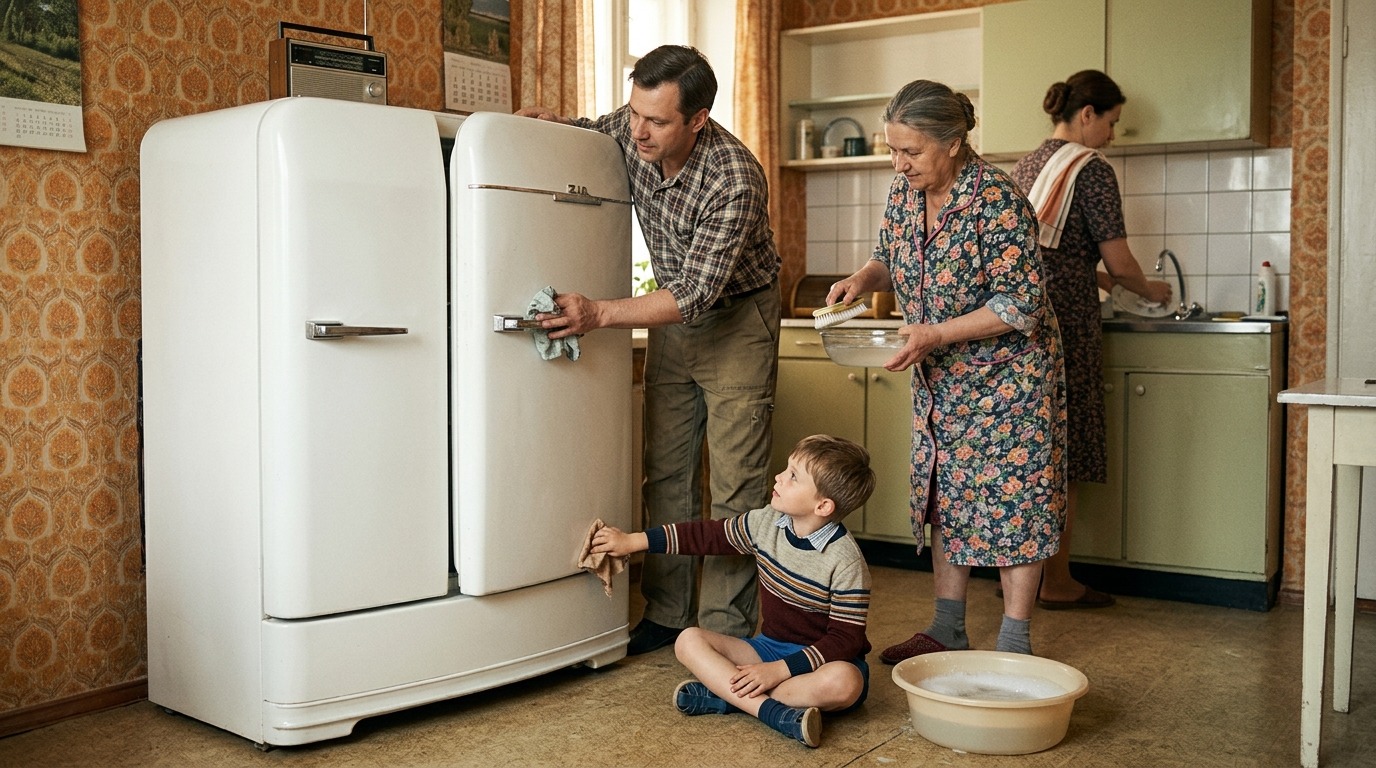
In Soviet families, household appliances were cared for especially thoroughly — replacements were nearly impossible to get
Repairing Soviet appliances and furniture
Repairability is another reason why Soviet things lasted so long. And it comes down to design: standard parts, simple joints, available spare parts. A television could be taken to a repairman, who would replace a burned-out tube. Refrigerators were fixed at home. Furniture was reglued, reupholstered, and repainted.
Joints in Soviet furniture were made using the “mortise and tenon” principle with wooden dowels. This is:
- stronger than modern cam locks and confirmat screws (plastic and metal fasteners for flat-pack furniture);
- more durable, because wood doesn’t loosen as quickly as metal in particleboard;
- more repairable — such a joint can be disassembled, reglued, and reassembled.
Modern appliances are often fundamentally unrepairable. Parts are soldered in permanently, casings are glued rather than screwed together. It’s more profitable for the manufacturer if you buy a new device rather than fix the old one. This is an entire business model that simply didn’t exist in the USSR’s planned economy.
Soviet state standards and quality marks
The USSR had a state quality control system. Its most famous symbol was the quality mark: a pentagon with the letter “K.” It was awarded to products that met certain standards. Enterprises received monetary rewards for complying with technical requirements, and penalties for defects.
Of course, the system was far from perfect. Not all products with the quality mark were truly good — bureaucracy and quotas sometimes outweighed real quality control. But the very principle of state responsibility for quality worked: manufacturers knew that systematic defects could lead to real sanctions. Today, non-compliance with standards is most often punished only with fines — and not always even that.
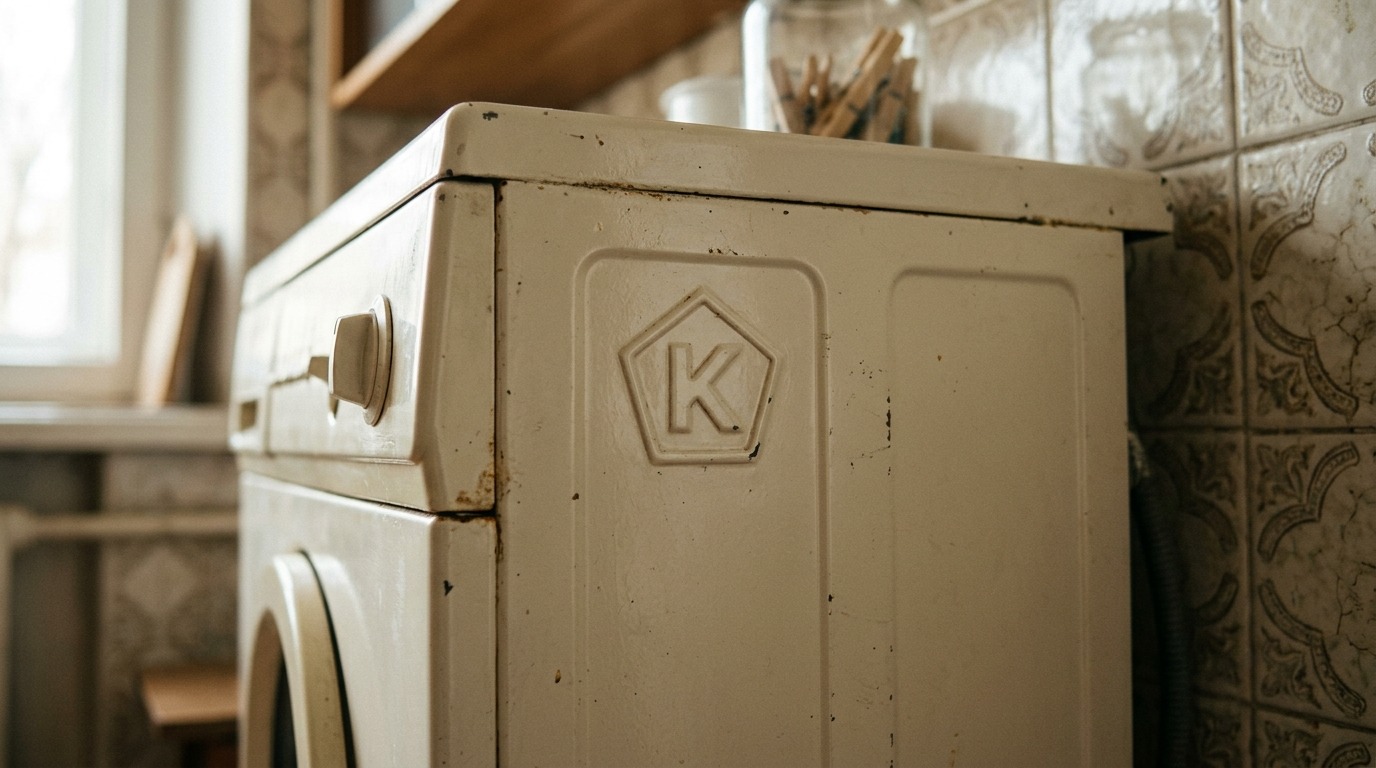
The Soviet quality mark, a pentagon with the letter “K,” was placed on products that passed state inspection
Why not all USSR-made goods were high quality
There’s another important factor that is often overlooked when talking about “great Soviet quality.” This is survivorship bias — a cognitive distortion in which we judge the whole based on what survived.
Only what was well-made has survived to our day. Poor furniture fell apart and ended up in the dump decades ago. Low-quality appliances broke down and were thrown away. And what worked — survived and gives us the impression that “everything used to be better.”
In 50 years, people will look at the surviving things of our time and say:
“They really knew how to make things in the 2020s!”
Because by that time, all the cheap products will already be in landfills, while the quality items will remain.
How to make modern things last longer
The Soviet approach to belongings is quite applicable today if you translate it into modern terms. Here are a few principles that worked then and still work today:
- Choose furniture made from solid wood or quality plywood instead of cheap particleboard — yes, it’s more expensive, but it will last many times longer;
- Pay attention to the type of joints: mortise-and-tenon and wooden dowels are more reliable than confirmat screws;
- Buy appliances that can be disassembled and repaired — some manufacturers still make repairable devices;
- Take care of your things: regularly service appliances, clean them, lubricate them, don’t ignore minor breakdowns;
- Repair rather than discard — often replacing a single part costs less than a new purchase and extends the life of the item by years.
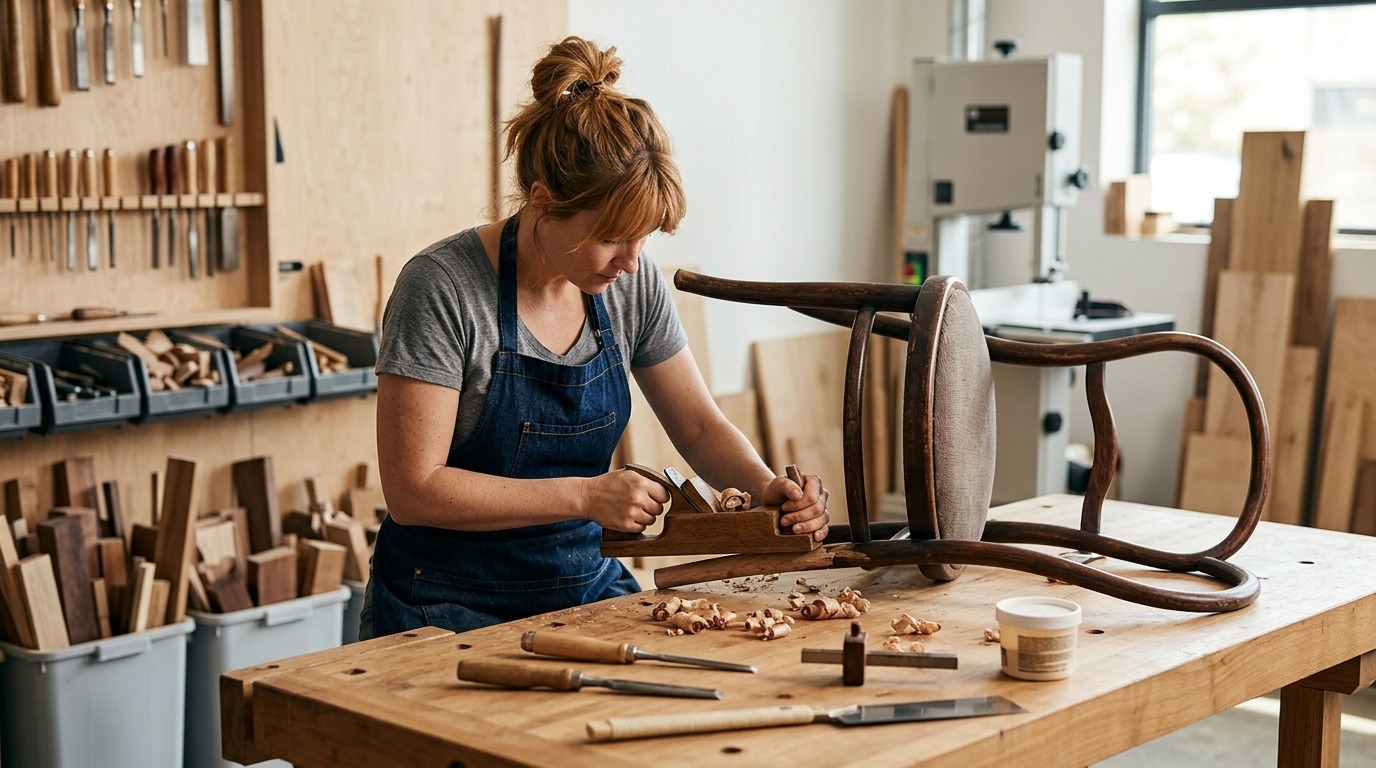
Repairing wooden furniture using traditional methods — an approach that worked in the USSR and hasn’t lost its relevance today
Soviet things lasted a long time not thanks to some magic of the planned economy. Three specific factors: quality materials, repairable design, and careful treatment by owners — explain almost everything. And survivorship bias adds a layer of nostalgia to reality that’s worth keeping in mind. The good news is that all these principles are still available today: buy less but better, repair, take care of things — and they’ll last just as long as your grandmother’s chest of drawers.