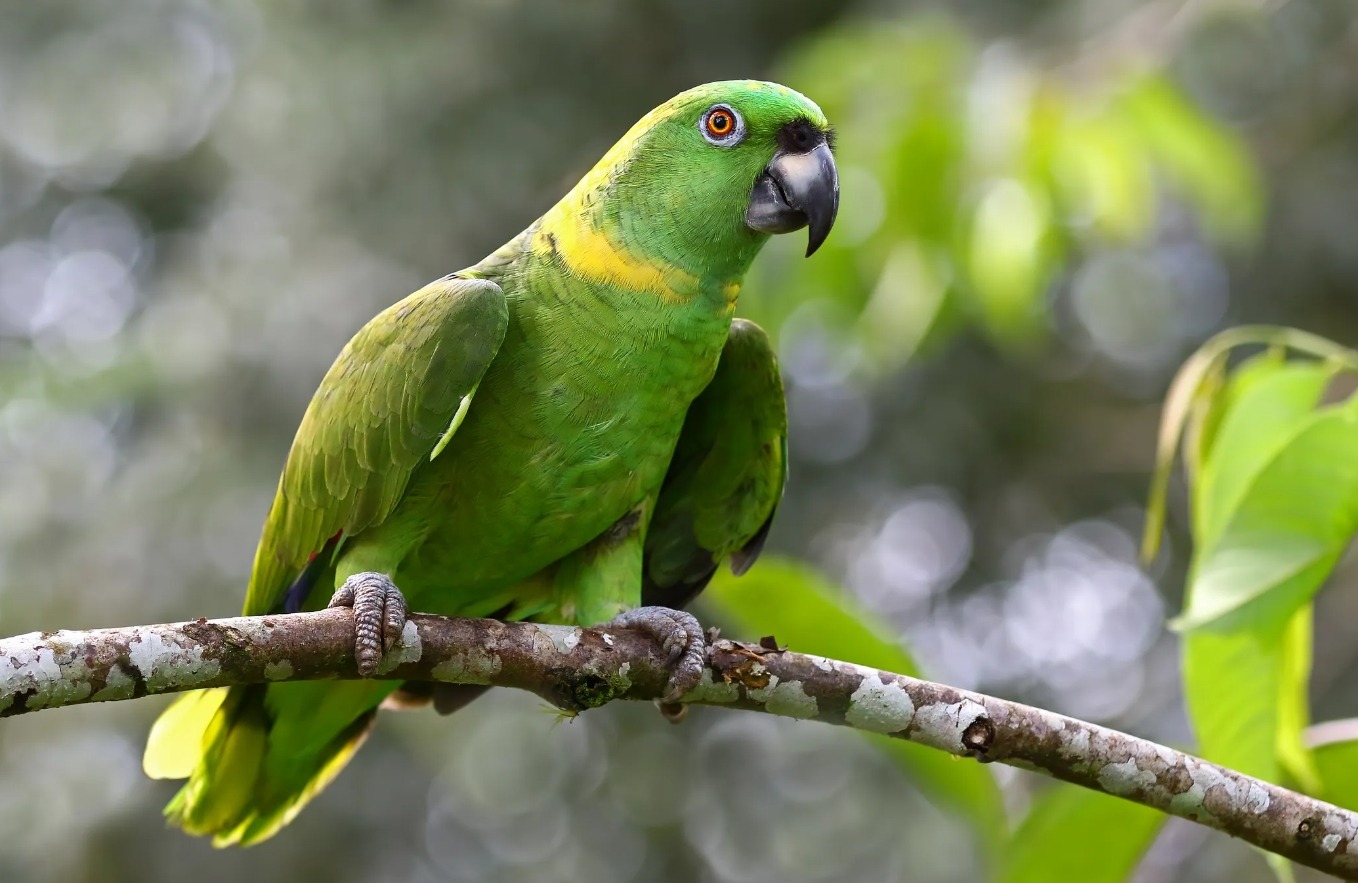
A bird’s brain may weigh just a few grams, but its neuron density is colossal
Have you ever wondered why your parrot can say “hello,” while, say, a dog or cat that has lived alongside you for years cannot? You’d think mammals would be much closer to us in brain structure. But it’s birds — which diverged from our evolutionary branch hundreds of millions of years ago — that have mastered human speech better than any other animals on the planet. And it’s not simply a matter of copying sounds.
Which Birds Can Talk
When it comes to talking birds, parrots are the first thing that comes to mind. But in reality, the ability to imitate human speech is found in representatives of three unrelated groups of birds: parrots, songbirds (passerines), and hummingbirds. This phenomenon is called vocal learning, and it is incredibly rare in the animal kingdom. According to Popular Science, out of more than 10,000 bird species, only a few hundred are capable of true imitation.
Among the record holders: the African grey parrot, the Indian myna, starlings, and — surprisingly — some crows. An African grey named Alex, who worked with researcher Irene Pepperberg, knew over 100 words and could answer questions about the color, shape, and number of objects. This was not mechanical repetition: the bird understood context.
On the other hand, chickens and pigeons, despite being so common around humans, are incapable of learning a single word. Their brains simply lack the necessary structures. It turns out that the ability to speak is not a matter of proximity to humans, but a matter of neural architecture.
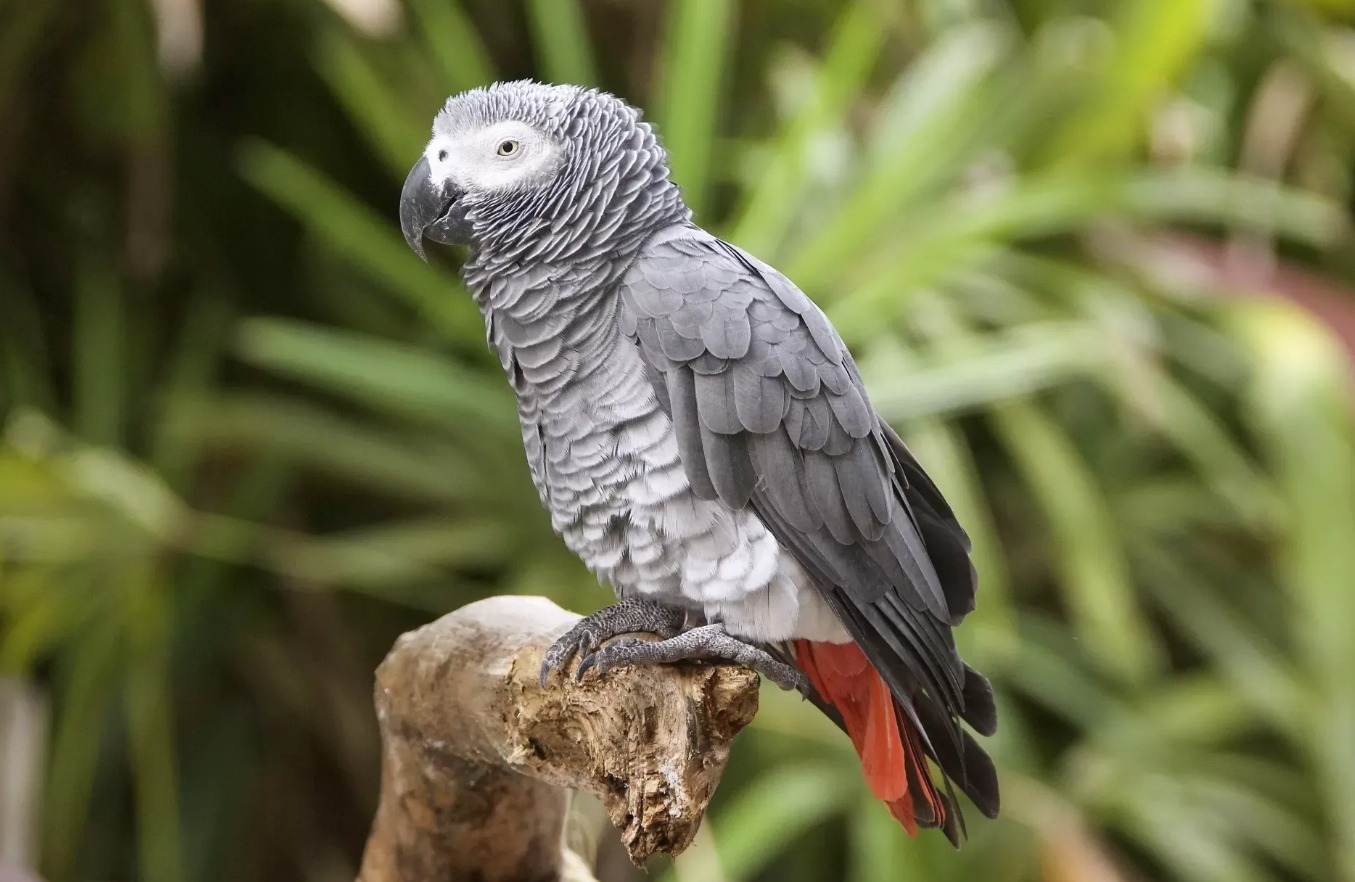
African grey parrot. Image source: bigenc.ru
How Bird Brains Are Structured
For a long time, scientists believed that bird brains were too small and primitive for complex cognitive tasks. The very expression “bird brain” became synonymous with stupidity. But research over the past two decades has overturned these ideas. Particularly telling was the story of Australian parrots teaching each other to steal from trash bins.
In birds capable of vocal learning, the brain contains special groups of neurons called “song nuclei.” These structures are located in the forebrain and are remarkably similar in function to Broca’s and Wernicke’s areas in humans — the very regions responsible for speech production and comprehension. Put simply, talking birds and humans arrived at a similar solution to the same problem, but completely independently of each other.
This phenomenon is called convergent evolution. Scientists discovered that parrots have not only basic “song nuclei” but also an additional “shell” around them — a kind of neural superstructure. No such dual structure has been found in any other birds. It is this structure, according to ornithologists, that allows parrots not just to memorize sounds, but to manipulate them: combining syllables, changing intonation, and even adapting to a specific conversation partner.
Why Parrots Repeat Words
In the wild, parrots are far from silent. They communicate with each other using a complex system of calls, whistles, and clicks. But there’s a nuance: each parrot in a flock learns its vocalizations from other members. A chick is not born knowing the “language” of its group — it picks it up by listening to adult birds. This fundamentally distinguishes parrots from, say, cuckoos, which know their song from birth.
When a parrot ends up in a human home, it perceives its owner as a flock member. And it begins doing what it would do in nature: copying the sounds around it in order to “fit in” with the social group. Human speech for a parrot is simply another form of “flock dialect.” This is why birds often repeat words that are spoken emotionally and frequently: names, greetings, swear words.
Interestingly, parrots are capable of distinguishing context. Studies have shown that some African greys use the word “no” specifically in situations of refusal, and the word “want” when they see food. This isn’t a complete understanding of grammar, but it’s far from meaningless repetition either. For comparison, dolphins — also considered intellectuals of the animal world — are physically unable to reproduce human words due to the structure of their vocal apparatus. Parrots have no such problem: their syrinx (the vocal organ of birds) is incredibly flexible.
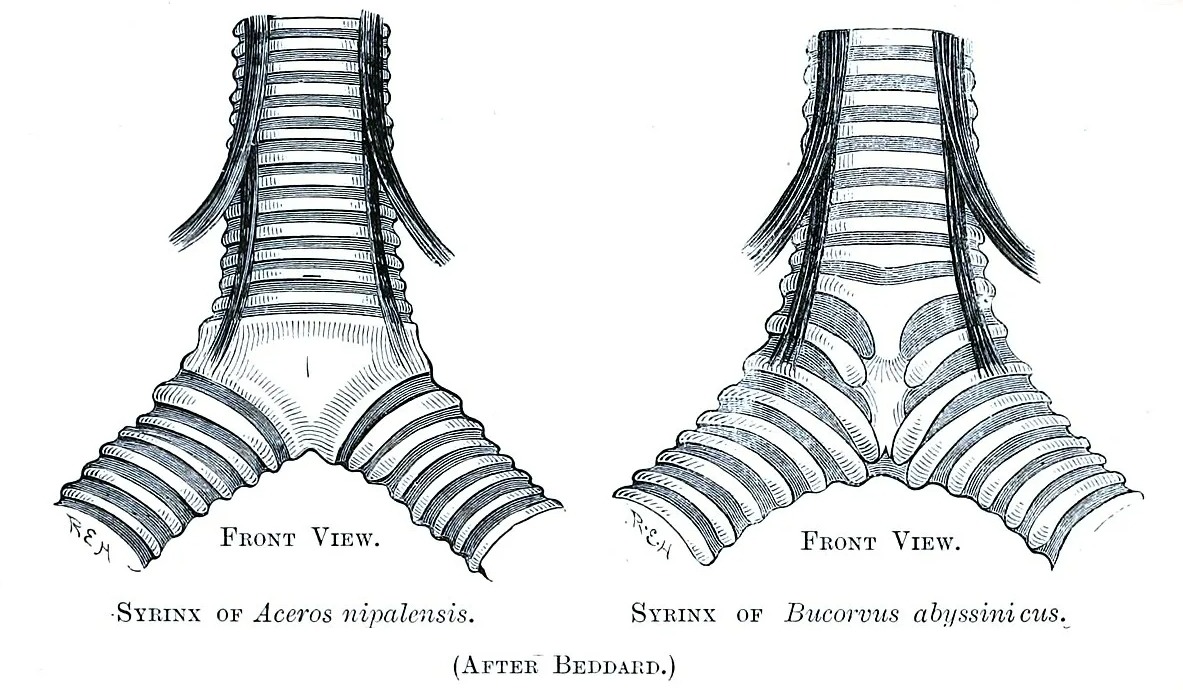
Bird syrinx. Image source: wikipedia.org
Which Genes Are Responsible for Birds’ Ability to Speak
In 2014, an international team of scientists conducted a large-scale genomic study, the results of which were published by the journal Science. They compared the genomes of 48 bird species and discovered that in all “talking” species, a set of more than 50 genes associated with the formation of neural connections in “song nuclei” is active. Moreover, many of these genes are also active in the speech areas of the human brain.
One of the key genes, FOXP2, has long been known in the genetics of speech. A mutation in this gene in humans leads to severe speech disorders. In songbirds, FOXP2 expression changes during the process of learning to sing: when a bird is learning a new melody, the level of FOXP2 protein in the brain decreases, and when the song is “consolidated,” it returns to normal. In other words, at the molecular level, a bird learns to speak by the same principles as a human child.
Another important discovery: unique transposons (mobile genetic elements) were found in parrots near genes that control brain development. These “jumping genes” may have played the role of a kind of evolutionary accelerator, giving parrots their exceptional vocal abilities. Research continues, but it is already clear that speech is not a unique human gift, but an evolutionary tool that nature “invented” at least twice.
How to Teach a Parrot to Talk
Short answer: no. If a bird doesn’t have “song nuclei” in its brain, no amount of training will help. A chicken, duck, or ostrich will never speak, no matter how many times you repeat “Hello, Kesha!” to them. But even among potentially talking species, not every individual will show talent.
Much depends on age and social conditions. Young parrots that come to humans as chicks learn significantly faster than adults. The critical period for learning in African greys falls within the first 1.5–2 years of life. After that, the acquisition of new words slows down, though it doesn’t stop entirely.
Among practical recommendations: repeat words with pronounced intonation, tie them to specific actions (for example, “hello” when entering the room), and communicate with the bird regularly. Parrots living in isolation speak much worse or don’t speak at all. For them, speech is a way to be part of a group, not a circus trick.