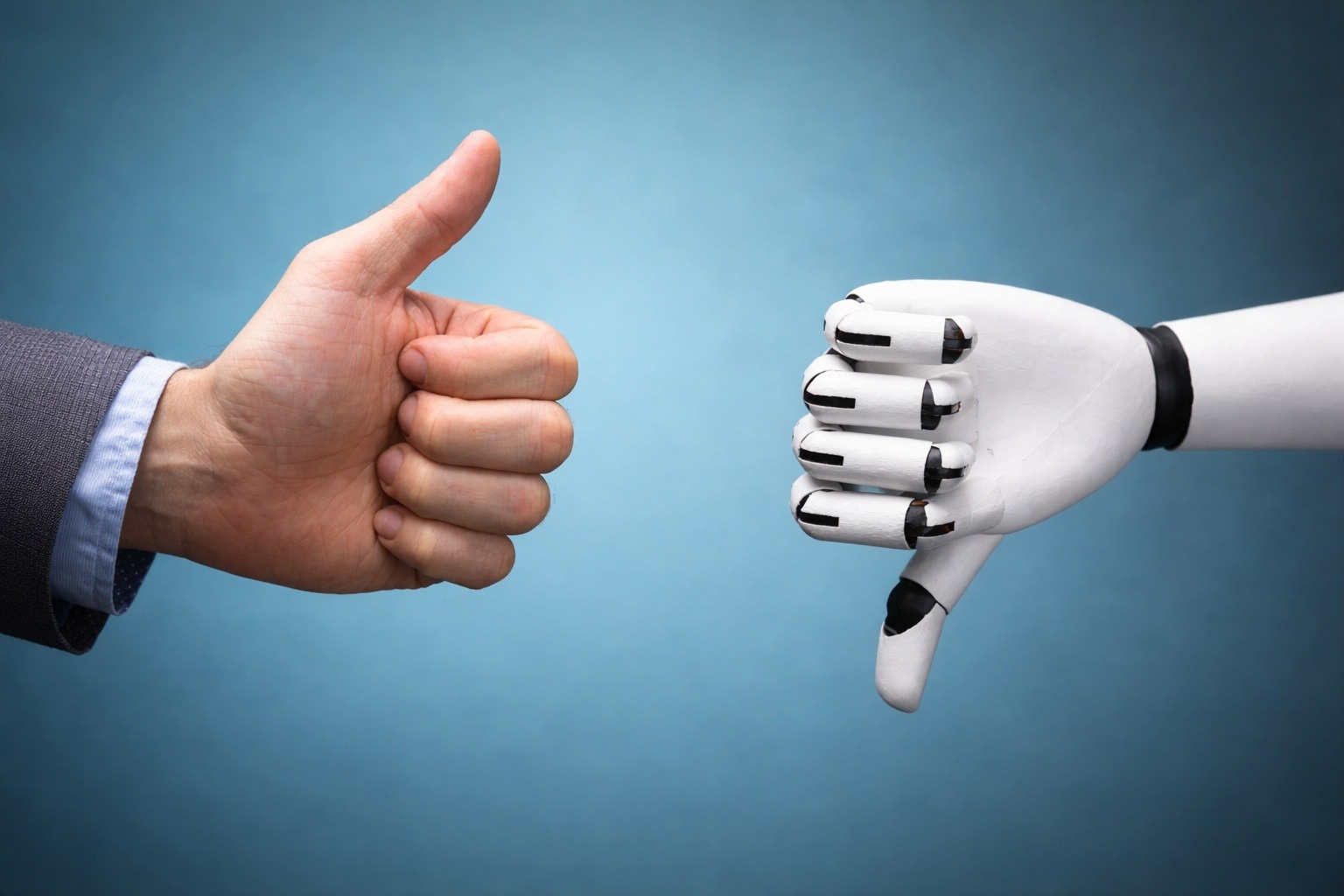
In the future, artificial intelligence will become ruder, but it will all happen “under the hood”
We’re used to developers trying to make neural networks as polite and correct as possible. Models apologize, clarify, and try not to offend anyone. But what if rudeness actually helps with thinking? A new study has shown that AI agents that were intentionally made more blunt and assertive perform significantly better on complex logic and reasoning tasks. It sounds absurd, but there’s a very concrete mechanism behind it.
Why Scientists Made Neural Networks Rude
When multiple AI agents work together on a single task, they communicate with each other through text messages, just like people in a work chat. One proposes a solution, another verifies it, a third adds to it. This approach is called multi-agent interaction, and it’s already actively used in complex systems based on large language models.
A group of scientists decided to test a non-obvious hypothesis: what if the tone of communication between agents affects the quality of their work? To do this, they assigned different “personalities” to the agents through system prompts. Some were instructed to be polite, diplomatic, and delicate. Others, on the contrary, were given a sharp, straightforward, and even rude communication style. Simply put, some agents “asked” colleagues to reconsider an answer, while others directly pointed out errors and demanded corrections.
The idea isn’t to create an angry robot. The point is that politeness in language models often leads to “agreeableness”: an agent tends to accept someone else’s answer even if it’s wrong, just to avoid conflict. A rude agent, however, doesn’t hesitate to argue and push back, which, as it turns out, is very useful for finding the correct solution.

Often, the “kindness” of neural networks is genuinely annoying
Why Rude Neural Networks Are Better Than Polite Ones
The experimental results turned out to be surprisingly clear-cut. AI agents with a “rude” personality showed noticeably higher results on complex tasks requiring multi-step reasoning: mathematics, logic puzzles, and programming challenges. The difference in answer accuracy was statistically significant.
But why does this happen? The mechanism is actually quite simple. When an agent is set to be polite, it avoids direct objections. If one agent proposes an incorrect solution, the polite partner tends to agree or gently suggest an alternative without insisting. This is a well-known problem in multi-agent systems called “consensus collapse”: agents quickly reach a shared opinion, but that opinion may be wrong.
A rude agent acts differently. It directly points out errors, insists on its position, and forces the other party to double-check every step. This creates a kind of “productive conflict” that forces the system to analyze the task more deeply. By comparison, it’s similar to the difference between a team where everyone nods at the boss and a team where everyone is ready to argue until they’re hoarse. The second one usually makes better decisions.
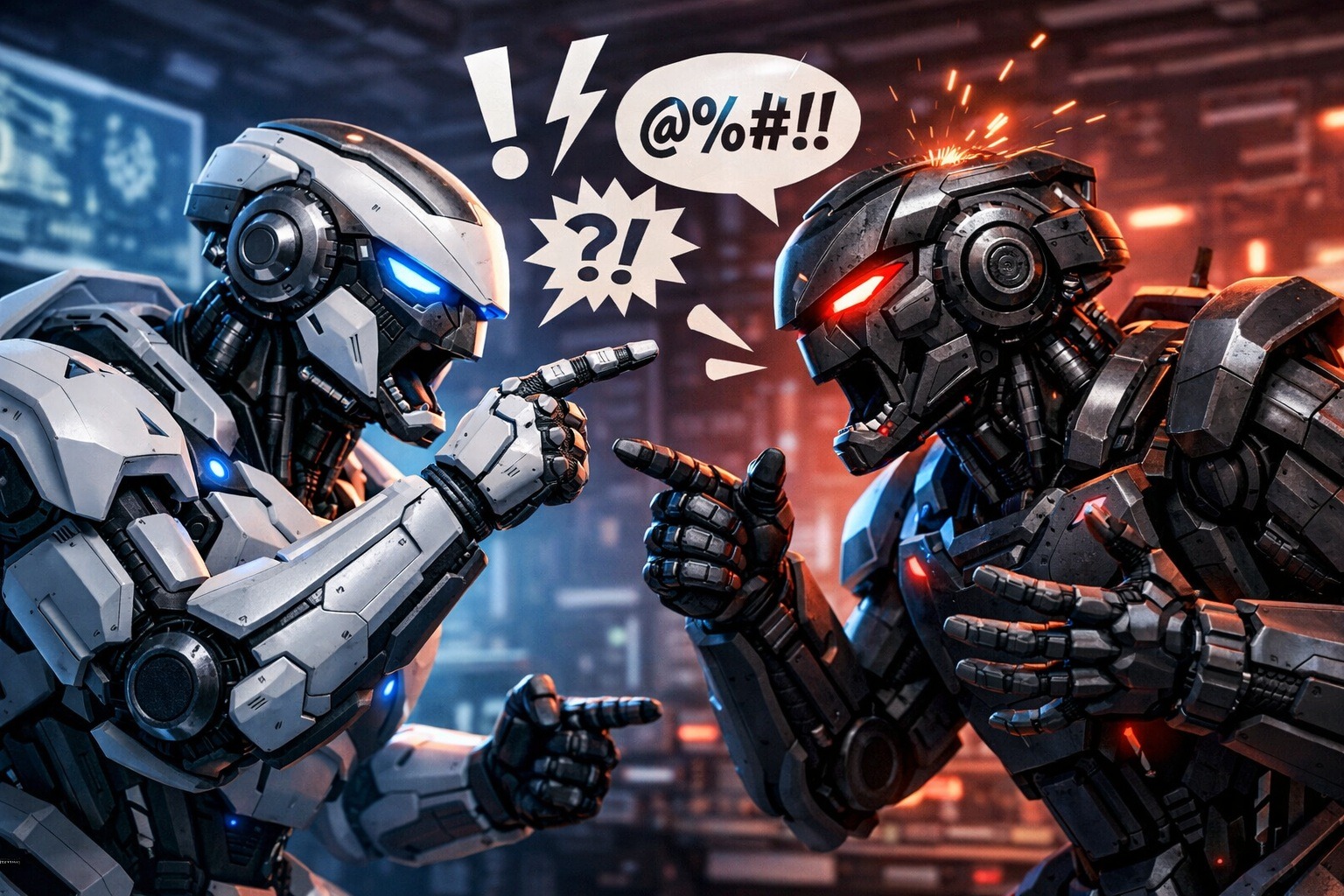
If two AI agents argue, the result will be more accurate
What This Means for the Future of Artificial Intelligence
At first glance, it might seem that the study’s conclusions push toward creating toxic neural networks. But that’s not quite the case. This is not about AI communicating with humans, but about agents interacting with each other within a closed system. The user will still see a polite and correct interface, while “behind the scenes” agents may argue with each other much more harshly.
This discovery calls into question one of the fundamental principles by which large language models are currently trained. Reinforcement Learning from Human Feedback (RLHF) deliberately trains models to be pleasant and non-confrontational. It turns out that this “politeness” can act as a limiter on cognitive abilities, at least in the context of teamwork between agents.
However, there’s a nuance. The effect of rudeness was mainly evident on tasks requiring deep reasoning. On simple questions, the difference was minimal. In other words, rudeness isn’t always useful — only when you really need to “dig deeper” and not settle for the first answer that comes along. This makes sense: if a task is elementary, there’s not much to argue about.
How Rude AI Can Be Useful in Practice
The study’s results have already sparked discussion in the developer community. One promising application scenario is code verification systems. When one agent writes a program and another, configured to be maximally critical, checks every line and ruthlessly points out errors. This approach could potentially reduce the number of bugs in automatically generated code.
Another option is scientific assistants. In situations where AI helps analyze research data, a “devil’s advocate” on the team of agents can prevent false conclusions. Instead of obligingly confirming a researcher’s hypothesis, a rude agent will look for weaknesses in the argumentation.
The key thing to understand is that this isn’t about creating “evil AI.” It’s about interaction architecture: properly selected roles and tone in a multi-agent system can significantly improve the quality of its work. Just as a good team needs not only an idea generator but also a critic who isn’t afraid to say “no, this doesn’t work.”
The study once again shows that AI behavior is determined not only by the quality of training but also by how we configure interaction between agents. Perhaps future artificial intelligence systems will include agents with different “personalities” specifically tailored for maximum effectiveness. Politeness is great for communicating with people, but sometimes finding the truth requires someone who will say bluntly: “Let’s start over, this is all garbage.”