
High-altitude settlements in the Andes — this is where scientists first noticed the link between altitude and blood sugar levels
People living high in the mountains are noticeably less likely to suffer from type 2 diabetes — this is a medical fact that has been known for almost a hundred years. But scientists couldn’t explain why exactly thin mountain air improves sugar absorption. A new study from Gladstone Institutes, published in the journal Cell Metabolism, has finally found the answer — and it opens the door to a fundamentally new approach to treating diabetes. This is especially important now, as diabetes is rapidly spreading worldwide.
What Is Type 2 Diabetes and How Does It Raise Blood Sugar
To understand why this discovery is so important, it’s worth recalling how type 2 diabetes works. Normally, after eating, blood glucose (sugar) levels rise, and the hormone insulin helps muscle, fat, and liver cells “take” that sugar from the bloodstream and use it as fuel.
In type 2 diabetes, cells stop responding normally to insulin — sugar remains in the blood, damaging blood vessels, nerves, and organs. Blood sugar spikes themselves are also dangerous, affecting not only blood vessels but also metabolism.
All modern treatment for type 2 diabetes revolves around one idea: making cells respond better to insulin or increasing its production. But what if there’s a completely different way to remove excess sugar from the blood — without insulin at all?
Why Blood Sugar Drops at High Altitude: The Effect of Hypoxia
The story began back in 1935, when the Harvard Fatigue Laboratory sent an expedition to the mountains of Chile. The researchers studied how altitude and oxygen deficiency — hypoxia — affect the body. Among other things, they discovered two things: at high altitude, people produce more erythrocytes (red blood cells), and glucose tolerance improves. In simple terms, the body began removing sugar from the blood more quickly.
This observation was confirmed in dozens of subsequent studies. But the mechanism remained a mystery. The logical explanation — that sugar simply moved faster into muscles and fat tissue — was not confirmed. When researchers from Gladstone Institutes performed PET/CT scans of mice under hypoxic conditions, 70% of the glucose that disappeared from the blood was simply not found in the muscles, brain, or liver.
“When we gave mice sugar under hypoxic conditions, it almost instantly disappeared from their blood,” says Yolanda Martí-Mateos, the study’s first author. “We examined muscles, brain, liver — all the organs typically checked — but none of them contained anything that could explain what was happening.“
How Red Blood Cells Lower Blood Sugar During Oxygen Deficiency
The answer, as they say, was hiding in plain sight. The sugar was being absorbed by the erythrocytes themselves — those very red blood cells that increase in number at altitude.
Here’s how it works. Erythrocytes are unusual cells: they lack mitochondria (internal “power plants”), so they cannot use oxygen to generate energy. Glucose is the only fuel for erythrocytes. Under normal conditions, they consume it moderately. But when there’s less oxygen in the air, erythrocytes switch their metabolism and begin absorbing glucose many times more actively.
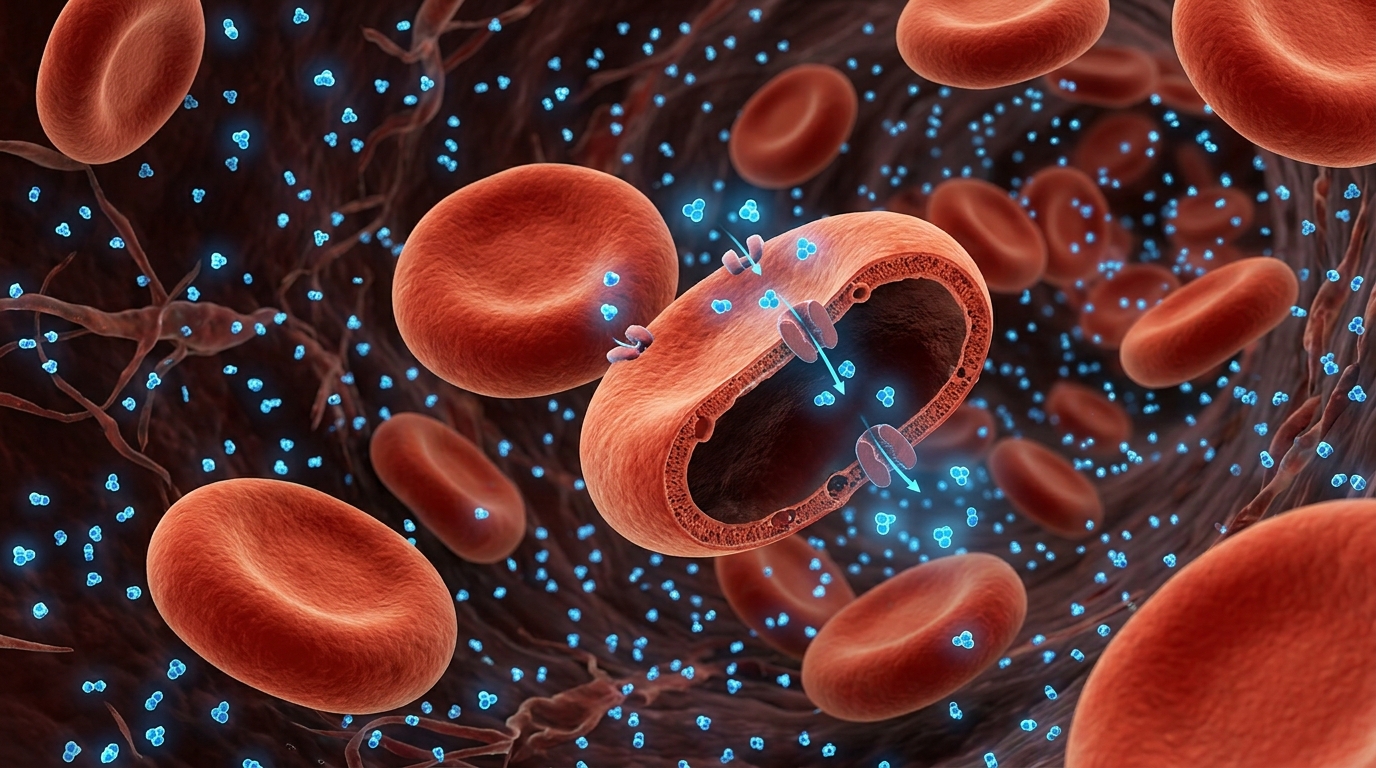
Under hypoxic conditions, erythrocytes begin actively absorbing glucose from the blood
Why do they need so much sugar? To produce a molecule called 2,3-DPG (2,3-diphosphoglycerate). This molecule causes hemoglobin — the protein that carries oxygen — to hold onto oxygen less tightly. Thanks to this, oxygen separates from erythrocytes more easily and reaches tissues that urgently need it.
The result is an elegant chain: less oxygen → erythrocytes consume more glucose → produce 2,3-DPG → hemoglobin delivers oxygen to tissues more efficiently. And the side effect of this process is a reduction in blood sugar levels. Imagine that erythrocytes work like sugar sponges, and the less oxygen there is around, the more actively they absorb.
Can Living in the Mountains and Hypoxia Replace Type 2 Diabetes Treatment
Understanding the mechanism itself is interesting fundamental science. But the researchers went further and tested whether this effect could be used to treat diabetes.
In the experiment, diabetic mice were placed under hypoxic conditions. In addition, the scientists used a drug called HypoxyStat, developed at Gladstone Institutes, which mimics hypoxia at the cellular level — without the need to climb mountains or breathe thin air. In both cases, the elevated blood sugar levels in the diabetic mice returned to normal.
HypoxyStat was originally created to combat mitochondrial diseases, such as Leigh syndrome (a severe hereditary neurodegenerative disease). But now the researchers see it as a potential treatment for diabetes.
“This is one of the first applications of HypoxyStat beyond mitochondrial diseases,” says senior study author Isha Jain. “It opens the door to a fundamentally different approach to treating diabetes — using red blood cells as glucose absorbers.“
The drug HypoxyStat is still being tested only on mice, but the results are encouraging
How Hypoxia Affects Diabetes: Proven Facts and Hypotheses
It’s important to understand the boundaries of this discovery. Here’s what has been confirmed:
- The mechanism of blood sugar reduction during hypoxia is linked specifically to erythrocytes, not muscles or the liver.
- Erythrocytes in oxygen-deficient conditions switch their metabolism and consume significantly more glucose.
- The drug HypoxyStat reduces blood sugar levels in diabetic mice to normal.
And here’s what is still missing:
- Clinical trials in humans — all results were obtained in mice.
- Data on the long-term safety of simulating hypoxia for the body.
- Understanding of how this approach would combine with existing diabetes therapy.
This is an early but convincing study that changes the very understanding of what removes excess sugar in the body. Until now, everyone looked at muscles, fat, and the liver. It turns out that trillions of tiny “glucose sponges” circulate in our blood, and they can be taught to work more actively.
If further research confirms the effectiveness and safety of this approach for humans, it could mean the emergence of an entirely new class of diabetes drugs — not ones that enhance insulin, but ones that “activate” red blood cells. For hundreds of millions of people with type 2 diabetes worldwide, this would be a true breakthrough. But for now — it’s only a promising beginning.