Almost every household battles limescale. What it says about your water and whether you should really worry. Image source: dom.mail.ru
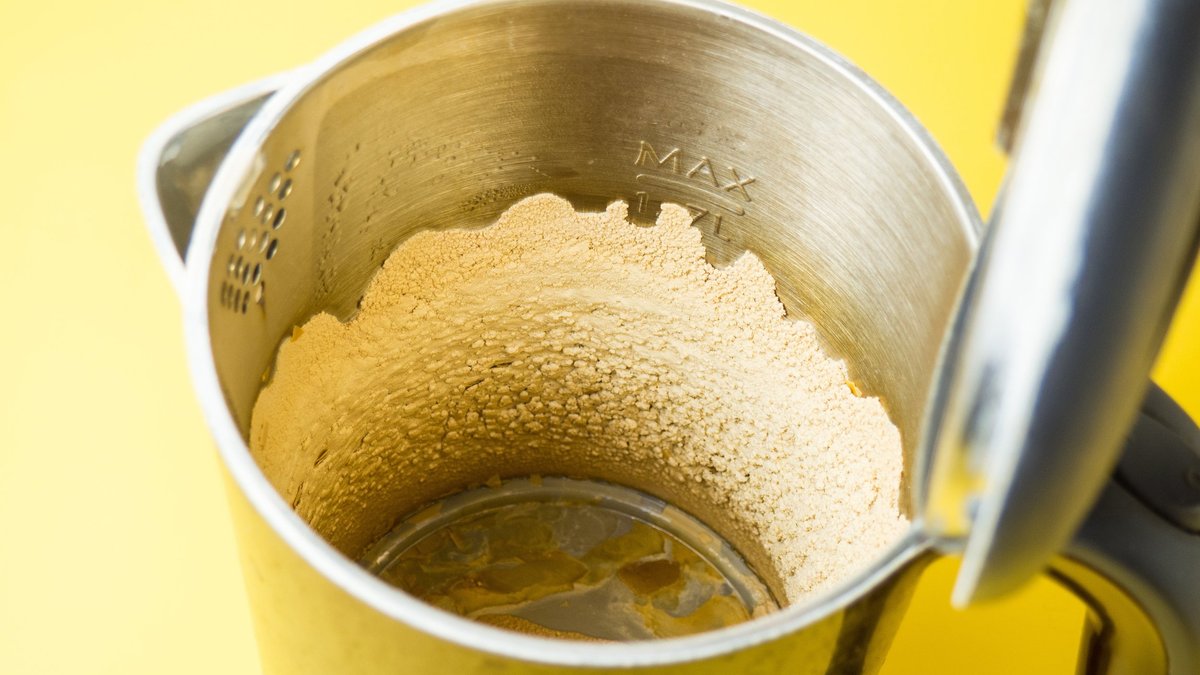
You’ve probably noticed white flakes and a hard coating inside your kettle. Sometimes it looks like powder, sometimes like a solid crust on the walls and heating element. This is limescale, and it appears in virtually every home where water is boiled. Many people think it’s a sign of poor water quality, but that’s not entirely true. Limescale is simply mineral salts that were dissolved in the water and precipitated out during boiling. Let’s figure out why this happens, whether limescale is dangerous for us, and whether it can be prevented.
Why Limescale Forms in Kettles When Boiling Water
The main reason is hard water. It contains dissolved calcium and magnesium salts. While the water is cold, they remain invisible. But when heated, a chemical reaction occurs.
When water boils, calcium and magnesium bicarbonates break down, forming carbonates — solid compounds. These are what settle on the kettle walls as a white deposit.
Interesting fact: a liter of hard water can contain up to 200–300 mg of minerals, so after dozens of boiling cycles, limescale becomes noticeable even in a new kettle.
The most buildup forms:
- on the heating element
- on the bottom of the kettle
- in areas of intense boiling
The harder the water in a region, the faster the limescale layer appears.
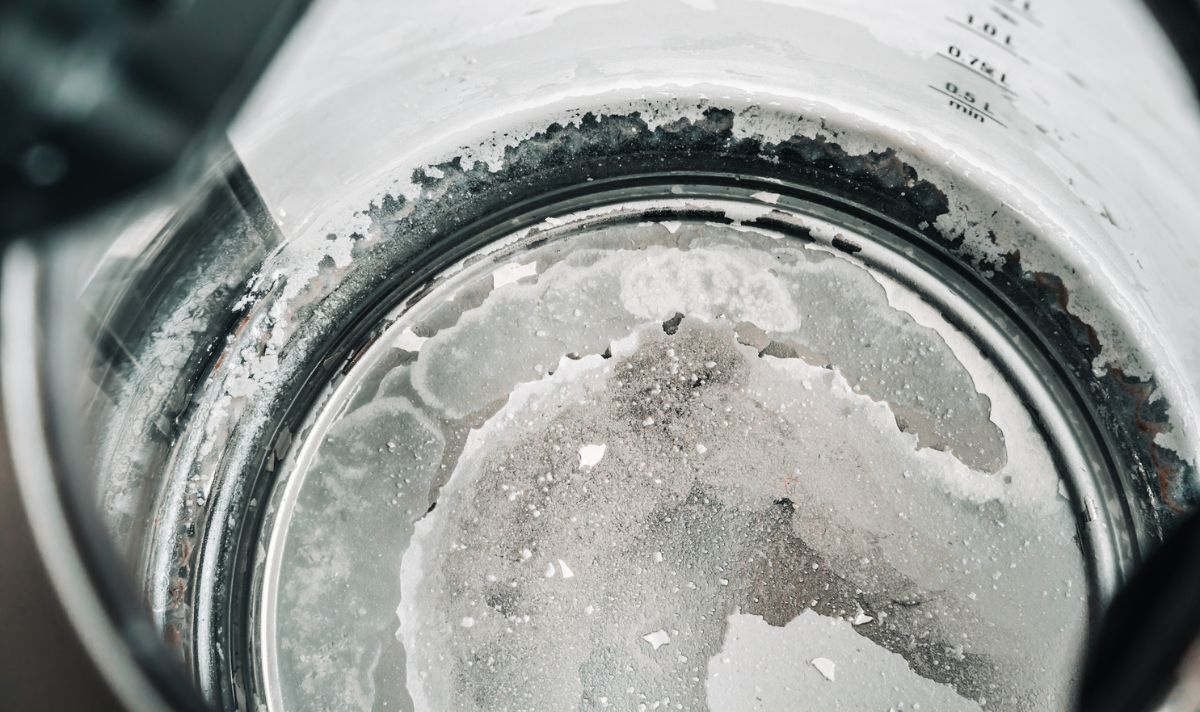
Limescale is not an indicator of “bad” water, but an indicator of its hardness. Image source: express.co.uk
Is Kettle Limescale Harmful to Health
Limescale itself is not toxic. Essentially, it consists of the same calcium and magnesium minerals that are present in drinking water and are even beneficial for the body.
However, it does have several unpleasant effects.
- The kettle takes longer to boil water. The limescale layer acts as thermal insulation.
- Energy consumption increases. The heating element has to work harder.
- White flakes appear in the water. They can spoil the taste of tea and coffee.
A limescale layer of just 1 mm can increase the kettle’s energy consumption by approximately 10–15%.
Sometimes a thick layer of limescale even overheats the heating element, shortening the kettle’s lifespan.
So it turns out that limescale is more of a household appliance problem than an indicator of drinking water quality.
How to Remove Limescale from a Kettle and Prevent Its Formation
It’s difficult to get rid of it completely, but slowing down the process is quite doable.
The simplest methods:
- use good water filters — they reduce hardness
- don’t boil the same water multiple times
- clean the kettle regularly
The simplest cleaning method is boiling water with citric acid or vinegar. The acid dissolves carbonates, and the limescale literally disappears from the walls.
An amazing paradox: the softest water produces almost no limescale, but it is often the result of deep purification (reverse osmosis). It contains almost no minerals, which is why it is sometimes even additionally remineralized.
Interestingly, limescale forms not only in kettles. The same chemical reaction occurs in water heaters, coffee machines, and even in heating pipes, which is why special water softening systems are used in industry to combat it.