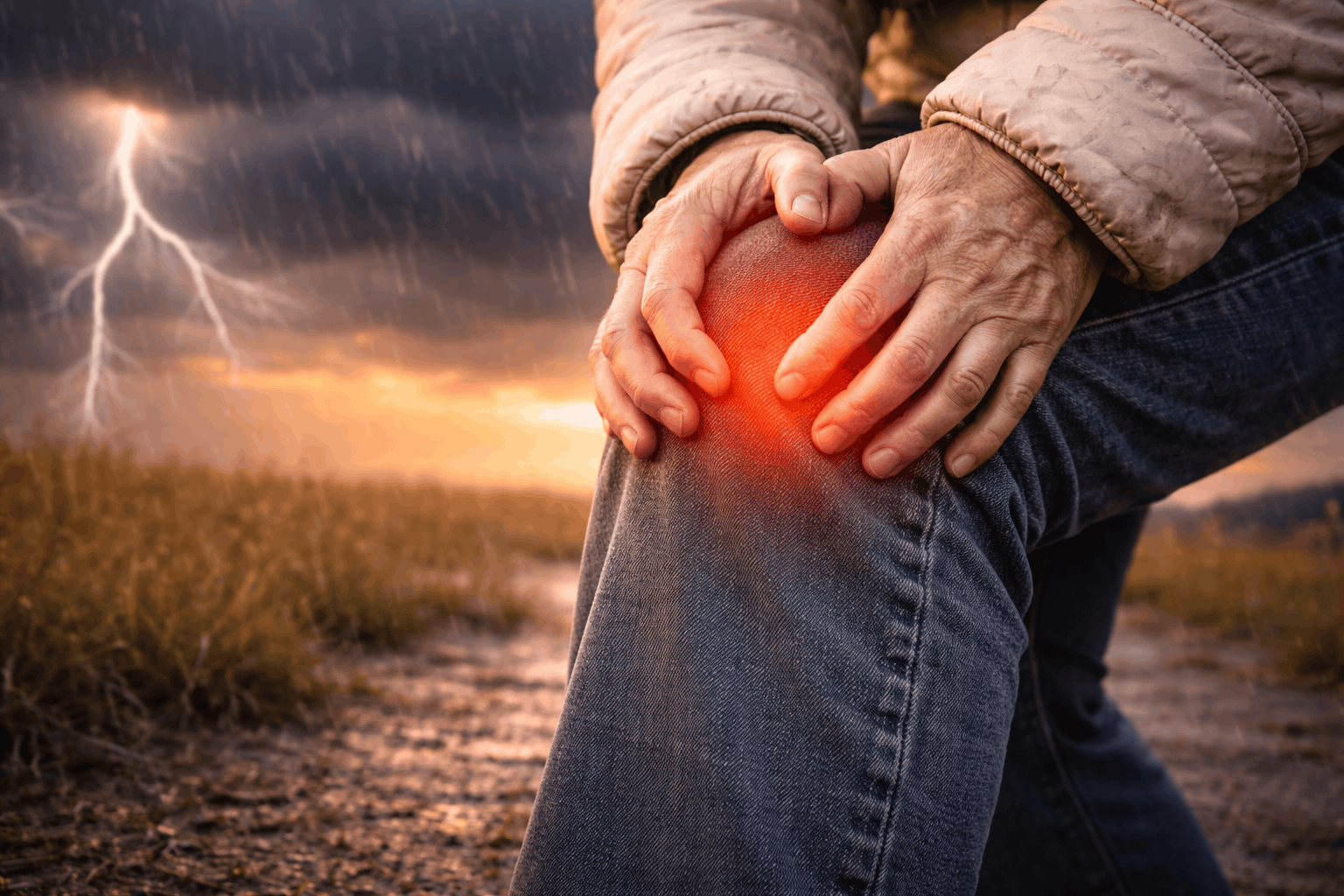
When the weather changes, bones and joints ache — it’s all about pressure.
Many people notice a strange pattern: as soon as the weather changes abruptly, their knees start aching, their back begins to pull, or their fingers feel sore. This happens especially often before rain, snow, or a sharp cold snap. Some consider this a myth, while others are convinced that the body can truly “predict” the weather. And this isn’t so strange: in bad weather, people often experience worsening weather sensitivity and body pain. And, surprisingly, science has an explanation for this phenomenon. Moreover, doctors have long known why joints react to atmospheric changes and how to reduce the discomfort.
Why Joints Ache When the Weather Changes: Main Causes
The main reason is changes in atmospheric pressure. When pressure drops, the tissues around the joints slightly expand, and the joint capsule stretches.
A healthy person barely notices this, but if there is inflammation, osteoarthritis, or an old injury, pain or a feeling of aching appears. This is exactly why many people have such a hard time with atmospheric pressure fluctuations.
People who are especially sensitive to weather changes include those with:
- osteoarthritis or arthritis
- old fractures and dislocations
- herniated discs and chronic back problems
Research shows that pain often appears not during rain, but several hours before it, when the pressure is just beginning to drop.

In some people, joint pain worsens with weather changes, which is confirmed by clinical observations and a number of studies.
Why Joints Hurt in Bad Weather and When Pressure Drops
Cold weather itself affects muscles and ligaments. At low temperatures, they become less elastic, receive poorer blood supply, and tire more quickly. Because of this, the joint moves less freely, and nerve endings react more strongly.
Humidity amplifies this effect because cooling occurs faster. It’s no surprise that many people experience especially frequent joint pain in autumn, even if they never had a serious diagnosis before.
There is another reason — reduced physical activity. In bad weather, people move less, and this is bad for joints. Without movement, cartilage nutrition deteriorates, and discomfort increases.

Cold, wind, humidity, and reduced activity can increase stiffness and unpleasant sensations in joints and old injuries.
What to Do If Your Joints React to Weather Changes
You can’t completely eliminate weather sensitivity, but you can significantly reduce its effects. The most helpful habits include:
- keep your joints warm, especially knees and lower back
- move every day, even if you don’t have scheduled workouts
- do a light warm-up in the morning
- maintain a healthy weight
- monitor your vitamin D levels
- avoid getting cold after physical activity
It’s especially important not to get chilled after a walk or exercise — even the simple habit of getting your feet wet can unpleasantly affect the joints of sensitive people.
And of course, a doctor’s consultation and symptomatic treatment should not be overlooked, because a properly diagnosed problem and properly prescribed treatment are already half the battle on the way to feeling well.
Doctors note that people who are in good physical shape experience significantly weaker joint reactions to weather changes.
When Joint Pain Is a Sign of Disease and You Need to See a Doctor
If pain only appears when the weather changes, it’s usually not dangerous. But if the aching becomes stronger, swelling appears, there is morning stiffness, or the pain doesn’t go away for several days, it’s better to get examined.
Sometimes a “weather reaction” turns out to be the first sign of osteoarthritis or joint inflammation. The body sometimes starts reacting to weather before the person even learns about their problem.