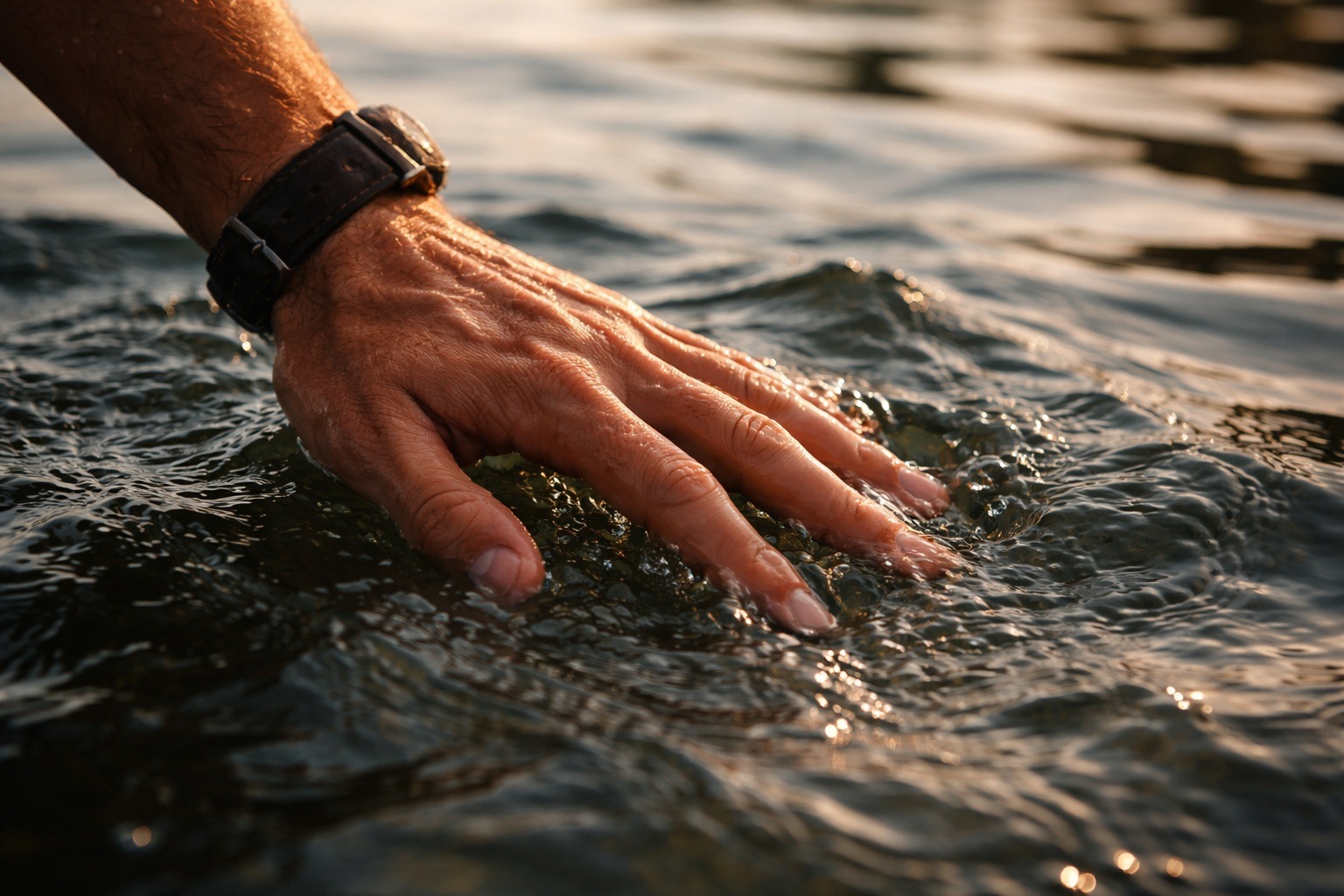
The debate over water’s properties can destroy a friendship faster than an argument about grammar
If someone asks you whether water is wet, your first reaction would be obvious: “Well, of course!” But think about it a second longer, and the question starts to seem not so simple after all. Scientists, philosophers, and even linguists argue about this far more seriously than you might expect. And, as it turns out, the answer depends on what exactly we mean by the word “wet” — and that’s where things get really interesting.
Why Water Makes Objects Wet
It might seem obvious: wet means there’s water on the surface of something. A rock in the rain is wet. A towel after a shower is wet. But water on the surface of water — now that’s a philosophical trap. Physicists approach this question through the concept of wetting — the ability of a liquid to spread across a solid surface and adhere to it.
Wetting is described by the contact angle between a drop of liquid and a surface. If the angle is small, the liquid “likes” that surface and spreads across it. If it’s large, the drop curls into a ball, like water on waxed fabric. Simply put, “wetness” is not a property of the liquid itself, but rather the result of the interaction between a liquid and something else. Water makes objects wet, but on its own it’s simply… liquid.
And that’s where the debate begins. Some scientists believe that since “wet” describes the state of a surface covered with liquid, water cannot be wet on its own — just as fire cannot be “burning” in the conventional sense. Others object: water molecules are in contact with each other, forming hydrogen bonds, and each individual molecule deep within the liquid is literally “drenched” by its neighbors. Doesn’t that make it wet?
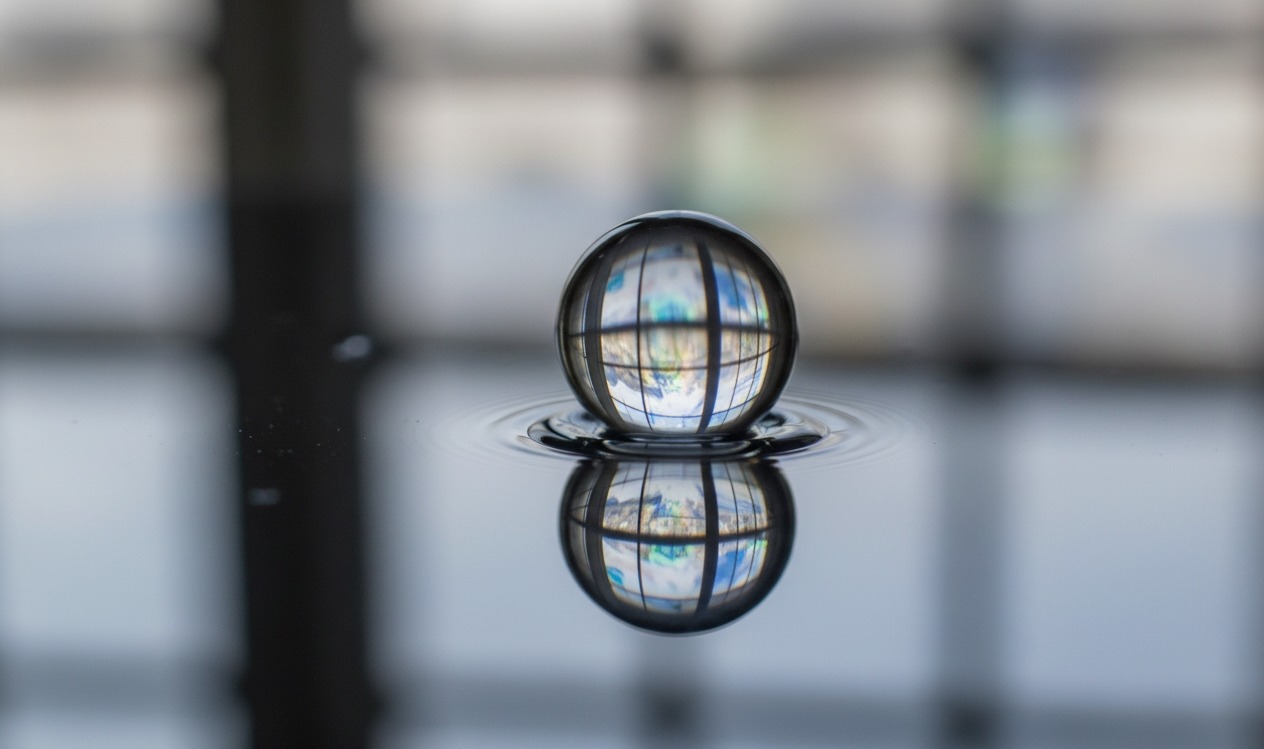
The contact angle of a drop with a surface is what actually determines whether an object becomes wet or stays dry
Surface Tension of Water
Water is a unique substance, and that’s no exaggeration. Most of its anomalous properties are explained by hydrogen bonds — weak but numerous “bridges” between H₂O molecules. These are responsible for water’s high surface tension: approximately 72 mN/m at room temperature. For comparison, alcohol’s surface tension is nearly three times lower, while mercury’s is six times higher.
Surface tension is essentially an invisible “film” at the boundary between water and air. Molecules on the surface are attracted to neighbors below and to the sides, but not above, and this creates tension. This is why water striders run across water, and small needles can rest on its surface without sinking.
But there’s a nuance. This same “film” separates water from the outside world and, according to some researchers, makes the boundary of water a fundamentally different medium. Molecules on the surface behave differently from those in the depths: they are less mobile and form more ordered structures. Some physical chemists even speak of a “dry” layer on the surface of water — a region several molecules thick where the liquid’s properties differ sharply from the bulk. It sounds paradoxical, but spectroscopy data confirm this.
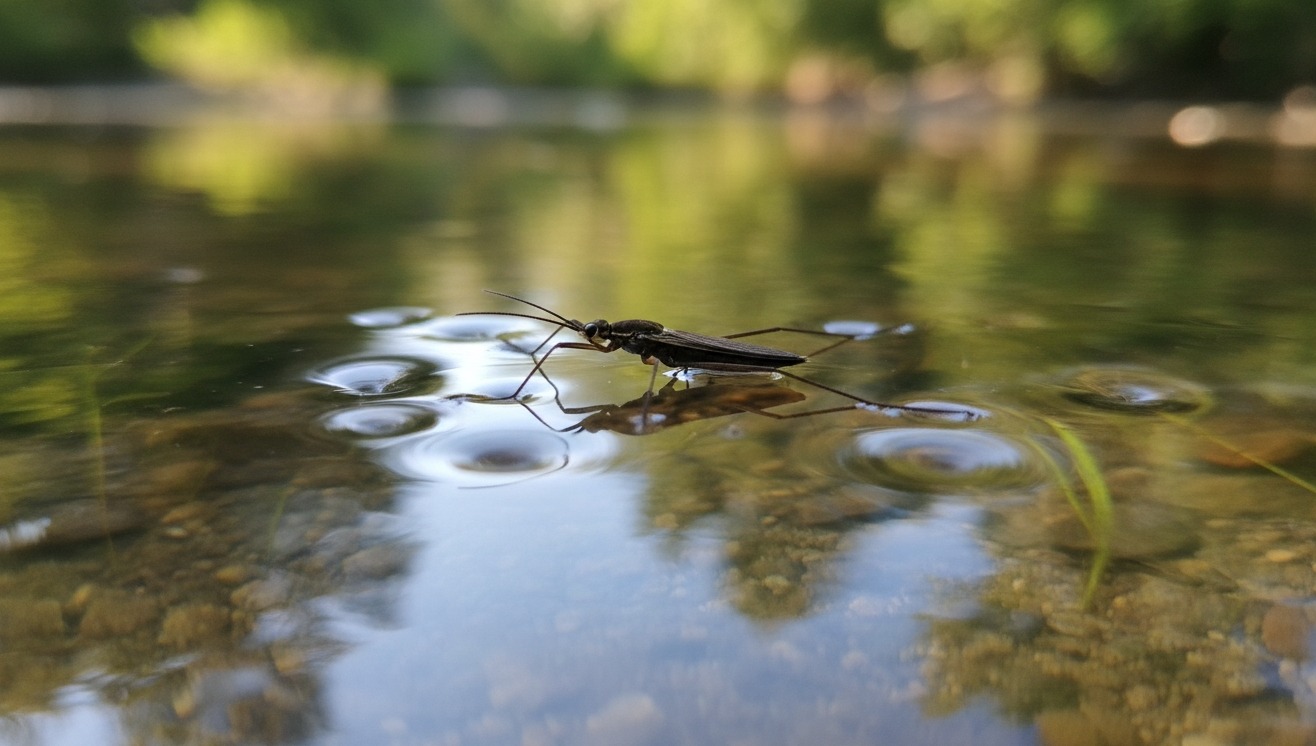
A water strider weighs almost nothing, but even it couldn’t run across alcohol — the surface tension simply wouldn’t be enough
What Does the Word “Wet” Mean
It turns out the problem isn’t only in physics but also in language. The word “wet” in English (as well as its equivalents in other languages) carries a dual meaning. On one hand, it’s an adjective of state: “wet clothes,” “wet floor.” On the other, it’s a property we intuitively attribute to water itself: “wet water” sounds like a tautology, but we understand what’s meant.
Linguists call this semantic ambiguity. We use the word “wet” as if it describes an objective characteristic, when in fact it’s a relative property — it exists only in the pairing of “liquid + surface.” Similarly, the word “heavy” has no meaning without context: heavy compared to what?
In 2019, this question literally blew up social media. Videos debating the “wetness of water” garnered millions of views, and fierce battles raged in the comments. Physics and chemistry professors gave interviews, and interestingly, no consensus was reached among them. Some held the position that “water is not wet; it makes other objects wet,” while others argued that any water molecule in the liquid phase is wet by definition because it’s surrounded by other water molecules.
This is one of those rare cases where a scientific question hits a wall not due to a lack of data, but a lack of a clear definition. Science knows perfectly well how water interacts with surfaces, how hydrogen bonds form, and how wetting works. But the word “wet” turned out to be too colloquial and vague for strict scientific use.
Is Water Wet or Not: What Science Says
If we set aside the linguistic debates and focus on physics, the picture becomes clearer. Modern research has shown that water’s behavior at the molecular level is far more complex than we’re accustomed to thinking.
Water molecules in the liquid phase form a dynamic network of hydrogen bonds that restructures every few picoseconds — trillionths of a second. Each molecule is simultaneously “attached” to three or four neighbors and constantly changes partners. It’s not a static lattice like ice, nor complete chaos like vapor. It’s something in between — and it’s precisely this intermediate state that creates all the properties we associate with “wetness”: the ability to spread, adhere, and permeate.
Interestingly, some liquids we intuitively don’t consider “wet.” Oil is more “greasy.” Mercury is “heavy and shiny.” Liquid helium below 2.17 kelvin loses viscosity entirely and becomes superfluid — it climbs up the walls of a vessel and flows out as if ignoring gravity. It’s hard to call it wet, even though it’s technically a liquid.
It turns out that “wetness” is not a universal property of liquids but rather a specific set of characteristics related to adhesion, cohesion, and surface tension. Water simply combines all three parameters perfectly, which is why it became the gold standard of “wet.”
If you were waiting for a definitive “yes” or “no,” you’ll have to be disappointed. Strictly speaking, water itself is not wet — it makes other things wet. “Wet” describes the state of a surface covered with liquid, not the liquid itself. It’s like asking whether the color red is red, or whether light itself is bright.
But if you dip your hand in water and say “it’s wet” — you’ll also be right. Because in everyday language, “wet” perfectly describes the sensation of contact with water. Science and everyday language simply operate in different coordinate systems, and confusion arises when we try to mix one with the other.
The main lesson of this story isn’t whether water is wet or not. It’s that even the “stupidest” question can expose a fundamental problem: we use words as if they’re precise, when in reality they’re full of holes and assumptions. And sometimes, to understand how the world works, you first need to understand how your own language works.