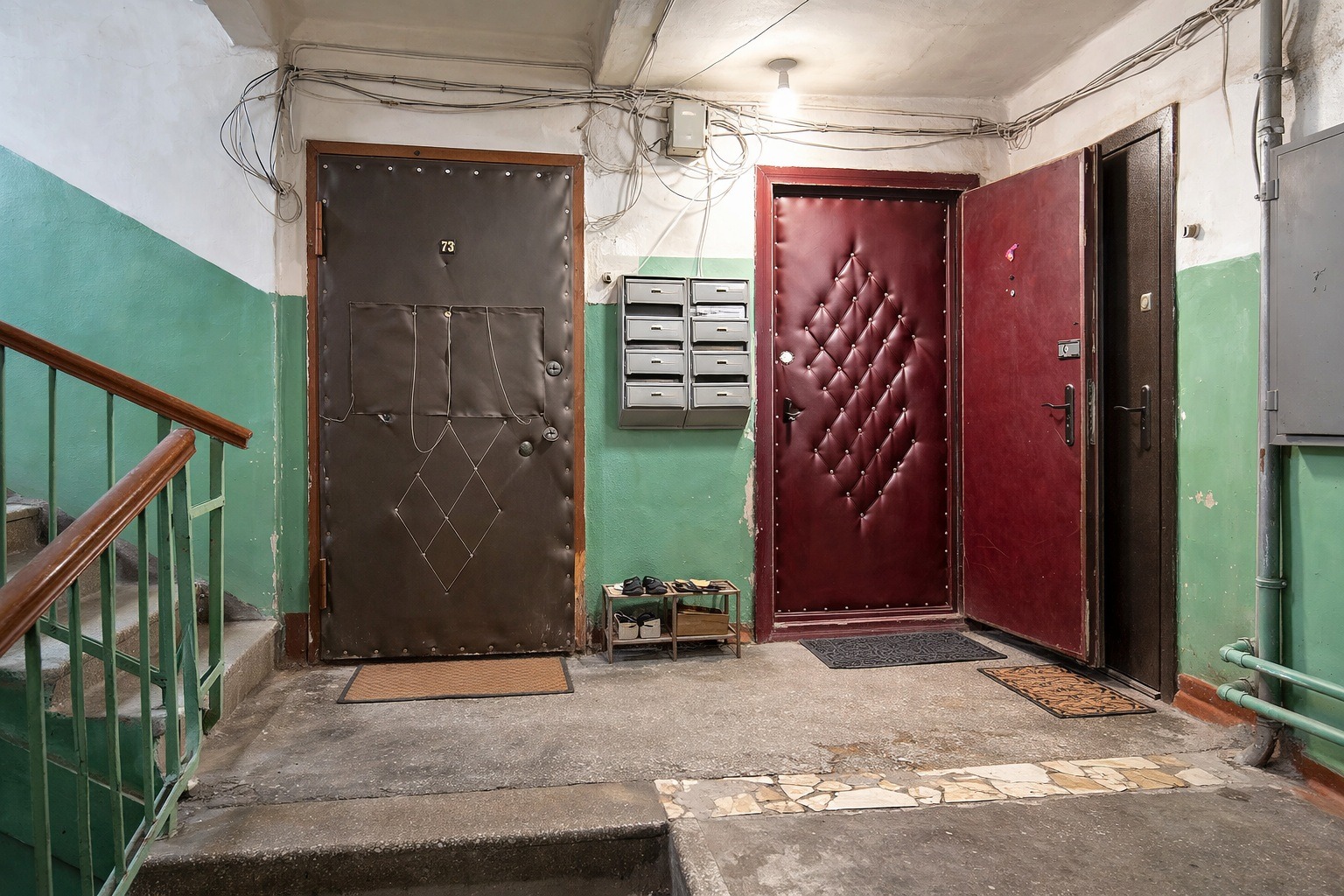
Leatherette is a durable artificial leather on a fabric base, which was widely used in the USSR for door upholstery due to its cheapness and practicality
If you grew up in the nineties or early 2000s, you probably remember doors upholstered in black or brown leatherette. Today, such a finish seems like a relic of the past and brings a smile, but back then it was so widespread that you could find it in nearly every other apartment building entrance. It’s interesting to wonder why our parents and neighbors spent time and effort to upholster their doors with this material.
Protection from the Cold
In fact, the main reason was laughably simple and practical — apartments were drafty.
Soviet panel and block apartment buildings were built quickly, and residents’ comfort was the last thing on anyone’s mind. Gaps between the door and the frame were commonplace, and drafts blew through hallways year-round.
Leatherette itself is a dense material, but the main secret was in the “filling.” A layer of insulation was always placed under the covering: at first it was cotton batting, which quickly clumped together, or sturdy felt, and later lightweight and cheap foam rubber came into use. This soft “cushion” fit tightly against the frame, reliably sealing all the gaps and keeping precious warmth inside the apartment.
Apartment Soundproofing
Besides the cold, thin Soviet doors also let in all the sounds from outside. Whether it was the rumble of the elevator, the neighbor’s dog barking, or music from the floor above — the acoustics in the building were excellent.
The upholstery with its soft filler acted as a basic sound absorber. Of course, it was far from proper soundproofing, but life in the apartment became noticeably quieter and more peaceful. The multi-layered construction dampened vibrations and made the door heavier, adding to its solidity.
Decorating the Front Door
The appearance shouldn’t be forgotten either. Doors in apartment buildings were often old, with peeling paint, cracks, and chips in cheap plywood. Leatherette was the simplest way to cover all these “scars” at once and make the entrance to one’s home look presentable.
An upholstered door looked more respectable and richer compared to unpainted neighbors’ doors. In a country where everything was in short supply, the desire to look “no worse than others” and add a touch of coziness and respectability to one’s apartment played a huge role.
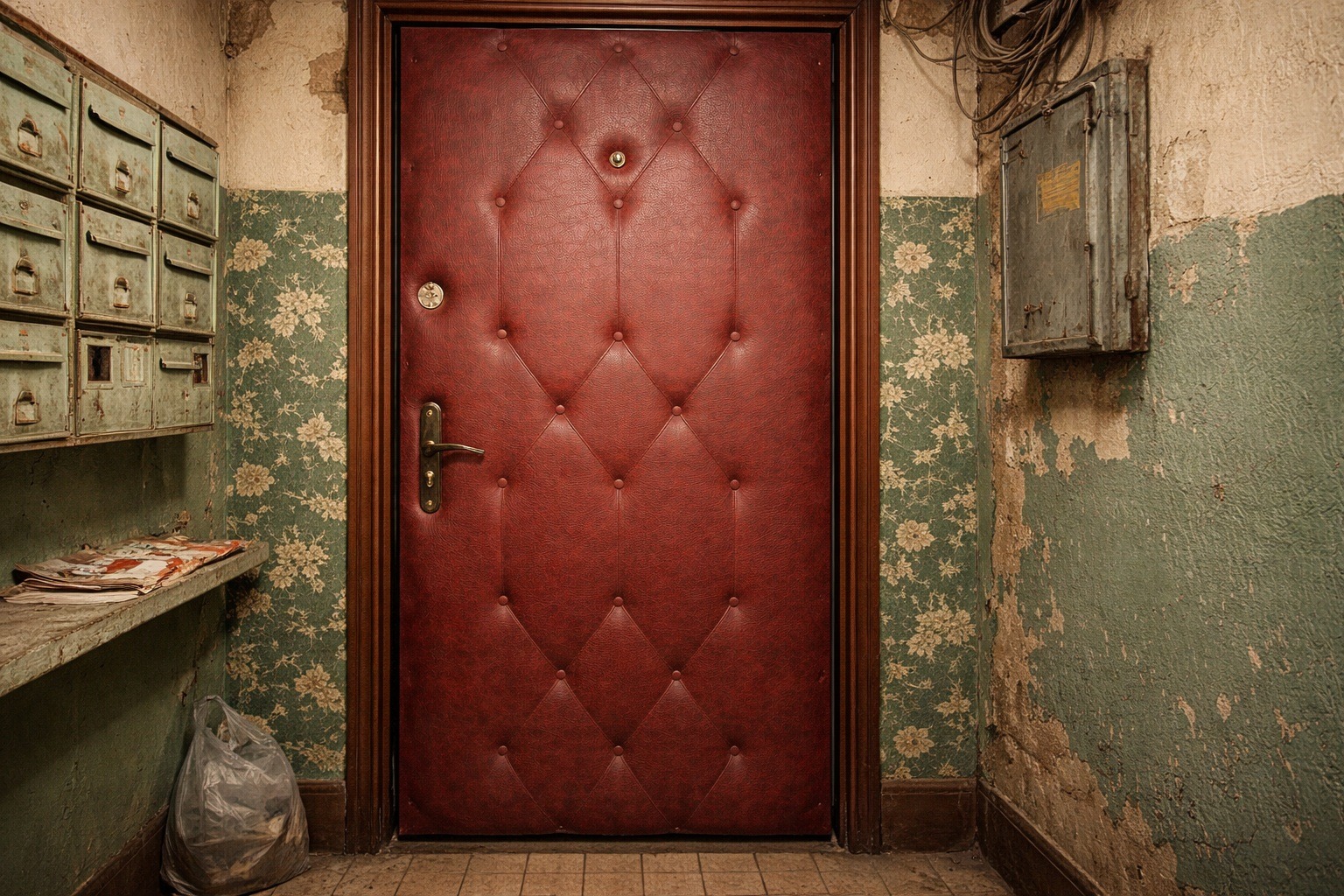
A door with leatherette looked more respectable
Leatherette Was Cheap
Another secret to leatherette’s popularity lay in the accessibility of the technology. Leatherette could be bought at any hardware store for pennies. And practically any man could upholster a door. All you needed were scissors, a hammer, and decorative nails with wide heads.
It became a popular men’s hobby and a way to save money. The most popular “trick” was upholstering in diamond or herringbone patterns: using twine or wire, the insulation was secured by stretching the pattern with nails. This was not only attractive but also reliable — the insulation didn’t slide down or bunch up.
Protecting the Door from Break-ins
Of course, leatherette didn’t protect against break-ins, but it created an additional barrier for burglars. Under a layer of material, it was harder to silently cut through part of the door. And metal plates over the upholstery visually made the door look sturdier.
In the end, leatherette upholstery in the USSR was a brilliant folk invention — a simple, cheap, and comprehensive solution to problems of cold, noise, and aesthetics. That’s why for many older people, the sight of an old door upholstered in black leatherette in a diamond pattern, and that distinctive smell, still evokes a warm feeling of nostalgia for their childhood home.