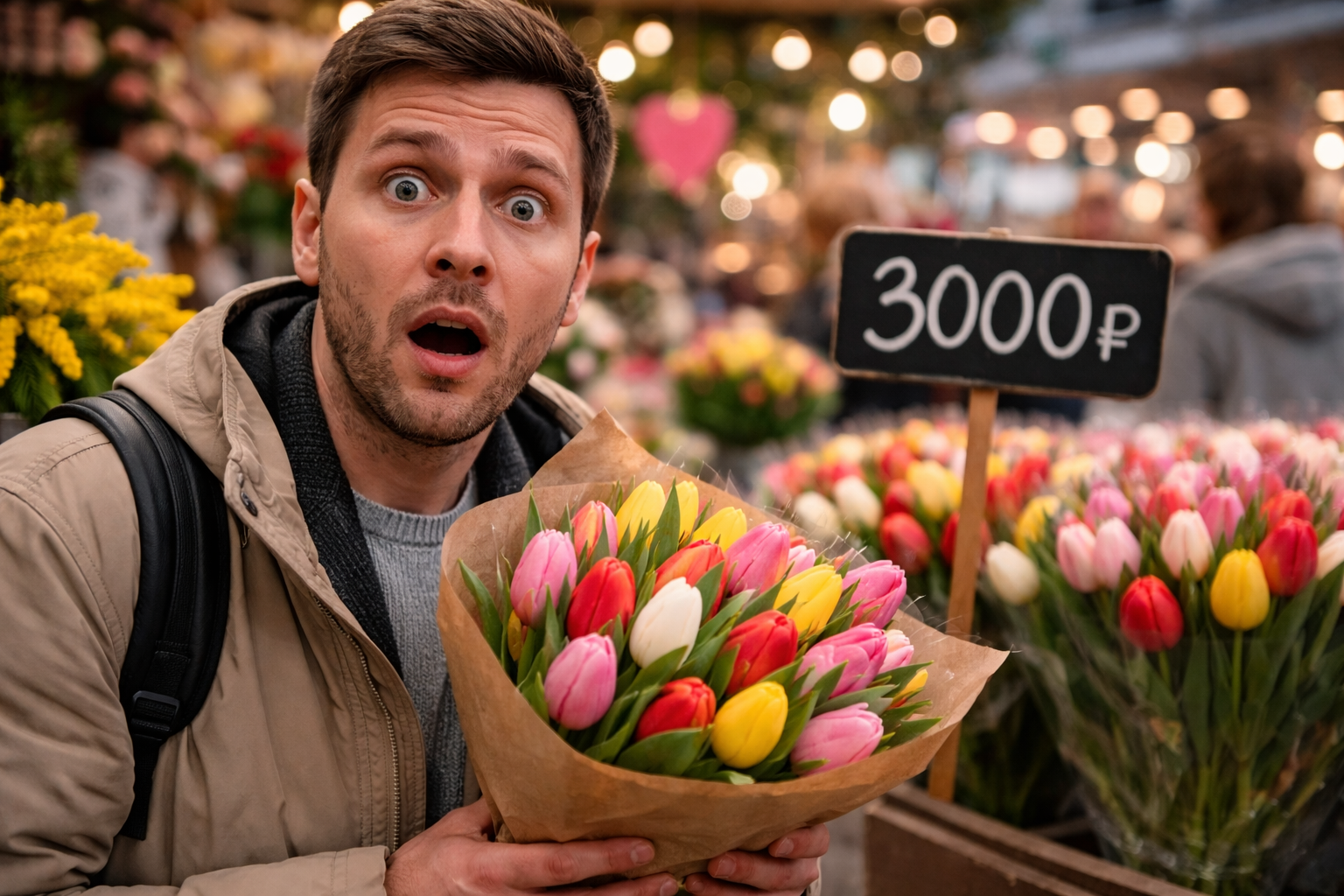
How much flowers really cost for March 8 and why we overpay every year.
Every year at the beginning of March, the same thing happens: prices for tulips, roses, and mimosas skyrocket. A bouquet that cost 1,500 rubles in February easily turns into 2,500–3,000 a couple of days before March 8. Many people blame greedy sellers, but the actual mechanism is a bit more complex. Let’s figure out what exactly affects flower prices and how to avoid overpaying. And most importantly, first check whether your wonderful woman has allergies — otherwise the flowers might not make her happy at all.
Why flower prices surge sharply before March 8: demand, imports, and hidden markups
The main factor is an explosive surge in demand. In Russia, up to 30–40% of the annual flower volume is sold in just a few days around March 8. This is especially true for tulips — their share in holiday sales reaches 60–70%.
The second point is imports. Up to 80% of cut flowers are imported from abroad: the Netherlands, Ecuador, and Kenya. This means the price is affected by exchange rates, customs duties, and air freight. And before the holiday, logistics operate at full capacity, which increases costs.
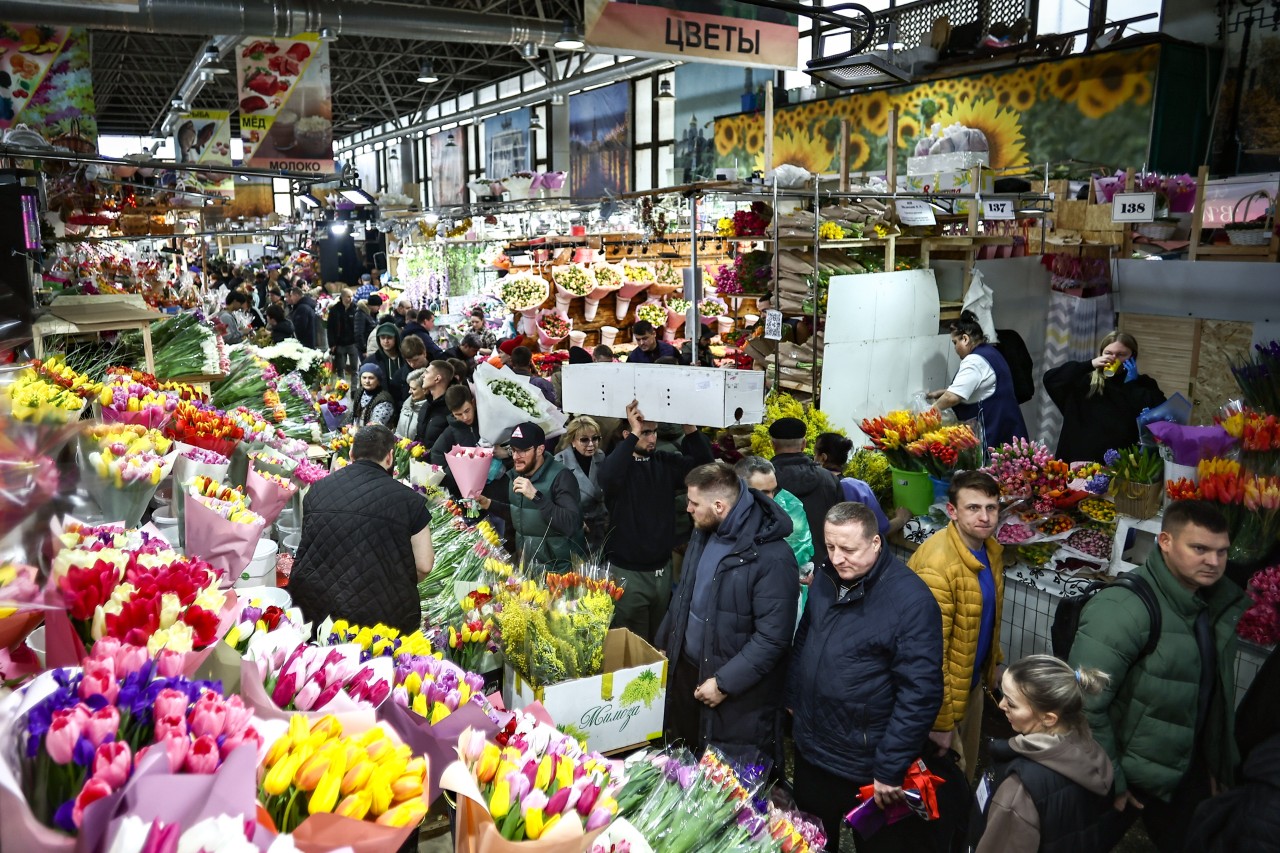
On March 8, flower shops are packed with crowds of men (and not only). Image source: sev.tv
What determines the price of flowers and bouquets: variety, stem length, and packaging
The cost is not just about the purchase price. It includes:
- storage in refrigerated chambers;
- waste write-offs (some flowers don’t survive until sale);
- florists’ work (and on March 8, flower shops often call in extra help);
- packaging and decoration.
The longer the stem and the rarer the variety, the higher the price. For example, 70 cm roses can cost 30–50% more than 40–50 cm ones. And Ecuadorian roses are traditionally more expensive than Russian greenhouse-grown ones.
A small but very important tip: if there’s a cat in the house, don’t give lilies — these are truly very dangerous flowers for them, without exaggeration (and I’m not even mentioning their smell…).
How to buy flowers cheaper for March 8: 4 ways to avoid overpaying
There are several strategies:
- Buy 3–5 days before March 8. Savings can reach 20–40%, but there’s a big question about the bouquet’s freshness — will it wilt in your home conditions before the holiday arrives.
- Choose local greenhouse flowers, if available in your city.
- Skip the fancy packaging — it adds up to 10–15% to the cost, and many recipients don’t even like it; instead, just ask to tie the bouquet with a satin ribbon.
- Consider alternatives: beautiful and useful potted plants (they tend to increase in price less) or food floristry, which has long become popular.
The bottom line is simple: price increases are not random — they’re the economics of demand. But if you approach the purchase rationally, you don’t have to overpay at all.