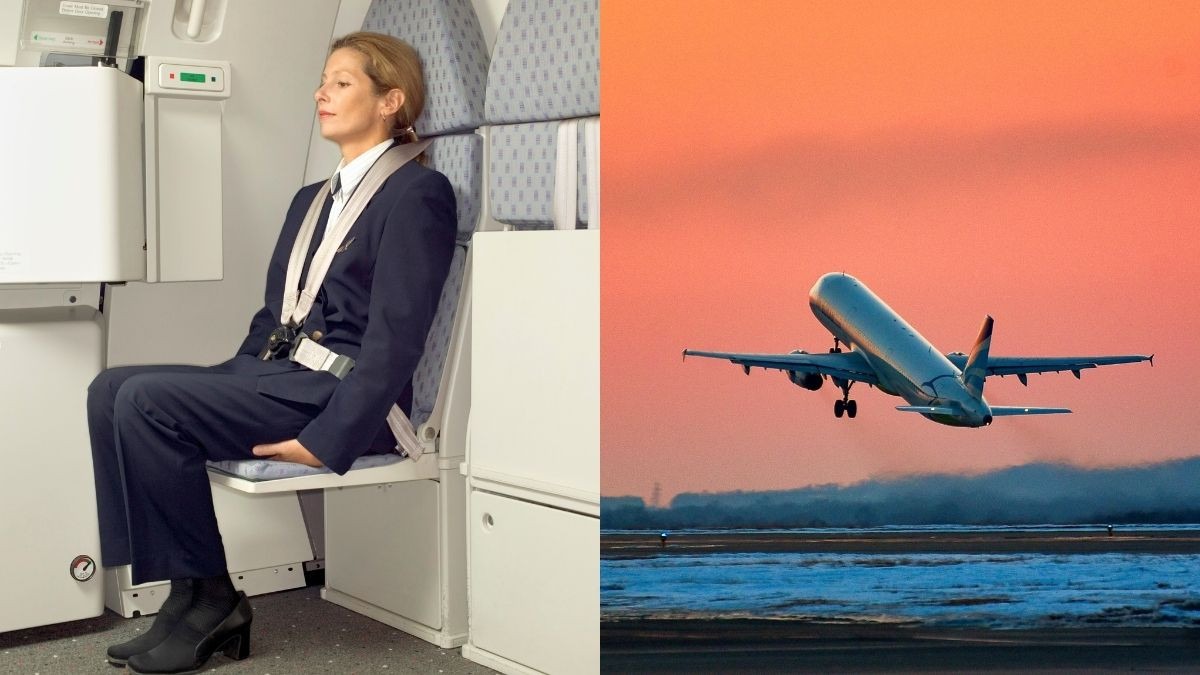
A flight attendant in a brace position during takeoff. Image source: vietnam.vn
When a plane starts accelerating down the runway, most passengers have already put on their headphones or buried themselves in their phones. But if you look at the flight attendants sitting in their jump seats near the exits at that moment, you might notice something unusual. Flight attendants sit perfectly upright, feet pressed flat on the floor, and hands tucked palms-down under their thighs. It looks strange, but this pose has a very specific and extremely important explanation.
What Flight Attendants Do Before Takeoff
You probably remember the flight attendant’s pre-takeoff speech — the oxygen mask demonstration, fastening the seatbelt, pointing out emergency exits. But after the briefing is over, the crew’s work doesn’t stop. On the contrary, one of the most critical phases of the flight begins.
Takeoff and landing are considered the most critical phases of any flight. It is during these minutes that the statistical risk of abnormal situations is highest — from sudden turbulence to a rejected takeoff at high speed. While passengers relax, flight attendants assume the so-called “brace position” — a protective readiness pose. And this is not a personal choice but a mandatory part of the flight protocol.
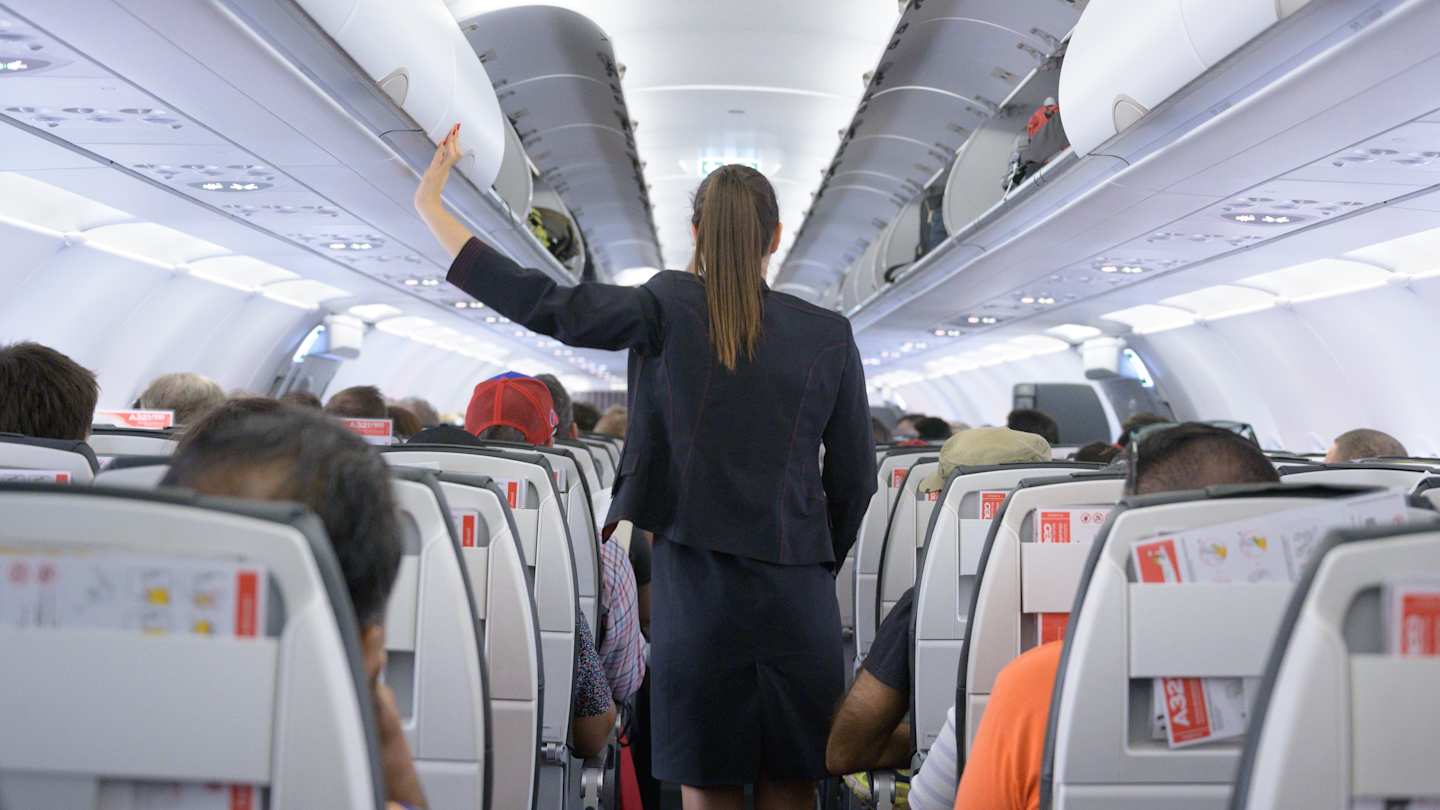
Air travel involves all kinds of familiar moments — from safely stowing luggage to fastening seatbelts. But there are also those that raise questions among people who don’t know the reasons.
Why Flight Attendants Tuck Their Hands Under Their Thighs During Takeoff
The main purpose of this pose is injury prevention. When the hands are under the thighs palms-down, the body is stabilized. During a sudden jolt, unexpected shaking, or emergency braking, a person in this position won’t slam their hands against nearby objects, won’t dislocate a wrist, and won’t suffer a fracture. A straight back pressed against the seat back reduces the load on the spine, and feet firmly planted on the floor provide additional support.
Why is this so critical specifically for the crew? An injured passenger is a serious problem. But an injured flight attendant means losing one of the few people on board trained to act in an emergency situation. If during a hard landing, a sudden rejected takeoff, or, for example, an engine fire on takeoff, a crew member is incapacitated, the evacuation of hundreds of people falls on an even smaller number of trained specialists. Every pair of working hands counts — and they literally need to be protected.
Why Takeoff and Landing Are the Most Dangerous Phases of Flight
There is a well-established expression in aviation — the “critical eight minutes.” This refers to approximately three minutes after takeoff and five minutes before landing. According to long-term statistics, the vast majority of aviation incidents occur during these short intervals.
There are several reasons: the aircraft is at low altitude, speed changes rapidly, engines are operating at increased power, and reaction time in case of any failure is minimal. That is why during these minutes the cockpit crew is maximally focused, and in the cabin a “sterile cockpit” mode is in effect — no distracting conversations, only critically important information.
Flight attendants at this moment are not just sitting motionless. They are carefully observing the cabin from their seats, mentally running through evacuation scenarios, and assessing the situation. An upright seated position and a clear view of the cabin are part of this task.
What Types of Brace Positions Do Flight Attendants Use
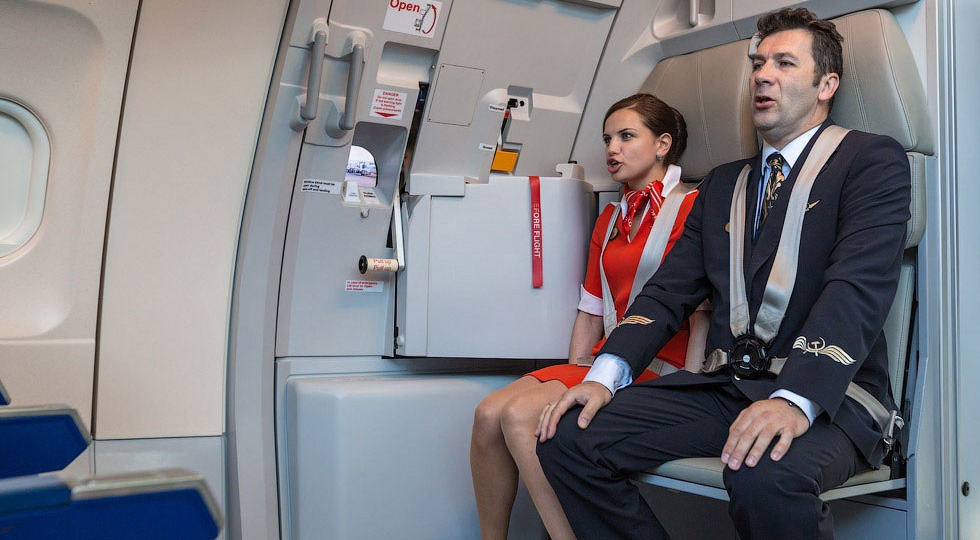
Flight attendants in brace positions during takeoff. Image source: terranova2017.livejournal.com
Interestingly, there is no single standard pose. Different airlines recommend slightly different variations to their crews. In some — hands palms-down on the knees. In others — under the thighs. Still others prescribe holding hands clasped on the knees.
The differences depend on several factors:
- Aircraft type — the placement and design of jump seats varies.
- Flight attendant’s position — some sit facing the direction of travel, others face backward, and the biomechanics of impact differ accordingly.
- Internal airline standards — each carrier approves its own protocol based on recommendations from the aircraft manufacturer and aviation authorities.
But the general principle is the same: the body must be stabilized, protected from impact, and ready for instant action.
How Passengers Should Properly Sit During Airplane Takeoff
Flight attendants use a professional brace position because their seats and tasks differ from those of passengers. But the basic logic applies to you as well. That is why the pre-takeoff briefing includes requirements to raise the seat back, fasten the seatbelt, and stow the tray table — all of these are elements of the same safety system.
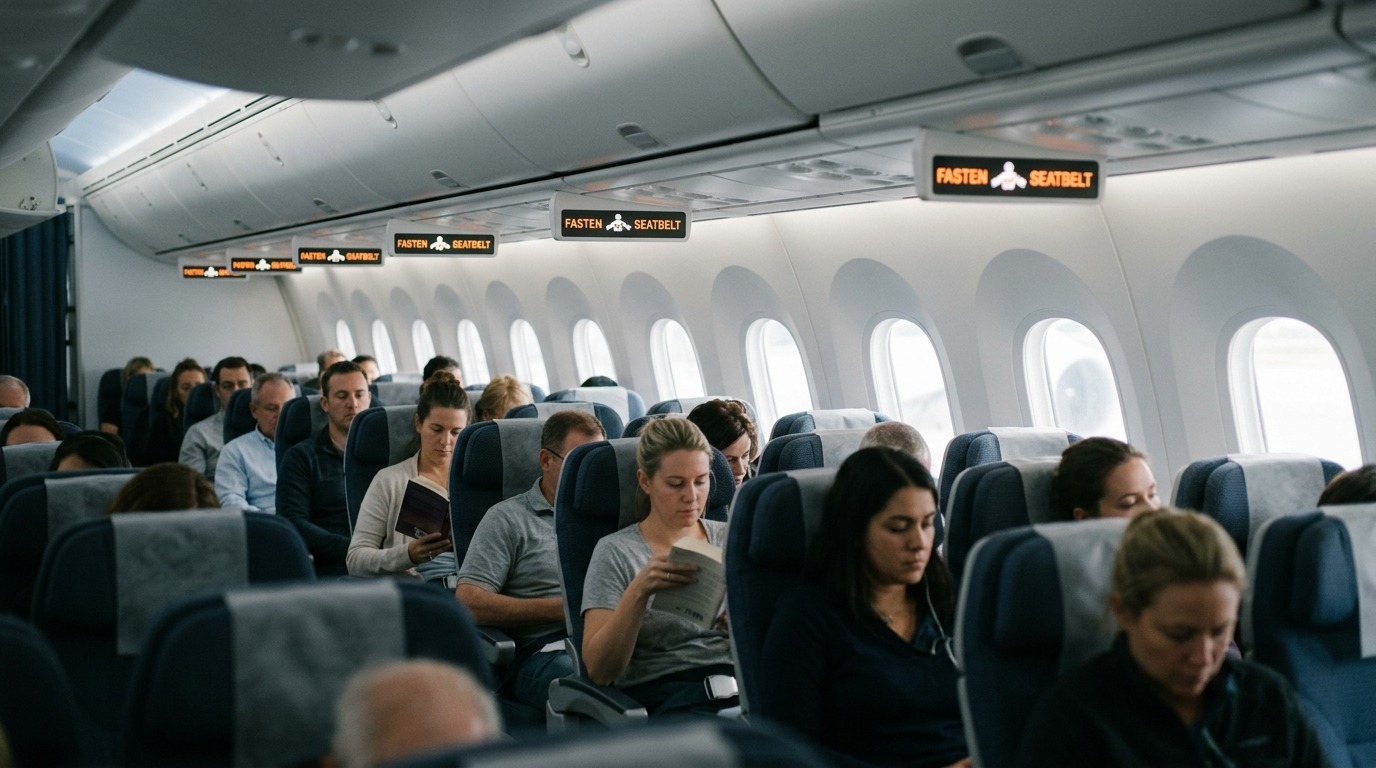
A fastened seatbelt and an upright seat back — the passenger version of the brace position
An upright seat back clears the evacuation path for people sitting behind you. A stowed tray table won’t hit you in the stomach during sudden braking. A seatbelt fastened low across the hips holds the body in place without injuring internal organs. Together, all of this forms a unified system where every element is designed for a specific scenario.
So when you notice a flight attendant sitting motionless with hands tucked under their thighs, know this: what you’re seeing is not a strange habit but trained readiness to stand up within seconds and guide you to the exit.
Takeoff and landing last only a few minutes — and it is precisely during these minutes that the crew’s professional concentration peaks. Everything else — beverage service and pillows — is just the visible part of the job, behind which lies far more serious preparation.