Flies constantly rub their legs for three reasons at once
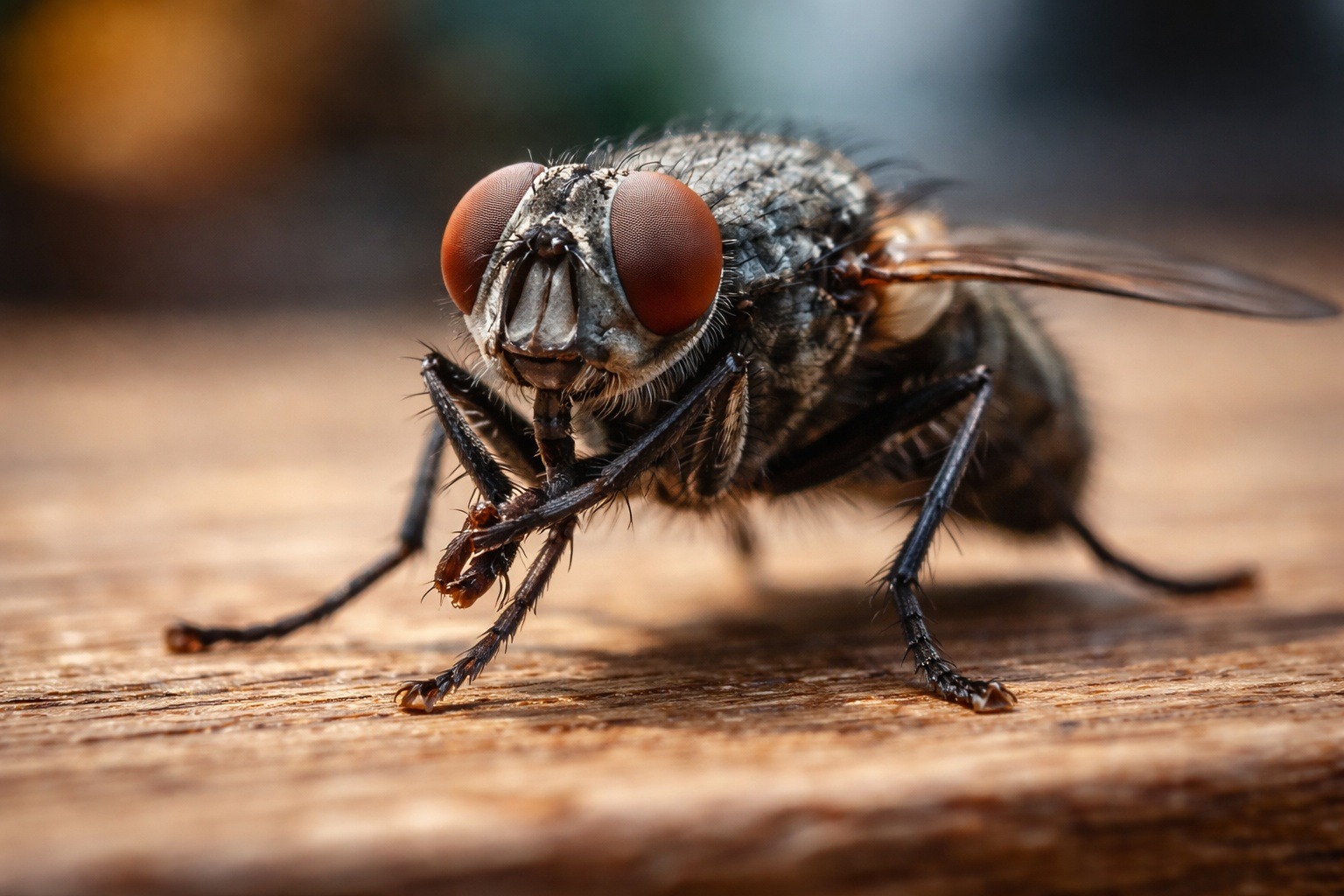
Have you ever caught yourself staring at a fly sitting on a windowsill, going about its business? The funniest thing about this spectacle is its habit of rubbing its front legs together, as if it were a cartoon villain planning to take over the world. Sometimes it seems like it’s just a nervous tic or a way to wash up, like a cat. But in reality, behind this simple movement lies one of the main secrets of survival for these pesky creatures.
Why Flies Clean Themselves So Often
Let’s start with the most obvious, but no less important point. Flies are quite the enthusiasts when it comes to hanging out in dangerous places. Garbage dumps, rotten fruits, or even the barbecue on your table — they leave their traces everywhere. And then they land on food with their dirty legs, and we don’t know whether it’s still safe to eat.
If you think a fly rubs its legs because it’s a squeamish clean freak, you’re wrong. It’s pure pragmatism. The insect’s legs are covered with tiny hairs and bristles that accumulate an insane amount of bacteria and dirt. If they don’t perform a “cleaning” in time, the fly risks catching an infection or simply drowning in its own microbes.
So rubbing their legs is not just a habit, but a vitally necessary part of hygiene that saves their health.
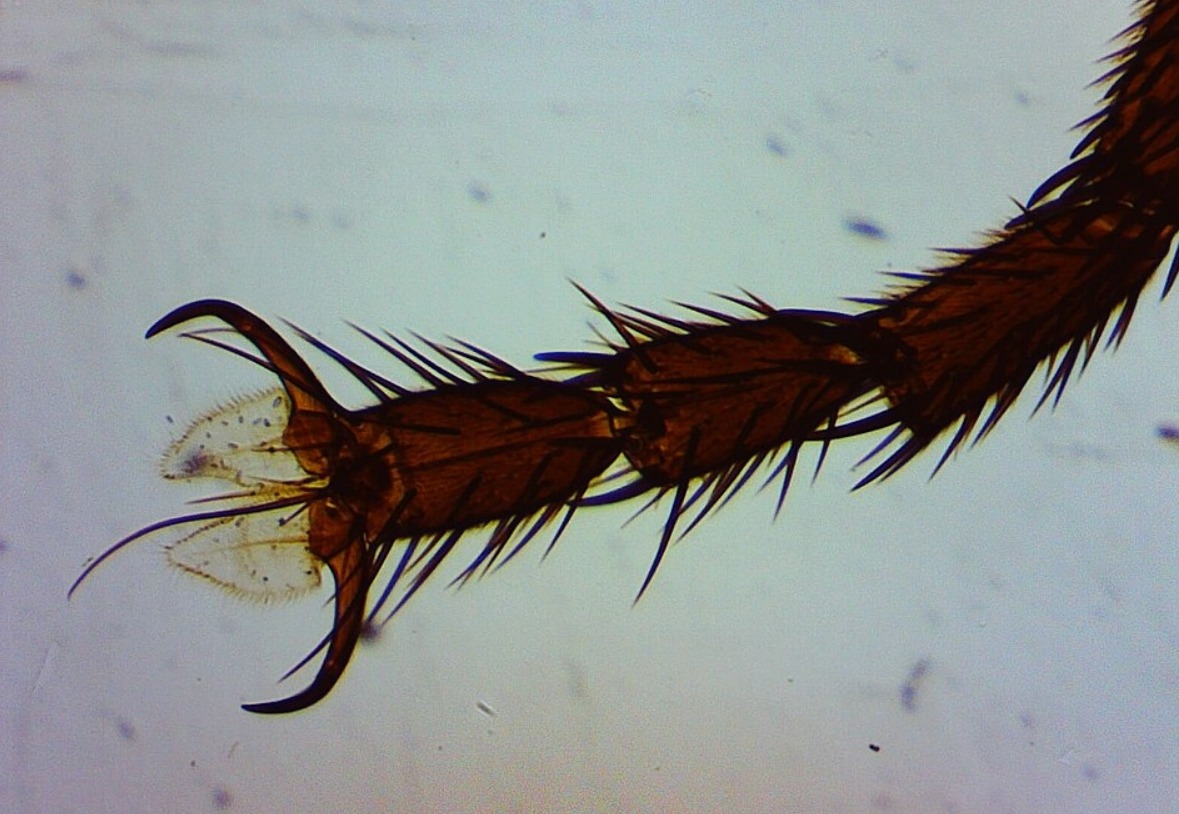
A fly’s leg under a microscope. Image source: wikimedia.org
Sensory Organs of a Fly
But hygiene is just the tip of the iceberg. The main secret lies in the fact that flies… taste food with their feet. Yes, you heard that right.
On a fly’s legs, there are tiny receptors that are hundreds of times more sensitive than the human tongue. When a fly lands on a watermelon or a forgotten cookie, it literally dances on the food to figure out whether it’s edible.
But imagine if those taste buds got clogged with pollen or old dirt. A nightmare for a gourmet! That’s why a fly rubs its legs — to scrape all the debris off these sensors. It needs the sensors to work perfectly: what if what’s under its leg isn’t food but poison? Or what if it’s not sugar but salt? So every time you see a fly rubbing its legs, know this: it’s calibrating its “taste scanner.”
How Flies Communicate
And now for the most interesting part. It turns out that flies rub their legs not only for their own benefit but also to communicate with their kind. Special substances — pheromones — are produced on their limbs.
When a fly rubs its legs, it spreads these scented molecules all over its body. For other flies, this reads like an open book. By the scent, they can understand:
- Who was here (friend or foe);
- How much food is here;
- Whether there’s a potential mate nearby.
It turns out that the ordinary rubbing of palms (or rather, legs) is a way to send important messages to everyone around. The fly literally leaves posts in the air:
There’s food here, fly over!
How Memory Works in Flies
Moreover, flies rub their legs to cross-check data. According to Explaining Why, in the world of flies, information becomes outdated quickly. What was safe here five minutes ago could now be teeming with danger.
By rubbing their limbs, a fly essentially resets its settings and reads the situation anew. It checks: has the chemical composition of the air changed? Did a swarm of hungry ants pass through here? Has the food been removed?
It’s similar to how we scroll through our news feed every five minutes. The fly is simply refreshing its data to stay up to date. So when you look at this insect, remember: before you is not just a pest, but a complex organism that combines personal hygiene, lunch tasting, and social media checking in one simple movement.