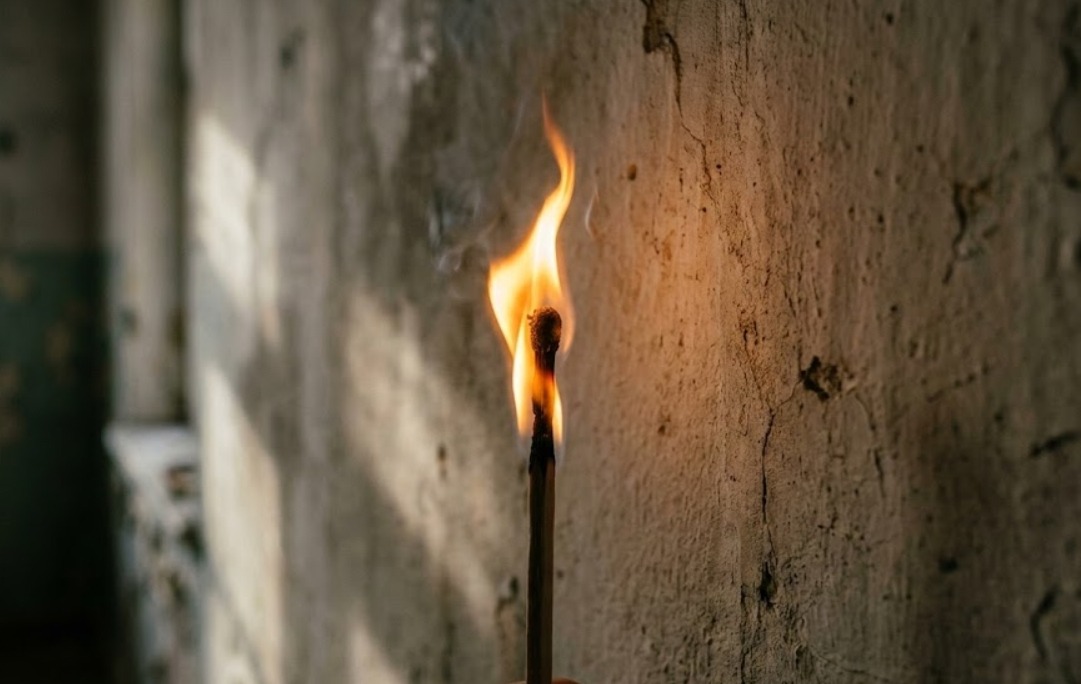
Fire can cast a shadow only in very rare cases
Everyone knows a simple rule: any object, when illuminated by a lamp or the sun, casts a shadow. But as soon as you light a candle or a match, something strange happens — the flame itself casts almost no shadow. You can see the shadow of your hand, the candle, or the match, but not of the fire itself. This seems like a paradox because we’re used to thinking of fire as an ordinary object. In reality, flame operates according to entirely different laws of physics.
How Shadows Appear and Why They Form
For a shadow to appear, three things are needed:
- a light source;
- an opaque object;
- a surface onto which the shadow falls.
A shadow appears when an object blocks part of the light rays. In the area where light doesn’t reach, a dark spot forms.
For example, if you place a book in front of a lamp, it will block part of the light. Behind the book, a dark area will appear — its shadow. The key condition here is that the object must block light.
Why Fire Doesn’t Cast a Shadow
Now let’s look at flame. It behaves completely differently from ordinary objects.
First, fire is itself a source of light. Therefore, it not only doesn’t block light but also emits it in all directions. When a flame illuminates a wall or surrounding objects, it fills the space with light rather than creating a dark area.
Second, flame is almost transparent. It consists of hot gases and incandescent particles that allow most light to pass through. Therefore, light rays pass through fire almost without obstruction.
As a result, flame simply doesn’t block the flow of light, which means a true shadow doesn’t form.
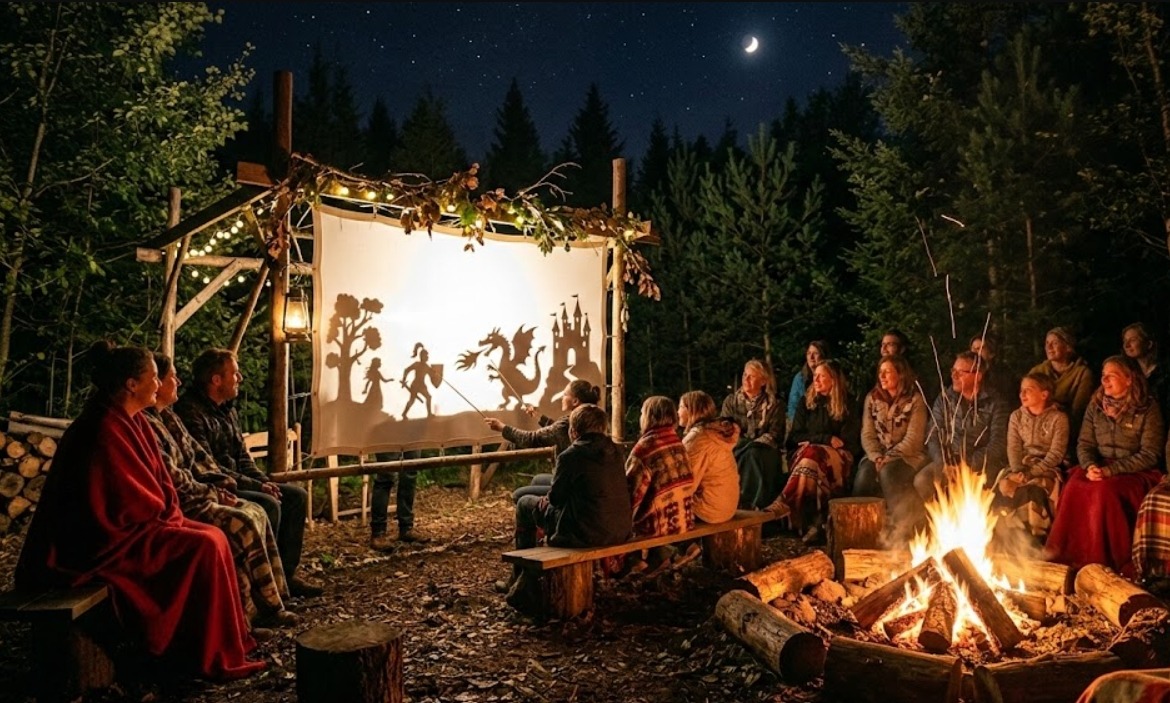
Shadow theater originated in China, but over time the art spread to other countries, including India, Turkey, and Europe
What Flame Is Actually Made Of
Surprisingly, many people think that fire is a separate substance. In reality, it is a combustion process.
When fuel (such as wood or gas) reacts with oxygen, a chemical reaction occurs. It releases energy in the form of heat and light.
What we see as flame is a mixture of:
- hot gases;
- water vapor;
- carbon particles (soot);
- superheated air.
This mixture glows but is almost not a dense object. Light passes through it, which is why there is no clear shadow.
Can Fire Cast a Shadow
Interestingly, under certain conditions, a shadow from flame can still be noticed.
This happens if:
- there is a very powerful light source nearby;
- the flame contains a lot of soot or particles.
In that case, some light may be slightly absorbed or scattered, and a very faint darkening appears behind the flame.
But the human eye barely notices this difference, so it seems to us that there is no shadow.
Why Air Above Fire Shimmers
Sometimes near a fire, you can notice a strange effect: objects seem to slightly tremble or distort.
This happens because flame strongly heats the air. Hot air becomes less dense and begins to rise. Because of this, light rays bend, and the image behind the fire becomes slightly distorted.
This effect is similar to how air shimmers above hot asphalt in summer.
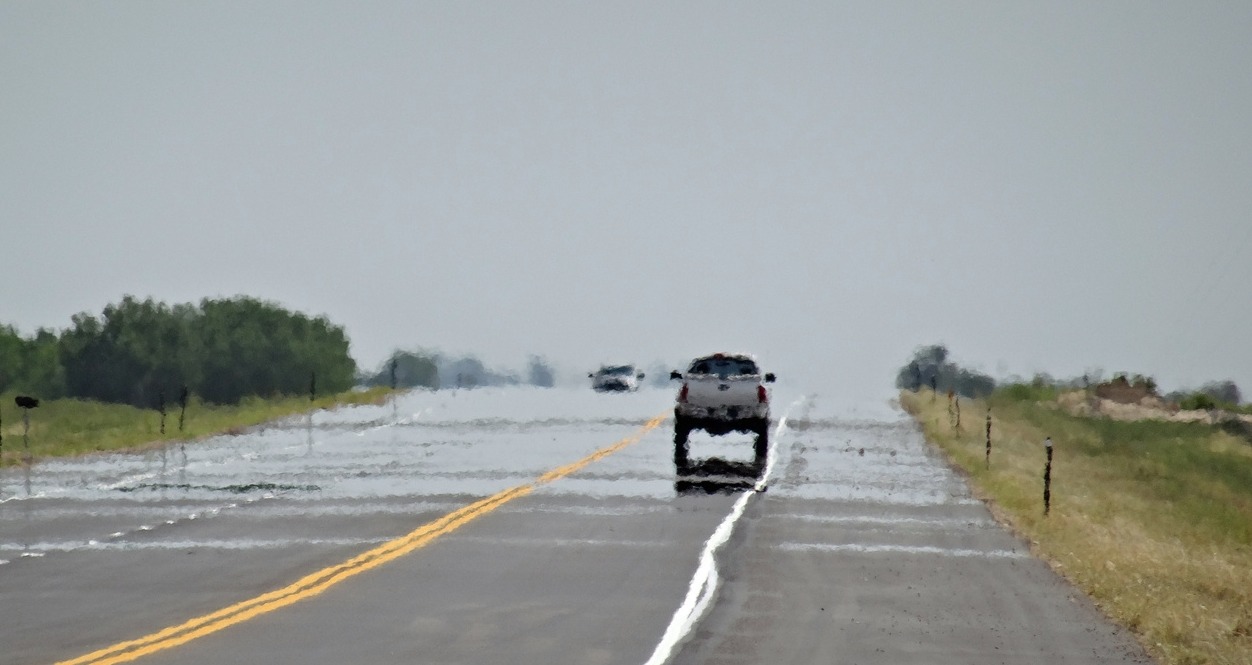
Air distortion above asphalt. Image source: index.hu
In the end, flame appears to be an ordinary object, but from a physics standpoint, it is more of a glowing reaction in gases rather than a dense object.
Therefore, fire has almost no shadow for three reasons:
- flame itself emits light;
- hot gases allow rays to pass through;
- light is not blocked the way solid objects do.
This is exactly why we can see the shadow of a candle, but almost never the shadow of the fire itself.