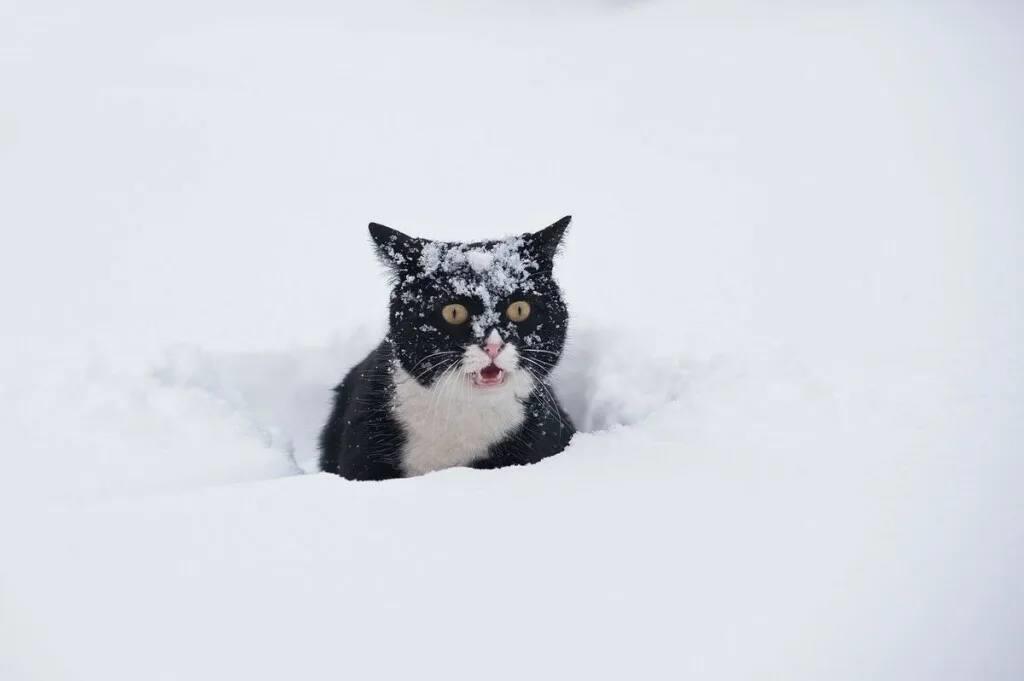
The February paradox: why frosts intensify when winter is already ‘waning’. Image source: author.today
In February, the sun already stays above the horizon noticeably longer. Daylight increases by almost three hours compared to December. It’s logical to expect warming. But it’s precisely in February that the strongest frosts of winter often occur. This is not a paradox or a “whim of nature,” but rather explainable physics.
What Is Seasonal Lag and Why Temperature Lags Behind Day Length
The main reason is thermal inertia of the planet’s surface. Earth, water, and even air don’t cool down or warm up instantly. After the winter solstice at the end of December, the influx of solar energy begins to grow, but:
- soil and snow cover continue to lose accumulated heat;
- the atmosphere still hasn’t had time to accumulate enough heat (loses faster than it receives from the Sun);
- the reflective capacity of snow (albedo) intensifies cooling.
Snow reflects up to 80–90% of sunlight. That is, the sun shines longer, but a significant portion of the energy is simply not absorbed. As a result, the minimum average temperatures in temperate latitudes occur not in December, but in late January through February.
An interesting point: cooling occurs faster over continents than over oceans. Therefore, February frosts are more pronounced deep in Eurasia than in coastal regions.

The coldest period usually arrives after the winter solstice because the Earth-atmosphere system continues to lose more energy than it receives for some time. Image source: e1.ru
Why Frosts Intensify in February: The Role of Anticyclones and Arctic Air
The second reason is restructuring of air circulation. In winter, the Siberian anticyclone strengthens, forming stable high-pressure areas (this applies to continental Eurasia). Under clear skies, heat actively radiates into space, and temperature drops even lower.
With an anticyclone, little cloud cover, and weak winds, nighttime cooling actually intensifies.
Furthermore, Arctic air invasions are common in February. If the jet stream weakens or “breaks,” cold air masses can descend far to the south. Such processes often produce anomalous cold waves.
When to Expect the Strongest Frosts and Why This Happens Specifically in February
- The most dangerous frosts often occur precisely in February.
- After a clear, windless night, temperature can drop sharply.
- In snowy winters, cooling is more pronounced.
Therefore, focusing only on day length is a mistake. Calendar spring and climatic winter operate by different laws.