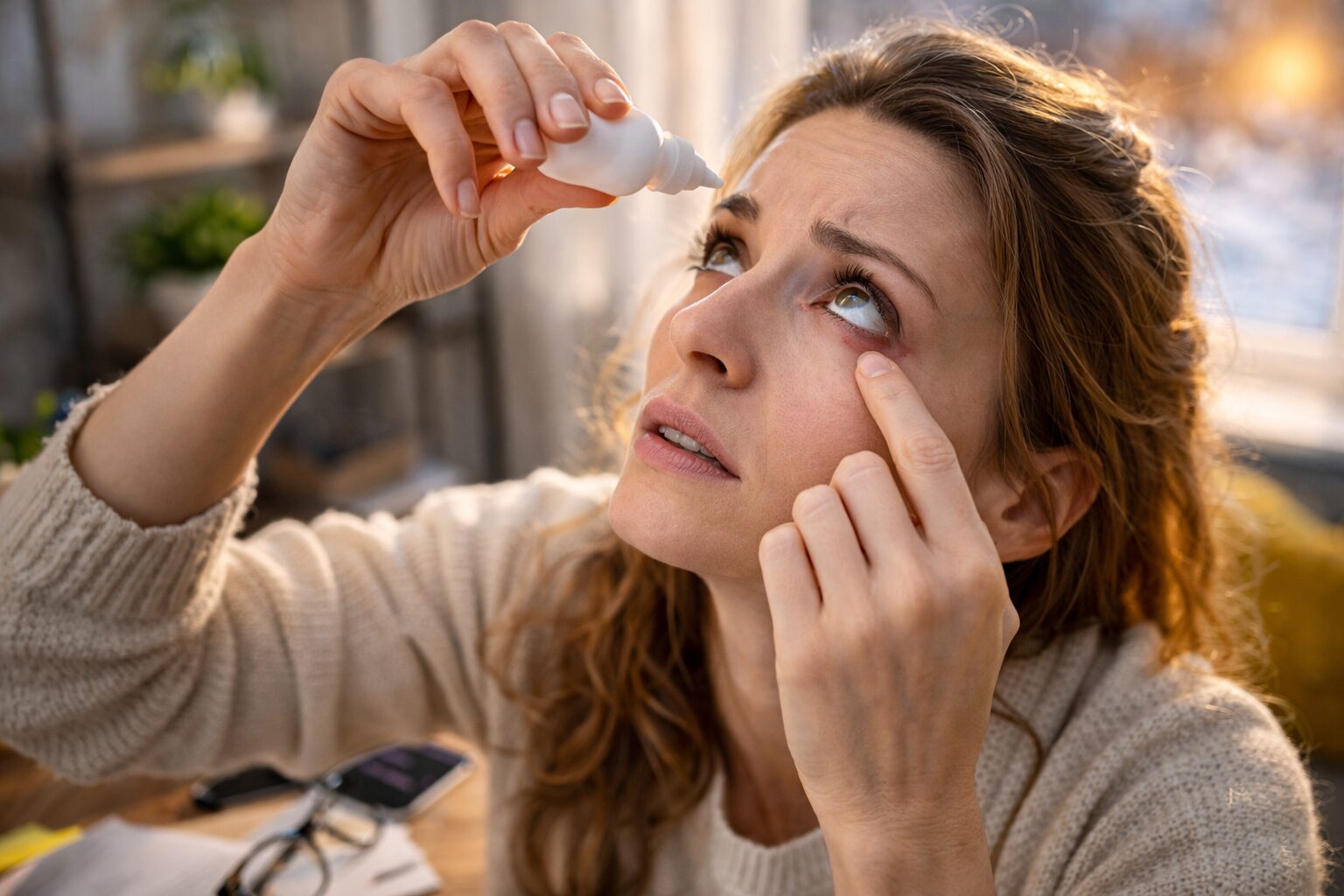
In spring, many people complain about worsening vision. The cause lies in conditions, not age.
Many people notice a strange thing: after winter, their eyes start getting tired faster, vision becomes less sharp, and dryness and a gritty sensation appear. Sometimes it feels like vision has actually worsened, even though everything was fine back in autumn. This is not a coincidence and not just aging. During winter, conditions for the eyes change significantly, and by spring the body ends up in a state of hidden fatigue. Dry indoor air also plays a role. The good news is that in most cases the situation can be fixed. The bad news is that many people make mistakes that only make their vision worse.
Why Do Eyes Get Tired and Dry After Winter
The main reason is a lack of natural light. In winter, daylight hours are short, and we spend most of our time under artificial lighting. The eyes are forced to constantly work in less comfortable conditions.
Add to that several more factors:
- dry air due to heating;
- a lot of time spent at the computer and on the phone, which also affects vision in its own way;
- fewer walks outdoors;
- deficiency of vitamins A, D, and B group.
Interesting fact: research shows that with a lack of daylight, people are more likely to experience worsening nearsightedness, especially those who spend a lot of time in front of screens. This is particularly true for children and teenagers.
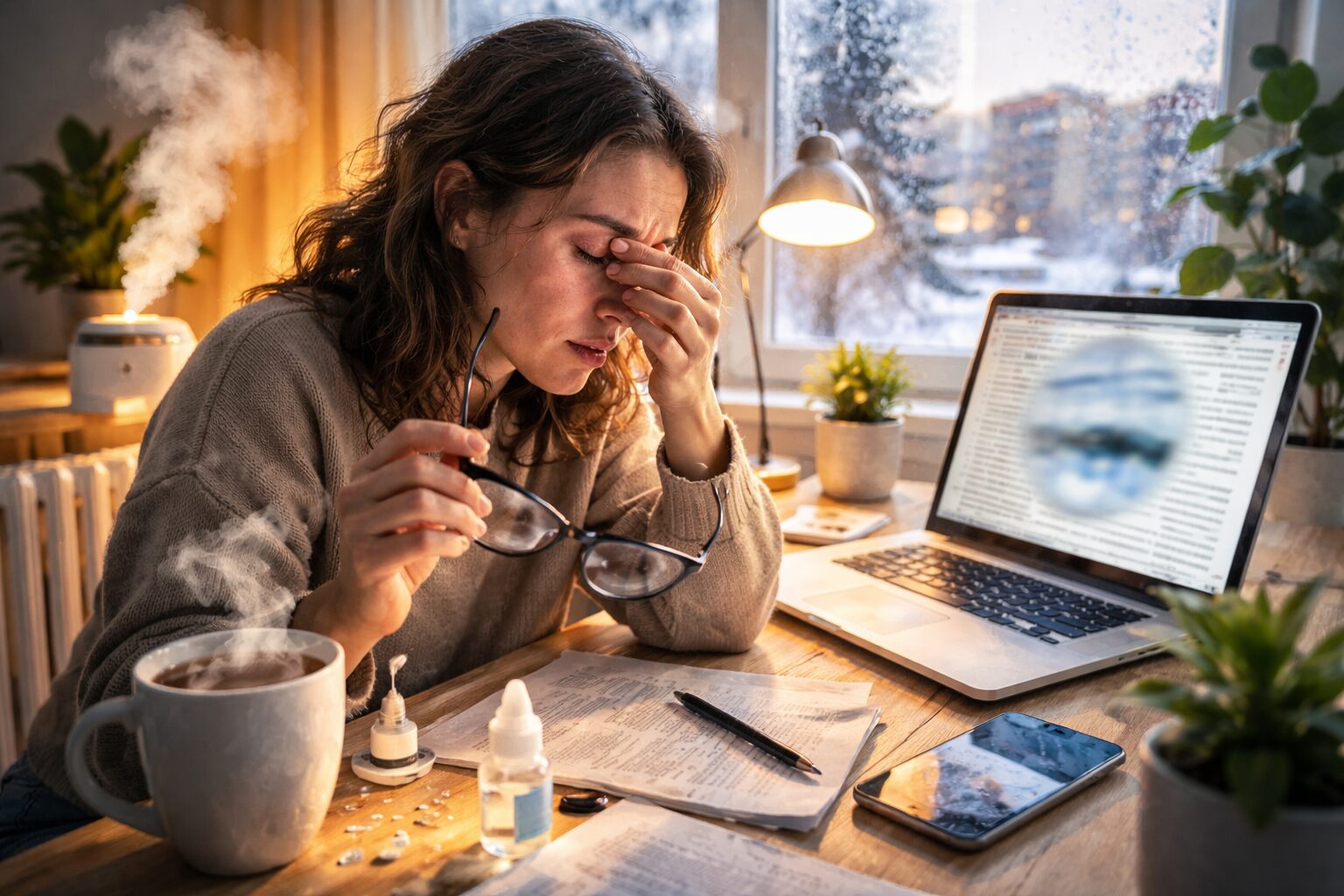
After winter, eyes may dry out more often, get tired, and experience temporary blurriness.
Why It Seems Like Vision Gets Worse in Spring
In spring, many people first notice the problem because the load on their eyes changes. The sun becomes brighter, days get longer, and the eyes start working more actively.
Several effects occur at once:
- light sensitivity appears after a long winter;
- dryness becomes more noticeable in wind and sunlight;
- eye fatigue feels stronger due to changes in lighting;
- the body is coming out of a winter resource deficit.
That’s why it feels like vision worsened specifically in spring, although the problem was accumulating all winter: fewer walks, less daylight, and more and more factors contributing to what experts today call an epidemic of nearsightedness.
What to Do If Your Vision Got Worse After Winter
In most cases, this is not actual deterioration but functional eye fatigue. It can be corrected fairly quickly by changing a few habits.
Here’s what actually helps:
- look into the distance more often, not just at the screen;
- walk in daylight for at least 30–40 minutes;
- humidify the air indoors;
- take breaks every 20 minutes of work, because even if the screen doesn’t directly damage your eyes, it can certainly cause severe eye fatigue;
- add foods rich in vitamin A and omega-3 to your diet;
- use moisturizing eye drops for dryness.
Ophthalmologists note that for many people, vision returns to normal if the strain is reduced and more natural light is added.
🟢 Temporary blurriness, dryness, fatigue — a common and usually reversible issue.
🔴 Persistent vision loss, double vision, pain, flashes, loss of visual field — a reason to see a doctor.
Sometimes spring simply becomes the moment when hidden problems start to surface. If blurriness, double vision, or eye pain persist, it’s better to get your vision checked and reconsider habits that may be harming your eyesight.