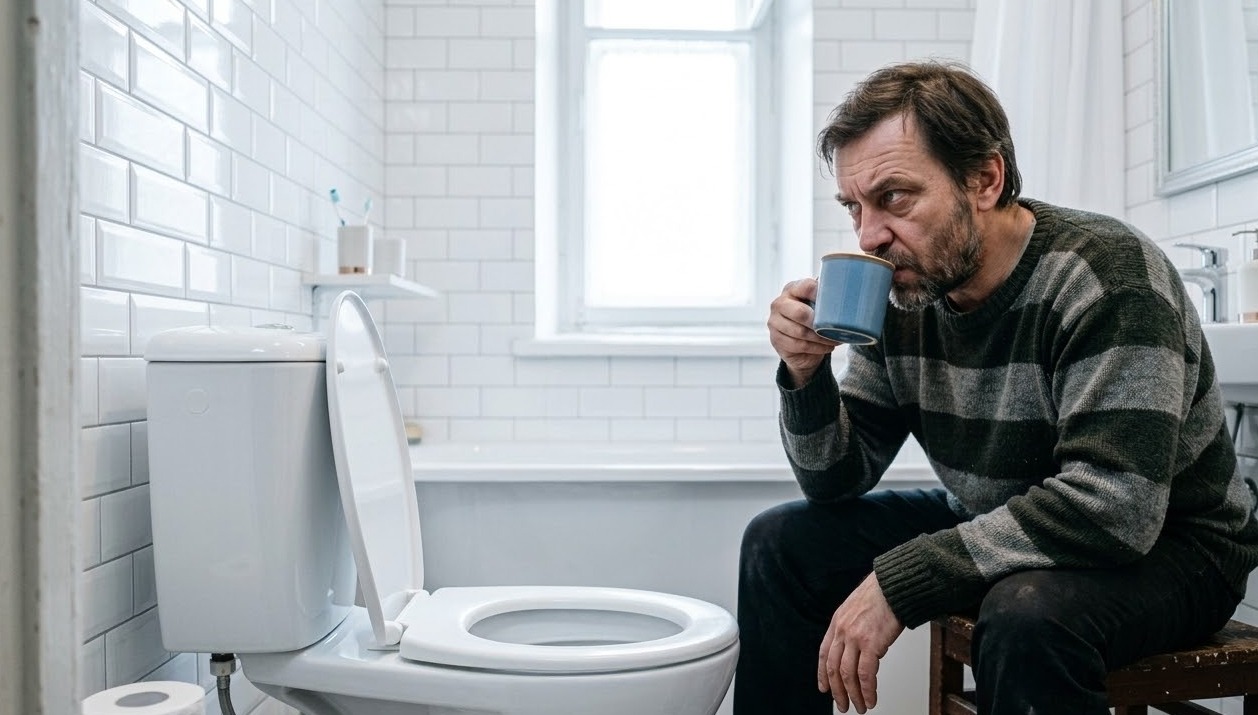
Caffeine alone isn’t the only reason coffee sends us to the bathroom
Have you noticed that just a few minutes after your morning cup of coffee, you’re already rushing to the bathroom? It’s not a coincidence or your imagination. This reaction happens to many people and has a very specific physiological explanation. Coffee is one of the few beverages that makes us happier in the morning and so actively communicates with our intestines. Let’s find out why this happens and whether you should be concerned.
What Is the Gastrocolic Reflex from Coffee
When you drink coffee, your stomach receives a signal about incoming contents and immediately sends a command to the intestines: “make room.” This mechanism is called the gastrocolic reflex — it’s completely normal and works in all people.
Coffee triggers it especially effectively — even better than regular food. Warm liquid enhances the effect. That’s exactly why the urge to go to the bathroom appears so quickly, within just 5–15 minutes after the first sip.
Coffee Increases the Level of a Gut Activity Hormone
Coffee stimulates the production of gastrin — a hormone responsible for the secretion of gastric juice and for enhancing intestinal activity. The more gastrin there is, the more actively the colon contracts.
This effect occurs even with decaffeinated coffee. This means it’s not just about caffeine — the beverage contains other substances (acids, chlorogenic compounds) that affect the intestines directly.
Caffeine Increases Intestinal Peristalsis
Caffeine is a stimulant. It excites not only the nervous system but also the smooth muscles of the intestines. Under its influence, the intestinal walls begin to contract more actively and faster, pushing contents forward.
As a result, what would normally take several hours passes through much more quickly. Hence the urgent signal from your body.
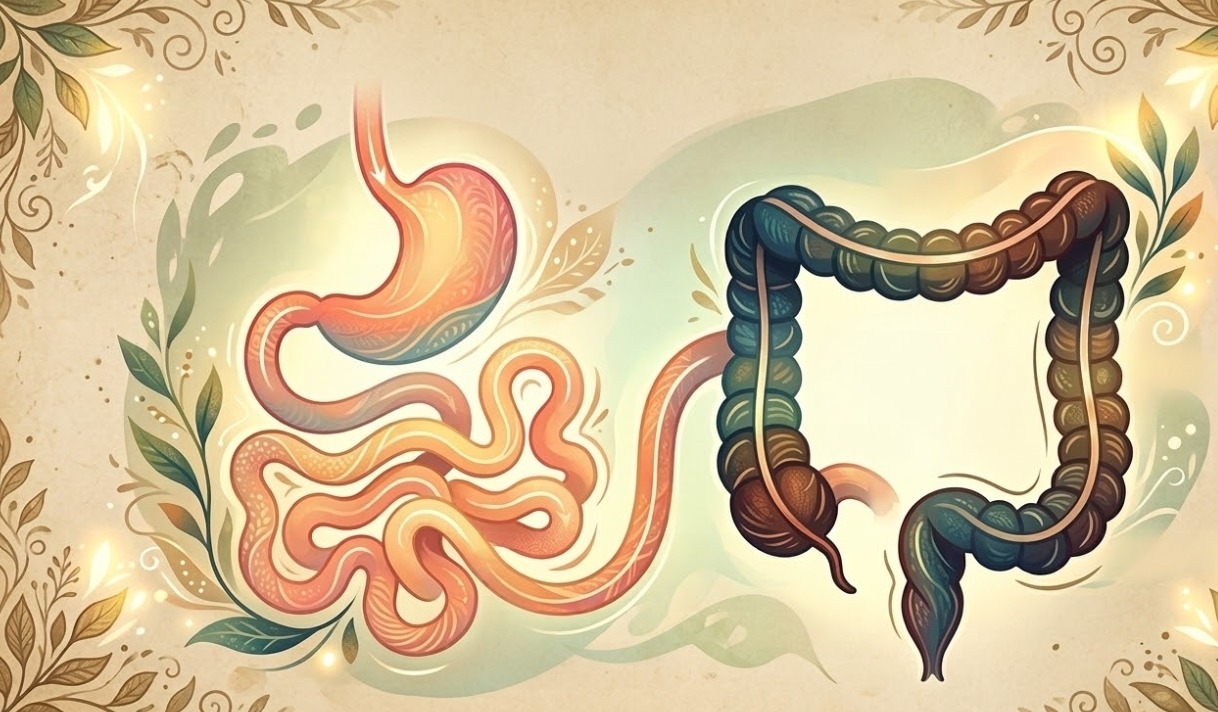
Caffeine stimulates not only the brain but also the intestines
Why Coffee Affects People Differently
The reaction between coffee and the intestines varies from person to person. Some are already on their way to the bathroom after the first cup, while others drink three cups and notice nothing.
This depends on several factors:
- Individual sensitivity to caffeine — some people’s receptors react more strongly;
- Intestinal condition — with irritable bowel syndrome, the effect is intensified;
- Time of day — in the morning, the intestines are already at their most active;
- Coffee habit — in avid coffee drinkers, the reaction dulls over time;
- Stress level — anxiety additionally speeds up the intestines.
What Happens If You Drink Coffee on an Empty Stomach
In the morning, on an empty stomach, coffee acts with double the force. The stomach is empty, the mucosa is more susceptible to irritants, and coffee acids act without the “buffer” of food. The gastrocolic reflex is triggered even more powerfully.
So if you want to reduce the effect, try eating something light first and then drinking coffee. You’ll notice the difference.
Symptoms of Intestinal Problems
Usually, the intestinal reaction to coffee is normal and doesn’t require treatment.
But there are situations when you should pay attention:
- Pain or sharp cramps appear in the abdomen;
- Diarrhea occurs after every cup;
- Symptoms worsen over time;
- Discomfort occurs not only from coffee but also from other foods.
In these cases, the issue may not be with coffee but with the condition of the gastrointestinal tract. It’s better to consult a doctor.
How to Drink Coffee Without Harm
If the reaction is too strong or inconvenient, a few simple rules can help soften it:
- Don’t drink coffee on an empty stomach — eat at least a piece of toast or a banana before your cup;
- Drink warm, not hot coffee — the optimal temperature is around 50–60 degrees Celsius;
- Try decaf — decaffeinated coffee has a lesser stimulating effect;
- Limit the amount — two cups a day instead of four;
- Choose low-acidity beans — they are gentler on the mucosa.
The urge to go to the bathroom after coffee is not a sign of illness and not a reason to give up your favorite beverage. It’s simply physiology: coffee activates hormones and reflexes that speed up intestinal function.
Listen to your body. If the reaction is comfortable — everything is fine. If it causes inconvenience — adjust your habits. And if pain or diarrhea occurs — that’s a reason to talk to a doctor.