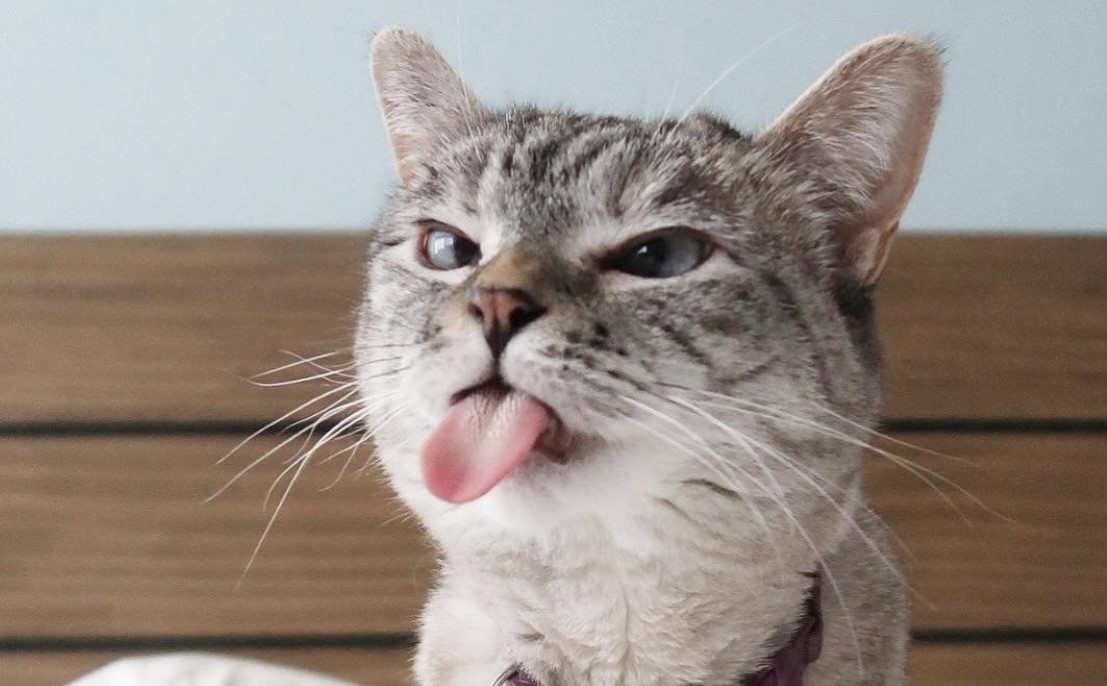
Why cats have a sandpaper-like tongue: scientific explanations that put everything in perspective. Image source: drive2.ru
If a cat has ever licked your hand, you’ve definitely noticed: its tongue feels like sandpaper. This isn’t a “strange quirk” but a well-designed evolutionary structure. The roughness is created by microscopic keratin hooks — the same protein that forms nails, hair, and even feathers and hooves. Veterinarians and biologists have long studied their structure and functions. And it turns out that the rough tongue is one of the most versatile tools in a cat’s body.
Why a Cat’s Tongue Is Rough and What It’s Made Of
The surface of the tongue is covered with papillae that are curved backward. They resemble small hook-shaped spines. They are longer in the center and shorter along the edges. Their tips are partially hollow and capable of retaining liquid.
Thanks to their “toward the throat” direction, they capture fur and food, and when the mouth opens, they slightly rise — making it easier to untangle mats. But that’s far from all the functions of this feline “tool.”
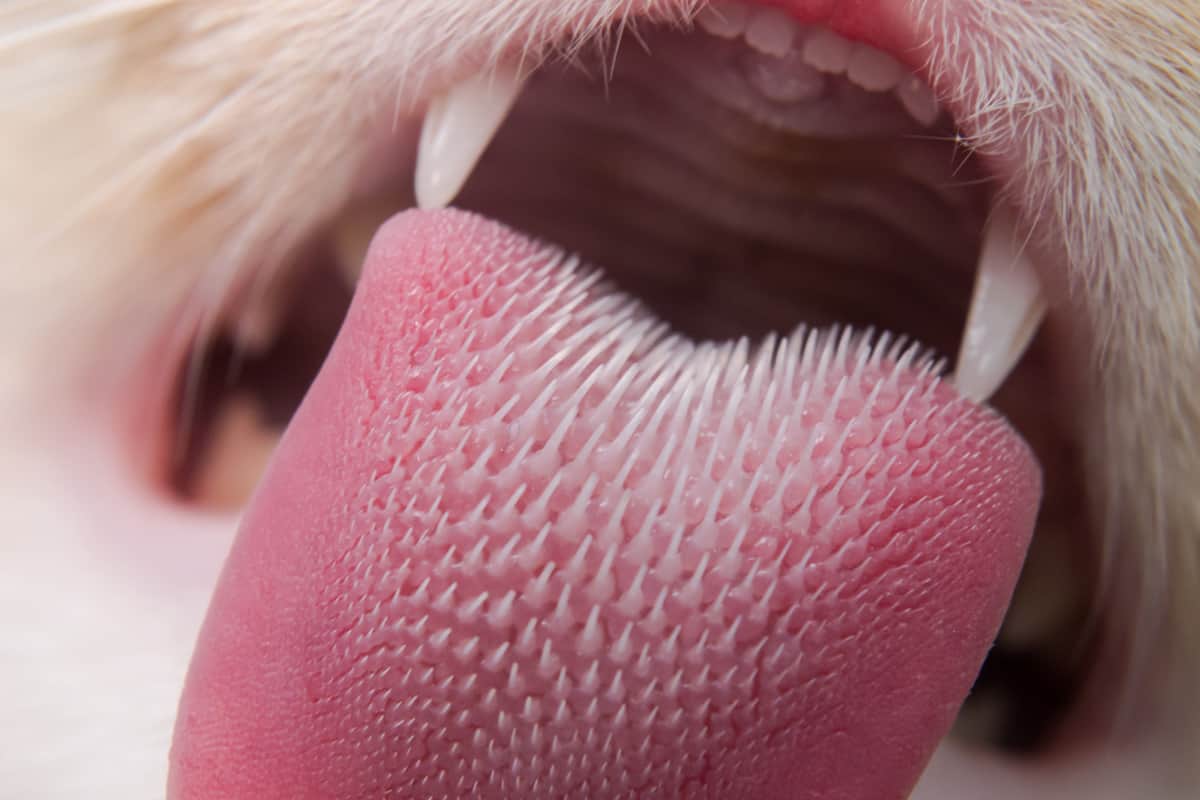
A rough tongue is not a quirk but a multifunctional tool for grooming, hunting, cooling, and caring for offspring. Image source: dishcuss.com
Why Cats Have a Rough Tongue: 8 Reasons
- It’s a built-in comb. Keratin hooks work like a fine-toothed comb: they capture loose hairs, pull out small debris, and even help remove parasites and their eggs.
A cat can spend up to half its waking hours grooming, and the tool it uses is truly effective.
- Fur protection without shampoo. During grooming, the tongue distributes natural skin oils across the fur. This makes it water-repellent and maintains skin health.
Frequent bathing strips away this layer — which is exactly why cats shouldn’t be bathed without medical indication.
- A natural “air conditioner.” The tips of the papillae are partially hollow and retain saliva. Over the course of a day, a cat distributes up to ~40 g of saliva across its fur; as the moisture evaporates, the temperature difference between the outer part of the fur and the skin can reach 15 °C.
Considering that cats mainly sweat through their paw pads and partially through their chin, this is an important thermoregulation mechanism.
- A tool for eating. The hooks point toward the throat, so they help strip meat from bones and direct food inward. When eating prey, the tongue literally scrapes bones clean.
- Massage and self-regulation. The roughness stimulates the skin and blood circulation. Grooming reduces stress, which is why cats often start washing themselves during stressful situations (after a fright or conflict).
Sometimes cats simply groom themselves to relax because it feels pleasant. Or they groom each other.
- Wound care. Mechanical “scraping” with the tongue removes dead cells, and saliva contains substances with antimicrobial effects.
However, for noticeable injuries, a veterinary examination is needed — excessive licking can slow down healing.
- Caring for kittens. The rough tongue stimulates urination and defecation in newborns and also forms a tactile bond with the mother.
Without such stimulation, kittens cannot manage on their own during the first weeks.
- A special drinking technique. A cat doesn’t scoop water but quickly touches it with its tongue, creating a thin column of liquid that it “snaps” shut with its mouth. The structure of the papillae helps retain moisture for a fraction of a second — enough to swallow the water.
When a Cat’s Rough Tongue May Be a Sign of Illness
The color of the tongue and gums should be bright pink. Paleness, bluish discoloration, lumps, or an unpleasant odor are reasons to visit a veterinarian.
Also: threads, rubber bands, and tinsel easily catch on the papillae and can get stuck — keep such items out of your cat’s reach.