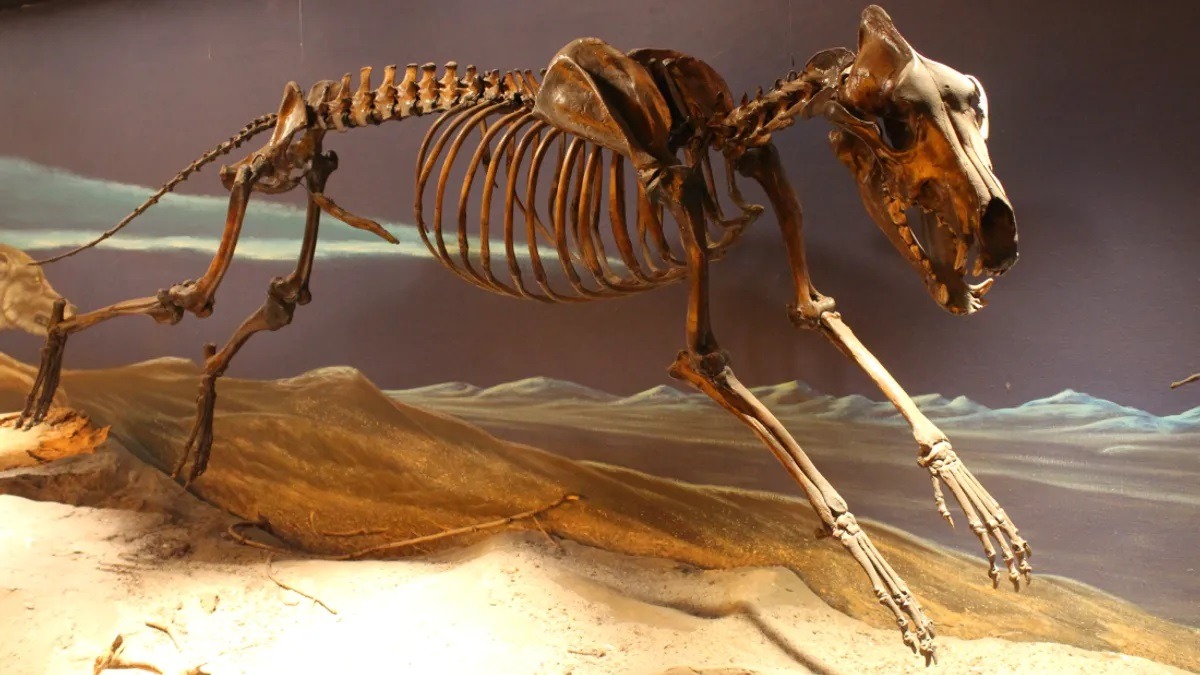
Most male mammals have a penis bone, but humans don’t. Why? Image source: iflscience.com
Dogs, cats, bears, monkeys, and even walruses all have a real bone inside their penis — the baculum. It helps maintain an erection and increases reproductive success. Humans are among the few primates that have completely lost this structure. Why? The answer lies in how our distant ancestors chose their partners, how rare monogamy is among mammals, and how long copulation lasted.
What Is the Baculum and Why Do Animals Have a Bone in Their Penis
The baculum (os penis) is a bone located inside the penis of males of many placental mammals. It is not connected by joints to the rest of the skeleton but “floats” in soft tissues, providing additional rigidity during mating. Essentially, the baculum is a natural mechanical reinforcement that helps the male maintain intromission (penetration) longer and deliver sperm to its destination.
This bone is found in representatives of at least eight orders of mammals: primates, carnivores, rodents, bats, insectivores, and others. At the same time, the baculum is remarkably diverse — it is called “the most morphologically variable bone” among all mammals. In some species, it is a tiny rod just a couple of millimeters long; in others, it is an impressive structure.
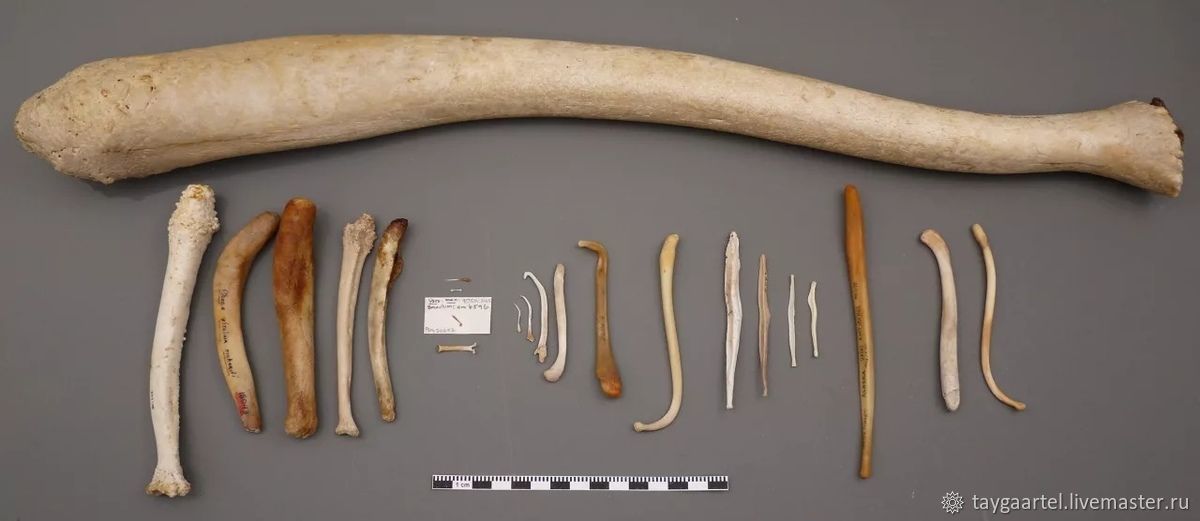
Bacula of different mammal species: from tiny to impressive. Image source: livemaster.ru
In walruses, for example, the baculum can reach 60 centimeters — often the longest bone in the animal’s body. In Alaska, the walrus penis bone is called an “oosik,” polished and used as a knife handle or sold to tourists as a souvenir.
When the Baculum Appeared: The Origin of the Penis Bone in Animals
In 2016, researchers from University College London — Matilda Brindle and Kit Opie — published a major study in the journal Proceedings of the Royal Society B, in which they reconstructed the evolutionary history of the baculum for the first time. Using Bayesian phylogenetic analysis of data from two thousand species, they reached several important conclusions.
The first discovery: the very first common ancestor of all mammals did not have a baculum. The bone appeared later — between 145 and 95 million years ago, after the split between placental and non-placental mammals. However, both ancestral primates and ancestral carnivores already had this bone.
The second important result: the baculum did not simply arise once. According to another study, it independently appeared at least 9 times and was lost in 10 separate evolutionary lineages. This means that the penis bone is not some ancient “default feature” but an adaptation that evolution introduces or removes depending on circumstances.
How the Duration of Copulation Is Linked to the Presence of a Baculum
The key question of the Brindle and Opie study was: what exactly makes the baculum useful? The answer turned out to be related to the duration of mating.
The scientists found a clear correlation: in primate and carnivore species that practice so-called prolonged intromission — penetration lasting more than three minutes — the baculum is present significantly more often, and when present, it is longer. The logic is simple: the longer mating lasts, the more important mechanical support of the penis becomes.
Why spend so much time on mating at all? It comes down to competition. In polygamous species — where several males compete for one female — a prolonged sexual act provides an advantage: while one male is occupied, another cannot “cut in.” This is known as post-copulatory sexual competition: a struggle for fertilization that continues after the act itself.

Chimpanzees live in polygamous groups where males actively compete for females
The study confirmed: in species with a high level of such competition, the baculum is significantly longer. Polygamy and seasonal breeding also predicted a larger bone in primates.
Why Humans Don’t Have a Baculum and How It’s Linked to Monogamy
Now — the main question: what about humans? Our closest relatives — chimpanzees and bonobos — do have a baculum, albeit a small one (6–8 millimeters). At the same time, copulation in chimpanzees lasts only about 7 seconds, and in bonobos — about 15. So why did these species retain the bone?
Because both chimpanzees and bonobos live in polygamous communities where males compete for females very actively. Even with short copulation, the high level of rivalry between males creates evolutionary pressure in favor of retaining at least a small baculum.
The situation with humans is different. Approximately 2 million years ago, after the human lineage split from the common ancestor with chimpanzees and bonobos, our ancestors formed predominantly monogamous pairs. This radically changed the balance: if a male mates with only one female, post-copulatory competition virtually disappears. Prolonged copulation no longer provides a reproductive advantage. And therefore, the baculum is no longer needed.
As study co-author Dr. Kit Opie explained: the transition to monogamy was probably “the final nail in the coffin” for the already shrinking baculum — and the bone simply disappeared in our ancestors.
Why the Penis Bone Is Rarely Displayed in Museums
There is another surprising detail related to the baculum — but this time it’s cultural, not biological. If you’ve ever been to a natural history museum and examined mammal skeletons, you most likely didn’t see a baculum. And it’s not because they forgot it — it was deliberately removed.
Jack Ashby, assistant director of the University of Cambridge’s Museum of Zoology, explains: the reason is “entirely unscientific.” Victorian museum curators removed bacula from displays out of a sense of decency — to avoid causing visitors embarrassment or giggles. Ashby calls this “astonishing,” since museums were effectively deliberately distorting animal anatomy, imposing human prudishness on them.
For some species, this is particularly dramatic. In walruses, remember, the baculum can be 60 centimeters long — its absence in a skeleton is simply impossible to miss. Nevertheless, in most European museums, bacula are still kept in storage rather than in display cases.
The only skeleton with a baculum on permanent display in the United Kingdom, according to Ashby, is a southern elephant seal at the Cambridge Museum of Zoology. So if you see a penis bone in a museum skeleton — know that you are at an institution with true scientific integrity.
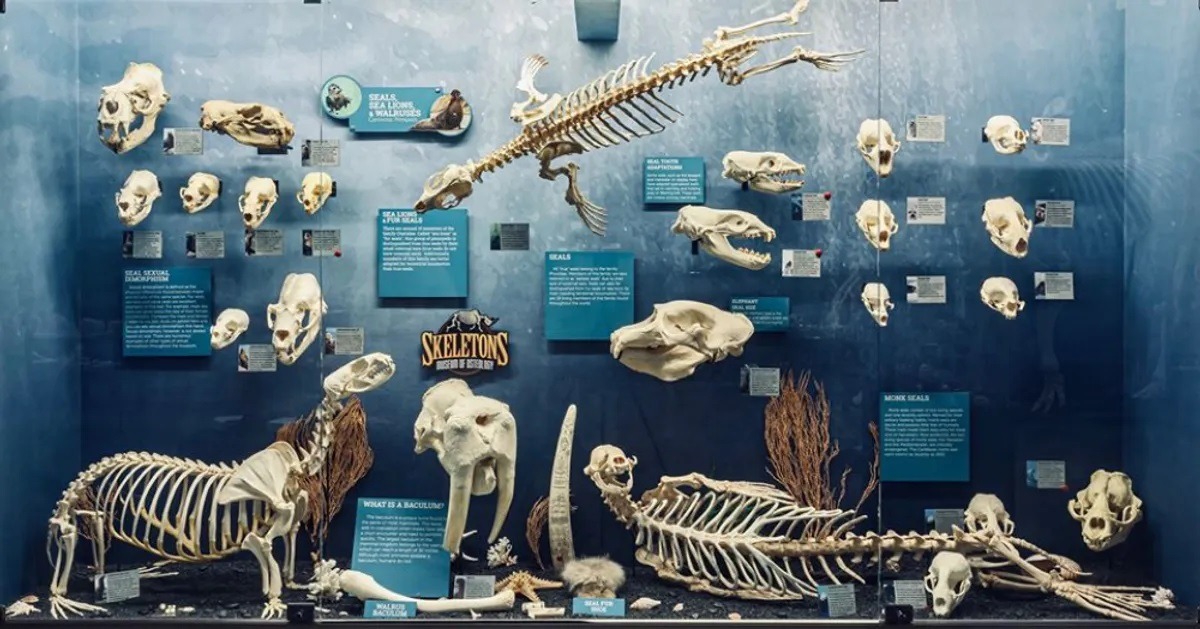
An impressive walrus baculum on display at the Museum of Osteology in Oklahoma. Image source: iflscience.com
Why Humans Lost the Baculum: What’s Proven and What’s Not
It is important to emphasize: the 2016 study showed a strong correlation between the baculum, mating duration, and the level of sexual competition. But correlation is not yet a mechanism. The scientists do not claim that monogamy is the sole and definitive reason for the disappearance of the bone in humans. It is the most probable explanation.