
In reality, recycled water is even cleaner than regular water
Turn on the tap — and there it is, clean water. For most of us, this is so routine that we never even think about where it comes from. But residents of small towns in the southwestern United States know the value of every liter: droughts there are getting longer, and reservoirs are getting shallower. A new study has revealed something surprising: people are willing to pay nearly $50 a month for water recycled from sewage, just to avoid running out entirely.
What Is Recycled Water
When you hear “water from the toilet,” it doesn’t conjure the most pleasant image. But in reality, it’s not about filling a glass from the sewer. It’s an extremely complex multi-stage process in which wastewater passes through microfiltration, reverse osmosis, ultraviolet disinfection, and additional chemical treatment. The result is water that matches or often exceeds the purity of regular tap water.
Such systems are already operating in several cities around the world. For example, in Windhoek (Namibia), people have been drinking recycled water since 1968 — over half a century. In Singapore, the NEWater brand covers up to 40% of the country’s water needs. In the United States, however, people were long wary of this idea. The problem wasn’t with the technology but with psychology: people were simply disgusted thinking about the water’s origin, even if it was crystal clear. Scientists call this the “yuck factor.”
But it seems drought has proved more persuasive than any prejudice.
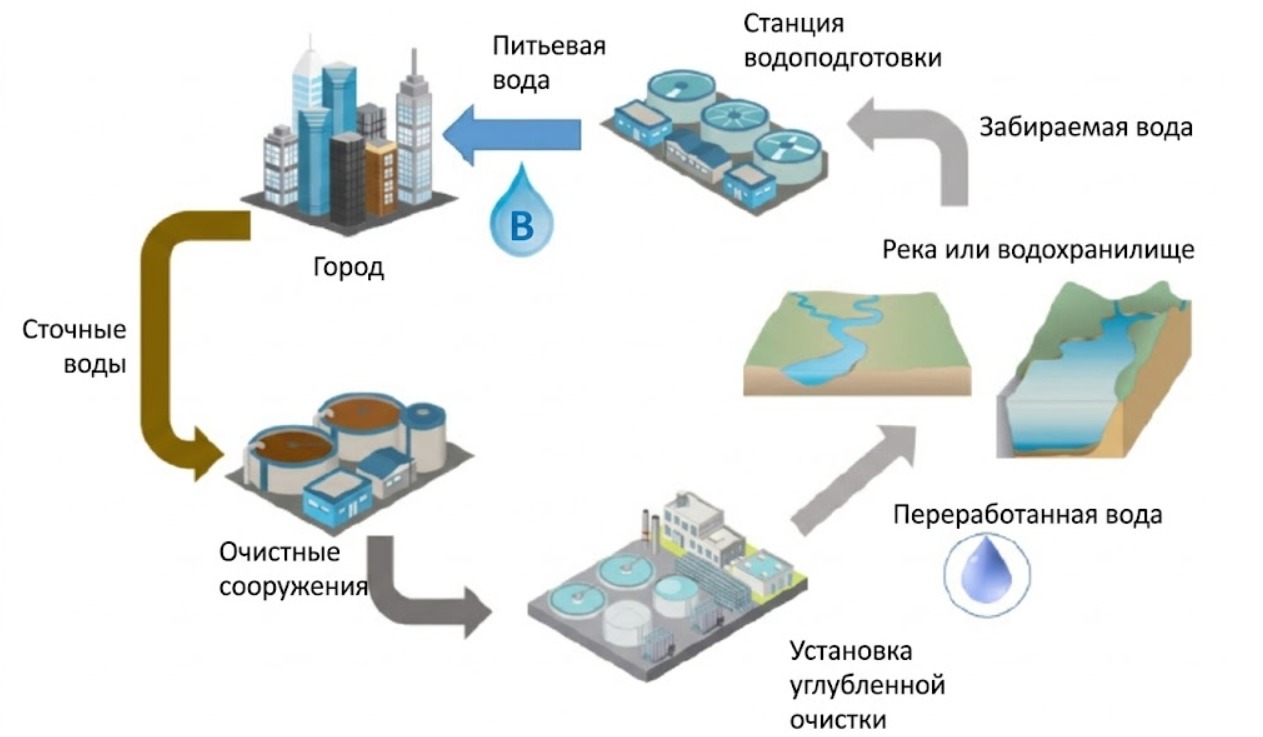
The process of obtaining recycled water. Image source: zmescience.com
Why Americans Are Drinking Sewage Water
The study, published by American scientists in the journal Water Resources Research, surveyed residents of small communities in arid regions of the United States. Participants were asked a simple question: how much would you be willing to pay monthly for your town to have a wastewater-to-drinking-water recycling system? The average answer was $49 per month — a figure that surprised even the researchers themselves.
The issue is that small towns are especially vulnerable. Unlike large cities, they don’t have extensive water supply networks with backup sources. When the only reservoir dries up or groundwater levels drop, there are almost no alternatives. More than 2 billion people on the planet already live under water scarcity conditions, and the American Southwest is rapidly joining that statistic.
The study’s key finding: the fear of running out of water proved stronger than disgust. People who had personally experienced water restrictions (such as bans on watering lawns or washing cars) were willing to pay even more. Simply put, when the tap starts coughing dry, the “yuck” factor quickly loses its power.
How Safe Is Recycled Water
This is where it gets really interesting. The reverse osmosis technology used at these plants filters water at the molecular level. The membrane allows water molecules through but blocks virtually everything else: bacteria, viruses, pharmaceutical compounds, and heavy metals.
Fun fact: The pores of a reverse osmosis membrane are 500,000 times smaller than the thickness of a human hair!
After reverse osmosis, the water undergoes another stage — ultraviolet treatment with the addition of hydrogen peroxide. This destroys even the trace amounts of organic matter that could theoretically slip through. The resulting water is so pure that minerals must be deliberately added so it doesn’t taste flat and doesn’t leach minerals from the pipes.
Skeptics, however, aren’t convinced. Their main argument: what if the system breaks down? It’s a fair question. But modern plants are equipped with multi-level monitoring systems — if even one parameter goes out of range, the water supply is automatically shut off. In practice, this water is tested dozens of times more frequently than regular tap water.
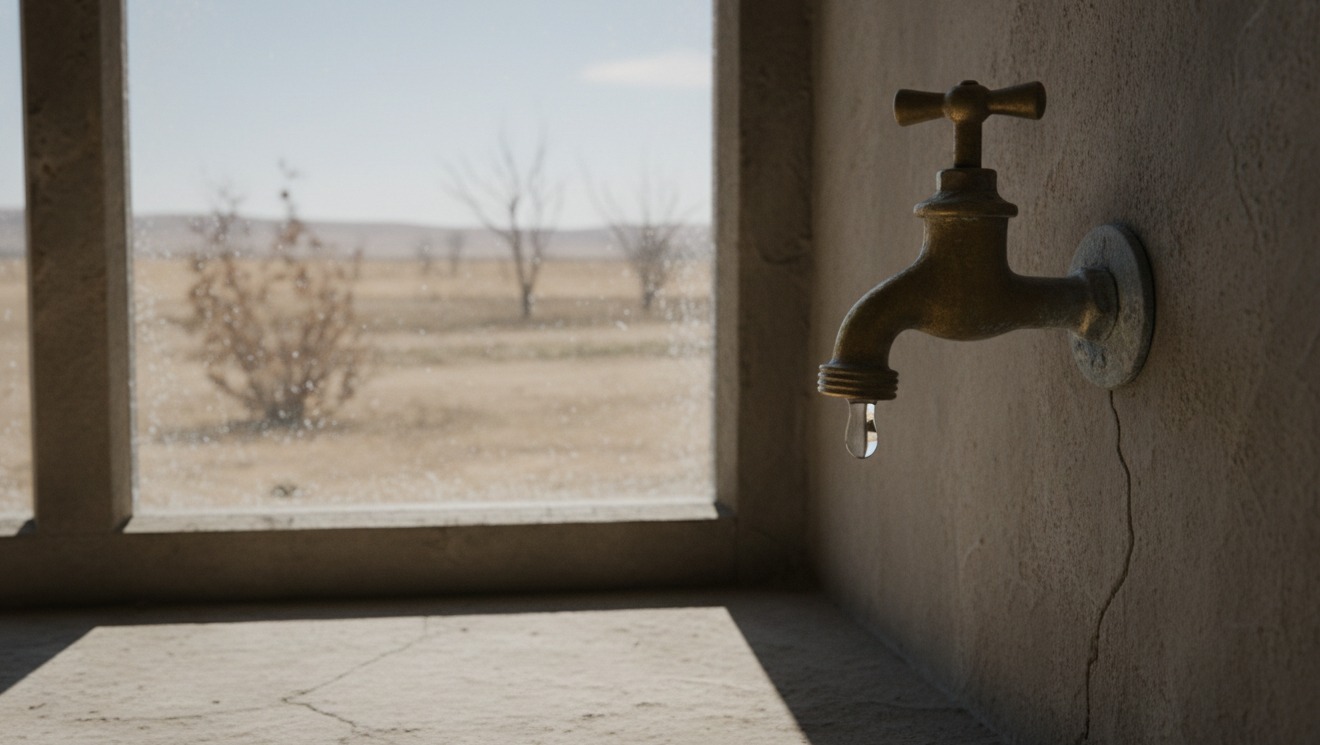
When water becomes a luxury, its origin is the last thing people worry about
Why the Future Belongs to Water Recycling
Climate models leave no illusions: droughts in the southwestern United States will only intensify. California, Arizona, Nevada, and New Mexico are already experiencing what’s known as a megadrought — the most severe in the last 1,200 years. The water level in Lake Mead, the country’s largest reservoir, has dropped so much that sunken boats and even human remains have been found on the bottom.
Against this backdrop, wastewater recycling looks not just sensible but inevitable. The state of California has already adopted rules allowing direct recycling of wastewater into drinking water, and the first projects are underway. Other states are watching closely. But there’s a catch: building such plants is expensive, especially for small towns. That’s exactly why scientists were so interested in whether residents would be willing to pay out of pocket.
The study’s results send an important signal to officials: people aren’t just willing — they want this to happen. For small communities with limited budgets, this could be the decisive argument when applying for federal funding.
Why We Haven’t Switched to Recycled Water Yet
The technology is ready, and people, as it turns out, are too. But two barriers stand in the way. The first is political. The word “toilet” in the context of drinking water is a gift for any opposition politician. History has already seen cases where excellent water recycling projects were derailed. Just look at San Diego in the 1990s, where public pressure halted a project for years.
The second barrier is financial. Building a direct purification plant for a town with a population of 10,000–50,000 can cost tens of millions of dollars. For comparison, the annual budget of such a town is often comparable to that amount. Without federal grants and subsidies, many simply can’t afford it.
But here’s what’s important: every year of inaction costs more. When the water runs out, a town dies. Businesses close, people leave, and property values plummet. Against this backdrop, $49 a month isn’t an expense — it’s an investment in survival.
The world is changing, and with it, attitudes toward what we drink are changing too. Just twenty years ago, the idea of recycling sewage into drinking water provoked only one reaction in most people — disgust. Today, as rivers shrink and wells dry up, this technology is transforming from an oddity into a necessity. And by all indications, people are ready for it sooner than politicians are.