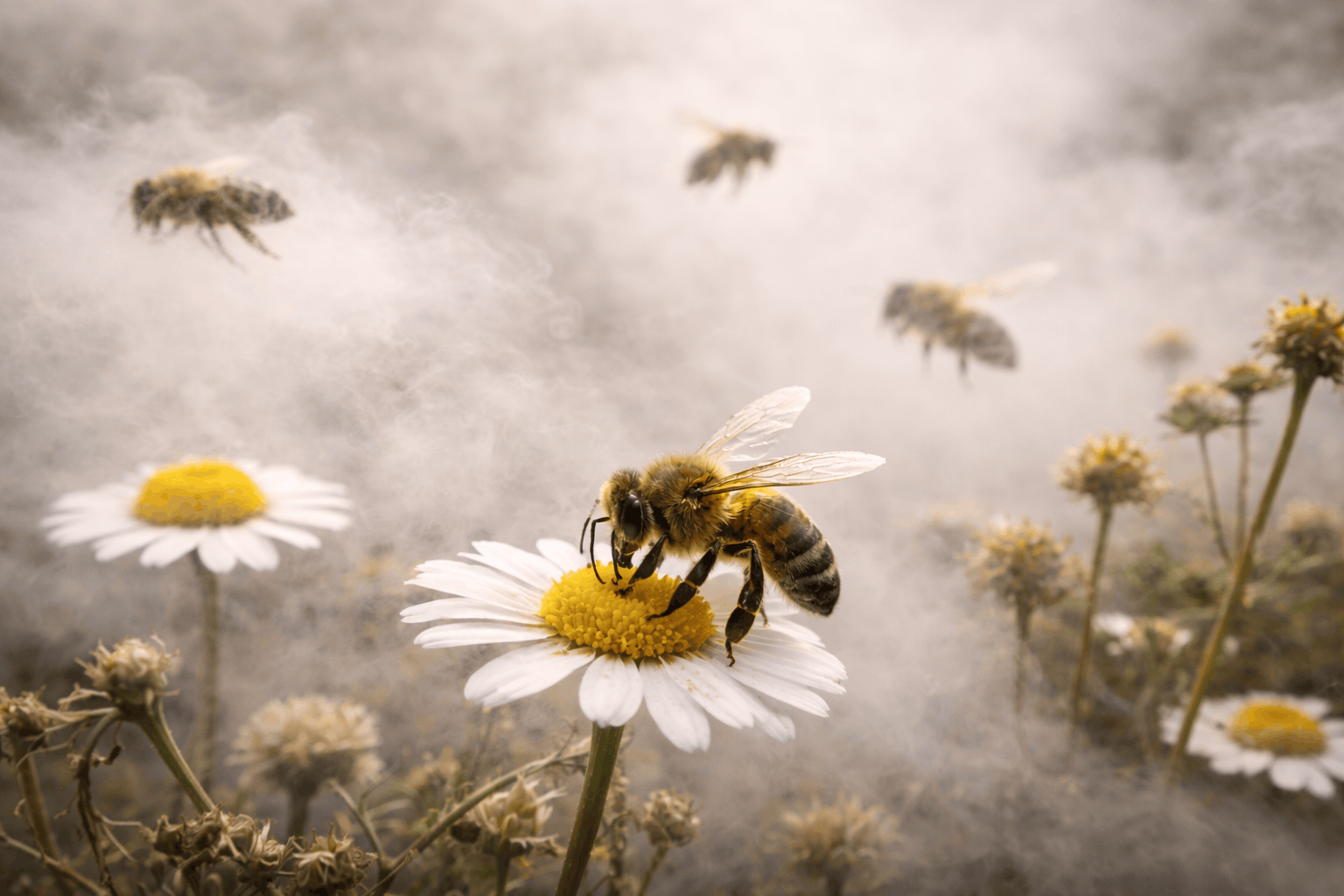
Air pollution distracts insects from pollination and reproduction. Why does this happen?
We are used to thinking of air pollution as a human problem, but more and more research shows that dirty air seriously affects insects, on which the entire ecosystem depends. Even concentrations considered safe for humans can disrupt the behavior of bees, ants, and other pollinators. Scientists have found that pollutants can destroy the scents that insects use to find flowers, partners, and their kin. As a result, not only their lives suffer, but also the plants that cannot reproduce without them.
How Air Pollution Prevents Insects from Pollinating Plants
The main problem is nitrogen oxides and ozone, the concentrations of which are rising due to transportation and industry. These gases react chemically with the aromatic compounds that plants emit.
For a human, the scent may be barely noticeable, but for an insect, it is a precise navigator. When pollutants destroy scent molecules, it complicates the search for flowers and disrupts signals. As a result, sometimes bees and other pollinators simply cannot find flowers.
Research shows that even a slight increase in ozone levels reduces the likelihood of successful pollination because insects lose their landmarks.
Scientists note that this is dangerous for the entire ecosystem: about 90% of flowering plants depend on pollinators. If insects stop finding plants, crop yields drop and species diversity decreases.
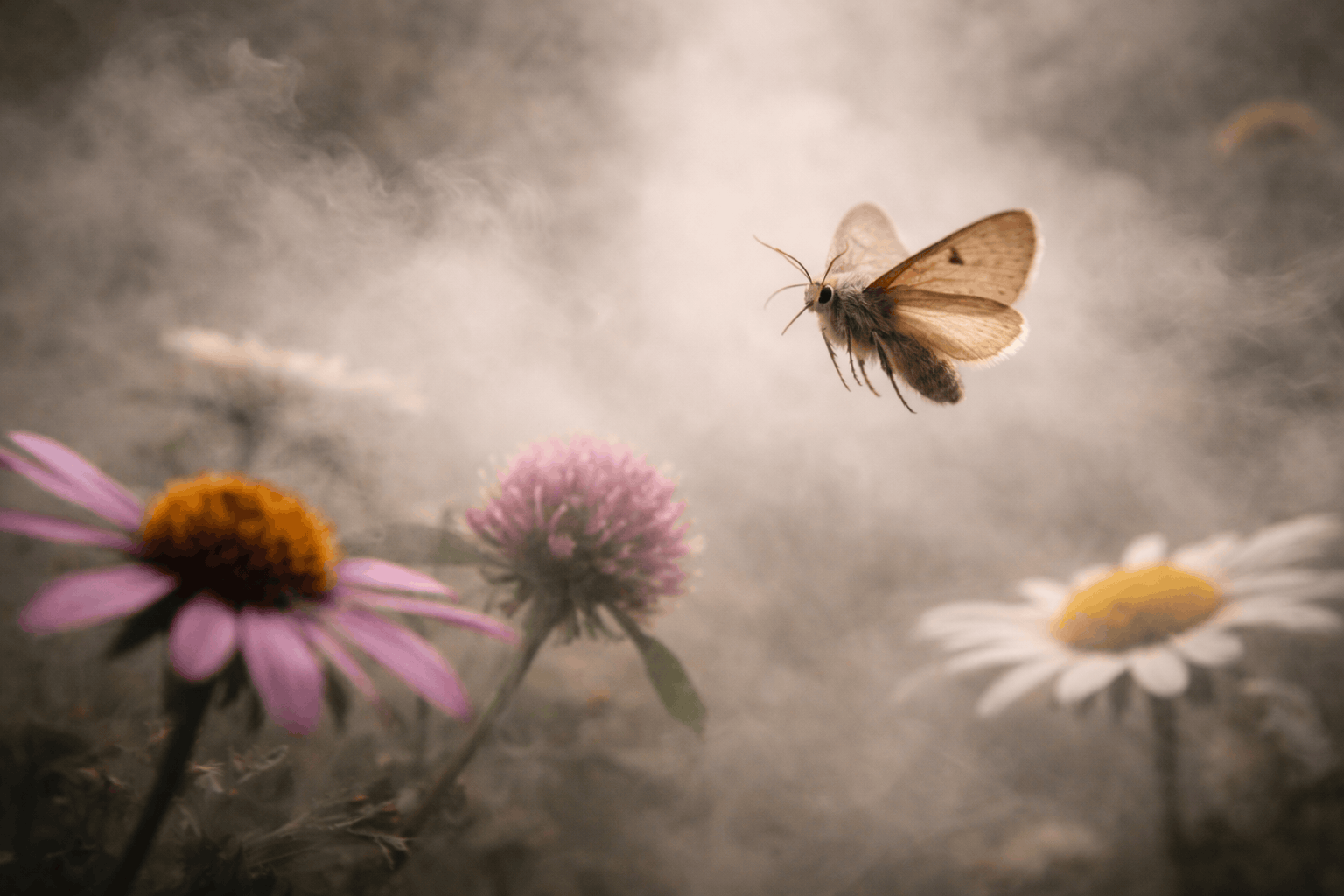
Air pollution prevents insects from interacting with plants and each other even at levels considered safe for humans.
How Air Pollution Disrupts Pheromones and Scents in Insects
Scents are important not only for finding food. Many insects communicate using pheromones — chemical signals by which they recognize their own kind, find partners, and distribute responsibilities.
An experiment with ants showed that elevated ozone levels change the composition of substances on the surface of their bodies. After brief exposure to the gas, colony mates stopped recognizing the ant and began behaving aggressively, even though ants generally have good memory for enemies. In four out of five studied species, conflicts arose within a single colony.
In some species, a different effect was observed: ants stopped responding to larval signals and provided worse care for their offspring. Even a small change in chemical scent was enough to disrupt the entire social system.
Pollution also interferes with sex pheromones, causing males to become less attractive, court other males, and in some drosophilids, even interspecies mating occurs.
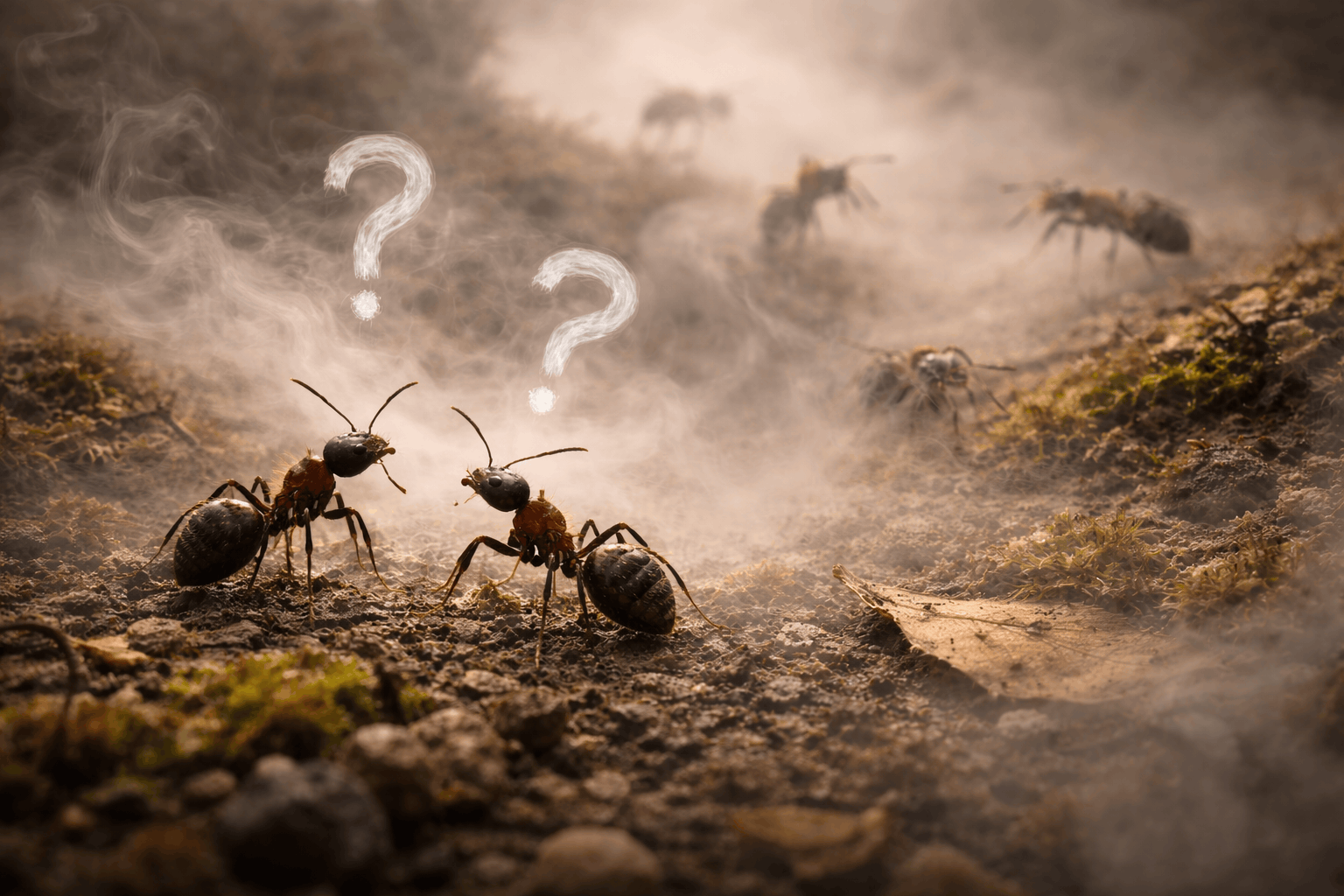
The main pollutants in this context are nitrogen oxides and ozone, which can destroy the chemical signals used by insects to find flowers, recognize kin, and for sexual behavior.
Why Air Pollution Is Dangerous for Insects and the Entire Ecosystem
At first glance, it may seem like these are minor behavioral changes. But in nature, everything is connected. If insects find flowers less effectively, plants produce fewer seeds. If colonies collapse, the number of pollinators decreases.
Scientists believe that air pollution may be one of the hidden causes of declining insect populations worldwide. And the problem is that the pollution levels at which this happens are often considered safe for humans.
This creates a paradox: air that we can breathe without harm is already capable of changing the behavior of creatures on which the functioning of the entire ecosystem depends.
And the more such changes accumulate, the greater their impact on nature — and ultimately on ourselves.